The Art Nouveau dance goes on forever

nouveau1.jpg

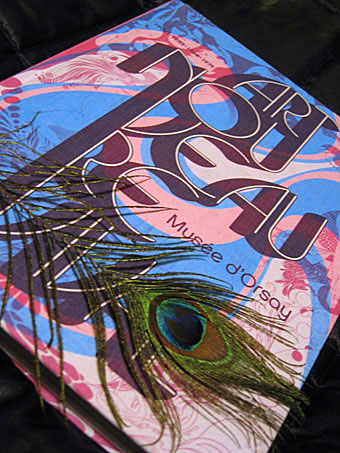
Catalogue for Art Nouveau Revival 1900 . 1933 . 1966 . 1974. Peacock feather not included.

Regular readers may recall my mention of the Musée d’Orsay exhibition Art Nouveau Revival which was launched late last year. I didn’t get to see the exhibition, unfortunately, but this week I finally ordered a copy of the catalogue, an expensive cloth-bound volume with essays (in French) by Philippe Thiébaut, Stephen Calloway, Irene de Guttry, Thierry Taittinger and Philippe Thieryre. Despite the ruinous postal charges incurred by the book’s weight this was worth every euro, it being the kind of polymorphous production which in solipsistic moments one can choose to believe was created solely for your own benefit.
nouveau3.jpg

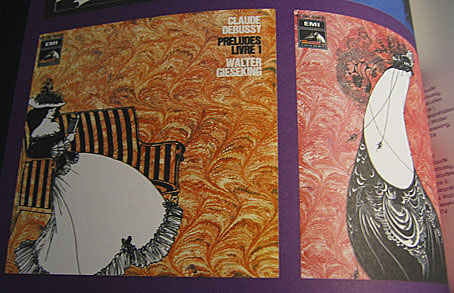
Aubrey again, album covers from 1974.

Much of the subject matter has been explored here in various small ways, with the curators following the influence of Art Nouveau through Surrealism (mainly Dalí) to the psychedelic art of the 1960s and on into the Pop Nouveau (for want of a better term) which flourished in the first half of the 1970s. Among the familiar Aubrey Beardsley graphics and psychedelic posters there are also some pleasantly surprising inclusions, including illustrations by Philippe Jullian (yes, I’m still intending on writing about him at some point), yet more Beardsley album covers, film posters, and even some of the sillier films of the late-60s such as Casino Royale. Being a French exhibition there’s a section devoted to comic strips which includes work by Moebius, Philippe Druillet and Guido Crepax.
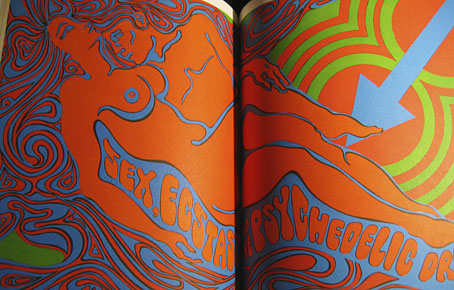
nouveau2.jpg

Sex and LSD, a spread from Playboy, 1967.

It’s common to see parallels drawn between the 1890s and the 1960s but the strange blooms of vulgarised fin de siècle style which burgeoned in the wake of psychedelia are seldom given much attention. One of the great things about this catalogue is the amount of ephemera the curators chose to include such as magazine ads and trend-chasing album sleeves. It was precisely this blend of 1890s + 1960s + 1970s I sought to capture in my recent cover for Dodgem Logic. As I said, it’s an expensive book but for anyone drawn to this aesthetic hothouse it’s also an essential purchase. Art Nouveau Revival can be ordered direct from the museum shop. Further samples follow.
Continue reading “The Art Nouveau dance goes on forever”

Mind the doors!

andreev1.jpg

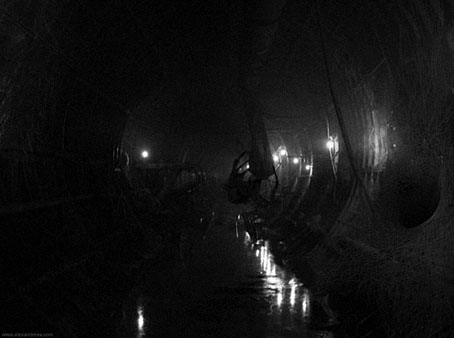
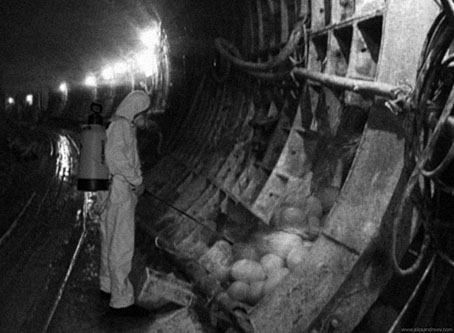
Russian artist Alexey Andreev populates the Moscow Metro with eldritch weirdness in a photo-collage series he calls Metronomicon. A couple of these pieces remind me of Clive Barker’s throat-grabbing story, The Midnight Meat Train, which was filmed a couple of years ago. For an earlier cinematic example of the horror inherent in underground transport systems there’s Gary Sherman’s Death Line, or Raw Meat as it was fatuously rebranded for the US, a very effective low-budget film from 1972. Fantastic Voyages reviews it here.

Andreev tip via MetaFilter.

andreev2.jpg

Previously on { feuilleton }
Subterrania
Tunnel 228

Book-plates of To-day

plate1.jpg

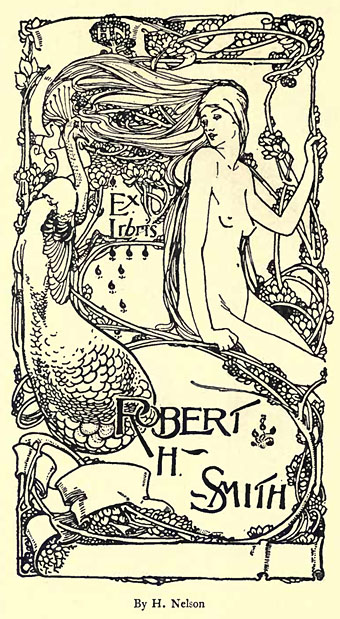
A design by Harold Nelson.

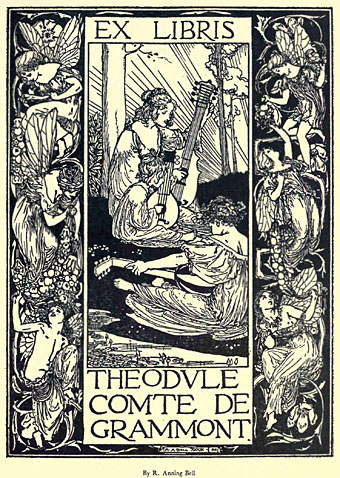
That title probably requires a (sic) for those unaware that “today” was commonly hyphenated until about 1920. Wilbur Macey Stone’s Book-plates of To-day (1902) is a small overview of the art of the bookplate at the Internet Archive. Among the artists flourishing the Art Nouveau foliage are a couple of familiar illustrators such as Robert Anning Bell (below), and there’s also a plate by the Belgian Symbolist Fernand Khnopff, the first such work I’ve seen by that artist.

plate2.jpg

Elsewhere on { feuilleton }
The illustrators archive

Previously on { feuilleton }
Louis Rhead bookplates
Pratt Libraries Ex Libris Collection
Robert Anning Bell’s Tempest
The Evil Orchid Bookplate Contest
David Becket’s bookplates

Gekko Hayashi: homoerotics and monsters

gekko1

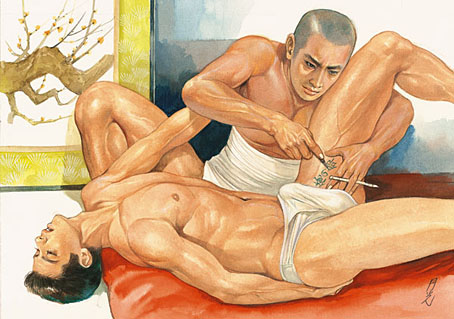
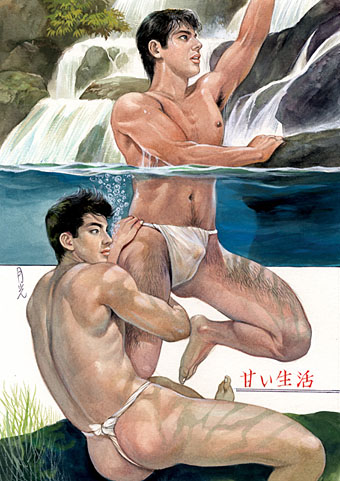
Needless to say, it’s primarily the homoerotics which concern us here. Gekko Hayashi is the name under which Japanese artist Goji Ishihara (1923–1997) produced his gay erotica, and these examples are among a small handful to be found on the web. Far more common is his Ishihara work which included some spectacular grotesqueries for the Illustrated Book of Japanese Monsters (1972) and the Illustrated Book of Hell (1975). Sate your appetite for the monstrous at Pink Tentacle.

gekko2

Hayashi/Ishihara’s work may be scarce but you can read about both his personas thanks to ComiPress, who posted an overview of the artist’s career, and Comics212, who examined the gay side of his output. There is a book collection of Hayashi’s gay art but that appears to be out-of-print. This Japanese page has many samples from the Ishihara work.

The dual career of Hayashi/Ishihara brings to mind another artist equally adept at commercial illustration and gay art, Oliver Frey. As “Zack”, Frey gained an enthusiastic audience in UK gay mags while he was also popular with quite a different audience for his illustrations in computer game magazines throughout the 1980s. He was also no slouch at painting monsters as I recall. A collection of Zack comic strips, Bike Boy, is published this month by Bruno Gmünder.

Continue reading “Gekko Hayashi: homoerotics and monsters”

Weekend links 26

library.jpg

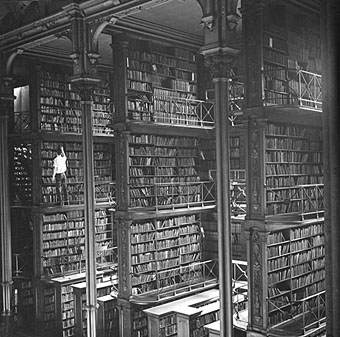
The interior of the Public Library of Cincinnati and Hamilton County “Old Main” Building, 1874. Reblogged over the past few days on numerous Tumblr postings, none of whom had bothered to find out any details about the picture. I’m with Silent Porn Star on the contextless reblogging issue.

Keith Richards et Mick Jagger à Londres, TV interviews with the Glimmer Twins from 1968 with some remarkable footage in the second half of Jagger filming the penultimate shot of Performance. That French video site requires further exploration. Also there is a short film from 1961 with Jacques Lasry demonstrating the Cristal Baschet. Related: Jacques Doyen & Jacques Lasry play their Cristals while Arlette Thomas and others read French poetry. I wrote something about the mystery of the Cristal two years ago this week.

• Two great album cover blogs from Jive Time Records: Project Thirty-Three is “a shrine to circles, dots, squares, rectangles and triangles, and the designers that make them come to life on album covers” while Groove Is In The Art “celebrates the era when psychedelic graphics and pop art met the mainstream”.

• At A Journey Round My Skull: Night Hallucinations: illustrations by Jaroslav Šerých for Tales of the Uncanny (Prague, 1976); Snark, Strangeness and Charm, Mahendra Singh’s illustrations for Lewis Carroll and others.

chaves.jpg

Laurence Chaves illustrates De Quincey’s Confessions of an English Opium-Eater at Golden Age Comic Book Stories.

Austin Osman Spare: Fallen Visionary at the Cuming Museum, Southwark, London in September, “will be the largest showcase of [Spare’s] work in a public museum since his death in 1956.” Jerusalem Press are publishing an expensive monograph to accompany the exhibition.

Freeing “Pale Fire” From Pale Fire; “the next big Nabokov controversy”. Probably not but the thesis is an interesting one.

Quintessential ‘topiary’ in Gandalf’s Garden: Barney Bubbles, head shops and Op Art graphic design.

• Monster Brains discovered some more paintings by Thomas Häfner.

• Spaceweather’s Northern Lights gallery.

The passion of Krzysztof Penderecki.

• More Bookshelf porn.

White peacocks.

Sussan Deyhim: Daylaman | Desert Equations (for Brion Gysin) (with Richard Horowitz) | An interview at WorldStreams.

Several links this week via Adrian Shaughnessy’s Twitter feed. Thanks!