Cthulhu under glass

bl-exhibition.jpg

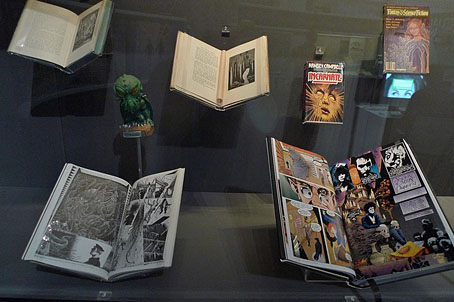
Having had two separate visitors to the British Library’s Out of this World exhibition tell me that some of my work was featured there, it’s been a good to finally discover what was on display. Many thanks to John Keogh for notifying me of his exhibition photo set which includes the above shot of the relevant display case. This is an odd collection for what’s been widely advertised as a science fiction event. Pages from my 1988 adaptation of The Call of Cthulhu are in there along with other fantasy and horror titles including Neil Gaiman’s Sandman, Incarnate by Ramsey Campbell, an edition of Fantasy & Science Fiction with Robert Holdstock’s Mythago Wood on the cover, and a Sidney Sime illustration for Lord Dunsany’s Gods of Pergana. Cthulhu originates out of this world, of course, and that phrase is general enough to encompass other genres.

coulthart-cthulhu.jpg

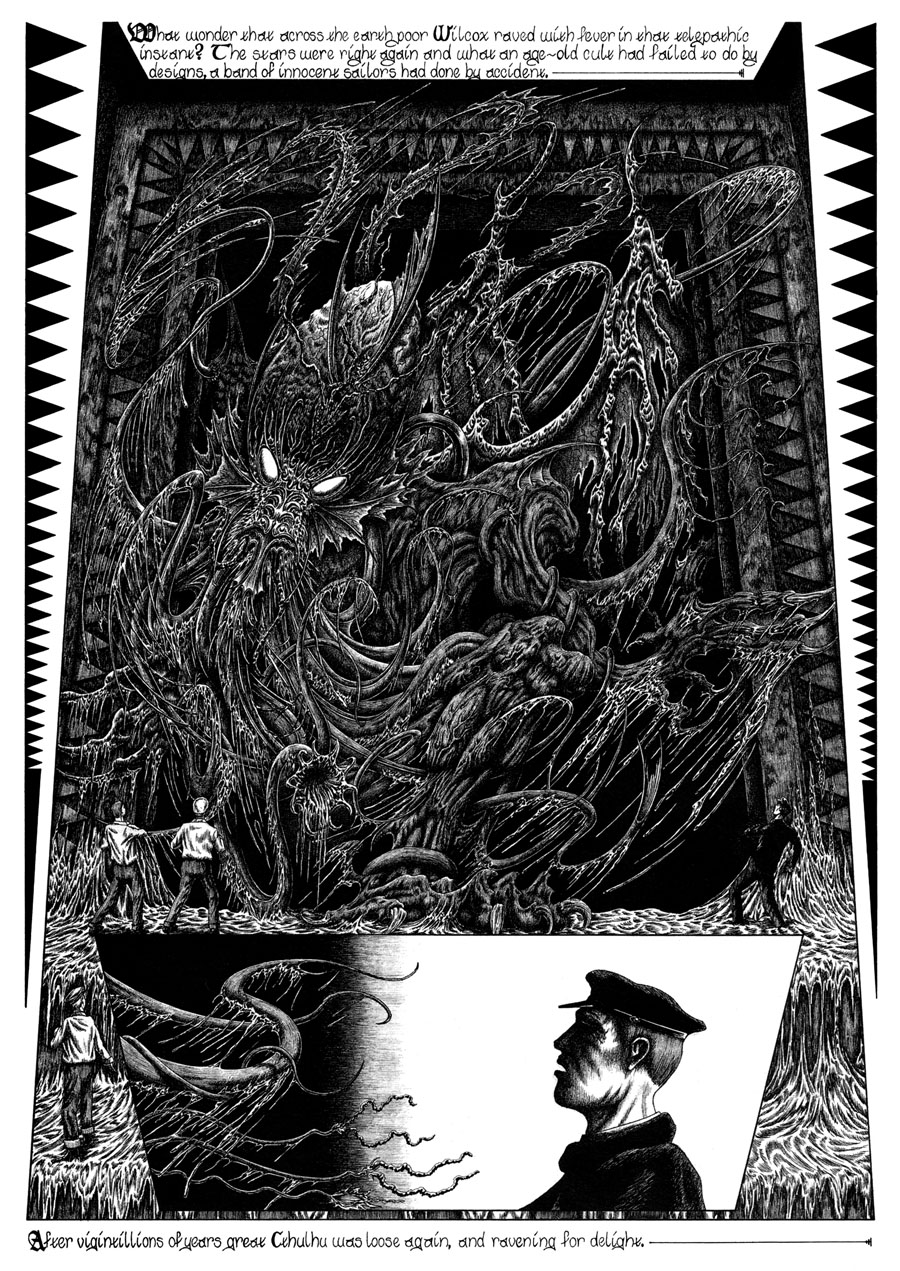
This page from the climax of Lovecraft’s story was the first drawing I made of the living Cthulhu, all earlier representations following Lovecraft’s scheme of the creature manifesting throughout history in different human artworks and religious icons. Since most of those representations are highly stylised I wanted to make the awful reality seem a lot more visceral and even incoherent, hence the mass of flailing tentacles and ropes of slime. This is also the only full view you receive, everything else is fragmentary and allusive so there’s space for the reader’s imagination. I think the book in the library display is the Lovecraft anthology The Starry Wisdom but The Call of Cthulhu is also present in my Haunter of the Dark collection which includes a couple more portraits of “the green, sticky spawn of the stars”.

Out of this World is a free exhibition which will run to September 25th, 2011.

Elsewhere on { feuilleton }
The Lovecraft archive

Weekend links 63

solaris.jpg

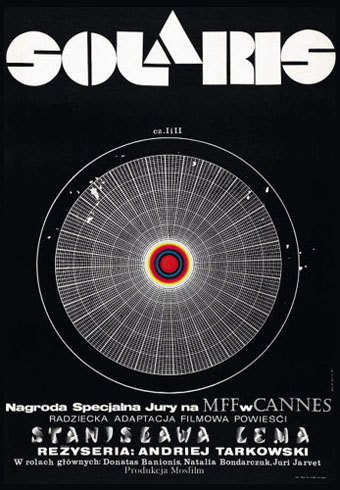
Polish poster by Andrzej Bertrandt for Andrei Tarkovsky’s 1972 film of Solaris.

• Stanisław Lem’s Solaris receives its first ever direct English translation by Bill Johnston (only on Audible for the moment), all previous editions having been sourced from a poor French translation. An all-too-common state of affairs for non-English fiction where bad or bowdlerised translations persist for years.

• Now that Minnesota politician Michelle Bachmann is running for US president it’s a good time to examine her views when (theoretically) her actions could one day impact on us all. The Daily Beast gathered together some of her worst pronouncements, including the following about gay people: “It’s a very sad life. It’s part of Satan, I think, to say that this is gay.” Her husband describes his attempts to counsel (ie: cure) gay teenagers with the words “Barbarians need to be educated.” It’s no surprise that both these people find confirmation of their views in the usual narrow interpretation of Christian doctrine. Not all American Christians are this ignorant or offensive, of course. The Heartland Proclamation calls for “an end to all religious and civil discrimination against any person based on sexual orientation and gender identity and expression”.

Journalist Andrew Sullivan in 2003 proposed a label for people like Bachmann: “I have a new term for those on the fringes of the religious right who have used the Gospels to perpetuate their own aspirations for power, control and oppression: Christianists. They are as anathema to true Christians as the Islamists are to true Islam.” It’s a term that ought to have more widespread use.
solaris-czech.jpg

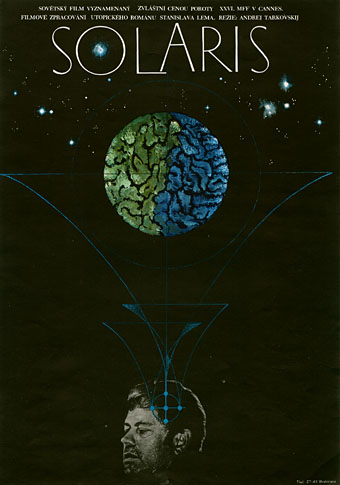
Czech poster for Solaris. No designer credited.

• Probing the secrets of psilocybin: “Scientists at the Johns Hopkins University School of Medicine have zeroed in on the dose levels of the ‘sacred mushroom’ chemical capable of yielding positive, life-changing experiences, while minimizing the chance of transient negative reactions in screened volunteers under supportive, carefully monitored conditions.”

• Rick Poynor relates a visit to the Frederic Marès Museum, Barcelona, home to the 50,000 objects Marès collected over his lifetime. Further details of the collection can be found at the museum website.

In her 1969 essay “The Pornographic Imagination,” [Susan] Sontag insisted that Story of O could be correctly defined as “authentic” literature. She compared the ratio of first-rate pornography to trashy books within the genre to “another somewhat shady subgenre with a few first-rate books to its credit, science fiction.” She also maintained that like science fiction, pornography was aimed at “disorientation, at psychic dislocation.”

If so, that aim is far more interesting than what most generic “mainstream” novels set out to do. No one could describe O as predictable or sentimental. Its vision was dark and unrelenting; everything about it was extreme. Sontag also compared sexual obsession (as expressed by Réage) with religious obsession: two sides of the same coin.

Carmela Ciuraru on the story of The Story of O by Pauline Réage.

• “No hay banda! There is no band. It is all an illusion.” David Lynch will be opening a Club Silencio in Paris (Montmartre, of course). Facebook pages here and here.

• Sad to say that Chateau Thombeau is now closed but Thom has begun a more personal journal here.

• Picture galleries of the Vorticists at the Tate here and here. Related: Into the Vortex.

• Illuminated Persian pages from 1604 at BibliOdyssey.

• Tape drawings by Chris Hosmer.

• Miles Davis and co. at the Isle of Wight Festival, 1970: part 1 | part 2 | part 3 | part 4

Joyce in Time

joyce-time.jpg

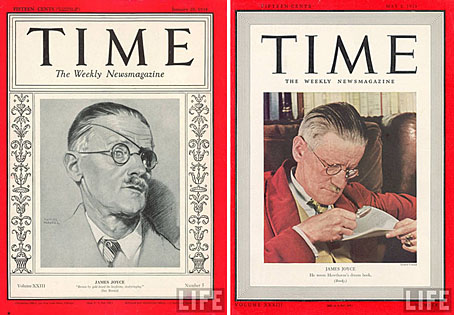
A post for Bloomsday. James Joyce made the cover of Time magazine on two occasions, each instance following the publication of his two greatest works. Ulysses was first published in France in 1922 but had to wait until 1934 to be presented in full to the American public after a trial for alleged obscenity. The edition for January 29, 1934 (left) included a review of the novel:

Is it dirty? To answer the man in the street in his own language, Yes. With the exception of medical books and out & out pornography, the only book of modern times that can compare with it for outspokenness in barnyard and backhouse terms is the late D. H. Lawrence’s Lady Chatterley’s Lover. But Ulysses is far from being “just another dirty book.” Judge Woolsey decided that its purpler passages are “emetic,” rather than “aphrodisiac”; that the net effect of its 768 big pages is “a somewhat tragic and very powerful commentary on the inner lives of men and women.”

I can imagine Joyce being amused (if not exasperated) by some of the ironies in this piece, not least for his novel having a “man in the street” as its central character, and that declaration, “Yes” (from the man in the street’s wife), being the very sign of affirmation upon which the narrative resolves.

Time for May 08, 1939 fares better in its review of Finnegans Wake although they still had to ask on behalf of the prurient reader: “Is the book dirty?” The answer? “Censors will probably never be able to tell.” Of greater interest is the description of the author which follows the review:

In appearance Joyce is slight, frail but impressive. He stands five feet ten or eleven, but looks as if a strong wind might blow him down. His face is thin and fine, its profile especially delicate. He wears his greying, thinning hair brushed back without a part. Joyce reads and writes sprawling in bed or on a couch but he does not like it known. He is very formal in public, in restaurants prefers straight-back chairs in which he sits bolt upright.

He dresses with conservative elegance, never goes out without a slender walking stick, which he manipulates expertly, accenting the delicacy of his beringed hands (he has a passion for rings). His voice is soft, rich and low with a gentle, melancholy brogue. He is rather vain of his tenor, which he likes to join with his son’s bass at small family celebrations.

For a list of Bloomsday events around the world, consult Google.

Weekend links 62

pavlishin.jpg

A plate from Tales of the Amur by Dmitry Nagishkin, a 1975 edition illustrated by Gennady Pavlishin.

• The week in Surrealism: Opera of the surreal gives Dalí an encore: Yo, Dalí, a previously unperformed work by Xavier Benguerel, receives its premier in Madrid. Meanwhile Tate Liverpool’s summer exhibition, René Magritte: The Pleasure Principle, is profiled here. “René Magritte has inspired more book covers than any other visual artist,” says James Hall.

If Rimbaud anticipated the Surrealists by decades, Ashbery is said to have gone beyond them and defied even their rules and logic. Yet though nearly 150 years have intervened since Rimbaud’s first declaration of independence, many readers in our own age, too, still prefer a coherence of imagery, a sameness of tone, a readable sequential message, even, ultimately, what amounts to a prose narrative broken into lines.

Lydia Davis on Rimbaud’s Wise Music.

Umberto Eco’s glimpse into the art of the novel | Return to Wonderland: an essay on Lewis Carroll’s world by Alberto Manguel | Heavy sentences by Joseph Epstein: On How to Write a Sentence and How to Read One, by Stanley Fish.

And then there’s the mystery of what happened to him for those four months in London when we have no trace of him. Rimbaud mentions Scarborough in “Promontory” and talks about “Hotels, the circular façades of the Royal and the Grand in Scarborough or Brooklyn.” Since there’s that missing period in England, people say he must have gone to Scarborough, and have even checked hotel registers for that period, but as far as I know nobody has ever found anything. Someone even checked railway and train schedules in order to pin him to this real place. I seem to remember a French writer admitting that Rimbaud was never in Brooklyn, but kind of wishfully thinking that he might have been. Which is very funny. “Rimbaud in Brooklyn”: there’s a project for someone.

A Refutation of Common Sense, John Ashberry on translating Rimbaud.

Robert Jeffrey posts a video of his nine-year-old self giving Madge a run for her money in 1991. As Boy Culture puts it: “Anyone who feebly clings to the belief that gay can be prayed away should take a look at this and give up already…” Amen.

• The mathematics of Yog-Sothoth: Richard Elwes on Exotic spheres, or why 4-dimensional space is a crazy place.

For I Will Consider My Cat Jeoffry by Christopher Smart (1722–1771).

Lesbian pulp fiction, 1935–1978 and Faber 20th century classics.

As The Crow Flies, a new album from The Advisory Circle.

New World Transparent Specimens by Iori Tomita.

79 versions of Gershon Kingley’s Popcorn.

Minor Man (1981) by The League of Gentlemen.

Polish Book Cover Contest Winners

jones.jpg

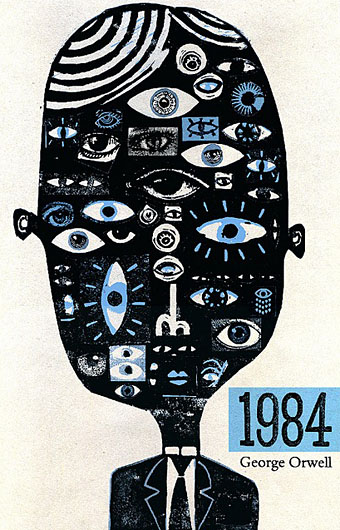
50 Watts (formerly A Journey Around My Skull) followed its 2009 Evil Orchid Bookplate Contest with a contest to design a Polish book cover. The results were announced a few hours ago, the winner being the above design by Ben Jones who happens to be from Manchester. The rest of the entries can be seen in this Flickr set. I’m astonished at the variety on display, and also the success of the majority of these pieces as both cover designs and pastiches of an idiosyncratic style. Nice to see so many people using non-digital techniques, Ben Jones included, and there’s an additional pleasure with this challenge in seeing the titles people have chosen to illustrate. Congrats to Will on an inspiring contest.

Elsewhere on { feuilleton }
The book covers archive

Previously on { feuilleton }
The Evil Orchid Bookplate Contest
Polish posters: Freedom on the Fence
The Robing of The Birds
Franciszek Starowieyski, 1930–2009
Czech film posters
Czech book covers