Robert Hughes, 1938–2012

hughes.jpg

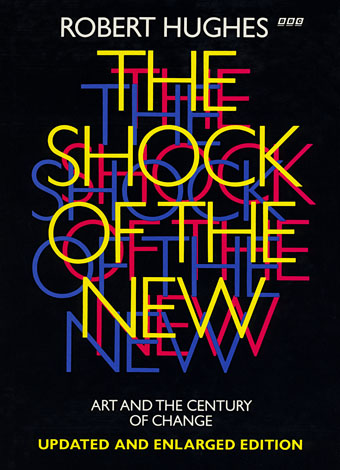
Read this book. Revised edition, 1991, no designer credited.

“Robert Hughes”: those were the first words I wrote in the first post for this blog, six years ago, referencing a piece Hughes had written about Rembrandt for the Guardian that week. Re-reading his polemic Culture of Complaint: The Fraying of America earlier this year I was feeling guilty about not having read more of his books; in slight mitigation I did watch every appearance of his on British television following The Shock of the New, and still have his American Visions series imprisoned on VHS in a box somewhere, along with The Fatal Shore, The New Shock of the New, some one-off things he did about Barcelona and Goya, and Visions of Space, a series of three films about European architects: Albert Speer, Mies van der Rohe, and Antonio Gaudi. Thanks to YouTube many of these exceptional documentaries can be given a fresh viewing; follow the links. Hughes used to write for the Guardian regularly so it’s no surprise they’ve filled several pages with memorials:

Obituary by Michael McNay
“Robert Hughes was Australia’s Dante,” says his friend Peter Carey
Robert Hughes on art
Robert Hughes quotes: 20 of the best

Elsewhere:
NYT obituary by Randy Kennedy
“Robert Hughes: The art critic with a dash of the streetfighter”: Judith Flanders at the Telegraph
At Open Culture: Remembering Robert Hughes, the Art Critic Who Took No Prisoners

A Trip to Mars

mars3.jpg

A floating Martian city from Letters from the Planets (1890) by WS Lach-Szyrma. Illustration by Paul Handy.

In honour of the remarkable landing on Mars of the Curiosity Rover, a handful of random illustrations from the vast stock of imagery generated by the Red Planet over the past century-and-a-half. When it comes to Mars I’m afraid you can keep your terraforming and geodesic domes, I prefer the more fanciful scenarios involving air-boats, cloaks and actual canals. Paul Handy’s illustration above shows what I believe is a Venusian vehicle sailing past a Martian city, Lach-Szyrma’s book concerning a journey through the solar system. I only have small copies of these pictures in a book, so far they don’t seem to have turned up online.

mars2.jpg

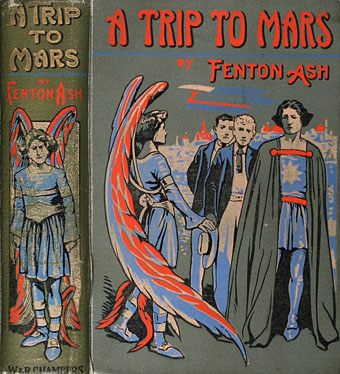
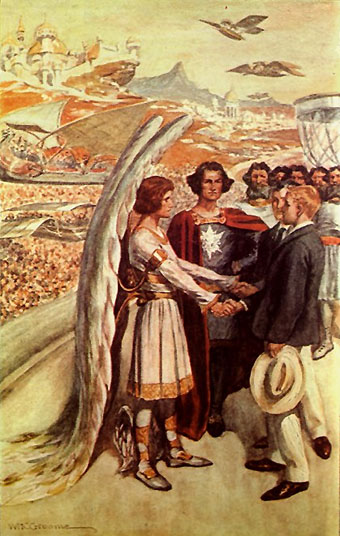
A Trip to Mars (1909) by Fenton Ash. Illustrations by WHC Groome.

Fenton Ash was the nom de plume of British author Francis Henry Atkins. A Trip to Mars concerns another exploratory journey taken this time by a pair of Edwardian schoolboys.

mars1.jpg

Continue reading “A Trip to Mars”

Weekend links 120

sanssoleil.jpg

• More Nabokov: The University Poem by Vladimir Nabokov, translated by Dmitri Nabokov and read by Ralph Fiennes. And Breitensträter – Paolino, a short story from Nabokov’s Russian period that’s only just been translated into English.

• More LSD: “For decades, the U.S. government banned medical studies of the effects of LSD. But for one longtime, elite researcher, the promise of mind-blowing revelations was just too tempting,” says Tim Doody.

• More Marker: The Guarded Intimacy of Sans soleil by Jonathan Rosenbaum, The Revolutionary Cinema of Chris Marker by Patrick Higgins, and Chris Marker’s Faces by Brian Dillon.

• “A private realm, not easily penetrated, from which emerged music that would give rise to so much of the music we know today.” Guy Horton on Kraftwerk’s Kling Klang studio.

• A narrative from the swamps of Borneo: BLDGBLOG on the mephitic enigma of London’s sewers.

• At Coilhouse: The Incredibly True Adventures of Gerda Wegener and Lili Elbe.

• “What some people call idleness is often the best investment,” says Ed Smith.

• Book cover design: Rick Poynor on Pierre Faucheux and Le Livre de Poche.

• Metaphysical psychedelia: Erik Davis on Rick Griffin: Superstar.

Diamanda Galás discusses her 13 favourite albums.

• Rudy Rucker’s Memories of Kurt Gödel.

• The Men of the Folies Bergère

Olympics or gay porn?

Smoketography

The songs of bowhead whales | Another Moon Song (2009) by Espers | One Thousand Birds (2012) by Six Organs of Admittance.

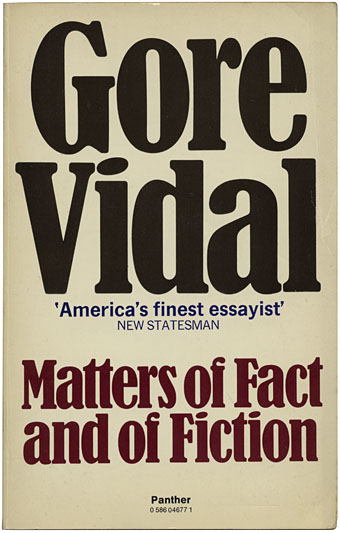
Gore Vidal, 1925–2012

vidal.jpg

You could spend all day picking out choice quotes. So much is still pertinent.

From ‘Women’s Liberation: Feminism and Its Discontents’:

Those who have been treated cruelly will treat others cruelly. This seems to be a fact of our condition. The Patriarchs have every reason to be fearful of woman’s revenge should she achieve equality. He is also faced with the nightmare (for him) of being used as a sexual object or, worse, being ignored (the menacing cloud in the middle distance is presently no larger than a vibrator). He is fighting back on every front.

Take pornography. Though female nudes have been usually acceptable in our Puritan culture, until recently the male nude was unacceptable to the Patriarchs. After all, the male—any male—is a stand-in for God, and God wears a suit at all times, or at least jockey shorts. Now, thanks to randy Lilith, the male can be shown entirely nude but, say the American censors, never with an erection. The holy of holies, the totem of our race, the symbol of the Patriarchs’ victory over the Great Mother, must be respected. Also, as psychologists point out, though women are not as prone to stimulus through looking at pictures as men (is this innate or the result of conditioning?), they are more excited by pictures of the male erect than of the male at ease. And excitement of course is bad for them, gives them ideas, makes them insatiable; even the ancient Greeks, though freer in sexual matters than we, took marriage seriously. As a result, only unmarried girls could watch naked young men play because young girls ought to be able to look over a field which married women had better not know about.

Today we are witnessing the breakup of patterns thousands of years old. The patriarchal response is predictable: if man on top of woman has been the pattern for all our known history, it must be right. This of course was the same argument he made when the institution of slavery was challenged. After all, slavery was quite as old an institution as marriage. With the rejection of the idea of ownership of one person by another at the time of our Civil War, Women’s Lib truly began. If you could not own a black man, you could not own a woman either. So the war began. Needless to say, the forces of reaction are very much in the saddle (in every sense), and women must fight for their equality in a system which wants to keep them in manageable family groups. buying consumer goods. raising future consumers, until the end of time—or the world’s raw resources, which is rather closer at hand.

The New York Review of Books, July 22, 1971

From ‘Pink Triangle and Yellow Star’:

Although our mental therapists and writers for the better journals usually agree that those who prefer same-sex sex are not exactly criminals […] or sinful or, officially, sick in the head, they must be, somehow, evil or inadequate or dangerous. The Roman Empire fell, didn’t it? because of the fags?

Our therapists, journalists, and clergy are seldom very learned. They seem not to realize that most military societies on the rise tend to encourage same-sex activities for reasons that should be obvious to anyone who has not grown up ass-backward, as most Americans have. In the centuries of Rome’s great military and political success, there was no differentiation between same-sexers and other-sexers; there was also a lot of crossing back and forth of the sort that those Americans who do enjoy inhabiting category-gay or category-straight find hard to deal with. Of the first twelve Roman emperors, only one was exclusively heterosexual. Since these twelve men were pretty tough cookies, rigorously trained as warriors, perhaps our sexual categories and stereotypes are—can it really be?—false. It was not until the sixth century of the empire that same-sex sex was proscribed by church and state. By then, of course, the barbarians were within the gates and the glory had fled.

Today, American evangelical Christians are busy trying to impose on the population at large their superstitions about sex and the sexes and the creation of the world. Given enough turbulence in the land, these natural fascists can be counted on to assist some sort of authoritarian—but never, never totalitarian—political movement. Divines from Santa Clara to Falls Church are particularly fearful of what they describe as the gay liberation movement’s attempt to gain “special rights and privileges” when all that same-sexers want is to be included, which they are not by law and custom, within the framework of the Fourteenth Amendment.

The Nation, November 14, 1981

Previously on { feuilleton }
Gore Vidal on American tolerance
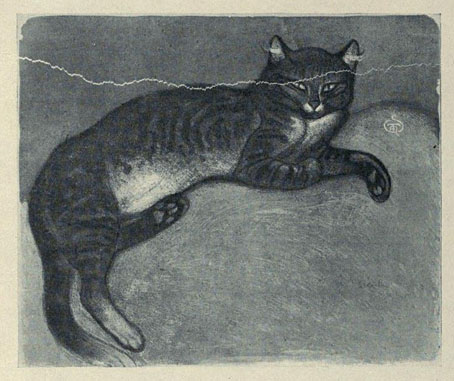
Steinlen’s cats revisited

steinlen01.jpg

Chris Marker’s feline obsession was oft-remarked: cats feature regularly in his films, and in later years he’d often send a picture of a cat to anyone requesting a portrait photo. The Immemory CD-ROM features his cartoon avatar/companion/alter-ego Guillaume, a character who later manifested in three dimensions in Marker’s corner of Second Life.

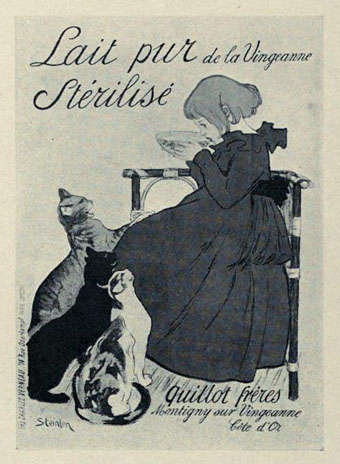
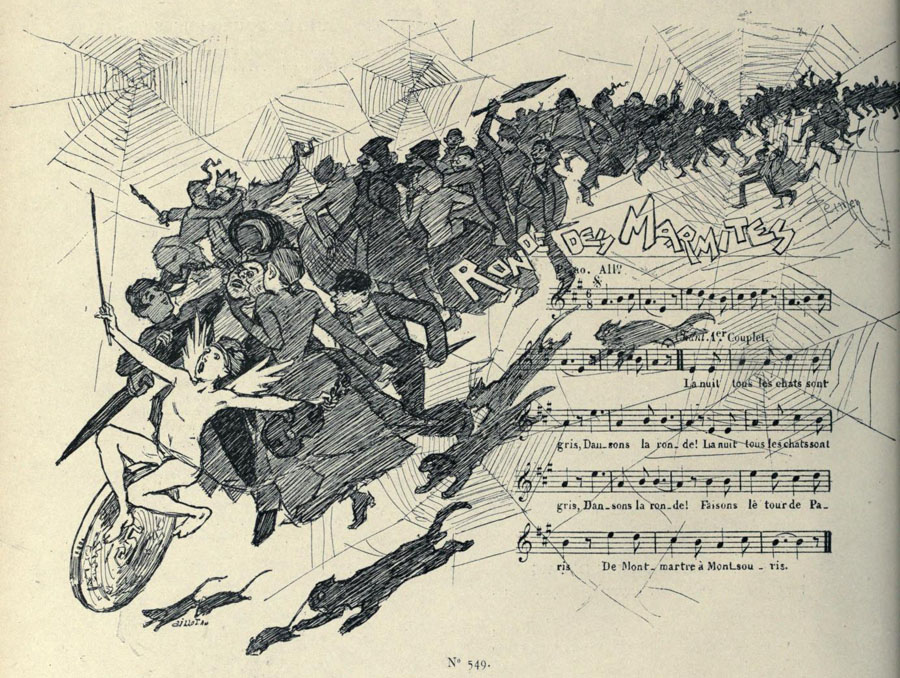
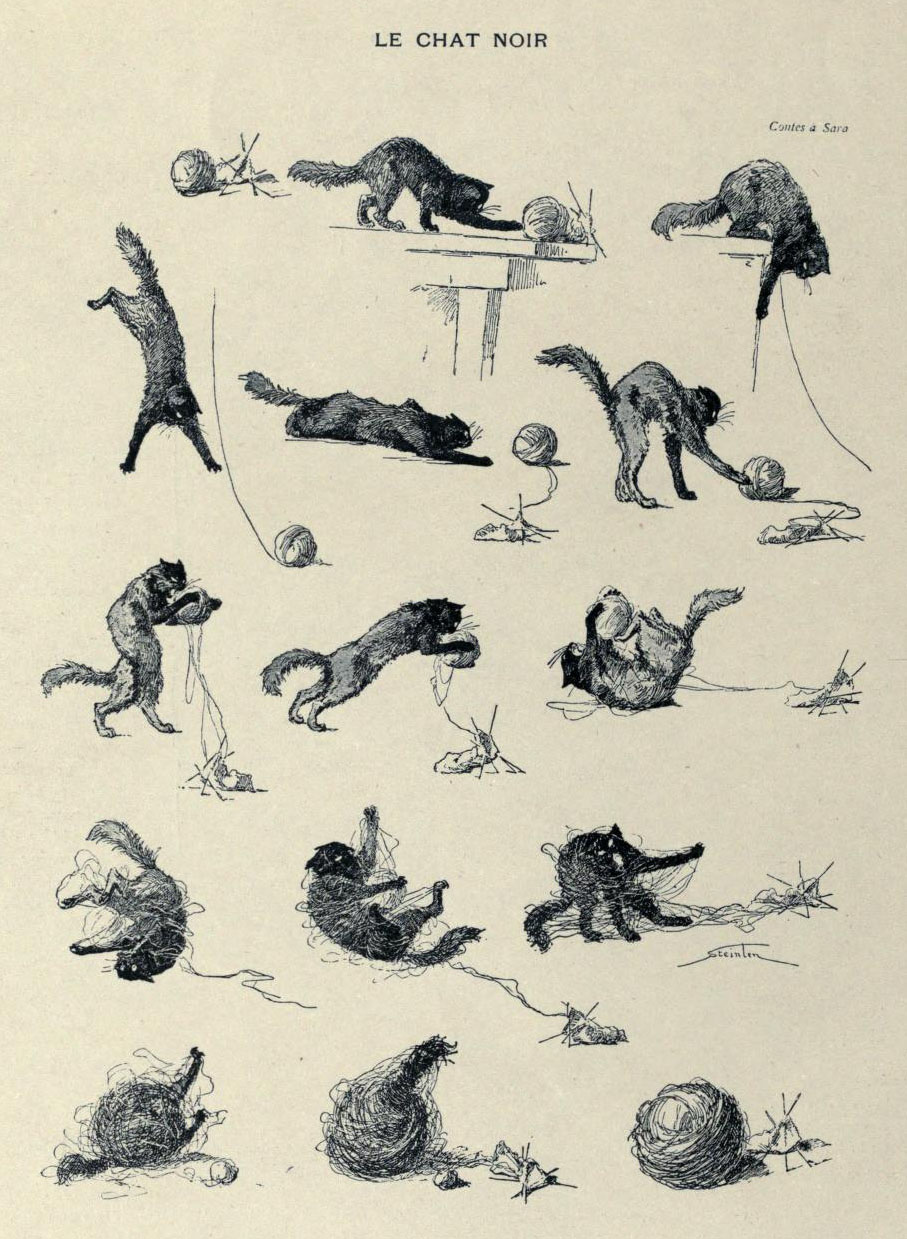
All of which had me thinking about another Parisian cat obsessive, artist Théophile Alexandre Steinlen (1859–1923). I’ve written about Steinlen’s cats before, one of which, his Chat Noir poster of 1896, is now a permanent fixture in the tourist shops of the city. Parisians are probably sick of the sight of that particular animal although I imagine Marker would have liked Steinlen’s other cats which range from fine art studies to cartoony sketches. All the examples here are from L’oeuvre gravé et lithographié de Steinlen, a catalogue of the artist’s print work from 1913. The song Ronde Des Marmites concerns the grey cats of Montmartre. At the end of the post there’s an other nod to Monsieur Marker (and Edward Lear) with a trio of Steinlen owls.

steinlen02.jpg

steinlen03.jpg

steinlen04.jpg

Continue reading “Steinlen’s cats revisited”