Weather vanes

vanes01.jpg

New illustration work has had me searching again through the Internet Archive’s scanned books so there may be a surfeit of these postings for a while. One of the more fascinating areas of that site for my purposes is the Winterthur Museum Library which has a large quantity of manufacturers’ and retailers’ catalogues. This is the kind of ephemera that Walter Benjamin enjoyed, the documents that you give you a more initimate and direct sense of the past than the broader examinations of social historians. (The same applies to magazine and newspaper adverts.)

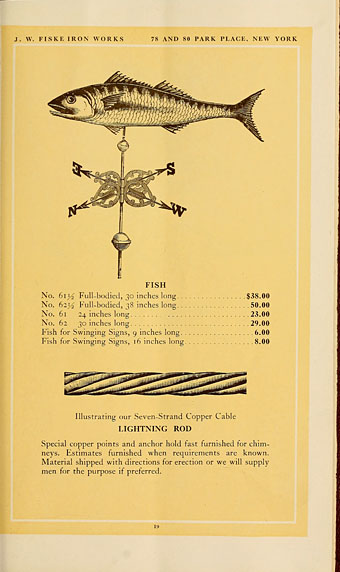
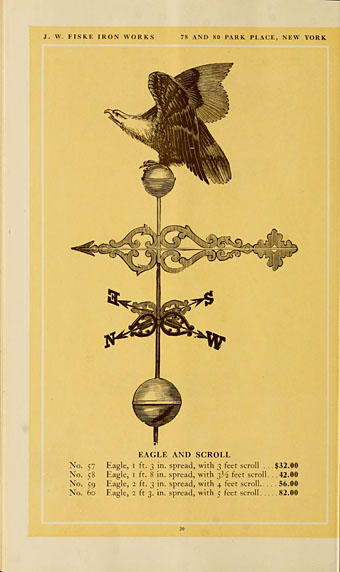
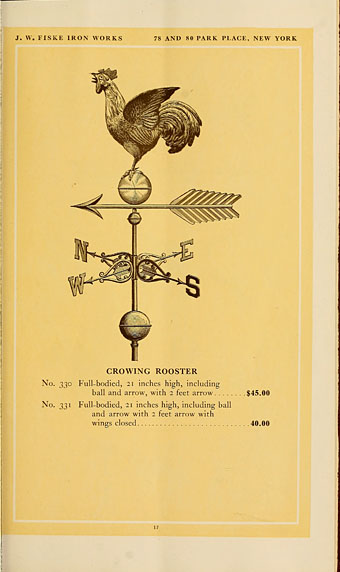
This weather vane catalogue for the Fiske Iron Works, New York, dates from 1921. Have weather vanes in recent times been more popular in America than in Britain? It often feels that way, possibly as a result of the preponderance in the US of new (or newish) houses in remote locations. The variety of designs in the Fiske catalogue implies a demand, in any case, with some surprising offerings such as a fish and an automobile. The rest of the designs can be seen here.

vanes02.jpg

vanes03.jpg

Continue reading “Weather vanes”

Rentz’s Todentanz

rentz01.jpg

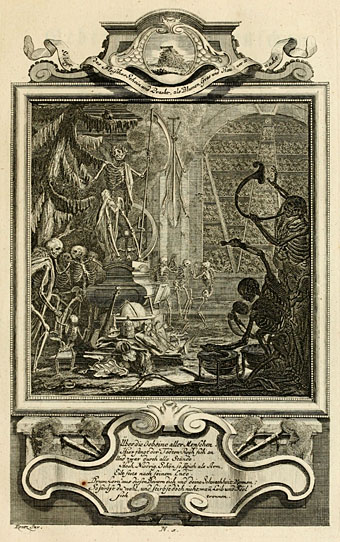
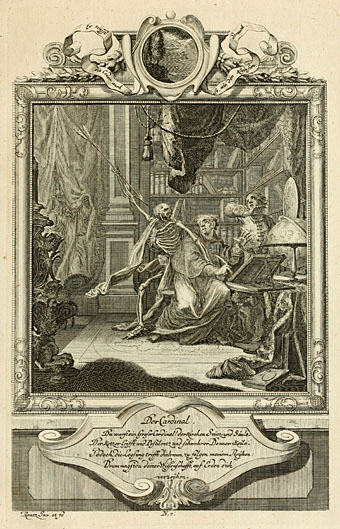
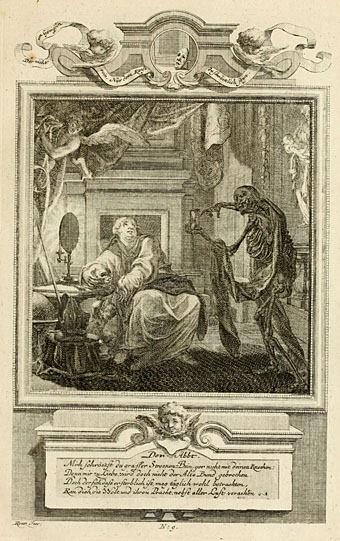
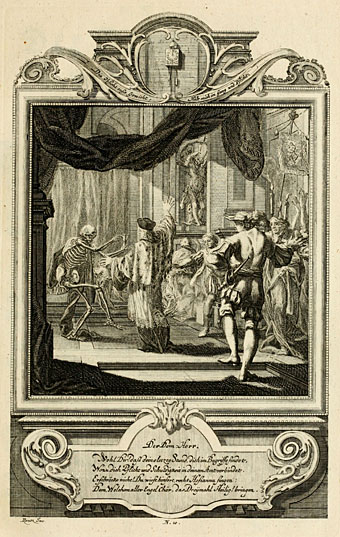
A post for Día de los Muertos. The 16th-century Dance of Death by Hans Holbein the Younger has been copied and adapted many times, often with results that add little to the original. These engravings by Michael Heinrich Rentz (1701–1758) from Der Sogenannte Todentanz (1767) feature some impressive compositions, the subject being the traditional one of Death in skeletal form bearing all and sundry to the grave. They may lack the vigour of Holbein’s series but they compensate with a wealth of fine detail. Browse the rest of the book here or download it here.

rentz02.jpg

rentz03.jpg

rentz04.jpg

Continue reading “Rentz’s Todentanz”

Weekend links 183

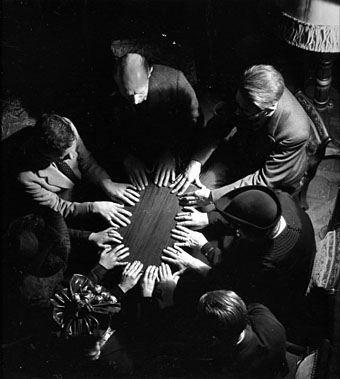
doisneau.jpg

La table qui tourne (1943) by Robert Doisneau.

In [Gödel, Escher, Bach], Hofstadter was calling for an approach to AI concerned less with solving human problems intelligently than with understanding human intelligence—at precisely the moment that such an approach, having borne so little fruit, was being abandoned. His star faded quickly. He would increasingly find himself out of a mainstream that had embraced a new imperative: to make machines perform in any way possible, with little regard for psychological plausibility.

The Man Who Would Teach Machines to Think by James Somers.

Whenever the latest pronouncements about the imminent arrival of artificial intelligence are being trotted out I wonder what Douglas Hofstadter would have to say on the matter. You don’t hear much about Hofstadter despite his having been involved for decades in artificial intelligence research. One reason is that he’s always been concerned with the deep and difficult problems posed by intelligence and consciousness, subjects which don’t make for sensational, Kurzweilian headlines. Hofstadter’s essays on AI (and many other topics) in Metamagical Themas: Questing for the Essence of Mind and Pattern (1985) are essential reading. James Somers’ lengthy profile for The Atlantic is a welcome reappraisal.

• The end of October brings the spooky links: When Edward Gorey illustrated Dracula | Paula Marantz Cohen on Edgar Allan Poe | Yasmeen Khan revisits Werner Herzog’s Nosferatu | Roger Luckhurst on horror from the Gothics to the present day, and Michael Newton on Gothic cinema.

•  Magic Words: The Extraordinary Life of Alan Moore is a biography of the Northampton magus by Lance Parkin. The author talks about his book here, and also here where if you look carefully you can see my Lovecraft book on his shelf.

• A crop of Halloween mixes: Boo, Forever by Jescie | Samhain Seance 2: Hex with a Daemon by The Ephemeral Man | Wizards Tell Lies & The Temple of Doom by The Curiosity Pipe | Radio Belbury’s Programme 11.

The Book of the Lost is an album by Emily Jones & The Rowan Amber Mill presenting music from imaginary British horror films. Release is set for Halloween. More details here.

Laura Allsop on Derek Jarman’s sketchbooks. Jarman’s Black Paintings are currently showing at the Wilkinson Gallery, London.

Magick is Freedom! Existence Is Unhappiness: Barney Bubbles vs. Graham Wood.

• Soho Dives, Soho Divas: Rian Hughes on sketching London’s burlesque artists.

Jenny Diski on the perennial problem of owning too many books.

Equus through the years by Clive Hicks-Jenkins.

Virgin Records: 40 Years of Disruptions

• At BibliOdyssey: Chromatic Wood Type

Witches at Pinterest

The Witch (1964) by The Sonics | My Girlfriend Is A Witch (1968) by October Country | You Must Be A Witch (1968) by The Lollipop Shoppe
JK Potter and HP Lovecraft

hm1.jpg

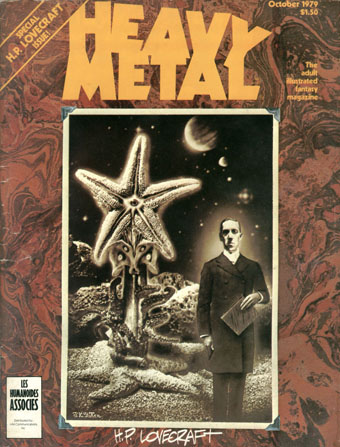
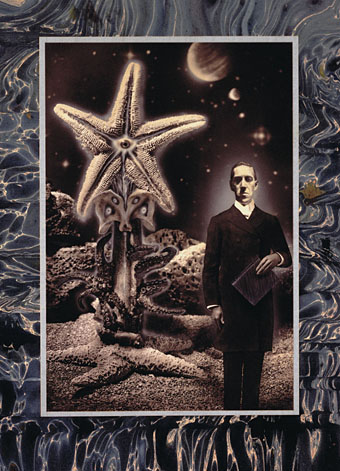
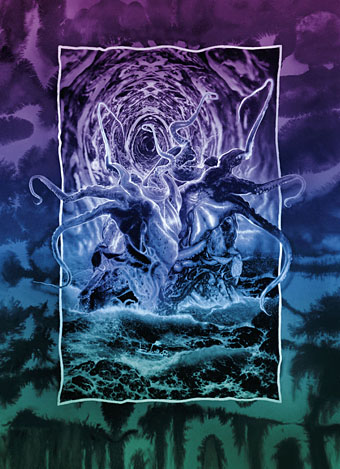
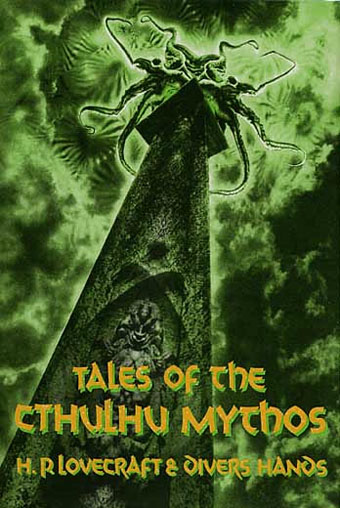
American artist JK Potter is another photo-montagist whose work since the 1970s has been very popular as illustration for books of horror, fantasy and science fiction. Potter’s portrait of HP Lovecraft on the October 1979 issue of Heavy Metal was my first introduction to his work. The original version of that picture can be seen below. Despite Potter’s flair for horror imagery there’s fewer Lovecraft illustrations than you might expect, certainly fewer than I used to hope there might be, although tentacles—real ones—do feature in a number of his other pictures.

While we’re on the subject, HPL continues to dog my footsteps. I recently autographed an enormous block of contributor signing sheets for a new doorstop anthology from Centipede Press. A Mountain Walked is a 636-page collection edited by Lovecraft scholar ST Joshi which will be published in March, 2014. Be warned that like many other Centipede volumes it won’t be cheap! Meanwhile I’m currently working on a new series of illustrations for a completely different anthology of Lovecraftian fiction. That will also be out early next year. It’s going to be a good one but I’ll say more about it at a later date.

potter1.jpg

potter2.jpg

potter3.jpg

Tales of the Cthulhu Mythos (1990).

Elsewhere on { feuilleton }
The Lovecraft archive

Hugo Steiner-Prag’s illustrated Poe

prag05.jpg

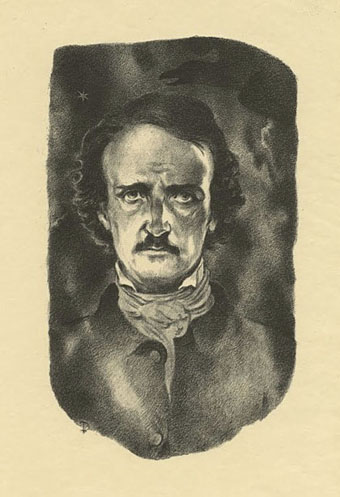
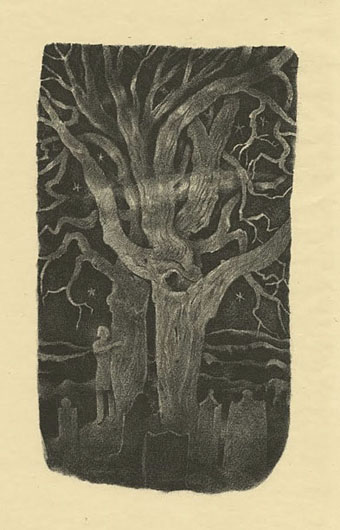
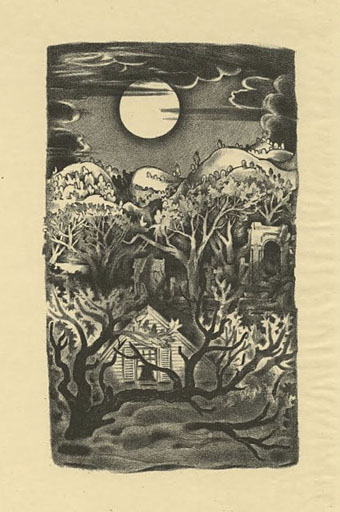
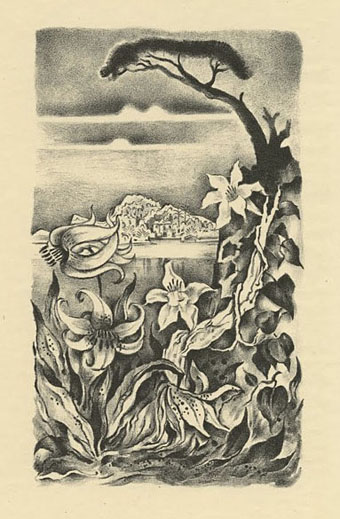
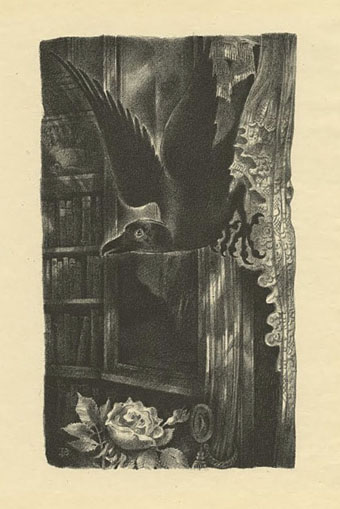
Halloween approaches. Edgar Allan Poe illustrators are legion—some of the better ones appeared here a couple of years ago (see the links below)—but I’d not seen these lithographs by Hugo Steiner-Prag (1880–1945) before. Steiner-Prag was an ideal illustrator for Gustav Meyrink’s The Golem so it’s a pleasure to see him addressing Poe’s poems. All the prints are from a collection at the Google Art Project which includes one of the Golem illustrations plus a set for The Tales of Hoffmann.

prag01.jpg

Spirits of the Dead.

prag02.jpg

The Sleeper.

prag03.jpg

To Zante.

prag04.jpg

The Raven.

Continue reading “Hugo Steiner-Prag’s illustrated Poe”