The Great God Pan

pan_daphnis.jpg

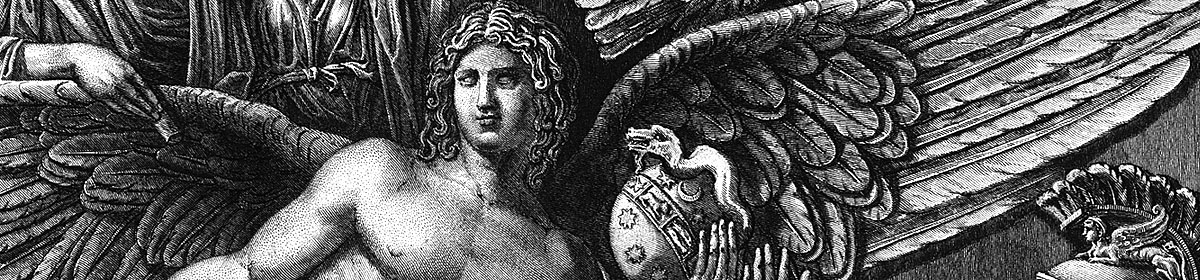
Pan teaching Daphnis to play the panpipes; Roman copy of a Greek original from the 3rd-2nd centuries BCE by Heliodoros.

“The worship of Pan never has died out,” said Mortimer. “Other newer gods have drawn aside his votaries from time to time, but he is the Nature-God to whom all must come back at last. He has been called the Father of all the Gods, but most of his children have been stillborn.”

So says a character in The Music on the Hill, one of the slightly more serious stories from Saki’s The Chronicles of Clovis (1911). Saki’s Pan is a youthful spirit closer to a faun than the goatish creature of legend. But being a gay writer whose tales regularly feature naked young men (surprisingly so, given the time they were written) I’m sure Saki would have appreciated the Roman statue above. There’s nothing chaste about this Pan with his “token erect of thorny thigh” as Aleister Crowley put it in his lascivious 1929 Hymn to Pan, a poem which caused a scandal when read aloud at his funeral some years later. The Roman statue was for a long while an exhibit in the restricted collection of the Naples National Archaeological Museum where all the more scurrilous and priapic artefacts unearthed at Pompeii were kept safely away from women, children and the great unwashed. These are now on public display and include the notorious statue of a goat being penetrated by a satyr.

Continue reading “The Great God Pan”

Passage 11

passage11.jpg

Ed Jansen writes to let me know that the latest edition of his web magazine, Passage, is now online. Once again, most of the features listed below are in Dutch but that doesn’t exclude all visitors here. David Britton has been recommending Jonathan Littell’s The Kindly Ones to me so I guess I’ll be reading that soon.

• Sylvia Plath, a biography.
• Ingrid Jonker, poet from South-Africa, essay on her life and work.
• Jack Kerouac & William Burroughs, a review of And The Hippos Were Boiled In Their Tanks.
• William Burroughs in Texas, a review of Rob Johnson’s, The Lost Years of William S. Burroughs.
• Aleister Crowley, an article about Crowley’s possible involvement with the Secret Service.
• Rudolf Hess, double agent? A view on his flight to Britain.
• Jonathan Littell, an in-depth review of his work The Kindly Ones. War as hallucination.
• Enrique Marty & Maurizio Cattelan, a review of the work from two conceptual artists.

Previously on { feuilleton }
Passage 10

The art of Motohiko Odani

odani.jpg

Erectro (clara) (2004).

From Alice in Wonderland to something in a similar, if freakier, vein. Unlike many contemporary artists, Odani doesn’t do the same thing over and over, there’s a very varied selection of work at the Yamamoto Gendai gallery. Many of the other artists there are also worth a look, the Peter Max-like pictures by Yayoi Deki many even be called (yes, that word again…) psychedelic.

Naked furniture

blazquez.jpg

Taking a break from the psychedelic overload today with a return to (what else?) black and white photographs of naked men. The subjects this time are from Mobilario Humano, fanciful suggestions for furniture designs by David Blázquez which use the photographer himself as the subject, collaged into a series of pliable clones. Allen Jones produced similar work with female figures in the 1960s—and Stanley Kubrick borrowed Jones’ idea for A Clockwork Orange—but this is the first time I’ve seen male figures used this way.

Thanks to Carmine for the tip!