The fascinating phallus

nude.jpg

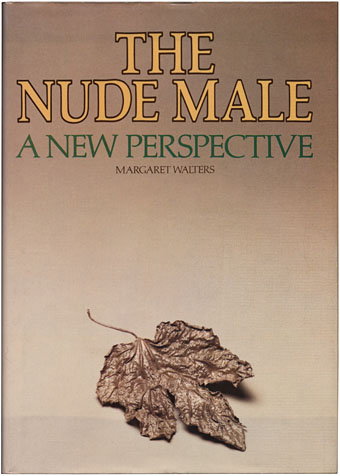
The latest used book purchase was this volume from 1978 and just the kind of unusual art book I enjoy finding. The witty cover design is by Patricia Pillay. Inside, Margaret Walters argues the necessity of her study by pointing out how little the male nude has been seriously studied in 20th century art history despite the form being a far more varied one than the female equivalent. The book is illustrated throughout (no colour plates, unfortunately) and looks like being a fascinating read, “fascinating” being an apt word as Walters notes in her introduction:

For the Romans Fascinus, the god of luck, was a personified phallus. (The modern word “fascinate” derives from the Latin word meaning enchant or charm; that magic power of warding off evil and attracting good fortune from the gods was the phallus.) In ancient Egypt, in classical Greece, all through the Roman world, phallic objects and figures abound. The phallus is carved in monumental stone, painted on domestic objects, worn as a charm (called fascinum) round the neck; herms, stone pillars with human heads and genitals, stood guarding crossroads and doorways.

amulets.jpg

Roman phallic amulets in the Musée Saint-Remi.

Previously on { feuilleton }
The Triumph of the Phallus
Le Phallus phénoménal
Phallic bibelots
Phallic worship
The art of ejaculation

Dalí in Wonderland

dali1.jpg

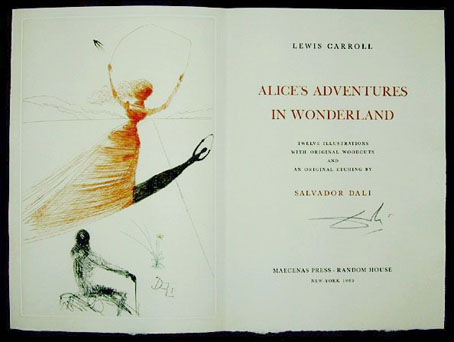
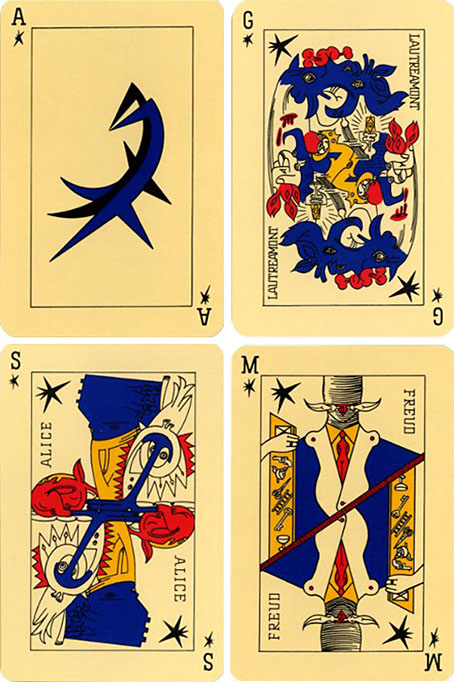
I’d only seen one or two of Salvador Dalí’s illustrations for Alice’s Adventures in Wonderland before but you can see the complete (?) set here. These date from 1969 when Dalí was well past his prime as an artist but they’re still worth a look to see how he tackled each chapter, using the skipping girl motif from earlier paintings as his Alice figure. The attraction of the Alice books for the Surrealists is no surprise; Max Ernst produced a rather enigmatic series of Alice-themed lithographs while André Breton had earlier made Alice the “Siren of Stars” in the set of Surrealist playing cards he designed in the 1940 (below). I’d imagine there are other connections I’ve missed; leave a comment if you know of any. (Thanks to Charity for the tip!)

For more Dalí, here’s something I neglected to link to a while ago, the legendary Dalí meets Disney short, Destino.

stars.jpg

Elsewhere on { feuilleton }
The illustrators archive

Previously on { feuilleton }
Virtual Alice
Psychedelic Wonderland: the 2010 calendar
Charles Robinson’s Alice’s Adventures in Wonderland
Humpty Dumpty variations
Alice in Wonderland by Jonathan Miller
Dalí and Film
The Illustrators of Alice
Surrealist cartomancy

Drowned worlds

rockman1.jpg

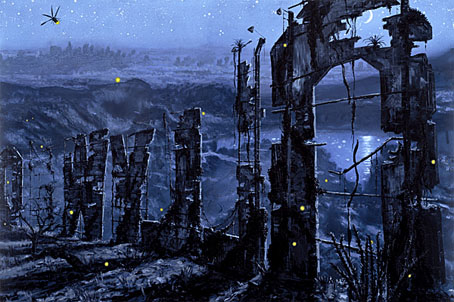
Hollywood at Night (2006).

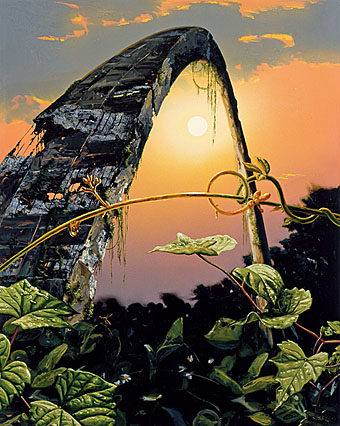
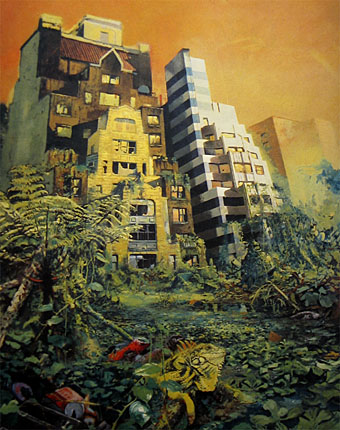
Alexis Rockman‘s paintings of swamped or ruined American landmarks present views which are a novelty in contemporary art galleries whilst being very familiar to science fiction readers. Many of these could well be illustrations for JG Ballard’s 1981 novel, Hello America, which imagined a depopulated United States reclaimed by flora and fauna. Others would suit The Drowned World, of course, and they bear favourable comparison with Dick French’s illustrated edition (below) which was also published in 1981.

rockman2.jpg

Gateway Arch (2005).

Rockman’s hothouse atmospheres remind me of earlier paintings of Brazilian wildlife by another American artist, Martin Johnson Heade (1819–1904), many of whose tropical landscapes only require a distant ruin or two to match Rockman’s work. (Tip via Design Observer.)

french.jpg

The Drowned World by Dick French (1981).

While we’re on the subject, Ballardian has posted the first of three features about my colleagues at Savoy Books, beginning with a Michael Butterworth interview which discusses some of Ballard’s connections with Savoy. One of the subsequent posts should see yours truly discussing the visual dimension of the Savoy world. More about that later.

Previously on { feuilleton }
The coming of the dust
Ballard and the painters