Tom Phillips album covers

phillips00.jpg

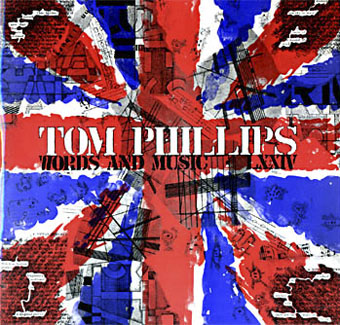
Words and Music (1975) by Tom Phillips.

Two related posts is coincidence, three is a series. Earlier posts from the past couple of weeks looked at album covers created by designers better known for their work in other areas. Tom Phillips is a British artist, writer and composer who I continue to insist is one of our greatest living artists, a figure of singular intelligence, invention and versatility whose lack of grandstanding has never raised his profile to, say, the Hockney level. Phillips’ involvement with the music world, both as composer/librettist, and his oft-cited position as Brian Eno’s art teacher in the 1960s, have led to the creation of a handful of record and CD covers from the mid-70s on. Before we get onto those I’ll note that Phillips has a piece in the latest edition of Eye magazine where he reviews a book of postcards from the Wiener Werkstätte. I happen to have a review in the same issue looking at a republished Kenneth Anger study.

Words and Music above has a January 1975 release date although the cover clearly states “LXXIV” in Phillips’ customary stencil lettering. The pressing was limited to 500 copies and doesn’t seem to have been reissued since which means that copies for sale command excessive prices. Side A comprises recordings of Phillips’ compositions while on the flip the artist/author reads extracts from A Humument, the treated book/experimental novel which is not only his most celebrated work but a project whose influence permeates all of the Phillips oeuvre, including the sleeve art.
phillips01.jpg

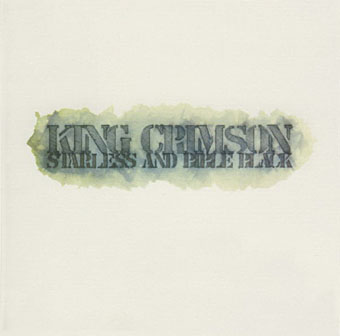
Starless and Bible Black (1974) by King Crimson.
phillips02.jpg

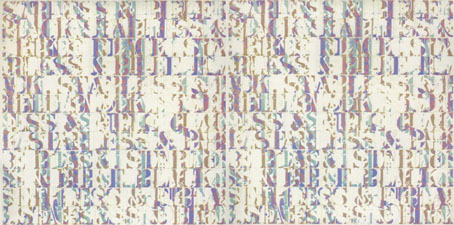
A year before Words and Music, Phillips created the cover art for this King Crimson album, and he’s also credited with the design. The fractured stencil lettering on the gatefold interior resembles similar effects in some of Phillips’ paintings while on the back cover there’s a tiny extract from A Humument bearing the enigmatic phrase “this night wounds time”. I’ve wondered for years how this cover came about: Robert Fripp often selects the art for King Crimson’s covers so was Phillips his choice as artist/designer? Or was it a result of the Fripp and Eno connection? If anyone knows the answer, please leave a comment.
Continue reading “Tom Phillips album covers”

Weekend links 87

scott.jpg

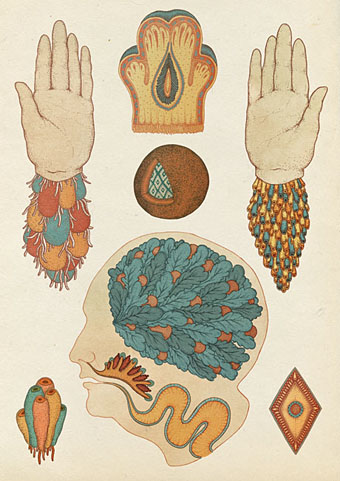
Untitled art by Katie Scott.

“…the very fact that people cannot get published by the big-name publishers in the way that they used to has meant that you’ve got some really interesting and often really beautiful little small publishing houses that are springing up and coming into existence. And the stuff that they’re providing is actually a lot better. I’m thinking of people like Tartarus Press, Strange Attractor and various other commendable small publishers that do a beautiful job and that are producing books that are good to have on your bookshelf.”

Alan Moore discussing books old and new in a lengthy interview at Honest Publishing. In part two he takes to task hardboiled moron Frank Miller and offers his thoughts on the Occupy movement. Elsewhere the Guardian finally paid some attention to the importance of design in the book world. Some of us who do this for a living have been saying for years that if publishers want to see physical books thriving they need to maintain (or improve) the quality of their design and materials. Related: The Truth About Amazon Publishing, Laura Hazard Owen at paidContent examines some the figures behind Amazon’s PR.

• “Tenniel argued for several changes to the characters as conceived by Carroll. The croquet mallets are ostriches in the original drawings, and the hoops are footmen bent over with the tails of their coats hanging down over their bottoms like an animal’s. Tenniel left them out. He told the author that a girl might manage a flamingo, but not an ostrich.” Marina Warner again on John Tenniel, Lewis Carroll and the Alice books.

schoeler.jpg

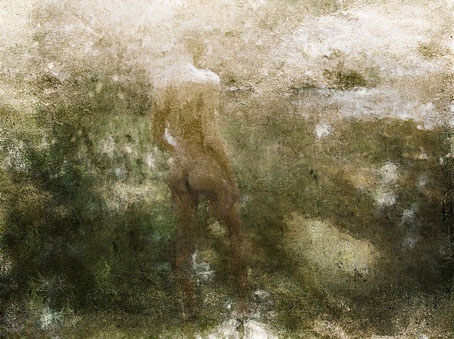
Untitled painting by Christian Schoeler who was interviewed for a second time at East Village Boys.

Shamanism and the City: Psychedelic Spiritual Tourism Comes Home and Scientists finding new uses for hallucinogens and street drugs. Related: LSD – A Documentary Report (1966), “a totally new kind of record album”.

• More books: Interview with a Book Collector. Mark Valentine, author, biographer and editor was also the co-publisher in 1988 of my adaptation of HP Lovecraft’s The Haunter of the Dark.

• The Priapus Chandelier “features six hand-sculpted phalluses cast in translucent resin, which radiate an atmospheric light.”

Stewart Lee on Top Gear, in which the comedian and Dodgem Logic contributor eviscerates the BBC’s pet trolls.

• The Beinecke Rare Book and Manuscript Library put the Voynich Manuscript online.

• The 432-page SteamPunk Magazine collection with my cover art is now on sale.

Hubble, Bubble, Toil & Trouble: The Haxan Cloak Interviewed

• The Sunn O))) chapter of The Electric Drone by Gilles Paté.

Colonel Blimp: The masterpiece Churchill hated

Submergence (2006) by Greg Haines | Reyja (2011) by Ben Frost & Daníel Bjarnason | The Fall (2011) by The Haxan Cloak.

Europe and the Spirit World

schongauer.jpg

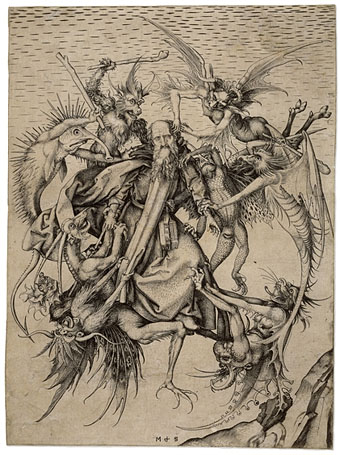
The Temptation of St Anthony (c. 1470) by Martin Schongauer.

From one lot of devils to another, and also another art exhibition with an occult theme. Are curators running out of ideas or becoming more adventurous? The answer probably lies somewhere in between. Europe and the Spirit World, or the Fascination with the Occult, 1750-1950 is currently showing at the Museum of Modern and Contemporary Art of Strasbourg, France, and the art on display ranges from early pieces like Schongauer’s famous engraving to more recent works by artists such as Victor Brauner, one of whose Chimeras is featured. The website is sparse but there is a 450-page catalogue for those interested. The exhibition runs until February 12th, 2012.

A London Street Scene

parry.jpg

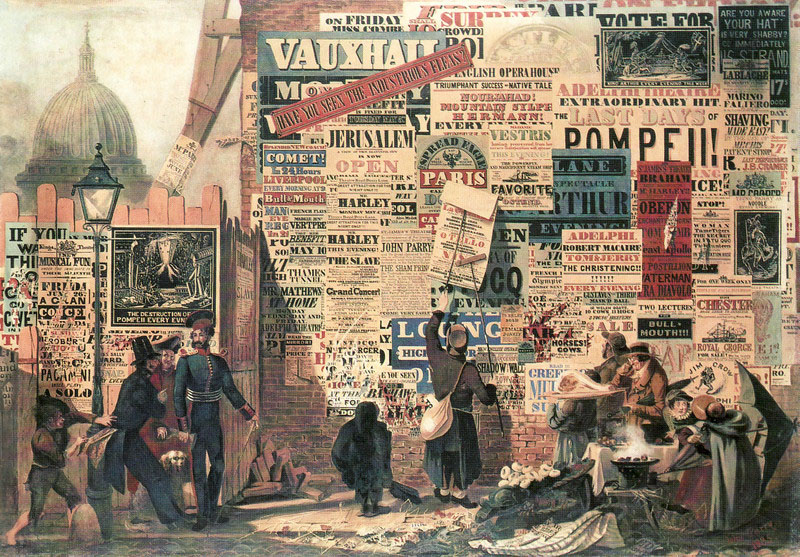
A London Street Scene (1840) by John Parry.

If any painting requires the attentions of the Google Art Project it’s this depiction of a bill poster going about his work by John Orlando Parry (1810–1879). I know this from a cropped view (see here) which shows the care Parry applied to details of typography and the layering of the posters. There’s also some humour with the pickpocket boy on the left, and the artist himself as the subject of one poster in the centre of the picture. Wikipedia has a large version here but it’s too washed-out and blurred to be any use. For a view of the genuine article at work, see this LSE Library photo.

A note about the painting’s date: online sources give 1830 but the copy I have in a book from the V&A says 1840.

Watercolour ruins

roberts1.jpg

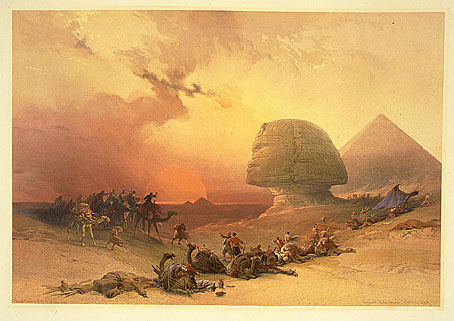
Approach of the simoom—desert of Gizeh.

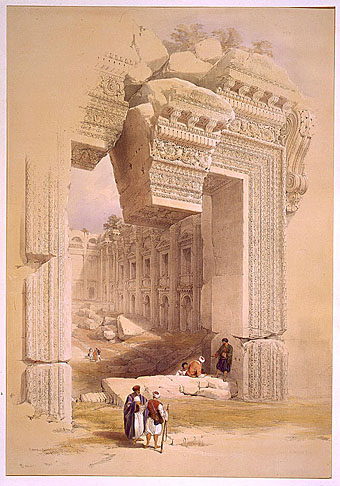
The paintings are by Scottish artist David Roberts (1796–1864) from two collections of prints of the Middle East, The Holy Land, Syria, Idumea, Arabia, Egypt and Nubia (1842–1845) and Egypt and Nubia (1846–1849). These are a small sample from many more at the Library of Congress Prints & Photographs archive, and as representations of places that most of the original viewers would never otherwise see they hold up very well beside photos of the same locations. (See this earlier post for photos of Thebes and Kom Ombo a few decades later.) I always enjoy old book illustrations of the Baalbec temple entrance for the way artists seldom resist doing the Piranesi trick of exaggerating its scale, the better to make its perilous keystone seem all the more precariously poised. The doorway is taller today (having been excavated) but less of a threat.

roberts6.jpg

Baalbec, May 7th, 1839.

roberts2.jpg

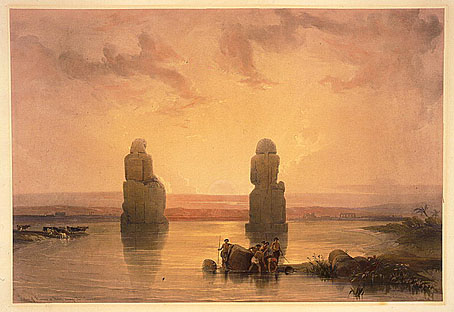
Statues of Memnon at Thebes, during the inundation.

Continue reading “Watercolour ruins”