Weekend links 158

soderberg.jpg

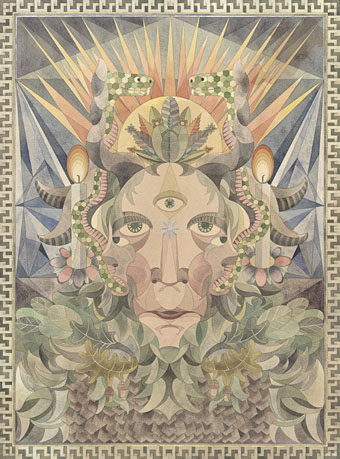
Pan II (2012) by Fredrik Söderberg.

• “Aubade was a surprise success, selling some 5000 copies and going into a second printing and an edition published in America.  Martin was immediately a minor celebrity, being interviewed for articles that couldn’t mention what his book was actually about.” Rediscovering the works of Kenneth Martin.

• “I can’t stand covers which imitate other covers, or which slavishly look like whatever their designated genre is supposed to look like.” Ace cover designer Peter Mendelsund is interviewed.

• At The Outer Church Isablood & Henry of Occult Hand are interviewed about their mixtape.

I’d decided to pay my respects in an unorthodox way, by time-travelling into the period of Thatcher’s pomp, when she occulted the light, alchemised the bad will of the populace and did her best to choke the living daylights out of the awkward, sprawling, socially coddled essence of metropolitan London. Hers was a tyranny of the suburbs operating from a position of privilege at the centre: she might have invested in a Dulwich retirement property, but she couldn’t sleep in it.

Iain Sinclair visits Tilbury on the day of the Thatcher funeral. Related: Iain Sinclair and Jonathan Meades in Conversation, Oxford Brookes University, March 2013.

Ormond Gigli’s best photograph: women in the windows in Manhattan. See it full size here.

Balzac and sex: How the French novelist used masturbation to fuel his writing process.

• At Dangerous Minds: Kenneth Williams and John Lahr discuss Joe Orton in 1978.

• Yet more Bowie: Sukhdev Sandhu reviews Ziggyology by Simon Goddard.

The Spectacular, Wild World of Tenjo Sajiki and its Posters.

• In 1967 Susan Sontag made lists of her likes and dislikes.

Stephen Sparks on fin de siècle author Marcel Schwob.

Day Jobs of the Poets by Grant Snider.

James Turrell’s Ganzfeld Experiment.

The Pan Piper (1960) by Miles Davis & Gil Evans | Panorphelia (1974) by Edgar Froese | Pandora (1984) by Cocteau Twins
Burt Shonberg’s Poe paintings

usher1.jpg

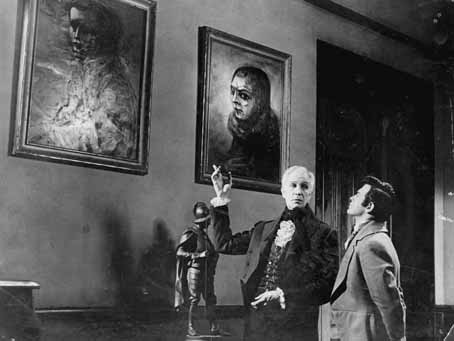
House of Usher (1960): Vincent Price and Mark Damon.

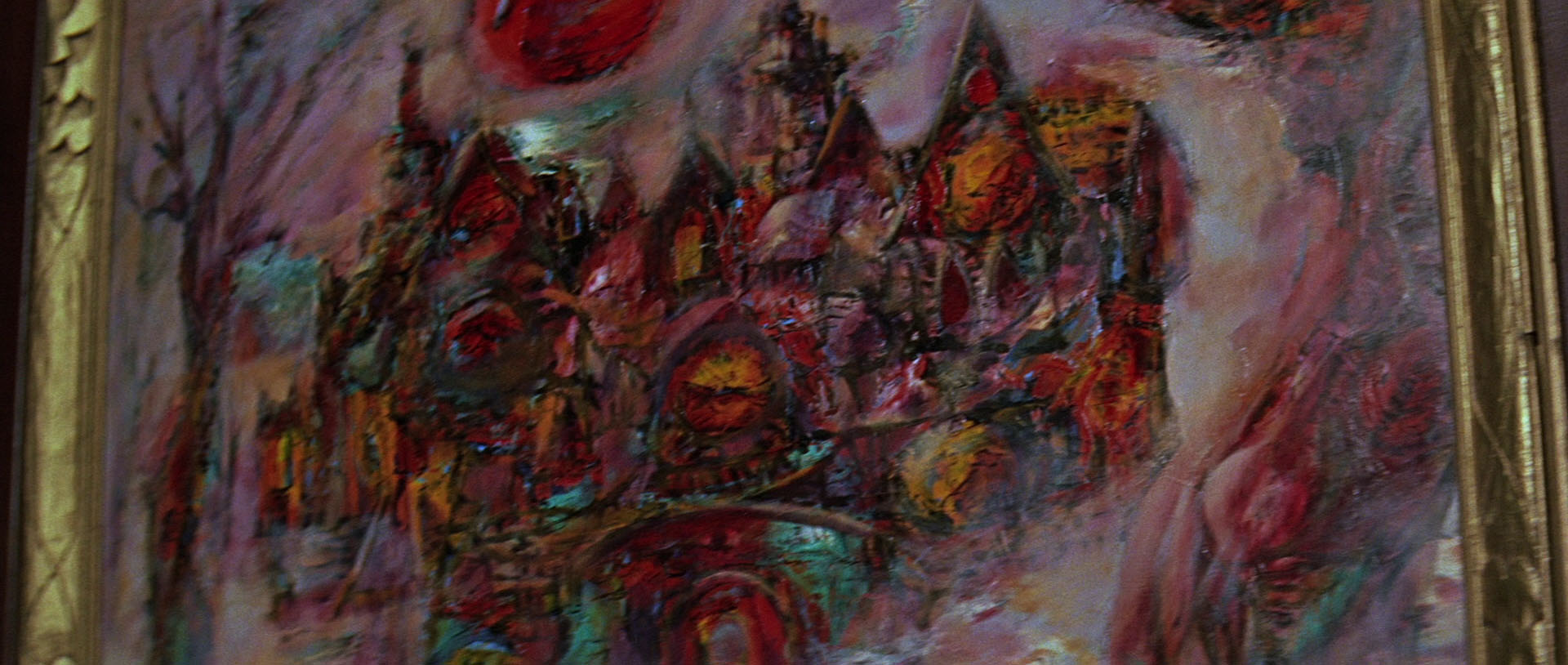
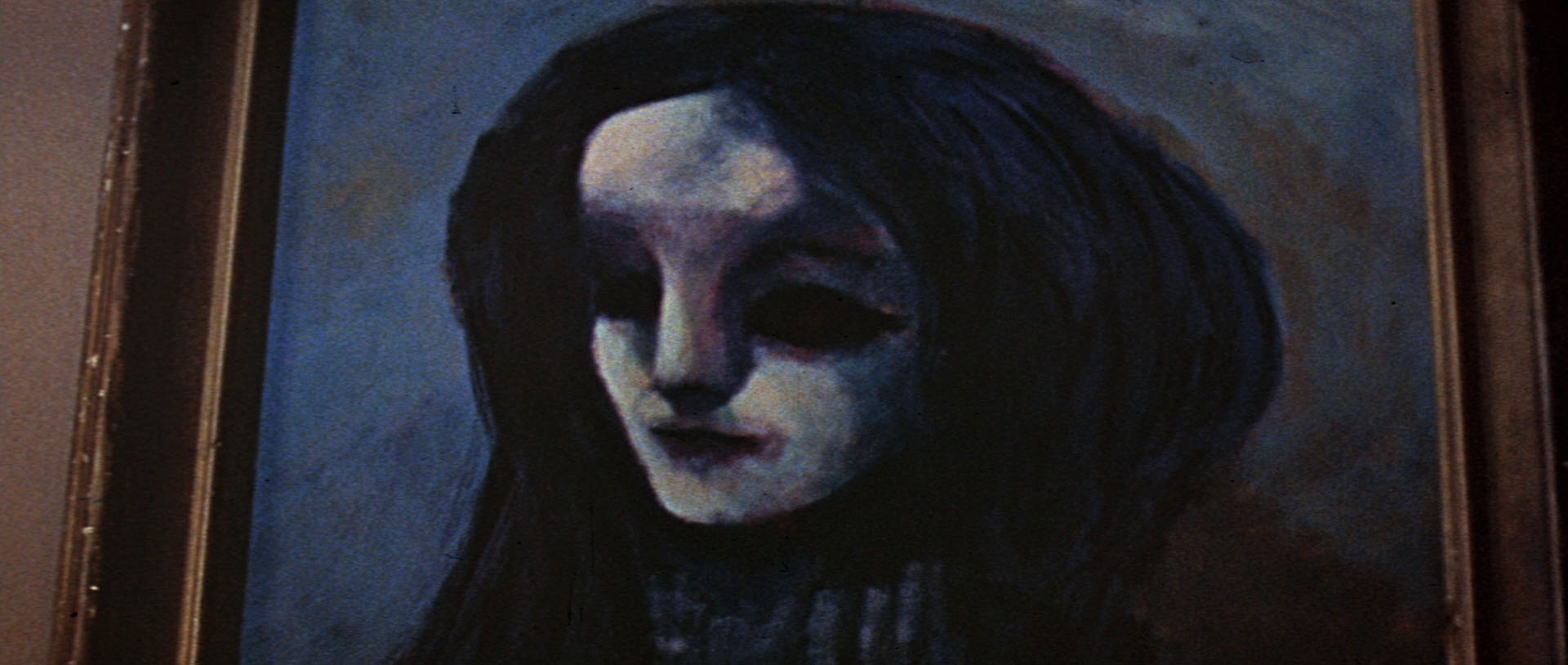
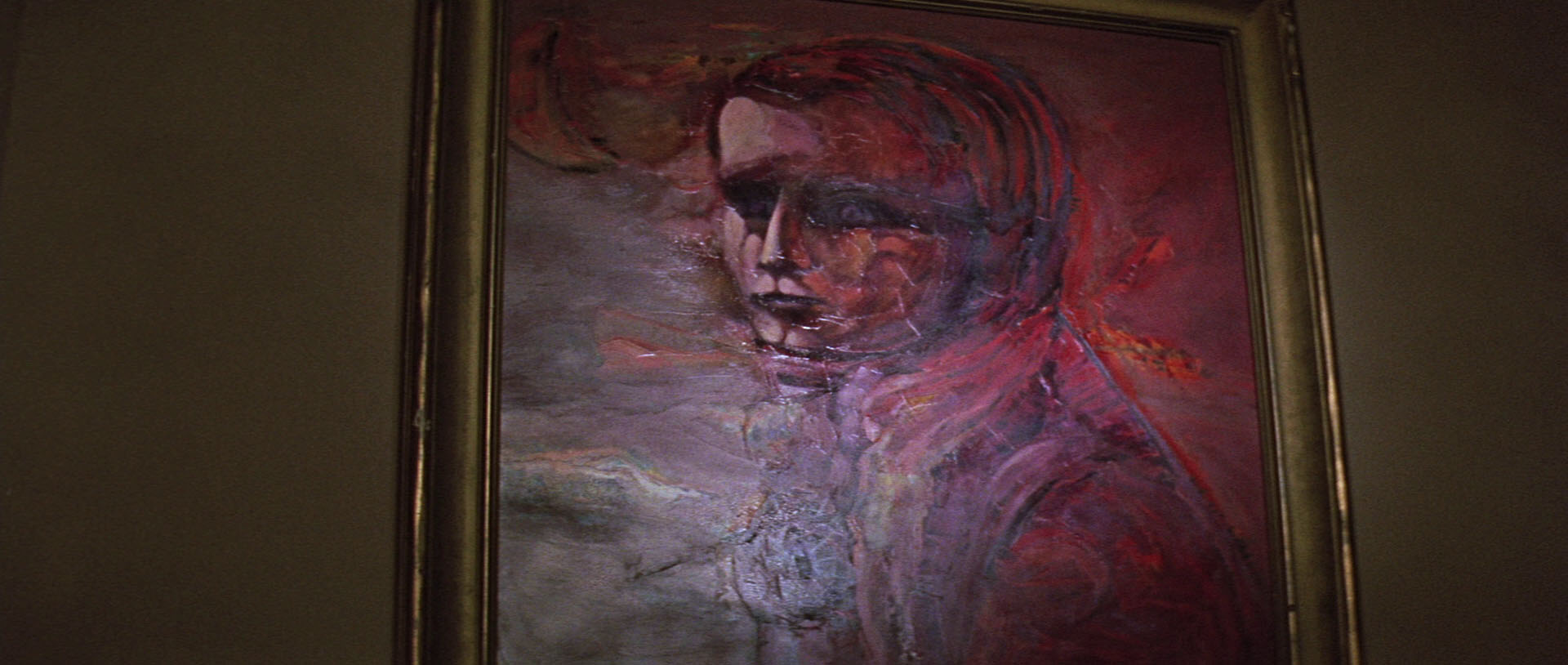
This post ought to have followed the one in January about the sinister portraits glimpsed in Roman Polanski’s Dance of the Vampires. I still don’t know who was responsible for those paintings but the artist who created the equally outré family portraits in Roger Corman’s House of Usher (1960) was credited for his work. Burt Shonberg (1933–1977) was a friend of Corman’s who had to produce the six portraits at speed (the entire film was shot in fifteen days) so the results are sketchier than they might have been in a production with a bigger budget. I always liked the anachronism of these pictures, the way they look very much of their time; the effect is a jarring one that adds a note of much-needed strangeness to Corman’s otherwise sparse interiors.

usher2.jpg

Shonberg was a curious artist, the gallery page on his website shows a progression from Picasso-style early works in the 1950s to his own brand of mystical psychedelia. Some of his paintings from around the time of House of Usher have that stained-glass fragmentation one finds in the work of Leo & Diane Dillon from the same period. Shonberg’s biography says Corman used more paintings in The Premature Burial (1962) but I don’t have a copy of that to hand and haven’t found any examples. There’s also the detail that Shonberg was involved for a while with Marjorie Cameron, herself an artist who appeared as the mysterious “Water Witch” in another AIP production, Curtis Harrington’s Night Tide, a year after House of Usher.

usher3.jpg

usher4.jpg

Continue reading “Burt Shonberg’s Poe paintings”

Vertumnus

arcimboldo1.jpg

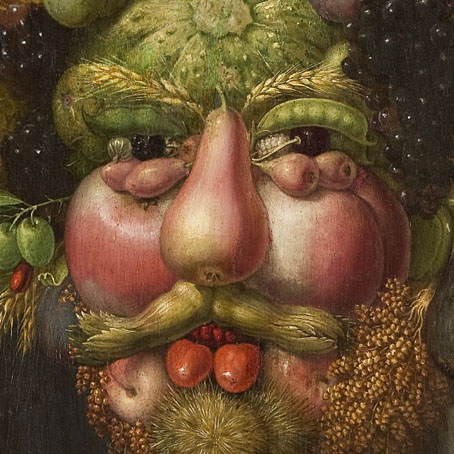
Rudolf II of Habsburg as Vertumnus (detail).

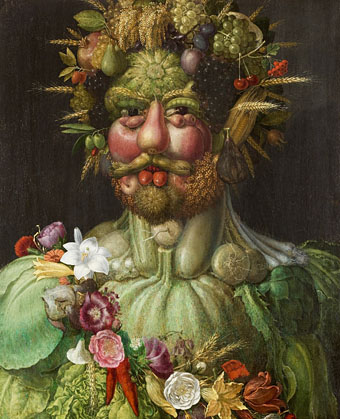
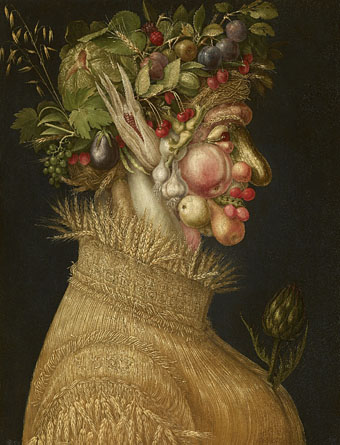
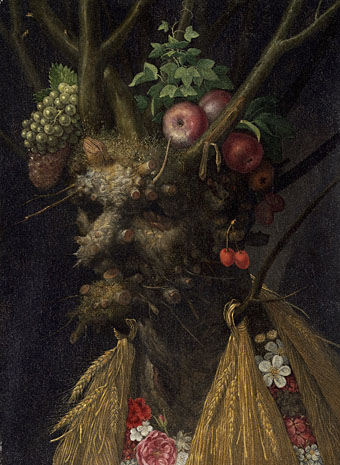
With the spring here starting to show its reluctant face it’s an apt moment to find a handful of Giuseppe Arcimboldo’s paintings at the Google Art Project. Vertumnus is the perennial favourite, Arcimboldo’s portrait of his patron, Rudolf II of Hapsburg, as the Roman god of the seasons. I’ve always thought this portrait flattered Rudolf more than those which faithfully depict his homely features. We’re told the Emperor was very pleased with his fruity likeness.

arcimboldo2.jpg

Rudolf II of Habsburg as Vertumnus (1590).

arcimboldo3.jpg

Summer (1563).

arcimboldo4.jpg

Four Seasons in One Head (c. 1590).

Previously on { feuilleton }
Arcimboldo’s Four Elements

Tarotism and Fergus Hall

gille.jpg

Gille Lettmann pictured in 1973 flourishing some of Fergus Hall’s Tarot cards. At the time Ms Lettmann was helping run partner Rolf-Ulrich Kaiser’s Kosmische Musik, Pilz and Ohr record labels, and thus oversaw the release of many fine albums—and a few dubious ones—before Kaiser’s empire imploded amid much bad feeling. It’s a fascinating saga, detailed at length here. Gille’s photo stood out for me in a week when I’ve been working on some new Tarot designs (about which more later) whilst listening to the latest Deutsche Elektronische Musik compilation from Soul Jazz Records which includes among its tracks a couple of Kosmische and Pilz recordings. Gille’s Tarot cards will have been a result of Kaiser’s most ambitious project, a double-disc concept album entitled Tarot (1973), and credited to Swiss artist Walter Wegmüller whose narration is backed by Ash Ra Tempel and members of Wallenstein. The album came in a lavish metallic silver box with a sheet of cut-out-and-keep Tarot trumps of Wegmüller’s own design, not the Fergus Hall cards Gille is holding. Wegmüller’s Major Arcana was expanded into a deck he calls the Gipsy Tarot. (I have the later CD box which included a complete deck of the Tarot cards.)

hall1.jpg

The Tarot of the Witches by Fergus Hall.

All of which gives me the opportunity to draw attention to Fergus Hall, an idiosyncratic Scottish artist who achieved worldwide prominence in 1973 when his Tarot designs were used on the cards seen in the James Bond film Live and Let Die. A complete deck called The Tarot of the Witches was later published as a spin-off from the film. I like his naive painting style which seemed a surprising choice for a blustering Bond movie; the production people could easily have used the Waite deck or something which suited the film’s vague Voodoo theme.

hall2.jpg

hall3.jpg

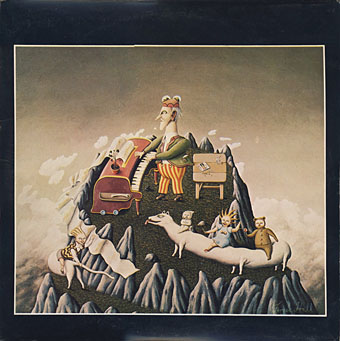
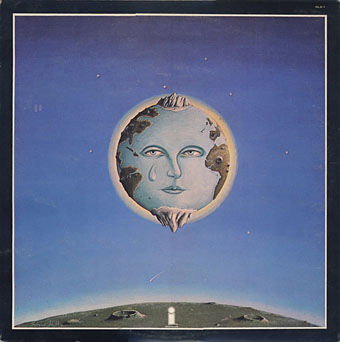
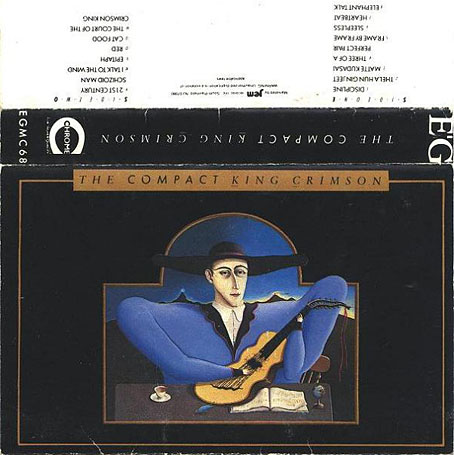
Robert Fripp liked Fergus Hall’s paintings enough to buy some of them. Two of these can be seen on the sleeve of the vinyl-only compilation A Young Person’s Guide to King Crimson (1975), while a third appeared a decade later on a King Crimson tape compilation. Despite this attention the artist’s only other major work is a book for children, Groundsel (1982), which features many more of his strange paintings. The compilations and the children’s book are all long out of print but decks of the Tarot of the Witches are still being published. As for Hall himself, his Wikipedia page says he’s now a Buddhist monk.

kc1.jpg

A Young Person’s Guide to King Crimson (front).

kc2.jpg

A Young Person’s Guide to King Crimson (back).

kc3.jpg

The Compact King Crimson (1986).

Elsewhere on { feuilleton }
The album covers archive

Previously on { feuilleton }
Giger’s Tarot
The Major Arcana by Jak Flash
The art of Pamela Colman Smith, 1878–1951
The Major Arcana

The art of Naomichi Okutsu

okutsu1.jpg

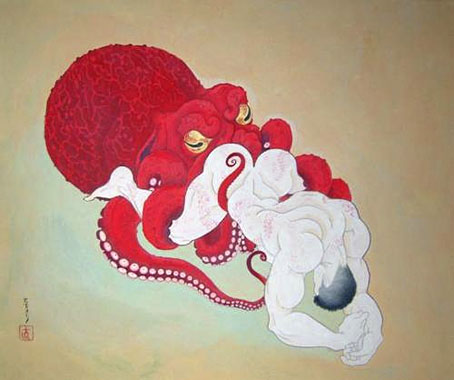
Hatsuyume – one’s first dream of the New Year – (2005).

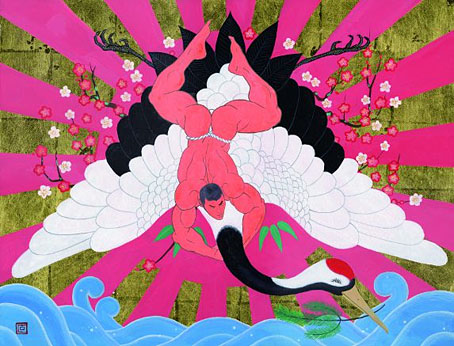
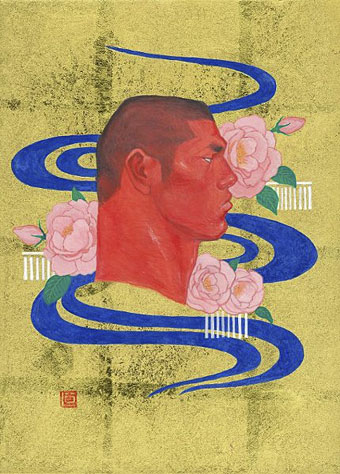
Naomichi Okutsu’s variation on the amorous octopus theme is understandably popular in the Tumblr world, but it often appears uncredited while his other work is far less visible. That seems unfortunate when there’s a lot more to his beautiful paintings than tentacle sex. His work applies homoerotic twists to Japanese iconography, with many of the paintings using gold leaf for the backing. Japanese Gay Art has many more examples, all of which are currently for sale.

okutsu2.jpg

Title unknown.

okutsu3.jpg

Bozu ni hanakanzashi.

Elsewhere on { feuilleton }
The gay artists archive