The art of Franklin Booth, 1874–1948

booth01.jpg

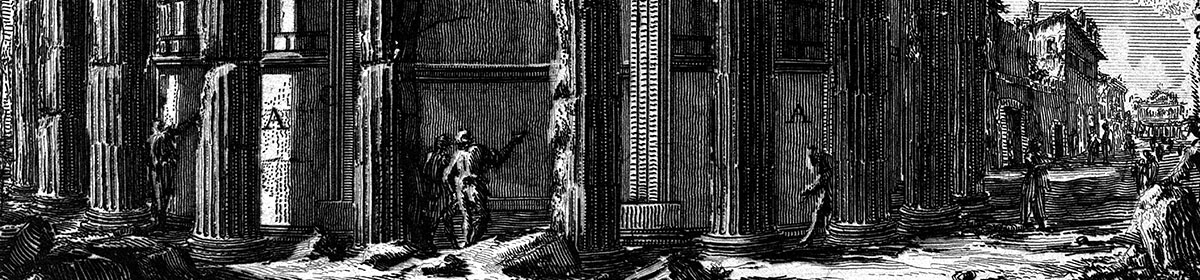
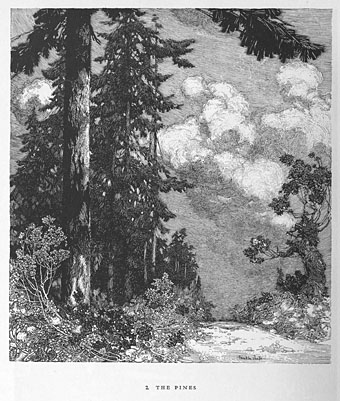
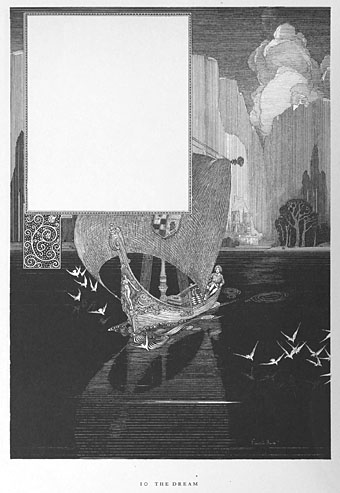
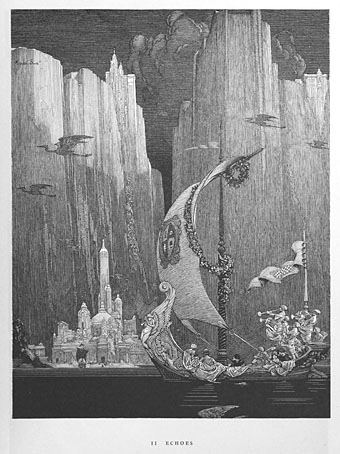
One of the hazards of working for ephemeral media such as magazines is that your work disappears from view once the magazine has left the news-stand, exiled to libraries and other archives. This is a particular problem for illustrators, as I’ve noted in the past with regard to artists such as Virgil Finlay; stories by popular writers will be reprinted but their illustrations tend to remain marooned in the pulp pages where they first appeared. Franklin Booth worked at the opposite end of the scale to Finlay, providing editorial and advertising illustrations for very unpulpy titles such as Harper’s and Scribner’s. He was, and still is, highly-regarded, but his illustrations aren’t as easy to find today as those of his contemporaries who spent more of their time working for book publishers.

booth02.jpg

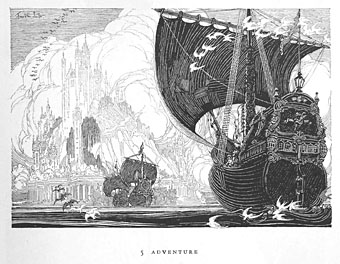
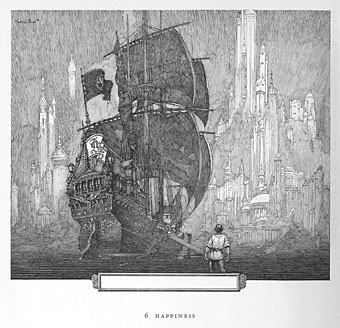
Franklin Booth: Sixty Reproductions from Original Drawings is a collection of the artist’s illustrations published in 1925, the most striking feature of which is the preponderance of fantastic scenes. Some of these are evidently story illustrations but the book lacks any notes about the origins of the drawings so we’re left to guess whether the same goes for the others, or whether these are examples of the artist indulging his imagination. Whatever the answer, Booth had a nice line in fantasy architecture, all soaring towers topped by cupolas and finials, which may explain the Booth influence in some of François Schuiten’s drawings. The building style is reminiscent of the Beaux-Arts confections that proliferated at international expositions in the years before the Deco idiom swept away superfluous decoration, something you also find in Winsor McCay’s Little Nemo in Slumberland where the dream palaces could easily have been built to showcase the latest engineering marvels.

Note: All these images have been processed to remove the sepia tone of the paper.

booth03.jpg

booth04.jpg

booth05.jpg

Continue reading “The art of Franklin Booth, 1874–1948”

20 Sites n Years: the documentary

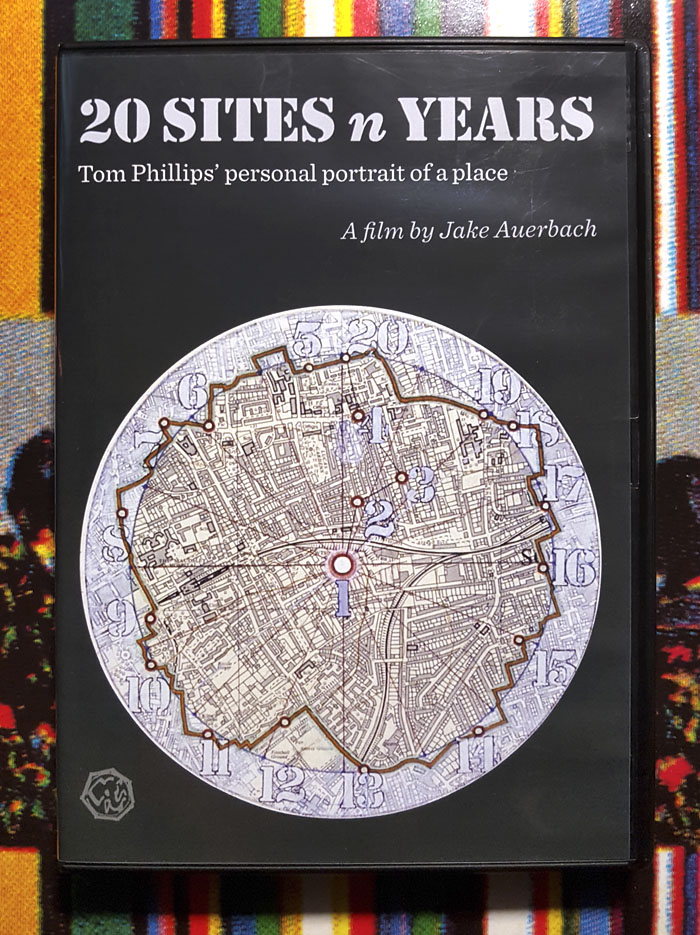
auerbach.jpg

This isn’t the first time I’ve written about Tom Phillips’ indefinite art project but I thought I’d give Jake Auerbach’s documentary some belated promotion after watching it again. The usual form here would be to link to a viewable copy somewhere. There is a copy online, as it happens, but it’s not in any of the obvious places so rather than link to it I’d encourage the interested to invest in one of Auerbach’s DVDs or watch the streaming version.
20_sites.jpg

As before, the project details are as follows:

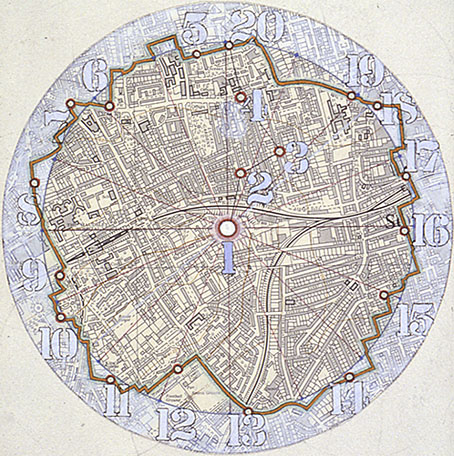
Every year on or around the same day (24th May–2nd June) at the same time of day and from the same position a photograph is taken at each of the twenty locations on this map (above) which is based on a circle of half a mile radius drawn around the place (Site 1: 102 Grove Park SE15) where the project was devised. It is hoped that this process will be carried on into the future and beyond the deviser’s death for as long as the possibility of continuing and the will to undertake the task persist.

The intention is that photographs (35 mm transparencies) be taken at twenty locations each year between May 24 and June 2. The locations are situated on what is (in 1973) the nearest walkable route to a perfect circle a half a mile in radius from the point in the home of Artist 1 (102 Grove Park, London SE5) where the project was devised and where these instructions were written. The circuit is divided into sixteen equal sections in each of which there is a site selected by Artist 1. Four other locations mark the route from the centre to the circumference: these are the former studio of Artist 1, his current home and studio, and the art school where he studied. The project book notes the times of the original photographs of 1973 and these should be adhered to as closely as possible (though all photos need not necessarily be taken on the same day) Artist 1 intends that the pictures should be taken by his family and their descendants, if they are willing, and that the work should thus go on indefinitely: the services of their friends may be enrolled or even from time to time that of professional photographers. Continuity is the most important factor.
auerbach2.jpg

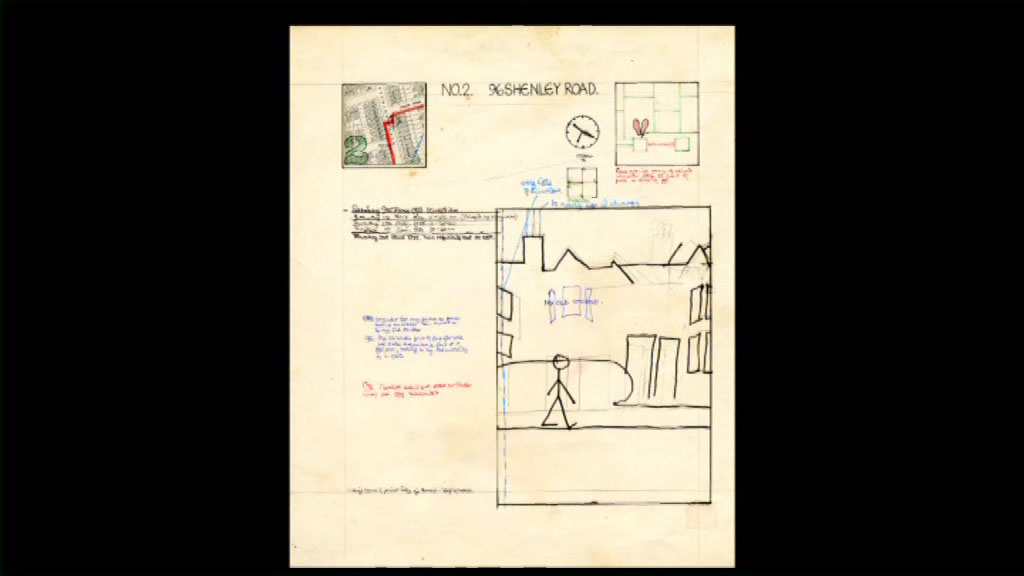
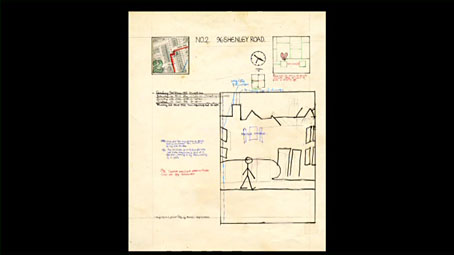
One of the pages from the project manual showing the location of Site 2, the hour of day at which the photo should be taken, where to stand when taking it, and a diagram of the preferred framing.

Auerbach’s 45-minute film begins with a brief description of the piece, after which we follow Phillips in 2012 on his annual excursion around the streets of Camberwell and Peckham in South London. Auerbach juxtaposes the arrival of artist and camera crew at each prescribed location with Phillips’ own description of the changes he’s observed since first commencing the project in 1973. During the narration we get to see many of the photographs, more than the few examples shown in Works and Texts. The film also includes extracts from a couple of earlier documentaries about Phillips, including his appearance on the BBC’s Late Show in 1989 which featured a shorter 20 Sites project report.
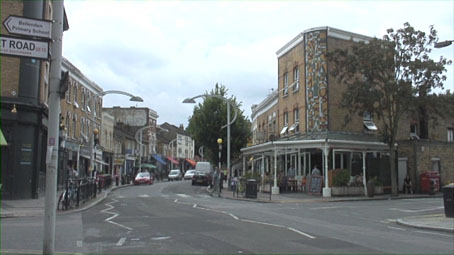
auerbach4.jpg

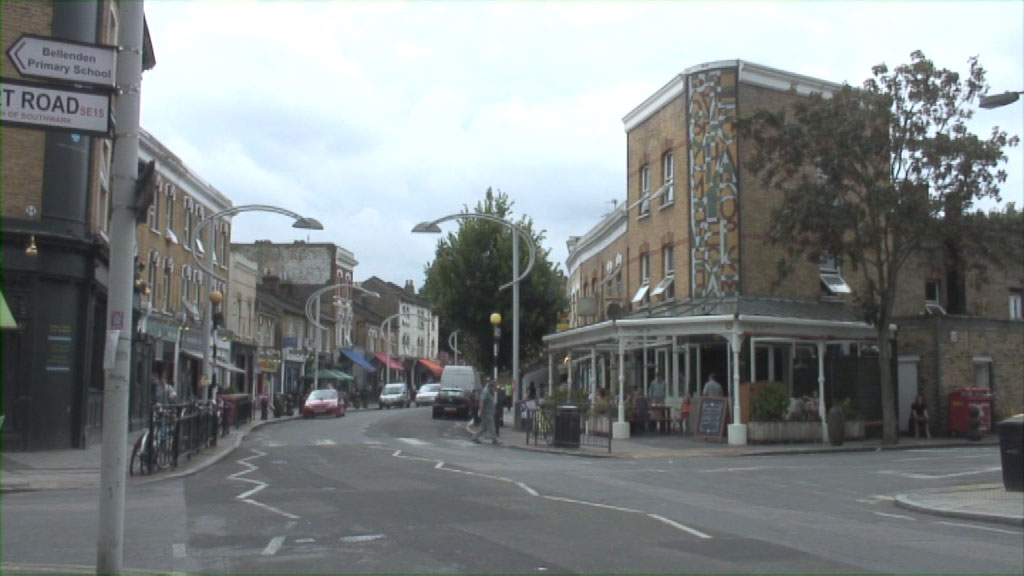
A local street that isn’t part of the project but which does feature street lights and a mural designed by Tom Phillips.

Auerbach’s trailing of the artist shows us aspects of the project that you don’t get in the big Thames & Hudson book or on the Tom Phillips website (where you can see slide-shows of all the views to date), the most prominent being a sense of the space in which each photograph is taken. London south of the river is a vast suburban sprawl that lacks the layered history of the northern quarters of the city. This might seem unpromising material for an art project but Phillips’ photographs remind us that “promise” is a quality dependent on the artist’s point of view, literally in this case with the dogged and very specific attention given to these twenty sites. In place of grand history we have the incremental advance of those changes which often go unnoticed or unremarked in city life: a tree grows, cars (and people) update their styling, a building is repurposed or demolished, street furniture appears then disappears, shops change their appearance and operation, public areas are subject to seemingly arbitrary alterations at the hands of council workers.
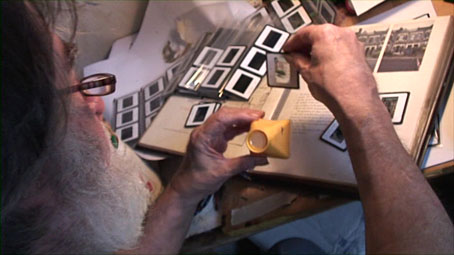
auerbach3.jpg

Auerbach shows us further details that we wouldn’t otherwise see, such as the aerosol marks made on the pavement each year showing where the photographer has to stand in order to take a shot that matches the earlier ones. We also get to see Phillips choosing the best shots after they’ve been processed. One of the impromptu conventions of the project has required people to appear at some of the quieter sites, random strangers (or animals) at Site 2, while Site 3 incorporates friends or relatives of the artist. John L. Walters, the editor of Eye magazine, occupies the latter role on the day that Auerbach is present.
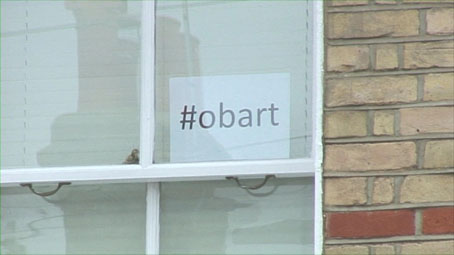
auerbach5.jpg

The project becomes self-aware. “Obart” was the name of a mysterious business or organisation that vanished soon after being chosen as Site 15. The name has since been an informal title for the project as a whole. The hashtag is in the window of one of the houses situated next to the original Obart sign.

Now that “Artist 1” is no longer with us, the project moves into a new phase with “Artist 2” (Phillips’ son, Leo) taking charge. Leo Phillips was already on board in 1989 so the annual excursion must be a familiar routine by now. Next year the project will have been running for 50 years which must make it the longest continually-running art project to date unless there’s a more extended one out there. Michael Heizer’s City recently attained completion after 50 years buts it’s debatable whether a work that was a construction site for most of those years should be considered as operating in the same sense as 20 Sites, a project which was functioning as intended from its first year. Meanwhile, I’ve yet to hear about the existence of an “Artist 3” ready to take up the camera after Leo Phillips, but whoever that individual might be they could conceivably take 20 Sites through to its centenary in 2073. Time will tell.

Previously on { feuilleton }
20 Sites n Years revisited
20 Sites n Years by Tom Phillips
Weekend links 650

phillips.jpg

A detail from Tom Phillips’ cover design for Starless And Bible Black (1974) by King Crimson.

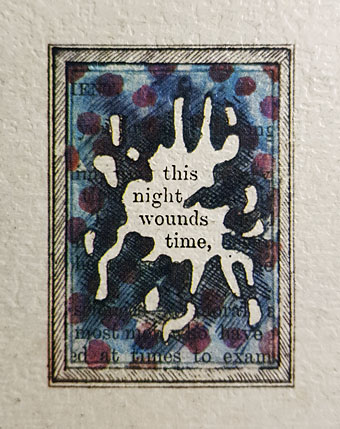
• RIP Tom Phillips. The term “polymath” is often used by monomaths to describe people who are proficient in two areas instead of just one. Tom Phillips was a model polymath, an artist whose work ranged wherever his curiosity took him, from conventionally realist portraiture to abstract painting and computer art, from collage, sculpture and stage design to 20 Sites n Years, a long-term photographic work. When Phillips decided to illustrate Dante’s Inferno he first translated the book himself; the Dante project subsequently evolved into a TV/film production made in collaboration with Peter Greenaway and Raúl Ruiz. As for A Humument, this is the artist’s book by which all others should be judged, a unique reworking of a Victorian novel which now exists in multiple editions and sub-works. Humument extracts became a kind of Phillips signature (you can see one at the top of this post), a series of often cryptic fragments and pronouncements that appeared in prints and paintings while also supplying the libretto for Phillips’ first opera, Irma, one of his many musical compositions. Some years ago I posted a quote by Brian Eno about his former art teacher; those words (from A Year With Swollen Appendices) are worth repeating:

It’s a sign of the awfulness of the English art world that he isn’t better known. Tom has committed the worst of all crimes in England. He’s risen above his station. You can sell chemical weapons to doubtful regimes and still get a knighthood, but don’t be too clever, don’t go rising above your station.

The smart thing in the art world is to have one good idea and never have another. It’s the same in pop—once you’ve got your brand identity, carry on doing that for the rest of your days and you’ll make a lot of money. Because Tom’s lifetime project ranges over books, music and painting, it looks diffuse, but he is a most coherent artist. I like his work more and more.

• “The most radical thing about Ever So Lonely is the instrumental when it breaks down and for eight glorious bars you’re dancing to a classical raga and loving it, whoever you are.” Sheila Chandra again on the fleeting pop career of Monsoon.

• Something to look forward to for next summer: Worlds Beyond Time: Sci-Fi Art of the 1970s, a book by Adam Rowe, curator of 70s Sci-fi Art at Tumblr.

• Mix of the week: Groove Orient: South Asian Elements in Psychedelic Jazz at Aquarium Drunkard.

• “Physicists create a wormhole using a quantum computer.” Natalie Wolchover explains.

Pattern Collider is a tool for generating and exploring quasiperiodic tiling patterns.

• “Infernal Affairs is still Hong Kong’s greatest crime saga,” says James Balmont.

Secret Satan, 2022, the essential end-of-year book list from Strange Flowers.

• Also no longer with us as of this week, comic artist Aline Kominsky–Crumb.

• New music: Violet Echoes by Subtle Energy.

Il Trio Infernale (1974) by Ennio Morricone | Firebird Suite: Infernal Dance Of King Kastchei (Stravinsky) (1975) by Tomita | Infernal Devices (2011) by Moon Wiring Club

Weekend links 649

chihuly.jpg

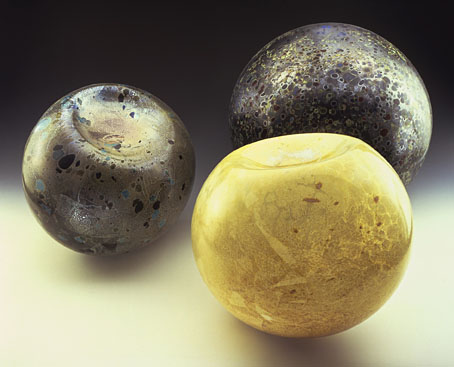
Niijima Floats: Mottled Blue Black Float with Silver Leaf (1991) by Dale Chihuly.

• “Blue whale songs fall below the range of human hearing. If you want to listen to one, to actually hear its ethereal patterns of wobbly pulses and haunting moans, you have to speed it up by at least two-fold. But according to Hildebrand and McDonald’s instruments, the tonal frequencies of the songs had been sinking to even greater depths for three straight years. ‘This is weird,’ Hildebrand thought. To figure out if it was just an anomaly or something more, Hildebrand and McDonald embarked on a quest to find some really old songs. Eventually they got their hands on some of the earliest known recordings, created by the Navy in the 1960s and stored on analog cassettes. They were floored. The frequencies had declined by 30 percent over 40 years.” Kristen French on a mysterious development in blue whale songs.

• “She didn’t see it as a game, or for divination, but as a model of the universe.” Joanna Moorhead on the Tarot designs of Leonora Carrington.

• “A collection of blogs about every topic”: ooh.directory. (Ta to whoever added this place to the list.)

• New music: Pop Ambient 2023 by Various Artists, and Aeolian Mixtape by Quinta.

• At Public Domain Review: The Tanzmasken of Lavinia Schulz and Walter Holdt.

• At Wormwoodiana: Mark Valentine on mazes and labyrinths. (Previously)

• At Spoon & Tamago: Paper-cut cityscapes by kirie artist Hiroki Saito.

• At Smithsonian Magazine: The Unrivaled Legacy of Dale Chihuly.

• Mix of the week: Neo-Medieval Mix by Moon Wiring Club.

• Old music: Back To The Woodlands by Ernest Hood.

• At Dennis Cooper’s: Jacques Rivette Day.

Weyes Blood’s favourite music.

(Gorgeous Curves Lovely Fragments Labyrinthed On Occasions Entwined Charms, A Few Stories At Any Longer Sworn To Gathered From A Guileless Angel And The Hilt Edges Of Old Hearts, If They Do In The Guilt Of Deep Despondency.) (2004) by Akira Rabelais | The Private Labyrinth (2008) by The Wounded Kings | Labyrinths (2018) by Jonathan Fitoussi & Clemens Hourrière

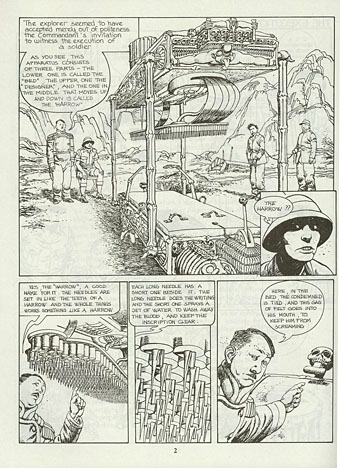
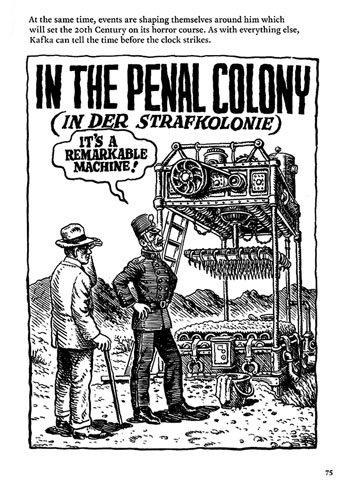
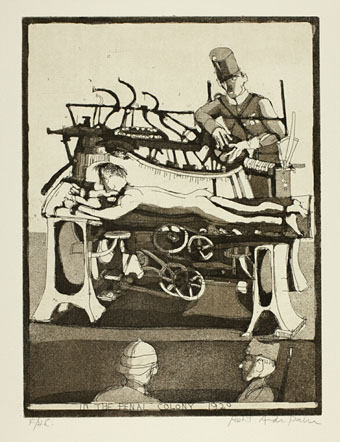
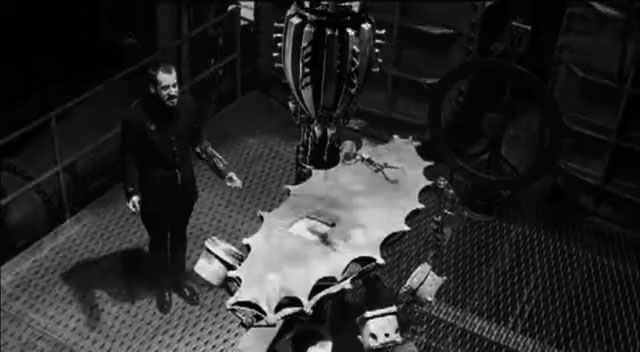
Kafka’s machine

kafka.jpg

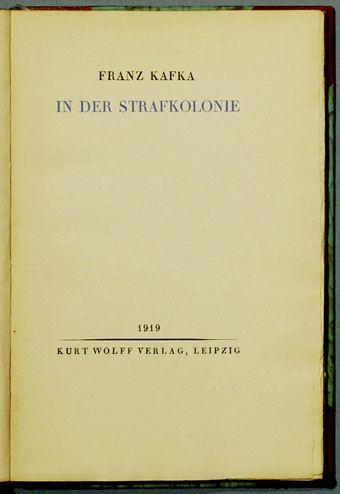
In der Strafkolonie (In the Penal Colony, 1919), a short story by Franz Kafka

“Yes, the harrow,” said the Officer. “The name fits. The needles are arranged as in a harrow, and the whole thing is driven like a harrow, although it stays in one place and is, in principle, much more artistic. You’ll understand in a moment. The condemned is laid out here on the bed. First, I’ll describe the apparatus and only then let the procedure go to work. That way you’ll be able to follow it better. Also a sprocket in the inscriber is excessively worn. It really squeaks. When it’s in motion one can hardly make oneself understood. Unfortunately replacement parts are difficult to come by in this place. So, here is the bed, as I said. The whole thing is completely covered with a layer of cotton wool, the purpose of which you’ll find out in a moment. The condemned man is laid out on his stomach on the cotton wool—naked, of course. There are straps for the hands here, for the feet here, and for the throat here, to tie him in securely. At the head of the bed here, where the man, as I have mentioned, first lies face down, is this small protruding lump of felt, which can easily be adjusted so that it presses right into the man’s mouth. Its purpose is to prevent him screaming and biting his tongue to pieces. Of course, the man has to let the felt in his mouth—otherwise the straps around his throat would break his neck.” “That’s cotton wool?” asked the Traveler and bent down. “Yes, it is,” said the Officer smiling, “feel it for yourself.”

He took the Traveler’s hand and led him over to the bed. “It’s a specially prepared cotton wool. That’s why it looks so unrecognizable. I’ll get around to mentioning its purpose in a moment.” The Traveler was already being won over a little to the apparatus. With his hand over his eyes to protect them from the sun, he looked at the apparatus in the hole. It was a massive construction. The bed and the inscriber were the same size and looked like two dark chests. The inscriber was set about two metres above the bed, and the two were joined together at the corners by four brass rods, which almost reflected the sun. The harrow hung between the chests on a band of steel.

The Officer had hardly noticed the earlier indifference of the Traveler, but he did have a sense now of how the latter’s interest was being aroused for the first time. So he paused in his explanation in order to allow the Traveler time to observe the apparatus undisturbed. The Condemned Man imitated the Traveler, but since he could not put his hand over his eyes, he blinked upward with his eyes uncovered.

“So now the man is lying down,” said the Traveler. He leaned back in his chair and crossed his legs.

“Yes,” said the Officer, pushing his cap back a little and running his hand over his hot face. “Now, listen. Both the bed and the inscriber have their own electric batteries. The bed needs them for itself, and the inscriber for the harrow. As soon as the man is strapped in securely, the bed is set in motion. It quivers with tiny, very rapid oscillations from side to side and up and down simultaneously. You will have seen similar devices in mental hospitals. Only with our bed all movements are precisely calibrated, for they must be meticulously coordinated with the movements of the harrow. But it’s the harrow which has the job of actually carrying out the sentence.”

(Translation by Ian Johnston)


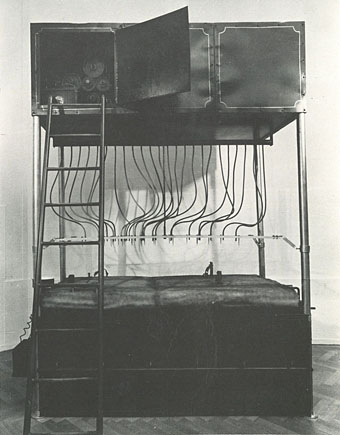
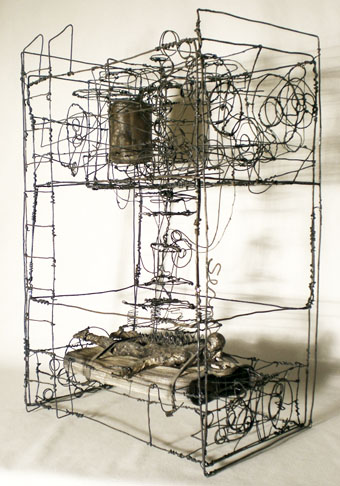
An authorless construction for The Bachelor Machines, 1975–77, an exhibition curated by by Harald Szeemann

szeemann.jpg


Kafka: The Execution (1989), a comic strip by Leopoldo Duranona

duranona.jpg

Read the full strip.


A page from Introducing Kafka (1993), an illustrated biography of Franz Kafka by David Zane Mairowitz and Robert Crumb

crumb.jpg


In the Penal Colony, 1920, from Franz Kafka: Dreams, Diaries, and Fragments (1994), a print by Robert Andrew Parker

parker.jpg


Zoetrope (1999), a short film by Charlie Deaux

zoetrope.jpg


Franz Kafka: The Peculiar Apparatus from the Story In the Penal Colony (undated), a sculpture by Martin Senn

senn.jpg

Previously on { feuilleton }
The Metamorphosis of Mr Samsa, a film by Caroline Leaf
Kafkaesque
Screening Kafka
Designs on Kafka
Kafka’s porn unveiled
A postcard from Doctor Kafka
Steven Soderbergh’s Kafka
Kafka and Kupka