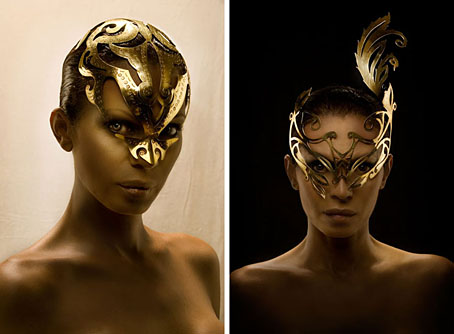
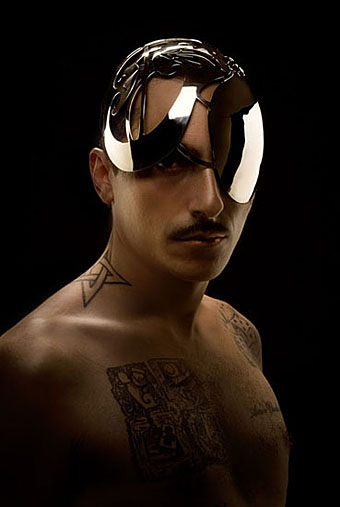
Beautiful, deliriously impractical and no doubt very expensive. More here.
Via Chateau Thombeau. (Yes, he’s back!)
A journal by artist and designer John Coulthart.
Art
Beautiful, deliriously impractical and no doubt very expensive. More here.
Via Chateau Thombeau. (Yes, he’s back!)
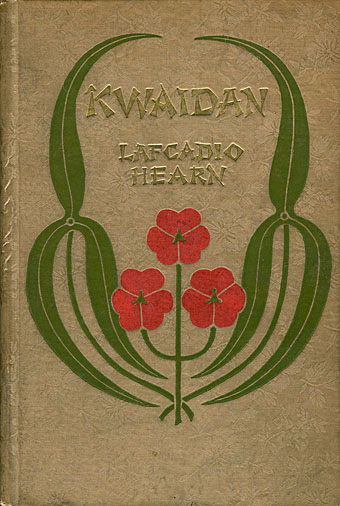
Kwaidan: Stories and Studies of Strange Things (1904), a book by Lafcadio Hearn retelling Japanese ghost stories. Later an incredible film by Masaki Kobayashi and a drawing by Vania Zouravliov.
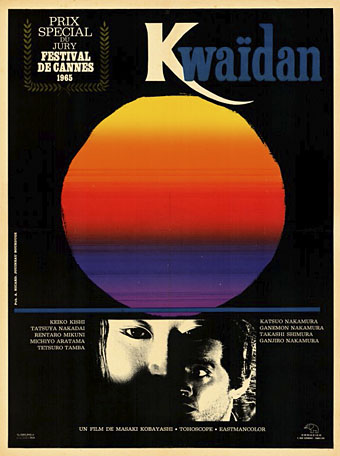
Kwaidan (aka Kaidan; 1964).
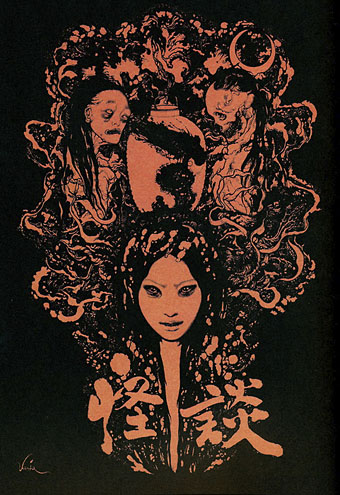
Kwaidan by Vania Zouravliov (no date).
• Kwaidan, Stories and Studies of Strange Things by Lafcadio Hearn with an introduction by Oscar Lewis (1932).
Previously on { feuilleton }
• The art of Bertha Lum, 1869–1954
• The Boy Who Drew Cats
• The art of Takato Yamamoto

Orphée endormant Cerbère by Henri Peinte (1887).
It’s often difficult to imagine a perfectly innocent motive when looking at works such as these. Did the world really need another statue of Orpheus or is the true intention revealed by those carefully sculpted buttocks, with the mythology added as a convenient subterfuge? We’ll never know, of course, and that’s part of the fun. Orpheus, Narcissus, Icarus and the rest gave 19th century sculptors and painters the excuse to portray unclad men and youths in a manner which would have been highly suspect—scandalous, even—had the subjects been shown in a contemporary context. In Oscar Wilde’s definition, art reflects the spectator; in Philip Core’s definition, camp is a lie which tells the truth. Camp art, therefore, can tell a truth about the artist whilst reflecting the concerns of the spectator. As it turns out, this work by Henri Peinte (1845–1912) had its delights, camp or otherwise, concealed by a prudish sheet of cloth when cast in bronze, a common fate of reproductions intended for home display.
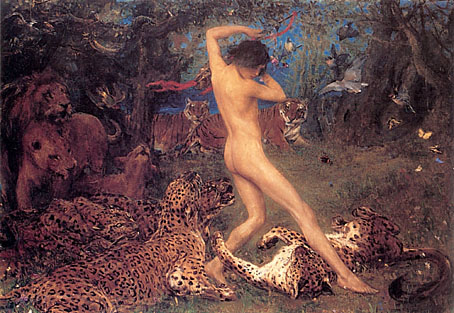
Orpheus by John Macallan Swan (1896).
The Encyclopaedia Orphica collects many of the numerous representations of Orpheus, including this equally lithe depiction by John Macallan Swan (1847–1910) with a pose reminiscent of Peinte’s sculpture. Swan’s painting of the poet charming the savage beasts combines two of his recurrent themes, wild cats and unclothed males. Was he another Uranian with a camp sensibility or is this mere academic innocence? Whatever the answer it’s easy to see why Jean Cocteau—who once said “I am a lie that tells the truth”—made Orpheus his pagan saint.
Elsewhere on { feuilleton }
• The gay artists archive
Previously on { feuilleton }
• Antonin Mercié’s David
• Reflections of Narcissus
• Narcissus
• La Villa Santo Sospir by Jean Cocteau
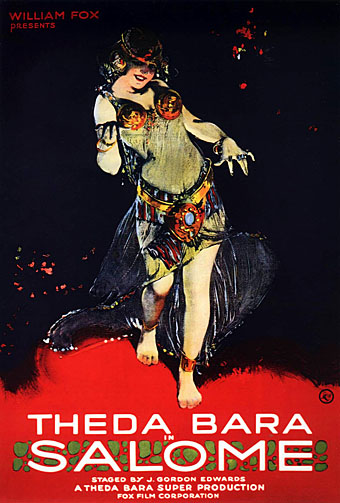
Salome (1918).
You can’t keep a bad girl down… Attempting to gather all the painted representations of Salomé would be a foolish enterprise, there are far too many especially when you reach the 19th century, an age whose misogyny found an ideal expression in the emasculating temptress. Searching through 20th century adaptations yields some interesting works, however.
Theda Bara’s film pre-dates the more flamboyant Nazimova version by five years, and since I haven’t seen it I’ve no idea how it holds up today. But from the look of the stills and posters it seems far closer to the usual historical fare than the stylised version which followed.
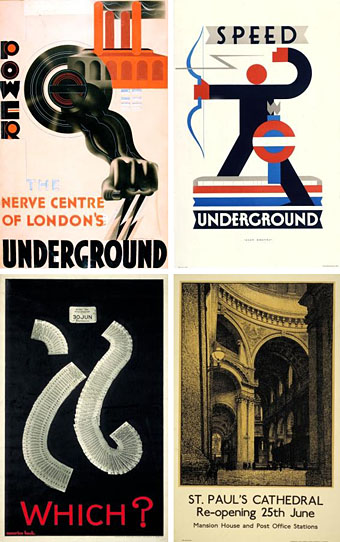
top left: Power by Edward McKnight Kauffer; top right: Speed Underground by Alan Rogers
bottom left: Which? by Maurice Beck; bottom right: St Paul’s Cathedral by Robert Sargent Austin
A small sample of the many great posters commissioned by London Transport during the last century, part of the collection at the London Transport Museum. These are all from the 1930s. The design and iconography of London’s Underground system has occupied much of my attention this year due to a substantial book project; more about that later. Meanwhile, Jonathan Glancey was asking earlier this week whether the expansion of the Underground system means the end of Harry Beck’s classic and much-imitated map design.
Previously on { feuilleton }
• Battersea Power Station
• The Mentor
• The art of Cassandre, 1901–1968