Weekend links 143

empire.jpg

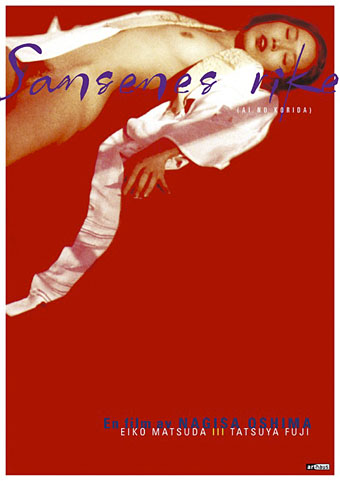
Ai No Corrida poster design by Egil Haraldsen (2001).

• “Back then, publishing an interview with Félix Guattari alongside little chats with rough trade and street walkers was unheard of — it still is for the most part.” BUTT on Kraximo, a gay Greek magazine of the 1980s.

13 books for 2013: A selection of forthcoming titles at Strange Flowers which so closely aligns with my preoccupations that I worry he’s reading my mind.

• “The Macaulay Library is the world’s largest and oldest scientific archive of biodiversity audio and video recordings.”

• A free BitTorrent Robert Anton Wilson audio and video pack. See also the RAW files at the Internet Archive.

beijing.jpg

The Pangu Building, Beijing, January 12th, 2013. Blade Runner arrives six years early.

Wired celebrates 100 years of Edward Johnston’s typeface for the London Underground.

Borges’ translation of Ulysses. Or of the last page of Ulysses as a translation of Ulysses.

0181, a new album by Four Tet, can be heard in full at SoundCloud.

• The Edge question for 2013: “What should we be worried about?

JG Ballard documentaries at Ubuweb.

Unlocking Dockstader.

• RIP Nagisa Oshima.

Ai No Corrida (1980) by Quincy Jones | Empire Of The Senses (1982) by Bill Nelson | Forbidden Colours (1983) by David Sylvian & Riuichi Sakamoto
Decapitations

heads03.jpg

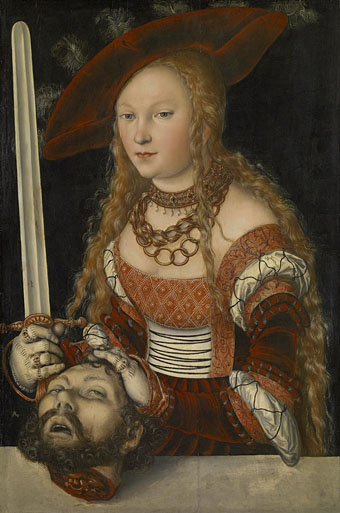
Judith with the Head of Holofernes (1520–1540) by Lucas Cranach the Elder.

It doesn’t take much effort to refute the jeremiads of those who complain that popular culture is exclusively violent, all that’s usually required is to direct attention to Titus Andronicus or The Revenger’s Tragedy. Compared to the stage, the art world seems at first to be more circumspect, especially in the 19th century when the battles scenes of history painters sprawled across acres of canvas, all of them devoid of the physical trauma of warfare.

salome6.jpg

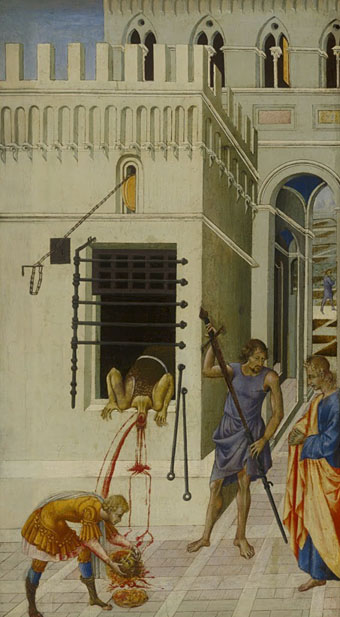
The Beheading of Saint John the Baptist (1455–60) by Giovanni di Paolo.

There are exceptions, however, and the nearer you move to Shakespeare’s time the more examples you’ll find. Paintings produced in an age when violent street executions were still a common sight would have seemed less surprising to their intended audience than they do to our eyes. Several of the paintings here provide a useful contrast with the many sanitised depictions of John the Baptist’s severed head in the Salomé archive.

heads01.jpg

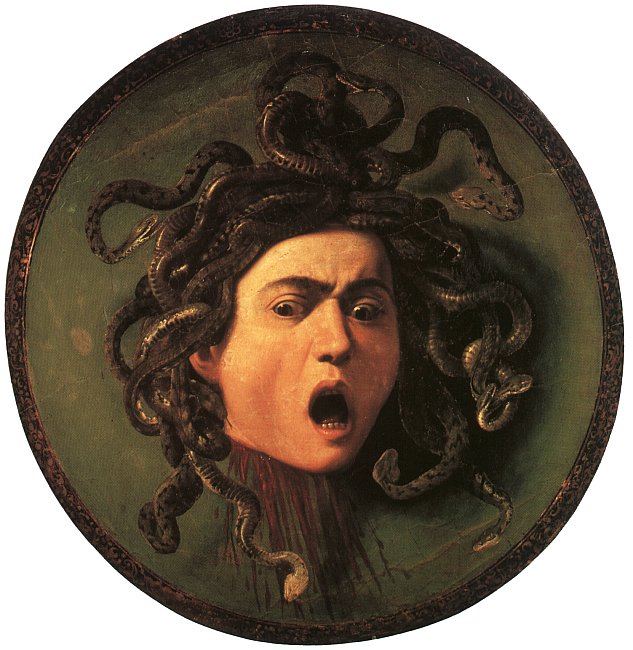
Medusa (c. 1590) by Caravaggio.

Of all the paintings of Medusa’s head the one by Caravaggio is the sole example with a gout of spurting blood. It’s also unusual for being painted on a convex panel intended to resemble the reflecting shield of the Gorgon’s killer, Perseus. Given the violent life of the artist the gore isn’t so surprising although the jet of red in his painting of Judith beheading Holofernes still seems shocking if you’ve never seen it before.

heads04.jpg

Judith Beheading Holofernes (1598–99) by Caravaggio.

The Biblical story of Judith and Holofernes may be the poor cousin to the more popular story of Salomé but depictions of the crucial event make an impression by being consistently gruesome. I suspect the reason is less to do with the story itself than with the success of Caravaggio’s paintings among cultured Europeans. The copying or imitation of celebrated works became a thriving industry in the days of the Grand Tour with the result that 17th- and 18th-century art is overburdened with variations on earlier paintings.

Continue reading “Decapitations”

Satyriconte

satyriconte1.jpg

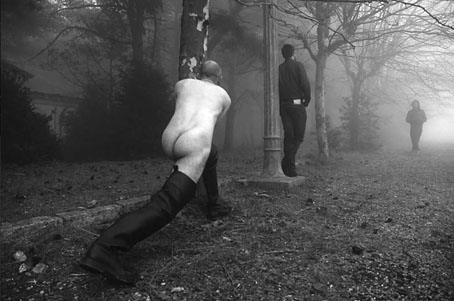
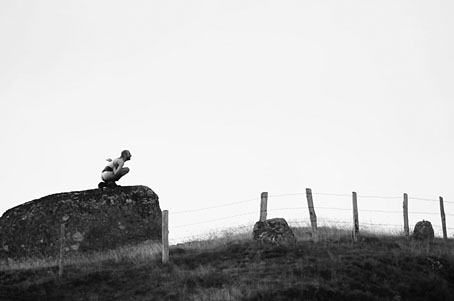
Here in the northern hemisphere it’s the wrong time of year to be cavorting in the open air with your clothes off for any length of time. In warmer months the people behind Satyriconte—who were in touch earlier this week—do just this as an exploration of what they call “the contemporary tale of a satyre”:

Satyriconte is a mix of two french words: satire and tale.
It’s a way to connect with Satyricon, this so old novel written by Petrone.
It’s a road we decided to follow to inquire our world according this point of view.

The Satyriconte project is a photo research around the filthy presence in our occidental civilisation.

So many years of education
……….and still
we can feel the Satire shadow in our daily life.

What about this Satire in our days :
……….Is it washed by our porn torrent ?
……….Is it perfumed and well dressed ?
……….Is it the breath of our parents while they exchange their flesh ?
……….Is it our animal side ? (more)

satyriconte2.jpg

In addition to photos there are drawings and a request for assistance of various kinds, from help staging photo shoots to critical opinion of the project. I’d not-so-helpfully suggest that a contemporary satyr ought to have prosthetic legs (like those used by some paralympic athletes) which give the wearer a suitably goatish appearance.

For more traditional representations of Hermes, Pan, satyrs and fauns this page has plenty of choice examples.

Previously on { feuilleton }
The Piper at the Gates of Dawn
The Great God Pan
Peake’s Pan

The art of Henri Caruchet

caruchet1.jpg

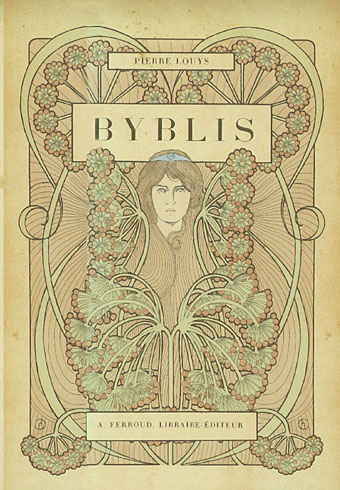
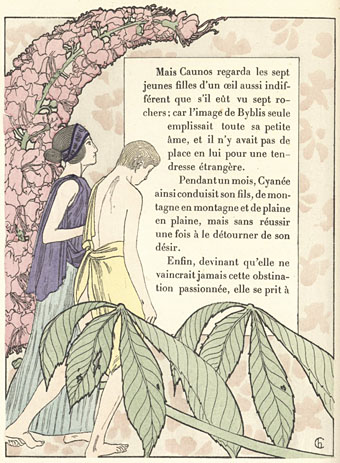
Byblis (1901) by Pierre Louÿs.

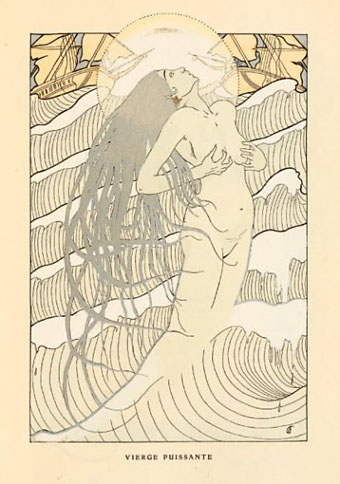
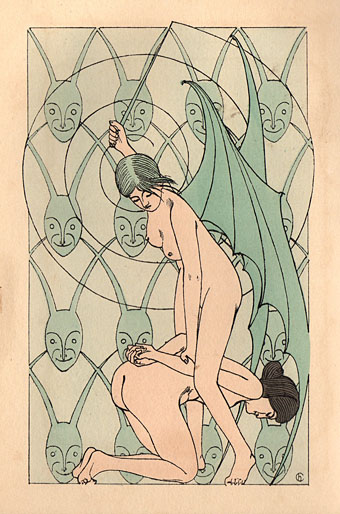
Henri Caruchet isn’t in George Barbier’s league, never mind that of Alphonse Mucha whose graphic style Caruchet appropriated. I’ve not been able to find details about his life either, all that turns up is examples of his book illustration on various websites. Author Pierre Louÿs is notable for his erotic works but it’s Caruchet’s illustrations for Jean de Villiot (via this site) which travel the furthest in that direction (see below), including another example of that deviant sub-genre, the woman being mauled by an octopus. If Caruchet had been a better draughtsman his illustrations might not have languished for so long.

There’s more decorative illustration by Caruchet at Gutenberg.org with an edition of Théophile Gautier’s Émaux et Camées. Two of Gautier’s poems from that volume are quoted by Oscar Wilde in The Picture of Dorian Gray.

caruchet2.jpg

Byblis (1901) by Pierre Louÿs.

caruchet3.jpg

Les Litanies de la Mer (1903) by Jean Richepin.

caruchet4.jpg

Parisienne et Peaux-Rouges (1904) by Jean de Villiot.

Continue reading “The art of Henri Caruchet”

George Barbier’s Falbalas et Fanfreluches

barbier01.jpg

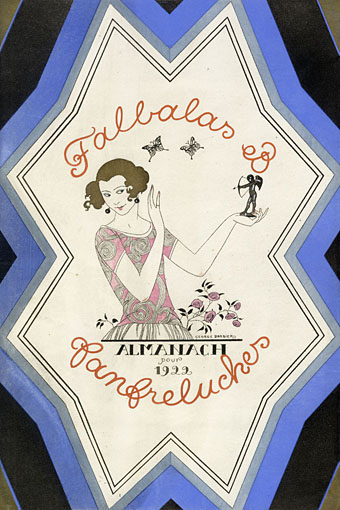
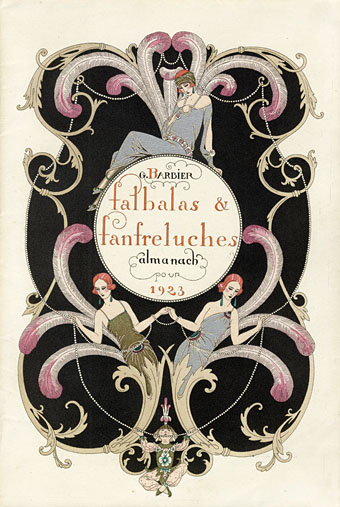
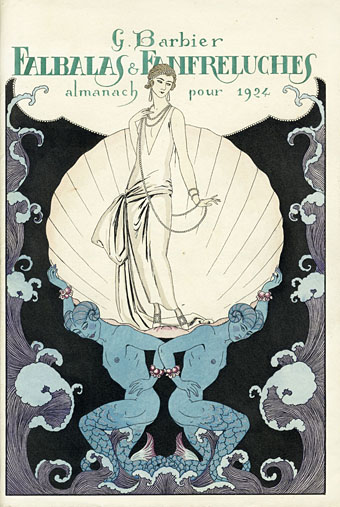
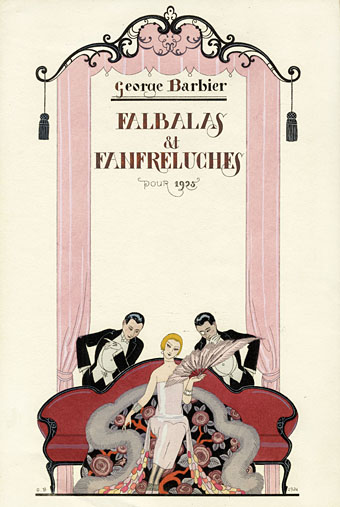
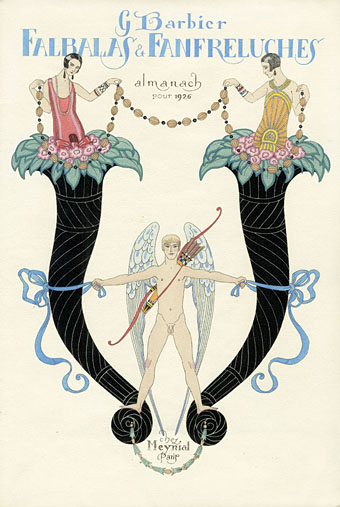
George Barbier’s work has been a regular visitor to these pages. Falbalas et Fanfreluches was a series of pochoir print portfolios published from 1922–1926, a catalogue of various liaisons and amours with a mildly erotic tone. There’s also some sly humour in the examples below, such as the tiny dogs menacing a dandy in L’Agression, and the eyes of the woman in Romance sans paroles wandering to the trim backside of the posing sailor (who doesn’t seem so interested in her).

In addition to being beautiful drawings, Barbier’s title has solved for me a minor conundrum: Falbalas et Fanfreluches means “Ruffles and Frills”, and the Abbé Fanfreluche is a suitably ruffled and frilled character in Aubrey Beardsley’s unfinished erotic novel Under the Hill.

barbier02.jpg

barbier03.jpg

barbier04.jpg

barbier05.jpg

Continue reading “George Barbier’s Falbalas et Fanfreluches”