The Wormwood Star

cameron1.jpg

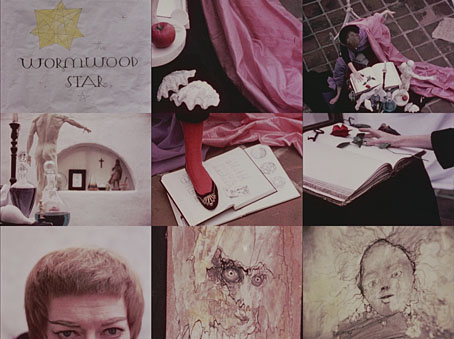
I’ve waited about 20 years to see this one, after first learning of it via a Curtis Harrington interview in Michael Weldon’s Psychotronic magazine in the 1990s. The Wormwood Star (1956) is a 10-minute study of the occult art and witchy persona of Harrington’s friend Marjorie Cameron (1922–1995), best known these days for her memorable incarnation as the Scarlet Woman in Kenneth Anger’s Inauguration of the Pleasure Dome (1954), a film in which Harrington also appeared. With her flame-red hair, green eyes and basilisk gaze, Cameron (as she preferred to be called) would have made an impression wherever she landed. Her presence in Anger’s film is so striking that stills of her face have often been used to stand for the entire Magick Lantern Cycle.
cameron2.jpg

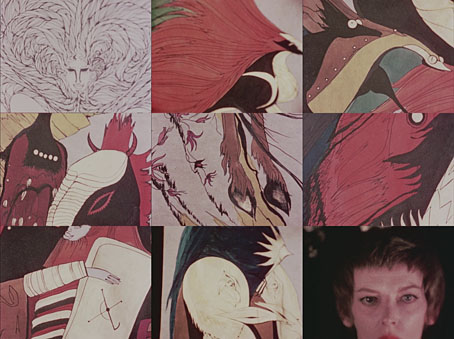
In The Wormwood Star Harrington ramps up the mystique with oblique shots and at least half the running time given to Cameron’s strange drawings and paintings. The subtitle, “Concerning the Knowledge and Conversation of the Holy Guardian Angel” harks back to the 1940s and her husband, Jack Parsons, a rocket researcher and, for a time, the American head of Aleister Crowley’s Ordo Templi Orientis. Harrington later gave Cameron a wordless role as the “Water Witch” in his low-budget horror film, Night Tide (1961), where she drifts around Venice Beach looking suitably mysterious. Night Tide is out-of-copyright so can be watched in full at YouTube. The Wormwood Star appeared on a Curtis Harrington DVD only last month which is no doubt where this copy originates. It may not stick around so watch it while you can.

Previously on { feuilleton }
Street Fair, 1959
House of Harrington
Curtis Harrington, 1926–2007
The art of Cameron, 1922–1995
Kenneth Anger on DVD…finally

Tonto’s expanding frog men

tonto.jpg

I wasn’t going to write about album cover art three times in a row but things keep catching my attention this week. Anyone interested in the history of electronic music knows the name Tonto’s Expanding Head Band, the duo formed by Malcolm Cecil and Robert Margouleff to create music with Cecil’s huge, custom-built TONTO (The Original New Timbral Orchestra) synthesizer. Cecil and Margouleff recorded two albums together: Zero Time (1971) and It’s About Time (1974), the latter credited to Tonto only. Zero Time was incredibly advanced for 1971, not classical adaptations like those being produced by Wendy Carlos and her many imitators, but all-original pieces created polyphonically, a feat that only the TONTO synth could easily achieve.

Given how successful the album is musically I’ve always thought it a shame that the sleeve art, inside and out, was the kind of amateurish “psychedelic” doodling that you find on many albums of this period. The design above was for a 1975 reissue, something I’d not seen before. The artist was illustrator Jeffrey Schrier who has a small, and no doubt incomplete, listing at Discogs with nothing similar to this in evidence. At a guess I’d say the evolving frog men are derived from the lyrics of Riversong, a meandering piece with singing processed via early vocoder-style technology, something that Wendy Carlos was also experimenting with. It’s not all hippy ambience: Jetsex sounds like an outtake from Kraftwerk’s Autobahn (albeit three years early) while Timewhys wouldn’t have been out-of-place on The Human League’s Travelogue album almost a decade later. Easy to see why Stevie Wonder and others were eager to work with Malcolm Cecil throughout the 1970s.

Elsewhere on { feuilleton }
The album covers archive

Previously on { feuilleton }
A Clockwork Orange: The Complete Original Score

Weekend links 171

bossi.jpg

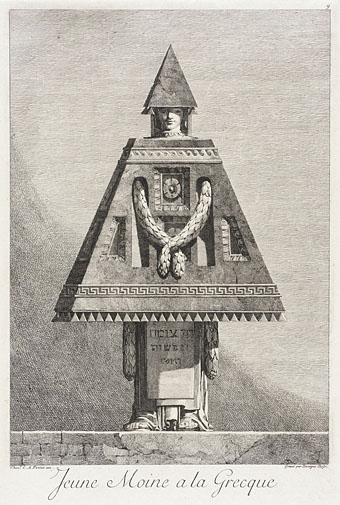
Jeune moine à la Grecque (1771) by Benigno Bossi. Via Monsieur Thombeau.

Victoriana: The Art of Revival is an exhibition which will run throughout the autumn at the Guildhall Art Gallery, London. Some of my steampunk work will be included. Related: Rick Poynor on Soft Machine’s Dysfunctional Mechanism.

• “The egg glows and hovers in the middle of a field of mesmerizing color. The spell is broken when the guard finally says, “Everybody up off the floor.'” Morgan Meis on Aten Reign by the amazing James Turrell.

• Mix of the week: a “heatwave mix” of psychedelic songs compiled by Jaime Williams. Anything that includes Vacuum Cleaner by Tintern Abbey gets my vote.

Because sex is so compartmentalized — it’s often considered separate from the rest of life and hidden away — porn performers, who have sex publicly, are in a unique position to consider and talk about integrating private and public aspects of life.

Writer and porn performer Conner Habib on the issue of nomenclature in the porn business.

• Still Hopscotching: Peter Mendelsund posts some unused cover designs for Julio Cortázar.

A Hymn For Megatron, an hour-long drone work, and a free download, by The Black Dog.

• Vagrancy and drift: Sukhdev Sandhu on the rise of the roaming essay film.

• A Flickr set of Peter “Sleazy” Christopherson’s musical instruments.

mwc.jpg

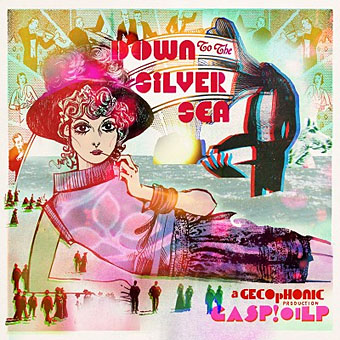
“Whether flower-pressing in the garden, hallucinating in the summerhouse, fainting inside stifling sites of historical interest, pirouetting along the promenade, or even sea-cruise thalassophobia complications, barely a moment will pass that isn’t made all the sweeter by obsessively listening to Down to the Silver Sea.”

The TM Research Archive: sate yourself on Swiss graphic design.

• A Lecture on Johnson and Boswell by Jorge Luis Borges.

• Words, sounds and robots from Sarah Angliss.

Never Built Los Angeles

Nautilus (2012) by Anna Meredith | Nature Of Light (2012) by Isnaj Dui | Popcorn (Ealing Feeder Mix) (2012) by SpacedogUK (Sarah Angliss)

Ads for The Yellow Book

yb1.jpg

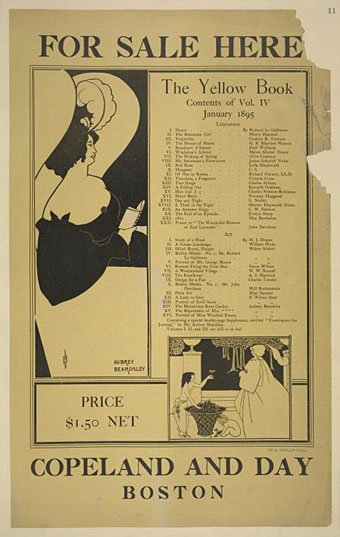
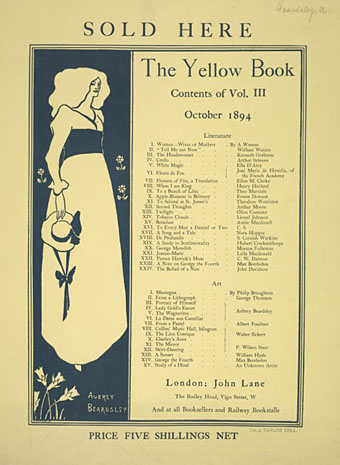
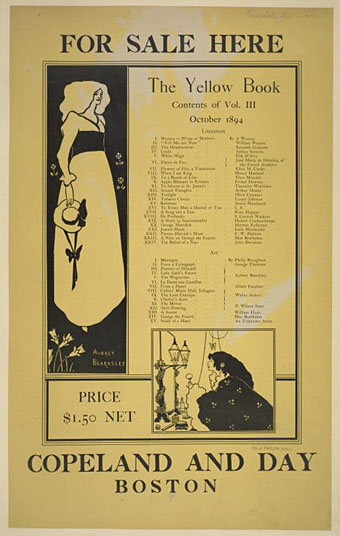
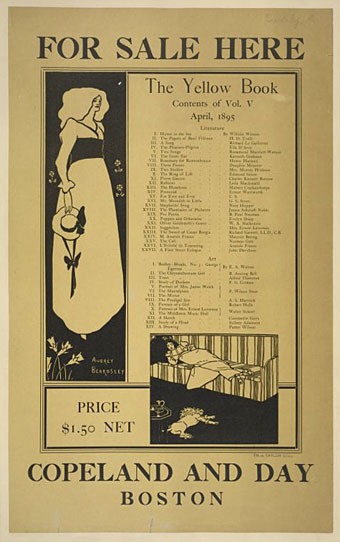
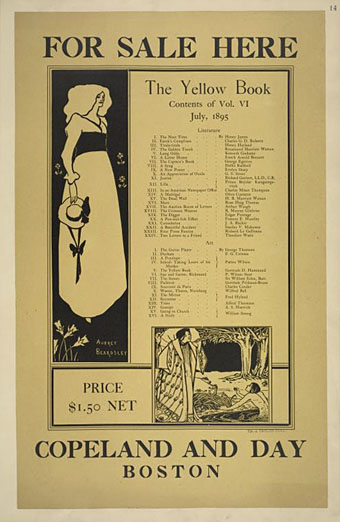
More Beardsley ephemera, and more from the recently upgraded NYPL Digital Collections. These US ads for The Yellow Book date from late 1894 to early 1895, a couple of months before Oscar Wilde was arrested and Aubrey Beardsley had to leave the magazine despite having no connection with Wilde’s activities.

What’s most interesting for me about these ads is the small vignettes, two of which I’m sure I haven’t seen before. This suggests that there’s still material in the pages of The Yellow Book which has been overlooked despite the many books which collect Beardsley’s art. The Internet Archive has several volumes of the magazine but I’ve been daunted in the past by its thousands of pages of not-so-interesting Victorian prose. (The Savoy was the superior publication where quality of writing was concerned.) Maybe it’s time to take a deep breath and dive in.

yb2.jpg

yb3.jpg

yb4.jpg

yb5.jpg

Elsewhere on { feuilleton }
The Aubrey Beardsley archive

One Way Street: Fragments for Walter Benjamin

benjamin1.jpg

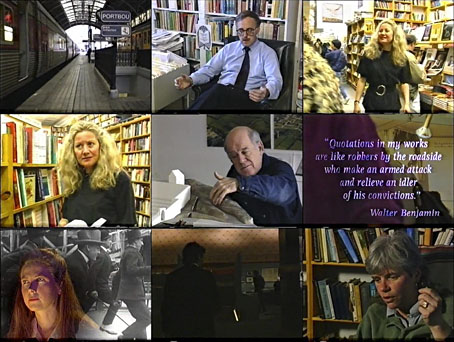
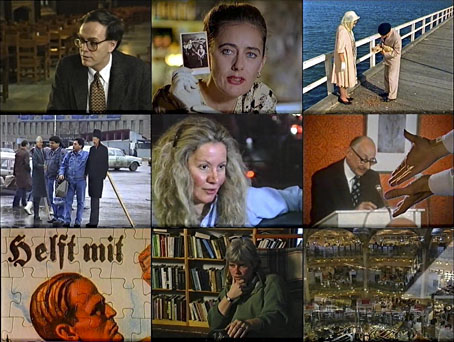
I thought I was going to intensely dislike One Way Street (1993) owing to the deployment of that bane of documentary film and television: the actor impersonating a historical figure. But these moments are sporadic, and John Hughes’ film is a reasonable introduction to Walter Benjamin’s elusive philosophies. It probably helps if you already know something of Benjamin’s life and work; there are several allusions, for example, to the famous “angel of history” thesis, and we even get to see the Paul Klee print to which the thesis refers (and which Benjamin owned); but there isn’t a reading of the thesis itself, an omission that the BBC in its documentary heyday wouldn’t have allowed. Various writers and academics do their best to convey something of Benjamin’s thought in sound-bite form, and the film as a whole can probably evade some criticism by claiming to be Benjaminesque in its disjointed and fragmented nature (although that would also be an evasion). I think if I hadn’t read any of Benjamin’s books there’d be enough to stimulate my curiosity, in which case the film would have succeeded. Watch it here. (Via Open Culture.)

benjamin2.jpg

Previously on { feuilleton }
Passage des Panoramas