Weekend links 767

east-totem-west.jpg

East Totem West head shop poster, from DJ Food‘s latest delve into the psychedelic poster auctions.

• The week in science-fiction illustration: Joachim Boaz on Rodger B. MacGowan’s “approachable New Wave art”; and Andrew Liptak talks to Adam Rowe about Rowe’s Worlds Beyond Time: Sci-Fi Art of the 1970s.

• At The Wire: Philip Brophy sets out his intentions for the return of his long running column on film music.

• At Public Domain Review: Gustatory Wisdom: Bruegel the Elder’s Twelve Proverbs (1558).

Though the project’s genesis predated Roeg’s involvement, Cammell said that his codirector “needled” him: “He provoked me, made me focus more and more clearly on what I was trying to say.” It was Roeg’s visual sensibility, Cammell graciously admitted, that “mobilized” and “improved” his own concepts. It’s appropriate that the movie concerns two men who become fully realized only in meeting and merging with each other. Turner, said Cammell, “believes himself to be at the end of his creative life. He’s a man in despair. And then destiny brings him his mirror image, Chas, the man in whom he sees what he was and what he could be again.”

Roeg and Cammell were hardly in despair in 1968; both were novices in the foothills of their own artistry. It is not fanciful, though, to see in their collaboration something like the same lightning connection that forms between Turner and Chas. Cammell said that he set out “to make a transcendental movie.” In achieving that goal, he stretched and challenged not just himself but cinema too. Even as Performance closed the lid definitively on the sixties, it opened the door to a radical new way of making films.

Ryan Gilbey on Donald Cammell and Nicolas Roeg’s Performance

• At A Year In The Country: Broadcast and Pathways Through Otherworldly Villages.

• “Pilot is an elegant and expressive display serif,” says Kim Tidwell.

Winners of the 2025 World Nature Photography Awards.

• New music: Forgotten Worlds by Rodrigo Passannanti.

• Janus Rose presents her Digital Packrat Manifesto.

• RIP Jamie Muir and Gene Hackman.

Pilots Of Purple Twilight (1981) by Tangerine Dream | Pilots (2000) by Goldfrapp | I’m With The Pilots (2001) by Ladytron
The art of Nikolai Petrovich Theophilaktoff, 1878–1941

theophilaktoff07.jpg

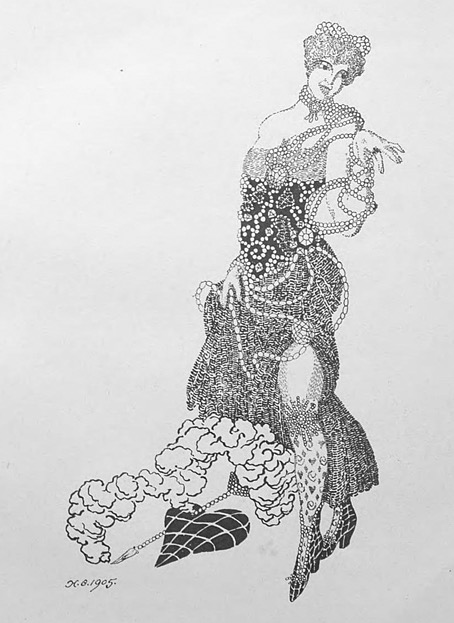
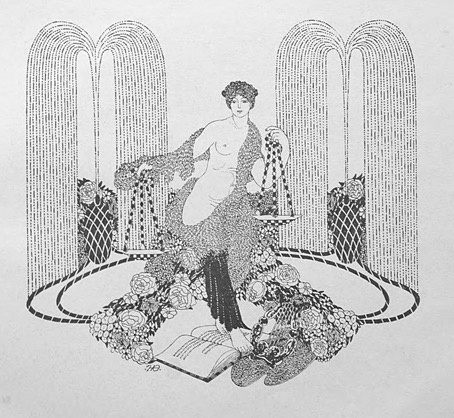
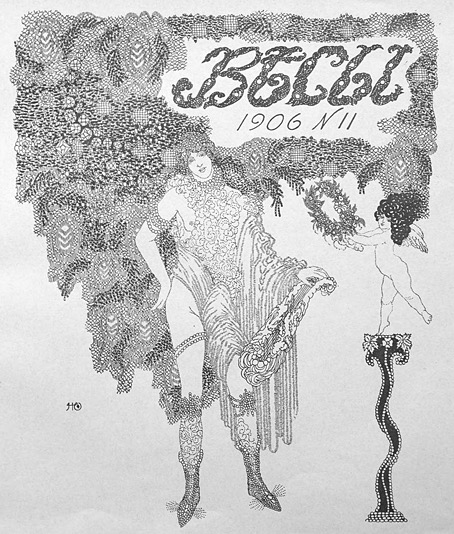
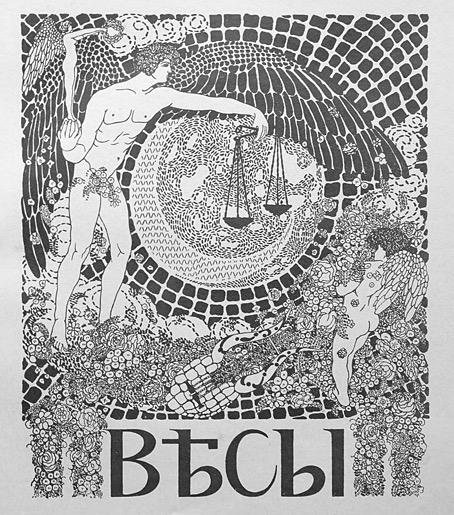
I’m taking the biographical details about this Russian artist from a Christie’s listing, accuracy being of particular importance to auction houses. The trouble with searching for information about Nikolai Theophilaktoff is that he’s one of those Russians whose name isn’t common enough to exist in a settled non-Russian form, so you may find his drawings credited to “Nikolai Feofilaktov” or even “Nikolai Theophylactus”. Whatever the spelling of his surname, Theophilaktoff is remembered today for illustrations with a distinct Beardsley influence, which is how he came to my attention. Aubrey Beardsley only had a few years for his art to impress itself on the world but he was known in Russia during his lifetime; Sergei Diaghilev was especially enthusiastic, using his position as editor of arts journal Mir Iskusstva (World of Art) to promote Beardsley’s work after the artist’s death. A later Russian arts journal, Libra, maintained the enthusiasm, devoting an entire issue to Beardsley in 1905. It was reading about Libra that led me to Nikolai Theophilaktoff, an artist who was sufficiently beguiled by Beardsley’s drawings to embark on his own variations on the Beardsley style.

theophilaktoff06.jpg

Theophilaktoff’s cover art for the Beardsley issue of Libra, November, 1905.

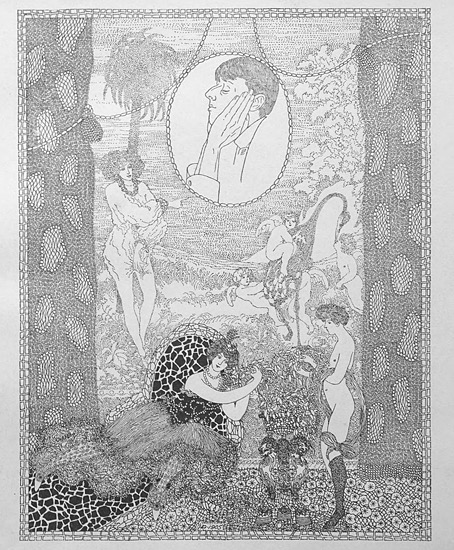
You can usually divide Beardsley’s followers into two groups: those who pick up on the striking contrasts that Beardsley created using areas of solid black against the white of the paper—Harry Clarke, Will Bradley and John Austen are good examples of this type. A second class would be those who favour the delicate, filigree style of Beardsley’s illustrations for The Rape of the Lock—Alastair (Hans Henning Voigt) and Nikolai Theophilaktoff are in this category. (Harry Clarke was also an expert filigree-ist but Clarke is really in a class of his own.) If you accept this artistic division it’s notable that the weaker artists are in the latter class. It’s easier to disguise deficiencies of figure drawing, say, with abundant stippling and decoration than it is when using nothing more than fine lines and masses of black ink. Theophilaktoff’s accomplishments are very uneven but they’re also rare examples of Beardsley’s style of Decadent art in a country that would soon have no time for such a thing at all.

theophilaktoff05.jpg

Most of the pictures here are from a book, 66 Dessins (1909), which collected many of the Theophilaktoff drawings published in Libra. The pornographic drawing at the very end is a swipe from an auction listing. Also near the end are drawings for Wings (1906), a novel by Mikhail Kuzmin which is one of the first literary works to openly deal with same-sex relationships. As for Libra, I thought copies of the magazine might be impossible to find but the trusty Internet Archive has what seems to be a complete run here. Mir Iskusstva, which seems rather staid by comparison, may also be found at the Internet Archive in a series of bound volumes.

theophilaktoff04.jpg

theophilaktoff08.jpg

Continue reading “The art of Nikolai Petrovich Theophilaktoff, 1878–1941”

Weekend links 766

steam.jpg

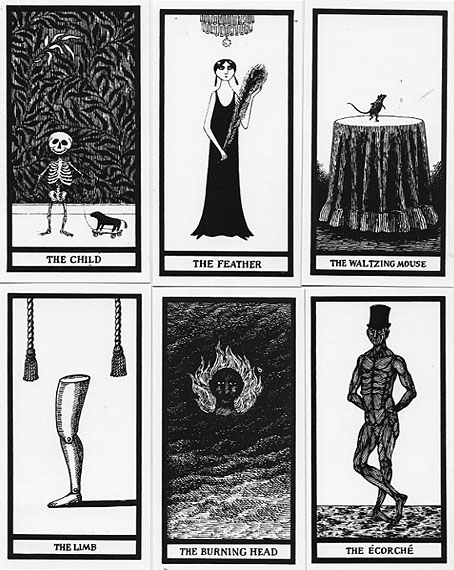
The Fantod Pack (1995): a Gorey take on the Tarot deck.

• A happy 100th birthday to Edward Gorey. I was hoping to link once again to Gorey’s appearance on the Dick Cavett Show from 1977 (a rare TV interview) but it’s one of those things that’s no longer available at YouTube. You can always browse Goreyana instead. Meanwhile, there’s this in Scotland: In Gorey Detail: Celebrating An American Friend At Custom House, Leith. A tribute exhibition which is running in Edinburgh for this week only.

• “A blisteringly frank and triple X-rated chat with Peter Berlin”. A blisteringly hyperbolic headline for a discussion between Ted Stansfield and Peter Berlin, the self-invented sex object of the 1970s.

• This week in the Bumper Book of Magic: Smoky Man posts my replies to his questions about the creation of the book’s Rainy Day and Kabbalah sections.

• Tricky’s Maxinquaye was released 30 years ago this month. David Bennun revisited the album five years ago.

• At Colossal: Felines evoke ‘A Floating World’ in Tùng Nâm’s whimsical illustrations.

• New music: Gloam by Emptyset, and The Mount Hibiki Tapes by Mount Shrine.

• Mix of the week: A mix for The Wire by Polonius.

• Steven Heller’s font of the month is Steam.

Last Of The Steam Powered Trains (1968) by The Kinks | Steam Megawatt (1979) by Tod Dockstader | Building Steam With A Grain Of Salt (1996) by DJ Shadow

Gwenaël Rattke record covers

rattke04.jpg

Muscle Up (2015) by Patrick Cowley.

This post is partly a reminder to myself that I’m still missing the last two Patrick Cowley album releases on the Dark Entries label. Dark Entries have distinguished themselves over the past few years by compiling selections from Cowley’s previously unreleased tape archive. Many of the recordings were made in the years before Cowley established himself as a producer of Hi-NRG disco hits, long pieces of instrumental electronic music which are closer to the typical electronica of the 1970s than the club music he became known for. This didn’t prevent his early recordings from being used as soundtracks for gay porn films, however, a connection that Dark Entries acknowledge in the packaging for their first three Cowley releases: School Daze (2013), Muscle Up (2015) and Afternooners (2017). The fourth album in the series, Mechanical Fantasy Box (2019), was released in tandem with a book of the same name, a journal of Cowley’s sexual encounters during the late 70s. The book and the albums from Muscle Up on have all featured art and graphics by Gwenaël Rattke, a German artist who uses traditional collage methods to repurpose imagery and graphics copied from gay magazines and porn publications of the 1970s and 1980s. The last time I looked at Rattke’s work I wasn’t aware that he’d created more album art so this post gathers a few additional examples along with his designs for Dark Entries.

rattke01.jpg

Lesbians On Ecstasy (2004) by Lesbians On Ecstasy.

I always like to see an accurate pastiche, and Rattke’s pastiches are close enough to their targets to be mistaken for products of the period they resemble, especially when assisted by fonts like Quicksilver, Stop, Sinaloa, and Motter Textura, all of which are redolent of the disco decade. Creating collages with scissors, paper and what looks in places like Risograph reproduction also helps with the period authenticity. You could create work like this with wholly digital means but if you did you’d have to do spend time disguising the absolute precision of those techniques.

rattke02.jpg

We Know You Know (2007) by Lesbians On Ecstasy.

rattke03.jpg

Liquidation (2015) by Liquid G.

rattke05.jpg

Patrick Cowley – Afternooners (2017) by Patrick Cowley.

Continue reading “Gwenaël Rattke record covers”

Weekend links 765

fini.jpg

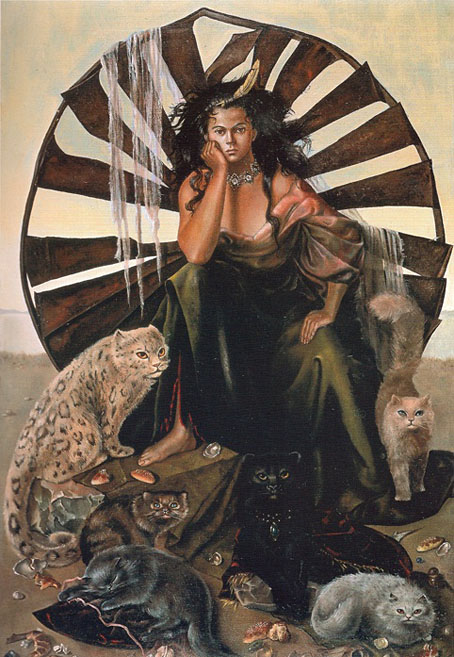
An Ideal Life (1950) by Leonor Fini.

• “…there has not been anything like a general, systematic discussion of what other, semantically different kinds of languages there can be, and the philosophical consequences of this. If reality has a certain structure, it would be a miracle if familiar languages contain all the resources to capture this structure.” Matti Eklund on the potential nature of alien languages.

• “As cats evolved from feral ratters into beloved Victorian companions, a nascent pet-food economy arose on the carts of so-called ‘cat’s meat men’. Kathryn Hughes explores the life and times of these itinerant offal vendors, their intersection with a victim of Jack the Ripper, and a feast held in the meat men’s honour, chaired by none other than Louis Wain.”

• Kinoteka, the UK’s Polish Film Festival, revealed its 2025 programme this week. Among the events will be a screening of the new Quay Brothers film, Sanatorium Under the Sign of the Hourglass (extract), at BFI Imax in London. Also in London (and with free entry), Swedenborg House will be hosting an exhibition of the Quays’ film decors.

• In a recent comment here I said that some of Charles Williams’ metaphysical novels were like John Buchan thrillers with an occult twist. At Wormwoodiana G. Connor Salter investigates the possible connections between the two writers.

Alice Coltrane & Carlos Santana, 1974: Lossless downloads of previously unissued recordings from the Illuminations album and a live set with John McLaughlin at San Francisco’s Kabuki Theater.

• “‘The Köln Concert is the hit he wants to disown’: why Keith Jarrett shunned two new films about his unlikely masterpiece.”

• New music: Shards by Tim Hecker; and Some Other Morning by Memory Effect.

• Mix of the week: DreamScenes – February 2025 at Ambientblog.

• At Colossal: Outdoor light installations by Lachlan Turczan.

• Galerie Dennis Cooper presents…Paul Laffoley.

Cat’s Eye (1977) by Van Der Graaf | Cat’s Eye (2015) by Patrick Cowley | No Cat’s Eyes (2017) by The Belbury Circle