Weekend links 567

dean-osibisa.jpg

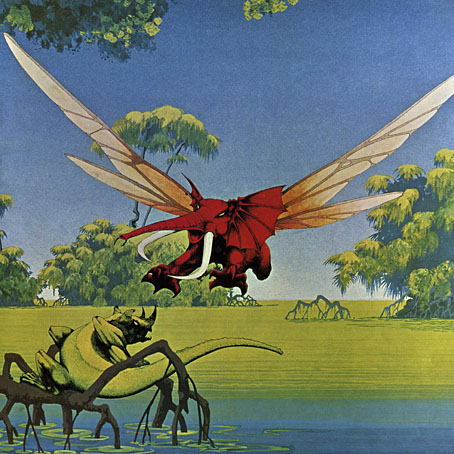
Cover art by Roger Dean for Woyaya (1971), the second album by Osibisa. Dean’s flying elephants made their first appearance on the group’s debut album, and have been an Osibisa emblem ever since.

• Many of Roger Dean’s early album covers are better creations than the music on the albums they decorate. This isn’t the case with Osibisa, however, a Ghanaian group based in London whose discography includes (uniquely, I think) two covers by Dean together with one by Mati Klarwein. The group’s first two albums, Osibisa and Woyaya, are exceptional blends of Ghanaian music with rock, funk and jazz whose omission from the generally reliable Kozmigroov list is a serious error. Garth Cartwright talked to Teddy Osei and Lord Eric Sugumugu about Osibisa past and present.

• “The antiheroes of Angry Young Men cinema railed against the limited life opportunities available to them. Wired and frustrated, they especially chafed against girlfriends, wives, domesticity. Yet they never questioned heterosexuality itself. Not, at least, until The Leather Boys (1964), a relatively little-known film directed by Canadian expatriate Sidney J. Furie.” Sukhdev Sandhu on a film about gay life in pre-decriminalisation Britain that offered a slightly more positive view of its subject than the justifiably angst-ridden Victim (1961).

• “Brian Aldiss once confided to me that the big problem with American science fiction writers was that they loved to write about Mars but knew nothing about Indonesia.” Bruce Sterling on the attractions of being an expatriate writer who adopts a foreign persona, as he did for the stories collected in Robot Artists and Black Swans.

• New music: Fire Tower by The Grid / Fripp. Dave Ball, Richard Norris and Robert Fripp have been collaborating on and off since The Grid’s 456 album in 1992. Fire Tower is a preview of Leviathan, a new album out in June on CD/DVD and double vinyl.

• RIP Michael Collins, the astronaut who orbited the Moon alone, listening to Symphonie Fantastique by Berlioz in the Command Module of Apollo 11 while Neil Armstrong and Buzz Aldrin were walking on the satellite’s surface.

• “‘Walking with a thesis’ could easily function as the subtitle for a significant number of Iain Sinclair’s books.” Tobias Carroll on Iain Sinclair and the radical act of walking through a city.

• “‘Plain speaking, like plain food, is a puritan virtue and thus no virtue at all,’ Meades pronounces.” Steven Poole reviews Pedro and Ricky Come Again by Jonathan Meades.

• Building a panorama: Clive Hicks-Jenkins‘ latest progress report on his Cocteau-inspired illustrated edition of Beauty and the Beast.

• At Unquiet Things: Groovy Goddesses From Dimension X: Gene Szafrans’ Kaleidoscopic Book Covers.

• From leather boys to leather men: Miss Rosen on the little-known photography of Tom of Finland.

Alexis Petridis attempts the impossible again, with a list of Grace Jones’ best songs.

• At Dennis Cooper‘s: Cars.

I’m A Leather Boy (1967) by The Leather Boy | Warm Leatherette (1980) by Grace Jones | Leather Bound (2017) by Patrick Cowley
Fire works

votf.jpg

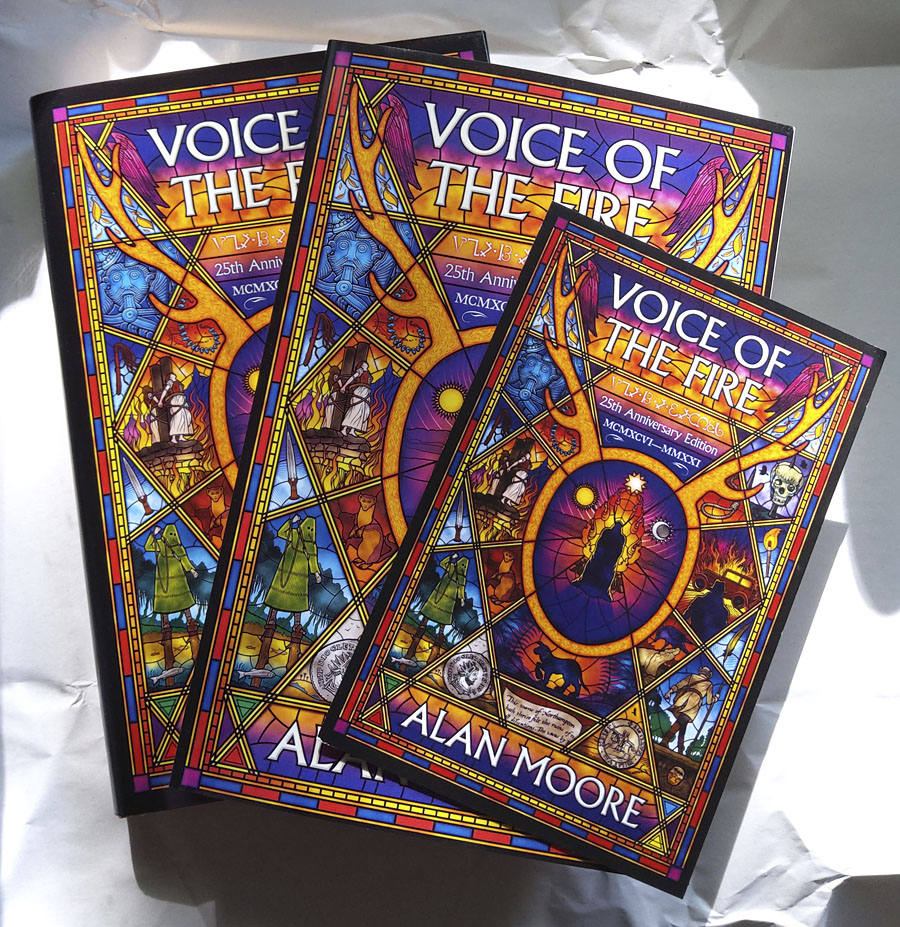
Glowing in the intermittent spring sunshine, the new hardback, paperback and bonus postcard of Alan Moore’s Voice of the Fire from Knockabout. The postcard is signed by the author, and only available with the hardbacks which are a limited run of 300 copies. Top Shelf will be publishing the book in the US (and also using my cover art) but I don’t know whether they’ll be following suit with signed cards. Anyone wanting more information about both editions is advised to check the publishers’ websites.

Previously on { feuilleton }
Voice of the Fire by Alan Moore

Hokusai record covers

hokusai01.jpg

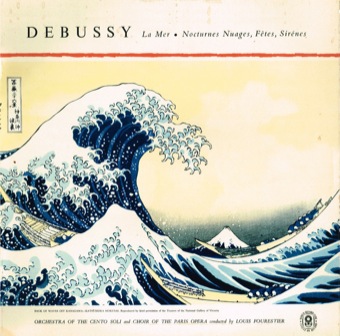
Debussy: La Mer, Nocturnes (Nuages, Fêtes, Sirènes) (1959); Orchestra Of The Cento Soli And Choir Of The Paris Opera, Louis Fourestier.

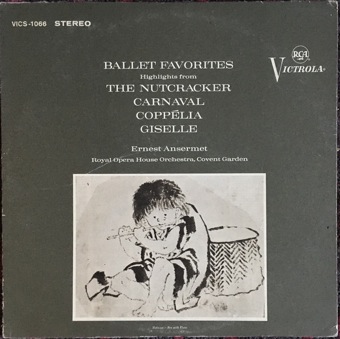
Continuing an occasional series about artists or designers whose work has appeared on record sleeves. In the case of Katsushika Hokusai it’s all about the waves, or one wave in particular. The Great Wave off Kanegawa (1830) is not only the most well-known of all the prints in the Thirty-Six Views of Mount Fuji series, but it occupies the unique position of representing to the rest of the world the nation from which it originates. Claude Debussy deserves much of the credit for elevating the popularity of the wave print after he used it in 1905 as an illustration on the cover of the sheet music for La Mer. Consequently, the print is an inevitable choice for art directors who require cover art for Debussy recordings. The example above is the first in a long line, many of which are omitted here in favour of other prints. The landscape format of this view, and that of many other Hokusai prints, means that the art is usually cropped to suit the square of the album cover. The results aren’t always successful.

hokusai02.jpg

Tchaikovsky, Schumann, Delibes, Adam: Ballet Favourites: Highlights From The Nutcracker/Carnaval/Coppélia/Giselle (1964); Orchestra Of The Royal Opera House, Covent Garden, Ernest Ansermet.

hokusai03.jpg

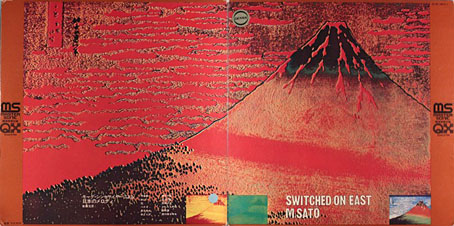
Switched On East (1971) by M. Sato. Art: Fine Wind, Clear Morning, from Thirty-Six Views of Mount Fuji.

A gatefold sleeve for one of the many “switched-on” Moog albums released to capitalise on the success of Switched-On Bach by Wendy Carlos. (Tomita recorded Switched On Hit & Rock a year later.) M. Sato gives a collection of Japanese folk tunes the synthesizer treatment.

hokusai05.jpg

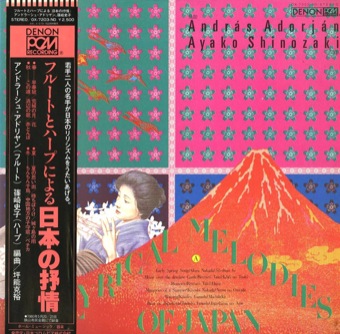
Lyrical Melodies Of Japan (1980) by András Adorján & Ayako Shinozaki.

hokusai04.jpg

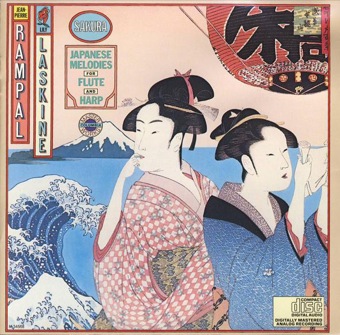
Sakura: Japanese Melodies For Flute And Harp (1990) by Jean-Pierre Rampal And Lily Laskine.

A reissue with collaged artwork by Paula Sher of an album first released in 1969.

Continue reading “Hokusai record covers”

Weekend links 566

hokusai.jpg

The Amida Falls in the Far Reaches of the Kisokaido Road. From the series A Tour of Waterfalls in Various Provinces (c. 1832) by Hokusai.

• New music: In Love With A Ghost by Kevin Richard Martin (aka Kevin Martin, The Bug, etc), a preview from his forthcoming alternative score for Andrei Tarkovsky’s Solaris (1972). In other hands I’d probably dismiss a further addition to the trend of creating new scores for films that don’t require them. Tarkovsky’s film certainly doesn’t need any new music, and we’ve already had an album-length homage from Ben Frost & Daníel Bjarnason. But I like Martin’s sombre atmospherics so he gets a pass with this one.

• “[Pauline] Oliveros wrote a piece for the New York Times in 1970 titled And Don’t Call Them Lady Composers, focusing on the difficulties of women being noticed and taken seriously in her field. It’s still online and could have been written yesterday.” Jude Rogers on Sisters With Transistors, a documentary about women in electronic music. Madeleine Siedel interviewed Lisa Rovner, the film’s director. Watch the trailer.

Submissions to the 16th number of Dada journal Maintenant will be open at the beginning of October, 2021, following an announcement of the theme of the new issue in September. All you would-be (or actual) Dadaists out there have the summer to plot your potential contributions.

Our reverence for originals takes an absurdly extreme form in the recent craze for NFTs (non-fungible tokens), where collectors and traders spend huge sums of money on unique ‘ownership’ of a digital artwork that anyone can download for free. Since there’s no such thing as the original of a digital file, the artist can now certify the file as the one and only ‘original copy’, and make a fortune. Time will tell whether this is a transient fad or a new way of establishing the feeling of a relationship to the mind of the digital artist.

But our reverence for originals isn’t universal. Treating the original as special and sacred is a Western attitude. In China and Japan, for example, it’s acceptable to create exact replicas, and these are valued as much as the original—especially because an ancient original might degrade over time, but a new replica will show us how the work looked originally. And, as mentioned, there are studios in China where artists are employed to create fakes. Perhaps our culture teaches us to respond to artworks by inferring the mind behind the art.

“Works of art compel our attention—but can they change us?” asks Ellen Winner

• “What Don basically did here is find a series of one or two bar riffs, or parts, that he liked, have me write them down, and then say, in essence, ‘make something out of this’.” John French (aka Drumbo) recalls the making of Trout Mask Replica.

• From 1988 (and relevant this week because I’m reading a Pynchon novel): Thomas Pynchon’s review of Love in the Time of Cholera.

• Andy Thomas on fusion legend Ryo Kawasaki, pioneer of the synth guitar.

• At Dennis Cooper’s: Dimitri Kirsanoff Day.

Gareth Jones’ favourite music.

• RIP Monte Hellman.

The Sea Named “Solaris” (1978) by Tomita | Solaris (2014) by Docetism | Solaris Return (2019) by Jenzeits

Charles W. Bartlett’s prints

bartlett08.jpg

Taj Mahal, Agra (1916).

In which British artist Charles W. Bartlett (1860–1940) applies the later style of ukiyo-e landscapes to his views of India and Hawaii. Bartlett was one of a handful of Western artists to have his work reproduced by a Japanese publisher of woodblock prints, Watanabe Shozaburo, so his mastery of the form may be taken as having been given a literal seal of approval.

bartlett07.jpg

Taj Mahal, Sunset (1920).

Considering the popularity and influence of Japanese prints I’m surprised that more artists haven’t attempted series productions like Hokusai’s Thirty-Six Views of Mount Fuji, rather than simply borrowing the familiar approach to line and colour. To date the only Western example I know of is Henri Rivière’s Hokusai homage, Thirty-Six Views of the Eiffel Tower (1902). Charles Bartlett could have done the same with the Taj Mahal, a subject he returned to often enough, and a building which, like the Eiffel Tower, is recognisable even in silhouette.

bartlett09.jpg

Hawaii, The Surf Rider (1921).

bartlett03.jpg

Taj Mahal (1916).

bartlett04.jpg

Silk Merchants, India (1919).

Continue reading “Charles W. Bartlett’s prints”