Getting shirty

shirt1.jpg

Another post about T-shirts… I discontinued daily posting in 2016, and I don’t usually write anything on Sundays, so take this as a bonus.

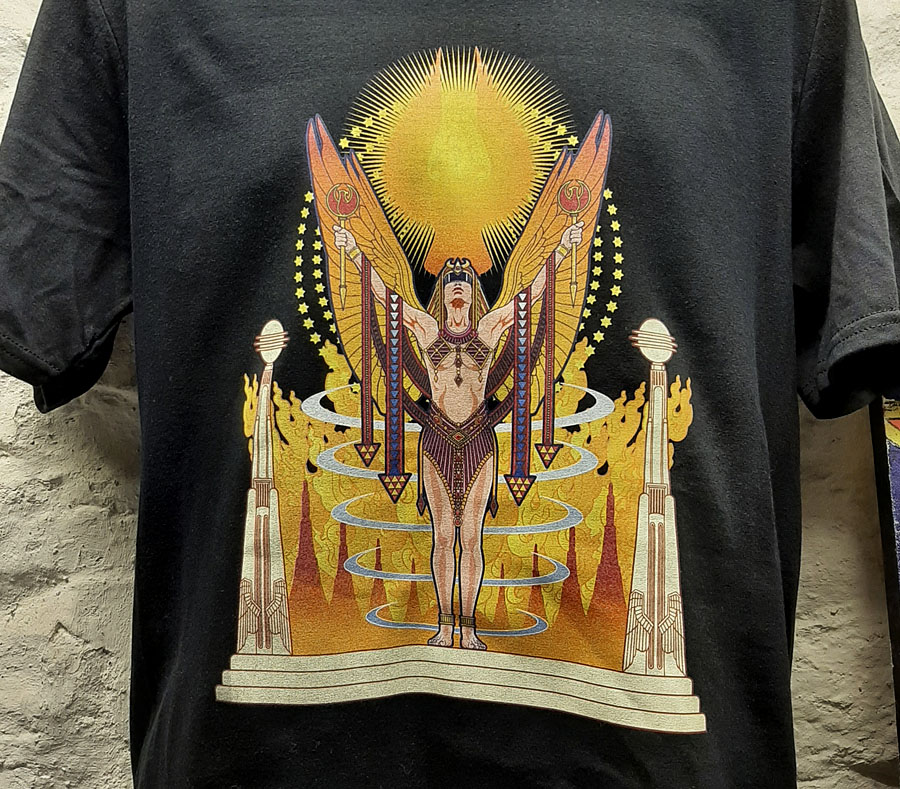
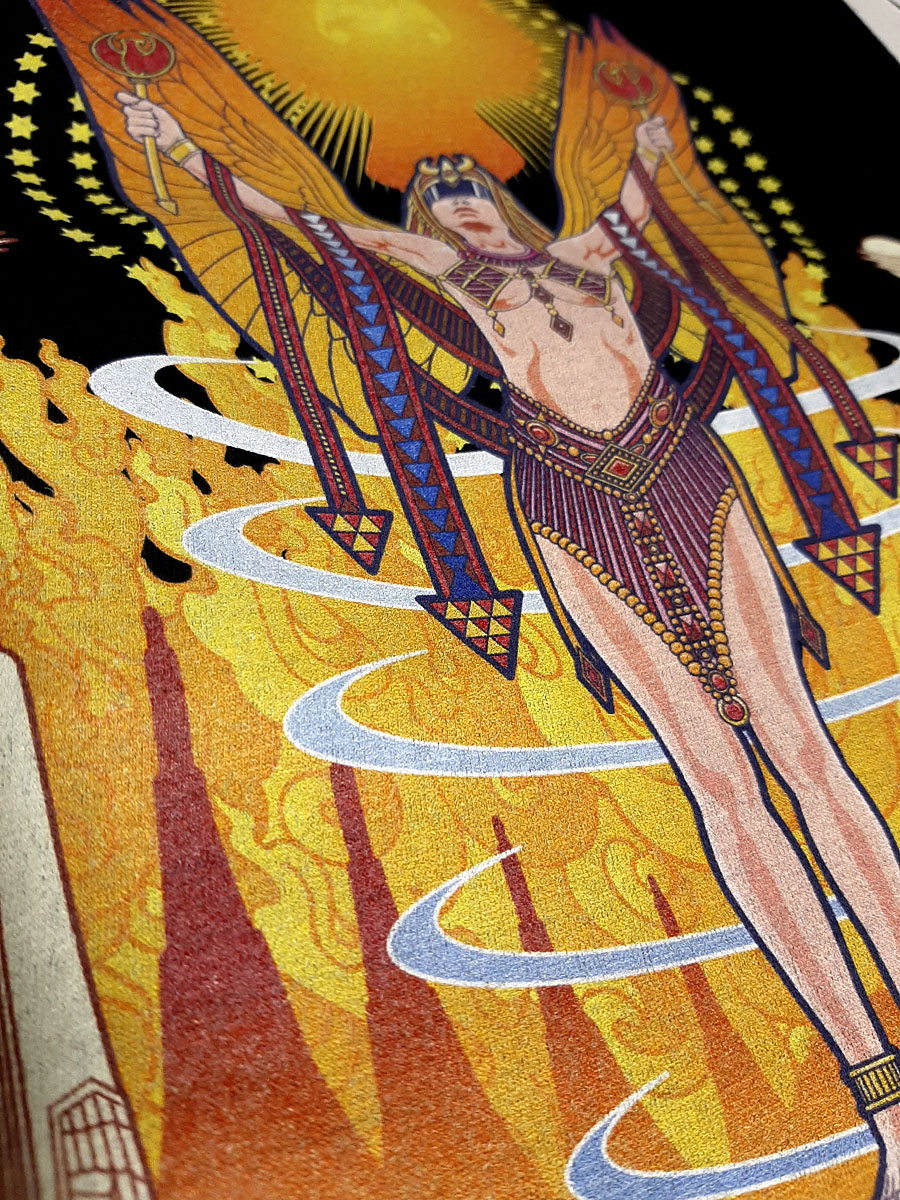
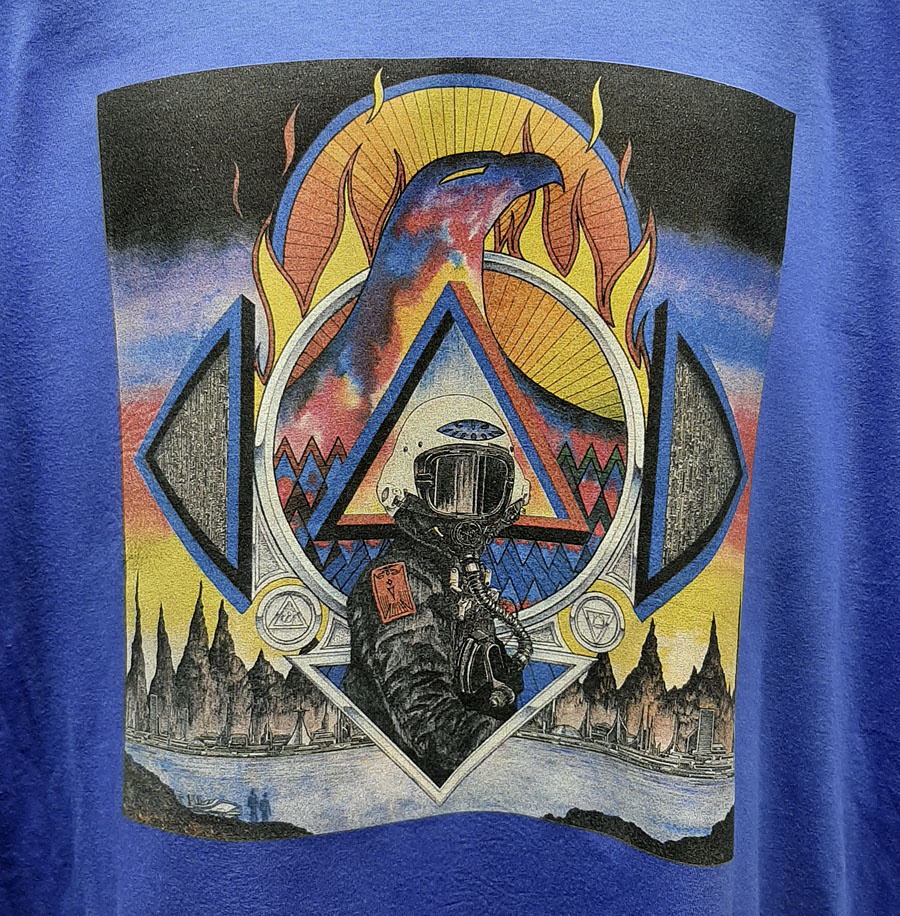
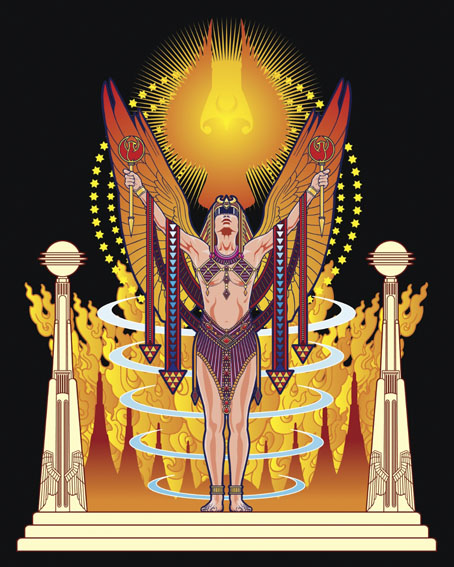
Skull Print sent these photos of the first batch of orders from the new shirt range. Very impressive detail and colour quality on both designs, especially the Zones shirt which contains a lot of fine detail. My thanks to everyone who’s placed an order so far!

shirt1-1.jpg

shirt2.jpg

Previously on { feuilleton }
More shirts
T-shirts by Skull Print

Weekend links 590

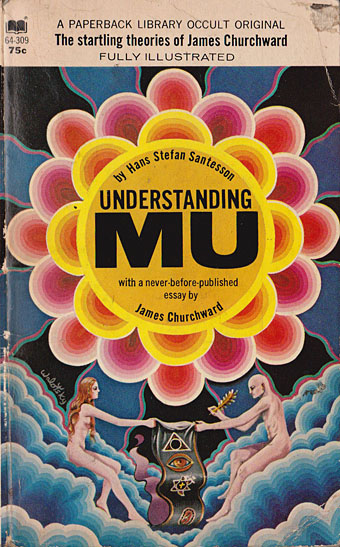
santesson.jpg

Understanding Mu (1970) by Hans Stefan Santesson. Cover art by Ron Walotsky. Via.

• “I have never believed Chariots of the Gods?—it takes faith, so what I mean is that I’ve never believed in it—but it has still held my affection for decades.” Patrick Allington on ancient aliens, unidentified aerial phenomena, and the unhinged pleasures of speculative nonfiction. I still have a stash of paperbacks in what I call “The Crank Box”, a collection of the more far-out titles that proliferated in the 1970s in the wake of the bestselling (and very egregious) Erich von Däniken. There aren’t many books about ancient astronauts or flying saucers in the box because they were so plentiful, I was always on the lookout for more outlandish volumes: lost continents, yes, but not the all-too-common Atlantis; Lemuria or Mu were more like it. So too with Hollow Earths and mysterious realms as detailed in Shambhala: Oasis of Light by Andrew Tomas, or The Lost World of Agharti: The Mystery of Vril Power by Alec MacLellan. The attraction wasn’t that any of this speculation might be true, more that these books operate as bargain-basement equivalents of the Borges conceit in which metaphysics is regarded as a branch of fantastic literature. Weird fiction by other means.

Collecting these books was a fun thing to do in the 1980s when the crank publications of the previous decade had washed up on the shelves of secondhand bookshops. The shine began to wear off in the 1990s when the emergence of the internet empowered a new breed of hucksters (and worse) pushing all of this stuff as though it was “hidden knowledge”. It’s hard to get excited about a battered paperback brimming with pseudo-science and pseudo-archaeology when similar ideas proliferate on YouTube channels catering to credulous hordes.

• Absolutely elsewhere (and linked here on a regular basis): An archive of the endlessly fascinating Absolute Elsewhere, a website created by the late RT Gault in order to present “a bibliography of visionary, occult, new age, fringe science, strange and even crackpot works published between 1945 and 1988”. The listings are accompanied by an informed, sceptical and often enlightening commentary, and also include a fair amount of weird fiction. Mr Gault had the right attitude.

• New music: Raum by Tangerine Dream, a preview of the new album, Probe 6–8, which will be released next year; new/old music: a reissue of Marine Flowers (Science Fantasy) by Akira Ito.

• “He had been honest about himself, and shockingly honest about his parents, but about his work he had spun me a tale.” Carole Angier on the elusive WG Sebald.

• At The New Criterion: Two stray notes on Moby-Dick by William Logan; on contemporary reviews of Moby-Dick and Melville’s journey on the Acushnet.

• “Perhaps what’s most extraordinary about Kollaps is that it was made at all.” Jeremy Allen on Einstürzende Neubauten’s thrilling debut album.

• At Culture.pl: a podcast about Czech film director Vera Chytilová and her masterpiece of Surrealist anarchy, Daisies.

• At Perfect Sound Forever: Part 2 of a Jon Hassell tribute which talks to friends and musical collaborators.

• At Dennis Cooper’s: Spotlight on…William S. Burroughs The Ticket That Exploded (1962).

• At Wormwoodiana: Mark Valentine unearths a medieval recipe for gingerbread.

• Mix of the week: Death’s Other Dominion by The Ephemeral Man.

MU-UR (2000) by Coil | Mu (2005) by Jah Wobble | Mu 1 (2015) by Acronym
T-shirts by Skull Print

skullprint-dotu.jpg

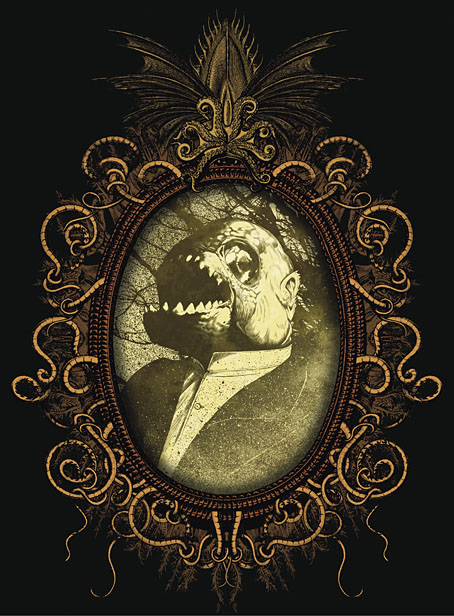
I’m very pleased to announce that I’ve partnered with T-shirt printers Skull Print to make shirts available featuring my artwork. See this standalone page for details. Skull Print are a small business based in the UK who specialise in music-related merchandise. Joe Banks pointed me in their direction when he was wondering if I’d considered doing a shirt design based on the cover of his Hawkwind book, Days of the Underground. To thank Joe for this, the first shirt is an adaptation of his cover design, which is followed by a very old piece of cover art for the Zones album by Hawkwind. Skull Print cater to a substantial Hawkwind fanbase so it makes sense to make this one available. And since we’re now in the horror month, I’ve added a couple of recent Lovecraft-related designs which have been tailored specially for this purpose.

skullprint-monsters.jpg

A design based on my cover for Lovecraft’s Monsters, an excellent story collection edited by Ellen Datlow.

I should emphasise that these aren’t the only shirt designs available. Skull Print operate on a print-on-demand basis so in theory any artwork of mine may be printed as a shirt if someone makes a request for one. (With a couple of exceptions; a few designs are subject to copyright restrictions.) The advantage that Skull Print have over other services such as CafePress is that I don’t have to spend time uploading the artwork to a website then creating a special sales page for it. Anyone who wants a shirt can now send me a request for one then I send the artwork to Skull Press and they’ll take care of everything else.

joyce.jpg

I’ll be setting up a few more designs with PayPal buttons when I have a spare moment. Some designs have been surprisingly persistent sellers at CafePress, such as my ideogrammatic portrait of James Joyce which is often ordered in the run-up to Bloomsday. A few years ago a shirt bearing this design was ordered by one “M. Atwood” of Halifax, Nova Scotia. I’ve been hoping ever since that the M. Atwood who everyone knows as a writer might turn up somewhere dressed in this item. If anyone sees a photo like this then please let me know!

Previously on { feuilleton }
Hawkwind: Days of the Underground
The Chronicle of the Cursed Sleeve
Rock shirts
Void City

Weekend links 589

mackintosh.jpg

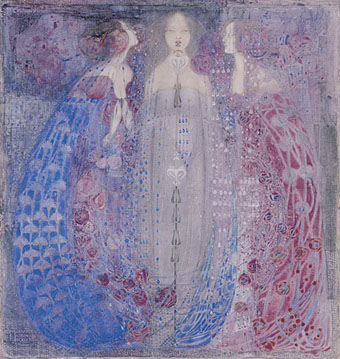
The Three Perfumes (1912) by Margaret Macdonald Mackintosh.

• “…we have empowered this monopoly to strike fear into the hearts of authors. And that may be unprecedented in history. Through our own complicity as consumers, their market share only grows.” Dave Eggers talking to Rachel Krantz about the dominance of Amazon, and his new novel, The Every.

• “People will readily flock to yoga and Pilates classes, but how many show up for soundscape therapy or take a sound-walk?” Bernie Krause on the healing powers of quietude, the Ba’Aka tribe, and Japanese forest bathing.

• “Difficulty is my drug of choice, I guess.” Dennis Cooper (again) talking to Troy James Weaver about his new novel, I Wished.

• At Wormwoodiana: Mark Valentine reviews Shadows of London by Jonathan Wood.

• Robert Fripp’s drive to 1981: Joe Banks on Discipline and the return of King Crimson.

• End times and rapture: Ken Hollings remembers Richard H. Kirk.

• Daniel Spicer on The Strange (Parallel) World of Miles Davis.

• Mix of the week: XLR8R Podcast 715 by Uffe.

• Steven Heller’s font of the month is Oposta.

Perfumed Metal (1981) by Chrome | Ode To Perfume (1982) by Holger Czukay | Perfume (2006) by Sparks

The art of Eduardo Hernández Santos

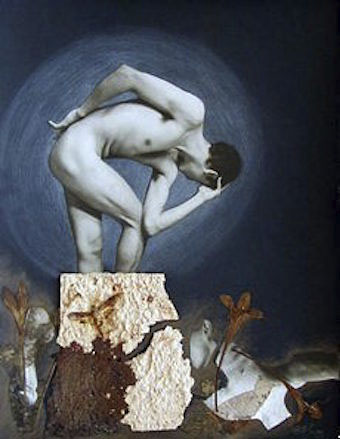
santos1.jpg

From the series Aproposito los flores.

In 1993 I made Homo-Ludens, which was the first homoerotic exhibition to take place in Cuban photography after the Revolution. This show was committed to a direct, frontal discourse, but very aesthetic. It was not intended to reflect great contradictions, but to propose to society that the male body was also an object to analyze, that it was a source of pleasure, and not only to women.

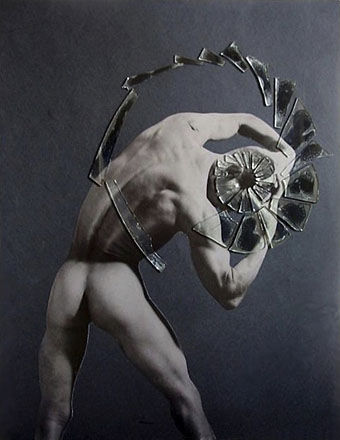
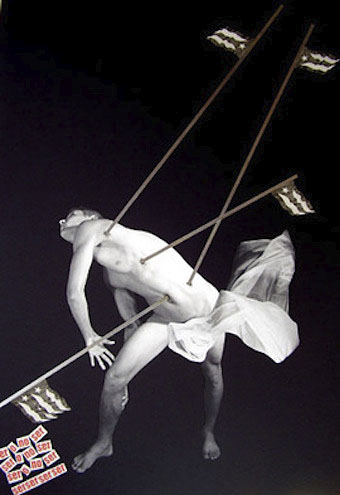
Cuban artist Eduardo Hernández Santos talking in 2016 about his career (here and here). In addition to straightforward photography, Santos favours collage as a technique, combining his own photographs with fragmented slogans and other imagery. The late date of the Homo-Ludens exhibition is a result of the slow evolution of attitudes towards sexuality in Cuban society. Fidel Castro regarded gay men as degenerates, a common sentiment in Communist circles in the 1960s, and one shared by many fascists. A striking thing about homosexuality is the way you can be despised by a wide variety of people who wouldn’t agree with each other about anything else.

santos2.jpg

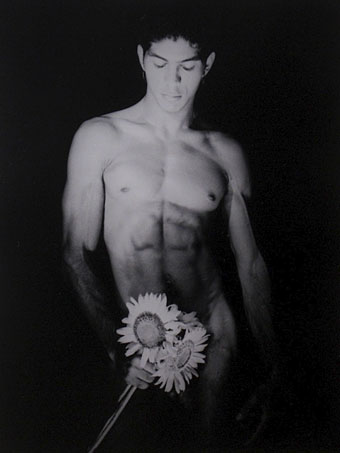
From the series Corpus Fragiles.

It’s tempting to wonder what Jean Genet would have thought about Santos’s photographs of male nudes with flowers. Genet used flowers for their symbolic qualities almost as much as Oscar Wilde, so even though it’s unwise to try and second-guess him I imagine he’d appreciate their use here.

santos3.jpg

Untitled (2000).

santos4.jpg

From the series Palabras.

Elsewhere on { feuilleton }
The gay artists archive

Previously on { feuilleton }
The art of Gregorio Prieto, 1897–1992
Emil Cadoo