Laurence Housman’s End of Elfintown

elfin01.jpg

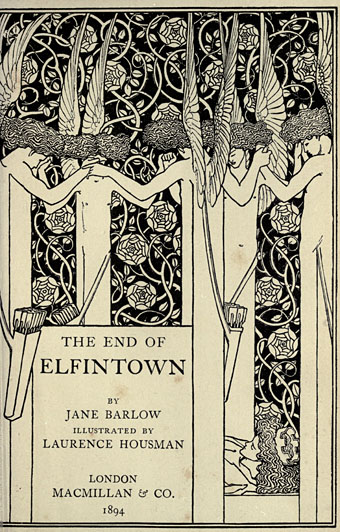
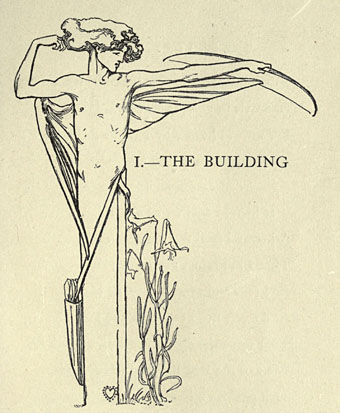
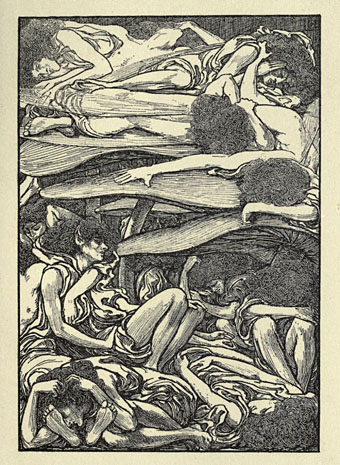
More Laurence Housman, and a book I’d not seen before. Jane Barlow’s The End of Elfintown (1894) is a typical piece of Victorian fairy poetry—her “elves” are also flower-dwelling “Fays”, and Oberon is mentioned—but Housman’s renderings give a very different impression. In place of the usual delicate creatures he shows a very sensual company, all satyr ears and enormous Pre-Raphaelite manes. The frontispiece is very Beardsley-like, especially those entwined roses.

elfin02.jpg

elfin03.jpg

Continue reading “Laurence Housman’s End of Elfintown”

The Reflected Faun

housman.jpg

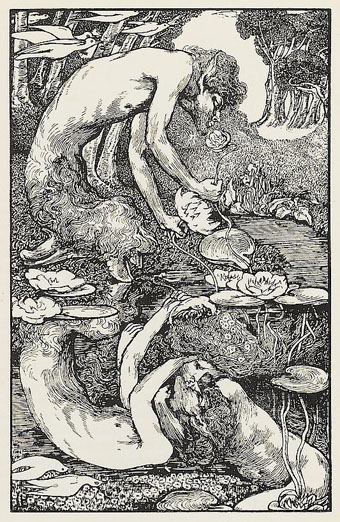
Another one to add to the stock of fauns, satyrs and Pan figures that proliferate from the 1890s to the 1920s, Laurence Housman’s The Reflected Faun appeared in The Yellow Book in 1894. The magazine’s publisher, John Lane, also published Arthur Machen’s The Great God Pan in the same year although an early version of Machen’s story had appeared a few years before. What’s notable about Housman’s drawing is the way he combines in a single image several distinct themes: Faunus/Pan, the reflected Narcissus, and all those tales of beguiling spirits lurking in water. The nature of the spirit in this picture is distinctly androgynous, a detail that wouldn’t have impressed those critics who considered The Yellow Book to be an unwholesome publication. The androgyny may be taken as deliberate: Housman was one of London’s “Uranian” artists, and a few years later joined George Cecil Ives’ Order of Chaeronea, a secret society for gay men and lesbians. In the light of this, the drawing might be interpreted as a symbol for a clandestine existence where true desires remain buried or submerged.

Elsewhere on { feuilleton }
The illustrators archive

Previously on { feuilleton }
Aubrey Beardsley’s Keynotes
In the Key of Yellow
Ads for The Yellow Book
The Piper at the Gates of Dawn
The Great God Pan
Peake’s Pan

La Ronde du Sabbat

hugo1.jpg

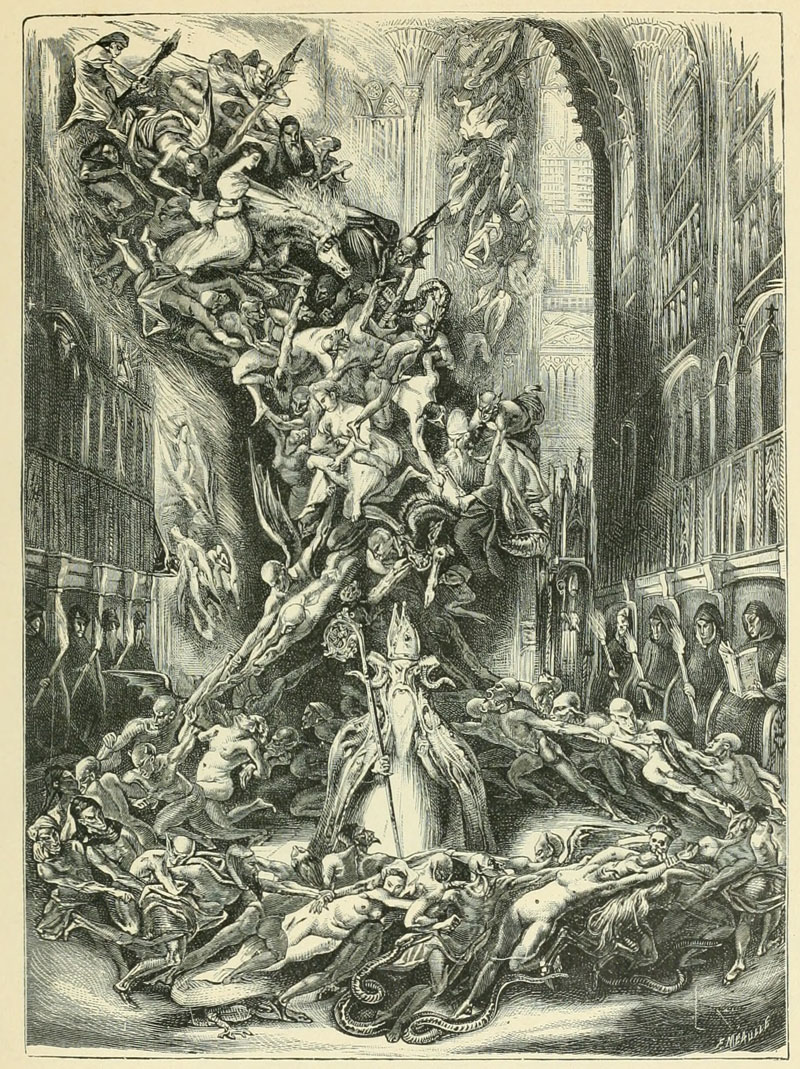
This is too late for Walpurgisnacht (although it’s still night at this moment) but the 1st May is Beltane, and this is a very pagan drawing. The artist is Louis Boulanger, a friend of Victor Hugo’s here illustrating one of the author’s poems for Cent Dessins: Extraits des Oeuvres de Victor Hugo, illustrations for Hugo’s poetry, fiction and drama. Much of the work is mediocre or dull but this surprisingly excessive picture would have stood out even among better company. Many of the illustrations are engravings from paintings—one is an adaptation of Delacroix’s Liberty Leading the People—but the copy of Boulanger’s painting wanders freely from the original which is a much more typical piece of Romantic art. The engraver was Fortuné-Louis Méaulle who really ought to share a credit with the original artist.

hugo2.jpg

A few of the more notable illustrations follow, one of which is yet another artwork on the perennial theme of man versus cephalopod.

hugo3.jpg

Continue reading “La Ronde du Sabbat”

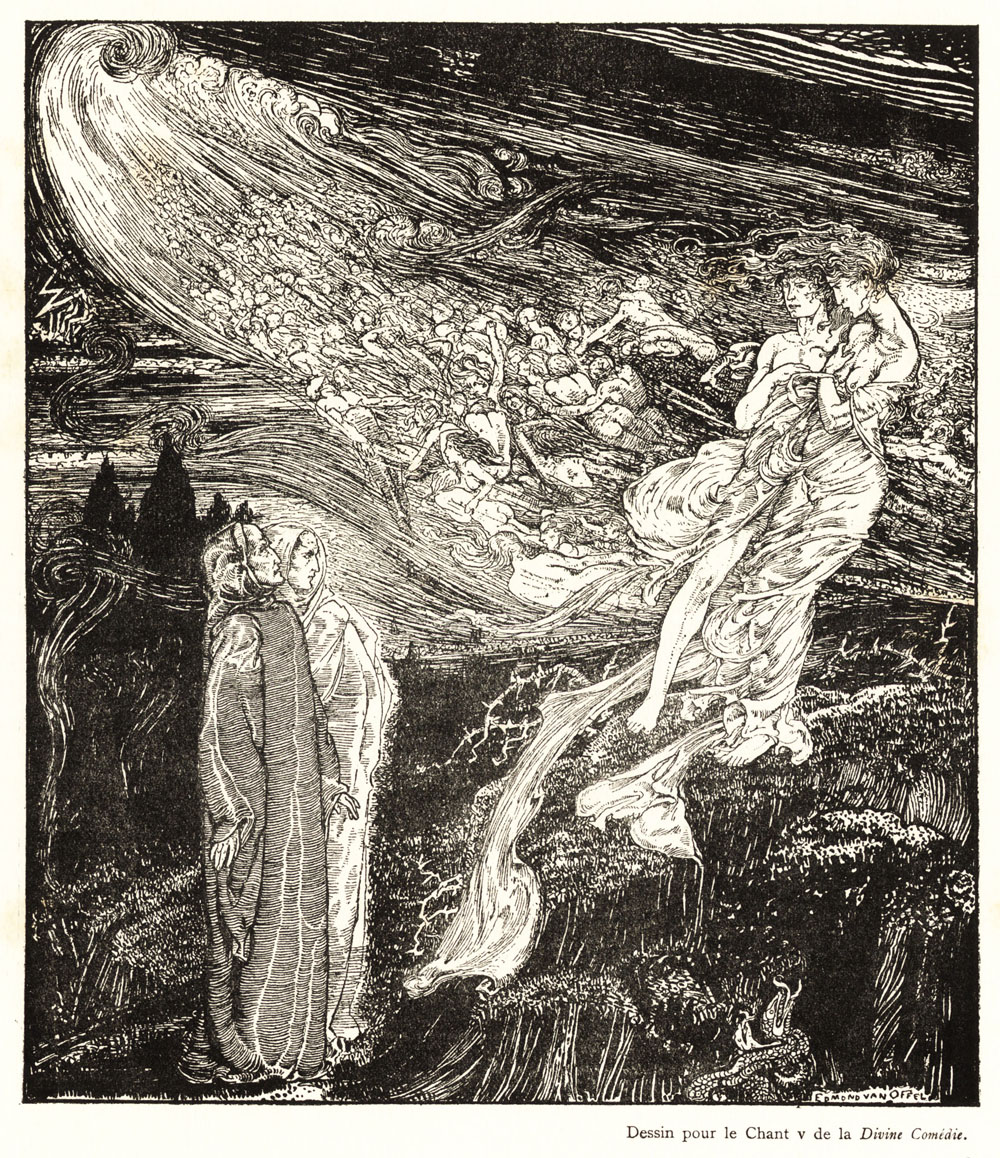
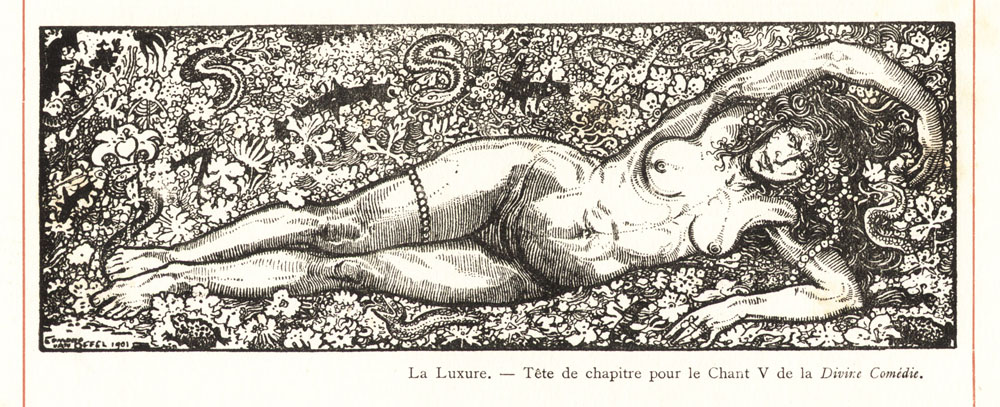
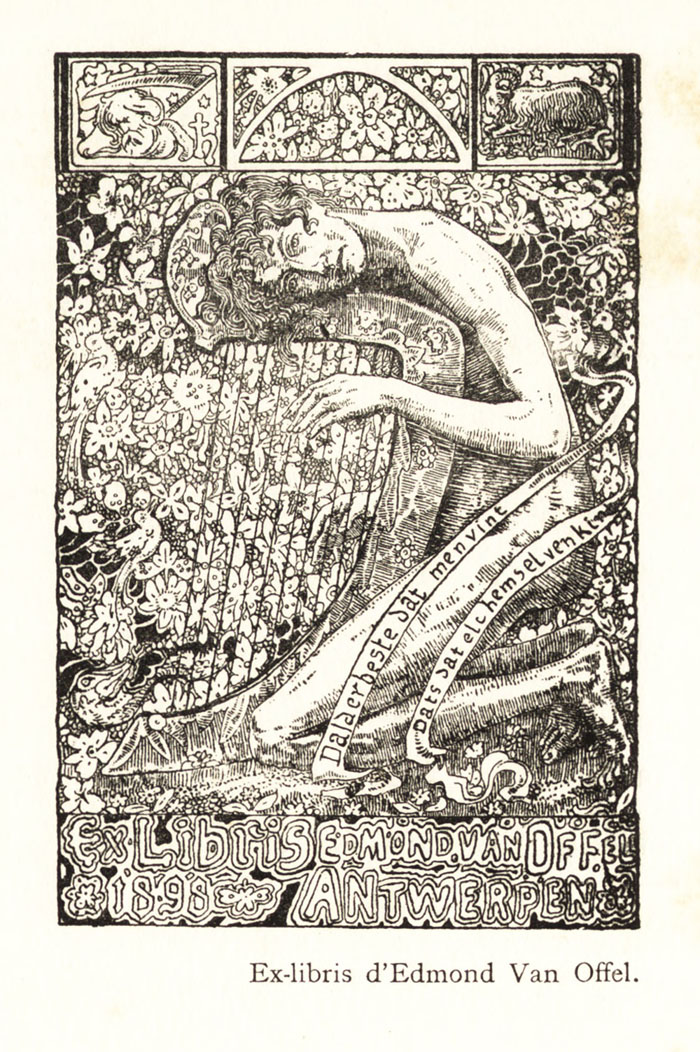
The art of Edmond van Offel, 1871–1959

offel01.jpg

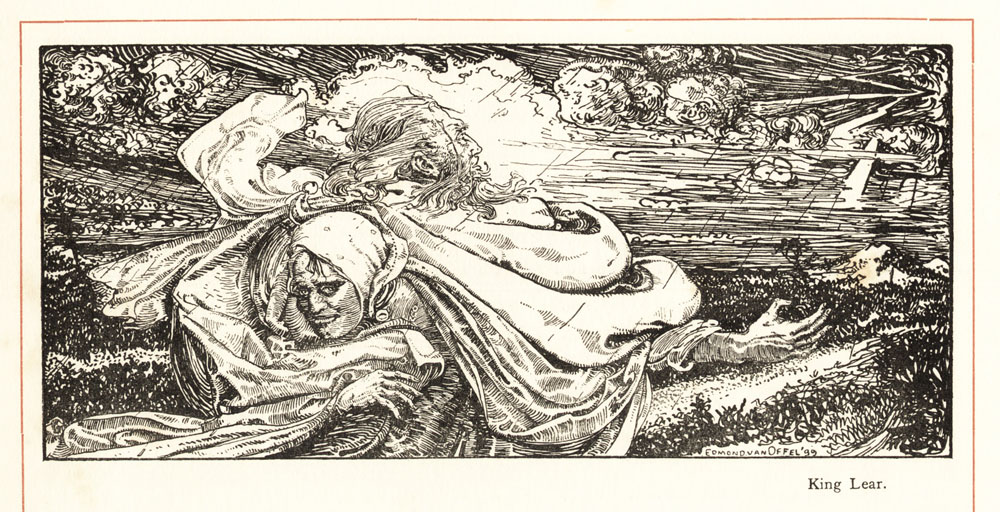
Edmond van Offel was a Belgian artist who Philippe Jullian features in two of his books about Symbolist art but whose work I’d not seen anywhere else—at least until now. All the pictures here are from a collection published in Paris in 1902 which may be the one Jullian used for his selections. The book contains both Jullian drawings together with a great deal of other work comprising illustrations, vignettes, bookplates and also some of the artist’s writings. Offel’s combination of detailed line-work and attenuated figures is reminiscent of Charles Ricketts who may have been an influence.

offel02.jpg

offel03.jpg

offel04.jpg

Continue reading “The art of Edmond van Offel, 1871–1959”

Weekend links 255

farneti.jpg

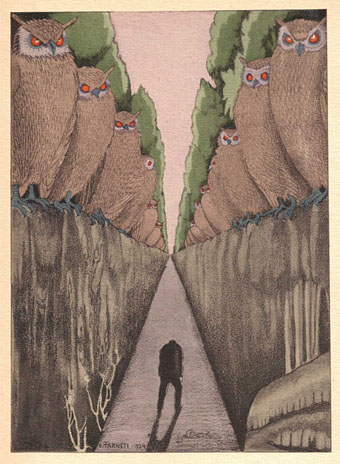
The Owls by Carlo Farneti for a 1935 edition of Les Fleurs du Mal. Via Beautiful Century although the scans probably came originally from 50 Watts.

• “…a project that seemed under a curse comprising greed, peculiar French copyright laws, jealousies and grudges, bad judgment, complicated ownership disagreements, a messy estate, and a list of individuals who believed they had some legal, financial, moral, or artistic right to the film itself.” Josh Karp on the tangled history of The Other Side of the Wind, always the most interesting of Orson Welles’ unfinished feature films.

• Producer Conny Plank is remembered for his work with a host of German artists but he also recorded a session with Duke Ellington and His Orchestra in 1970. Grönland Records is releasing the session in July, and they’ve posted Afrique (take 3 vocal) as a taster.

• “And that’s what a lot of social media by authors is starting to look like, to feel like: being smacked in the face, repeatedly, by hundreds of fish.” Delilah S. Dawson wants authors to leave off the incessant self-promotion.

“In everybody, there is an inner bestiary,” she claimed, and her pictures are overrun with animals and animal-headed creatures; sometimes sinister, sometimes acting as guides to the unconscious, as in The Pomps of the Subsoil (1947). As her interests grew more hermetic her paintings abandoned all trace of the world beyond. If the figures occupy any sort of space it’s rarely more than the planes of a room in muted browns or greys, and in many the surface is overlaid with geometric patterns that seem to imply some mystical framework.

Alice Spawls on the art and life of Leonora Carrington

• “How a pro-domme, a Russian diplomat, US intelligence and Mary Tyler Moore’s landscaper conspired to create a dance classic.” Dave Tompkins on The Dominatrix Sleeps Tonight.

• “Battersea, in fact, is a fairly simple climb, made ready by the builders who are destroying it.” Katherine Rundell on climbing Battersea Power Station at night.

• Mixes of the week: Secret Thirteen Mix 148 by Mlada Fronta, and The Ivy-Strangled Path, Volume V, by David Colohan.

Erté illustrates a gay romance in Lytton Strachey’s Ermyntrude and Esmeralda (1913 but not published until 1969).

• Dangerous Minds looks back at “The most unusual magazine ever published”, Man, Myth & Magic.

David Chase on the writing, directing and editing of the final scene of The Sopranos.

Magic Man (1969) by Caravan | The Myth (1982) by Giorgio Moroder | Magick Power (1987) by Opal