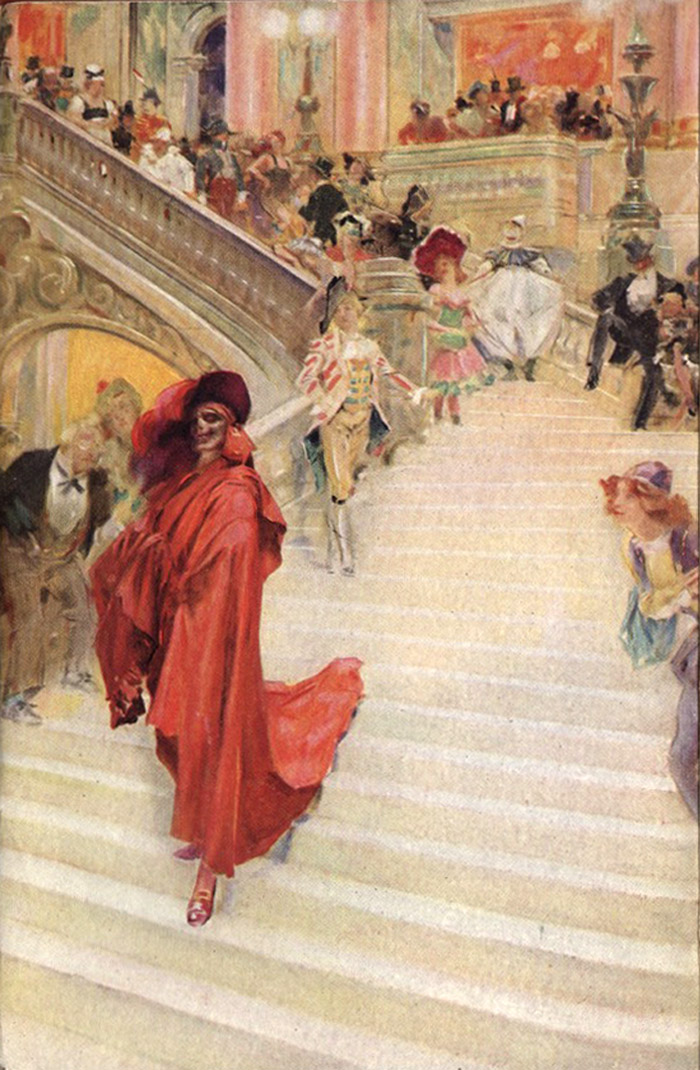
Exlibris (Bucheignerzeichen)

bookplates04.jpg

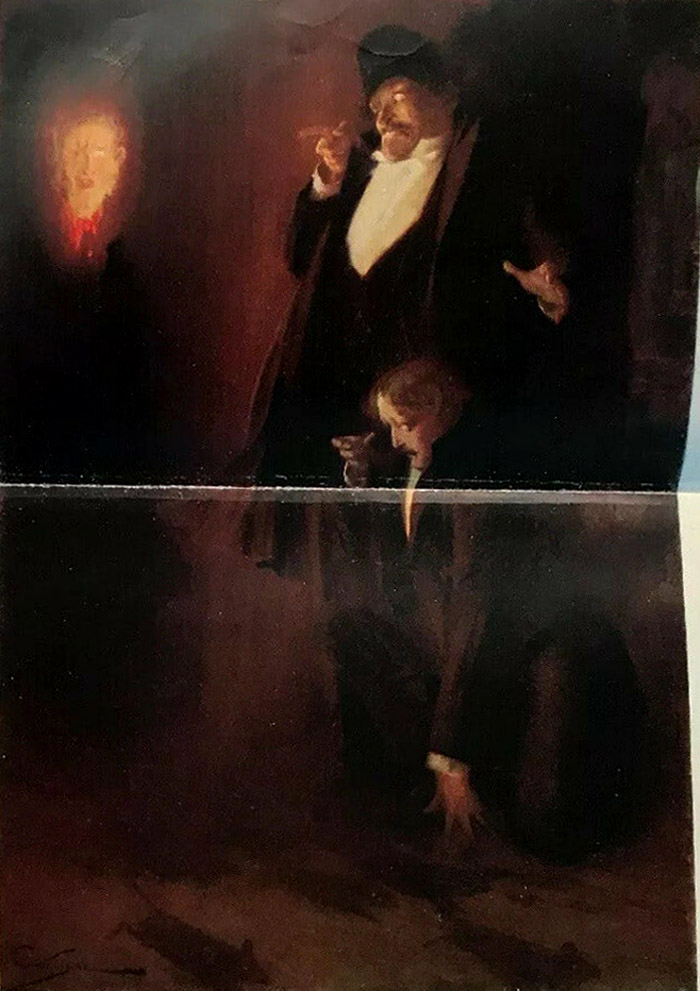
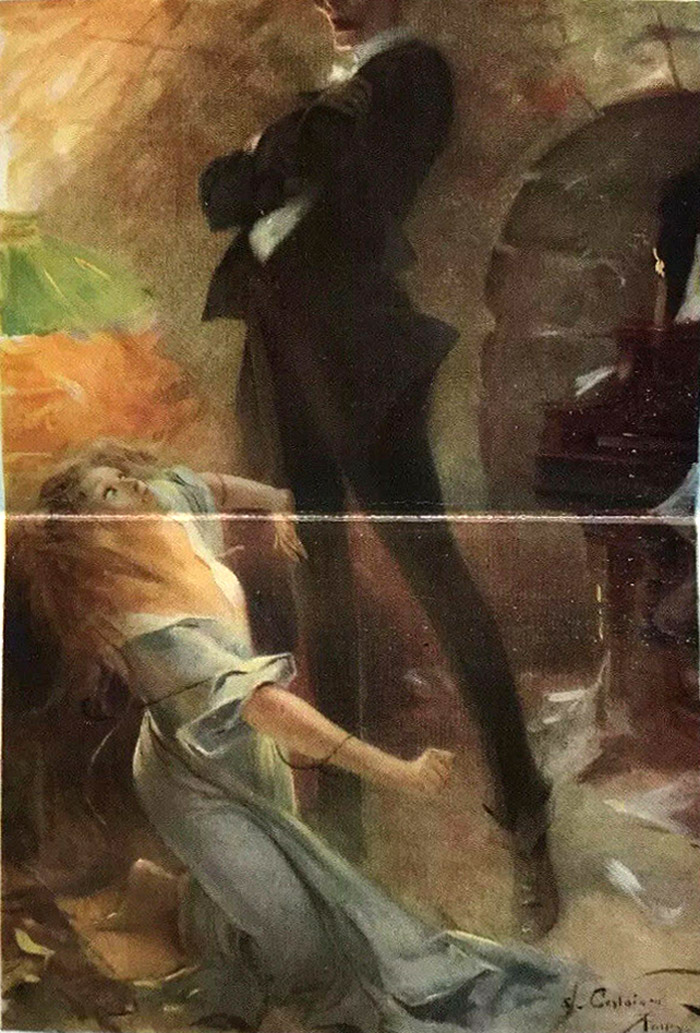
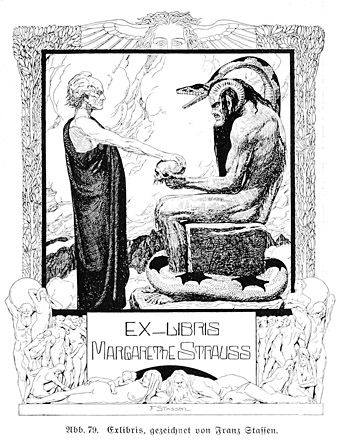
I don’t use bookplates, and don’t know anyone who does, but the conjunction between art and literature is a fascinating one. Exlibris (Bucheignerzeichen) (1909) by Walter von Zur Westen explores the history of the bookplate, and would no doubt answer some of my questions about the form if it wasn’t in German throughout, and also typeset in the semi-legible Fraktur style that used to be de rigueur for all German texts.

bookplates02.jpg

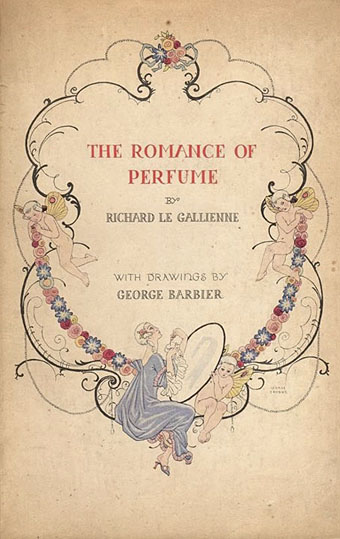
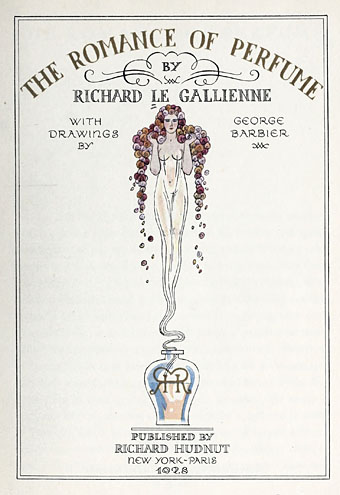
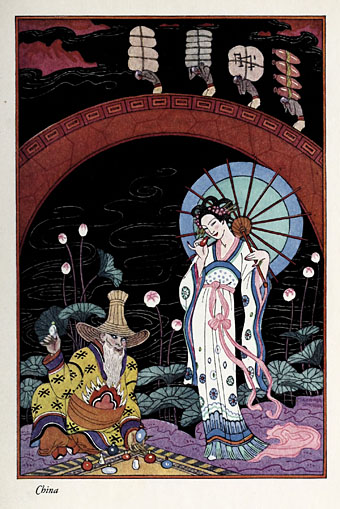
We still have the illustrations, however, and these range from woodcut engravings to contemporary works in pencil and ink, with many of the later contributions being from established artists whose names are familiar today; among the examples below are works by Symbolists Max Klinger, Fernand Khnopff and Felicien Rops. There’s also an especially fine example by Charles Ricketts. The latter are a reminder that bookplate commissions were a common thing for 19th-century artists, although their efforts are seldom seen outside collections such as this. Much of Zur Westen’s history is devoted to the German regions but later chapters cover other European countries and the United States.

bookplates03.jpg

bookplates01.jpg

bookplates05.jpg

Continue reading “Exlibris (Bucheignerzeichen)”

Weekend links 484

qadiri.jpg

Alien Technology (2014) by Monira Al Qadiri.

• “William S. Burroughs wrote, in a long, zigzag ode: ‘You can hear metal think in the electromagnetic fields of Takis sculpture.'” Geeta Dayal on the sound sculptures of the late Panayiotis Vassilakis (1925–2019), better known as Takis.

• “Everything about this song is mysterious, from the creation to the lyrics to where it played on the radio…” David Browne on The Unsolved Case of the Most Mysterious Song on the Internet.

Moebius made many illustrations of Jimi Hendrix. Related: Giraud-Moebius pour le disque: 33 tours et plus dans les étoiles.

• London arts venue the Horse Hospital (where some of my work was exhibited a couple of years ago) is fundraising again.

• Sam Gafford: Number One—The Larch: John Linwood Grant remembers the late author, editor and friend.

• Mixes of the week: Cosmique Français by Tarotplane, and Secret Thirteen Mix 297 by Rosa Damask.

• More Magma: the group in live performance in 2009 playing the end of De Futura.

• At Dennis Cooper’s: The Horror Films of Terence Fisher Day.

Pye Corner Audio performs at the state51 Factory.

• A demo of Colour Me In by Broadcast.

• RIP Malcolm Whitehead.

• Alien Activity From The 45th Parallel (1978) by Cellutron & The Invisible | Alien (1981) by Ende Shneafliet | Alien Loop (2014) by Mica Levi

Weekend links 481

gaussot.jpg

L’Hamestoque (1977) by Christine Gaussot.

• Another announcement from Strange Attractor Press: Of Mud & Flame: A Penda’s Fen Sourcebook edited by Matthew Harle and James Machin will be published at the end of October. Among the contents will be the screenplay of David Rudkin’s cult television play, an item that’s always been impossible to find in print.

• A trailer for Journey to the Beginning of Time (1955), another semi-animated fantasy film by Karel Zeman which will released on disc next month by Second Run.

• “There was craziness in getting lost and dizzy.” Stereolab choose favourite songs from their back catalogue.

E=MC² (1976), an album of spacey jazz-electronica by Teddy Lasry which has never been reissued.

• “Why do so many book covers look the same? Blame Getty Images,” says Cory Matteson.

• Mix of the week: The Ephemeral Man’s Teapot by The Ephemeral Man.

Masataka Nakano has been photographing a deserted Tokyo for almost 30 years.

• Beyond the bounds of depravity: an oral history of David Cronenberg’s Crash.

Woodblocks in Wonderland: The Japanese Fairy Tale Series.

• A new novel by M. John Harrison is always a good thing.

Hamid Drake‘s favourite music.

Warm Leatherette (1980) by Grace Jones | Crash (1980) by Tuxedomoon | A Crash At Every Speed (1994) by Disco Inferno

Picturing Vermilion Sands

knight2.jpg

First UK edition, 1971. Art by Brian Knight.

Vermilion Sands (1971) is a story collection by JG Ballard which maintains a cult reputation despite being overshadowed by its author’s more popular novels. Most of the stories were written in the 1960s—a couple of them are among Ballard’s earliest works—but where many of his other short stories can read like the work of a writer with bills to pay, the tales of Vermilion Sands are much closer to Ballard’s core interests, filled with symbolic resonance and literary allusion.

Vermilion Sands, the place, is a near-future resort with a desert climate and an unspecified location; a region where the Côte d’Azur meets Southern California but the ocean is a sea of sand. While each story has a different artistic or cultural theme, all are populated by the idle midde-class types found in the rest of Ballard’s work. Ballard more receptive to visual art than many authors, especially the SF writers of his generation for whom art was less interesting than science and technology. There is science and technology in these stories—some of the latter is now inevitably dated—but it doesn’t dominate the proceedings. The stories derive less from scientific speculation than from Ballard’s desire to create a future he would have been happy to inhabit himself, an alternative to the grim dystopias which proliferate in science fiction. The background furnishings also reflect the author’s ideal, owing much to the Surrealist landscapes of Salvador Dalí and Max Ernst, a pair of artists whose works are often referenced in Ballard’s fiction. Given all of this you’d expect that cover artists might have risen to the challenge more than they have. What follows is a look at the most notable attempts to depict Vermilion Sands or its population, only a few of which are covers for the book itself.

Continue reading “Picturing Vermilion Sands”

Claude Shepperson’s First Men in the Moon

shepperson01.jpg

In the week following the Moon-landing anniversary I’ve been re-reading The First Men in the Moon by HG Wells. This was a late entry in Wells’ extraordinary run of science fiction novels, and is both shorter and lighter in tone than his earlier novels, some of which veer at times into outright horror. The First Men in the Moon might have been a serious examination of interstellar travel but the narrative is overtly comic in places, rather like The Man Who Could Work Miracles, a Wells story in which a fantastic gift is offered to a character unprepared to make the most of it. Wells’ lunar explorers—Bedford, a failed entrepreneur, and Cavor, an absent-minded inventor—lurch from one mishap to another, yoked together through their own inadequacies. Early in the proceedings Cavor destroys his house when his gravity-repelling “Cavorite” generates a violent funnel of air before launching itself into space. Cavor regards this as fortunate, explaining that a slightly different set of circumstances might have removed the breathable atmosphere from the entire planet for a day or so. The trip to the Moon is conducted almost on a whim: Cavor has no real reason for going, and Bedford tags along in the hope of finding some future business opportunity. Like the hapless protagonists of Withnail and I, this is a lunar voyage undertaken “by mistake”.

shepperson02.jpg

It’s probable that Wells regarded absurdity as being the best way to approach a story that was less original than his earlier works. The first edition of the novel opens with an epigraph from Lucian’s True History (or True Story), a book from the second century AD which includes a journey to the Moon among its planetary travels. Lucian’s book was the first to feature such a journey (and is often regarded as the first work of science fiction) but many others followed, even before From the Earth to the Moon (1865) by Jules Verne, a book which Bedford mentions during the expedition discussions. (Cavor has never heard of it.)

shepperson03.jpg

The illustrations here by Claude Allin Shepperson are also from the first edition, and are closer to the tone of the novel than those by other artists. E. Hering’s illustrations for American readers are in a style which is more detailed and inventive than Shepperson’s but which also suggests a more serious story. Readers expecting a new War of the Worlds would have been surprised. Shepperson’s drawing of Cavor’s spacecraft evidently provided the model for Ray Harryhausen in the 1964 film adaptation, although Harryhausen’s Selenites differ from both Shepperson and Wells’ descriptions. Nigel Kneale’s screenplay deviates from the book elsewhere but the film is still a more faithful adaptation than those based on Wells’ more popular novels, as are many of the other screen adaptations, the first being a lost silent from 1919. All of which reminds me that I’ve not seen Harryhausen’s film for many years. I’d welcome another date with the Grand Lunar.

shepperson04.jpg

shepperson05.jpg

Continue reading “Claude Shepperson’s First Men in the Moon”