The original Gandharva

gandharva1.jpg

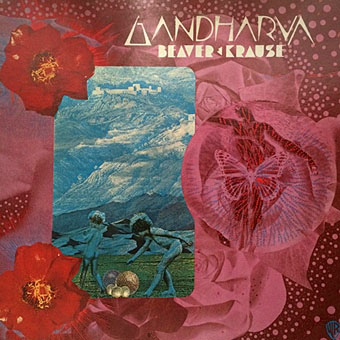
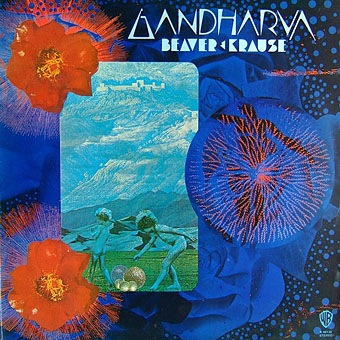
Cover art by Wilfried Sätty. Lettering by David Singer.

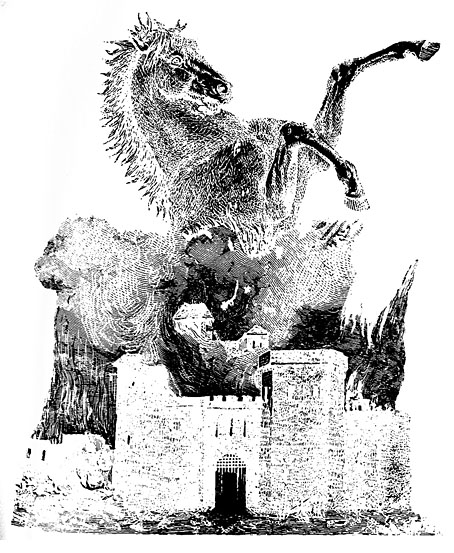
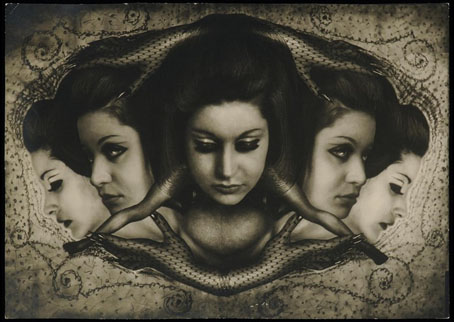
Collage artist Wilfried Sätty has been in my thoughts this month, it being ten years ago that Jay Babcock, Richard Pleuger and I drove up to San Francisco and Petaluma to talk to Walter Medeiros and David Singer about Sätty’s life and work. Looking today at the Sätty cover art for Gandharva (1971) by Beaver & Krause reminded me that the original pressing of this album came with the sleeve in a predominantly pink colouration rather than the more familiar blue. I have three copies of the album—vinyl and two CDs, one of which pairs it with Beaver & Krause’s In A Wild Sanctuary (1970)—but I’ve never seen one of the pink variations, and didn’t even know they existed until they started appearing on the web. The CD reissues favour the blue version, as do I, although this may only be a result of familiarity. I’ve enthused about Sätty’s cover a couple of times already but the music is worth hearing for its connections backwards to Cammell & Roeg’s Performance (for which B&K provided the ominous synthesizer tones), and forwards to Robert Fuest’s The Final Programme. Fuest asked Gerry Mulligan to score his film after hearing the Gandharva suite (described in the sleeve notes as “a score from a non-existent film”) which occupies side two of the album.

gandharva2.jpg

Elsewhere on { feuilleton }
The album covers archive

Previously on { feuilleton }
The Occult Explosion
Wilfried Sätty album covers
Nature Boy: Jesper Ryom and Wilfried Sätty
Wilfried Sätty: Artist of the occult
Illustrating Poe #4: Wilfried Sätty
Gandharva by Beaver & Krause

The World of Wonders

wonders01.jpg

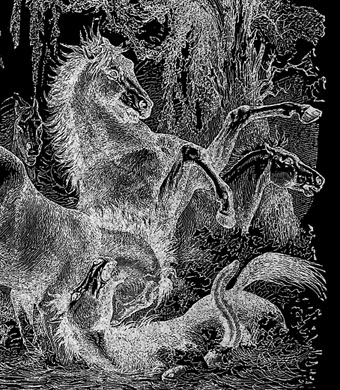
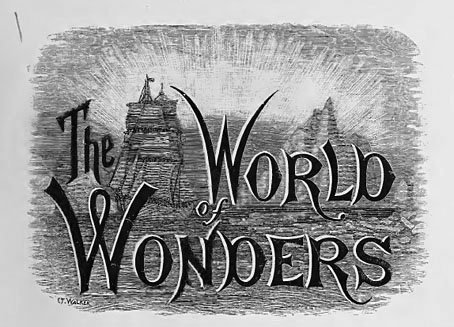
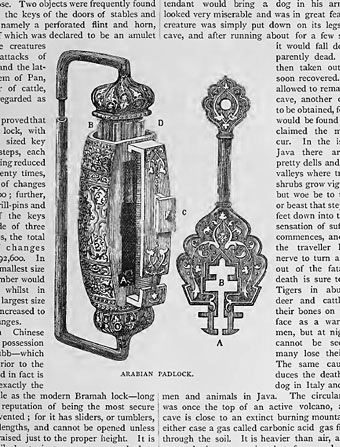
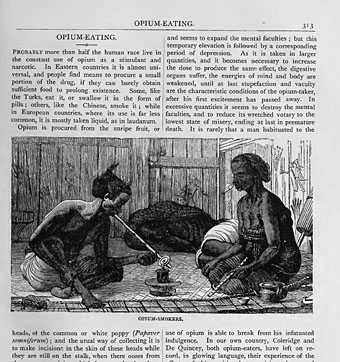
This is the kind of Victorian book I enjoy a great deal, something that might be regarded as a Wunderkammer in paper form: not an encyclopedia, and not a science text-book but containing the kinds of articles you’d find in both. The chief attraction is the engraved illustrations, of course, although the articles themselves are often of interest. The World of Wonders dates from 1883, and is subtitled “A record of things wonderful in nature, science, and art”. This is very like a book I own entitled The Pictorial Cabinet of Marvels although The World of Wonders is the superior work, with a larger page count and a wider range of subjects. This is also only Volume 1, although I’ve not searched through the Internet Archive to see whether they have any further volumes. The illustrations are from a PDF, the page scans are much better quality. And I was pleased to find that two of the plates shown below—Barnacles and A Coal Forest—were combined by Wilfried Sätty for one of his Poe collages. (I’d scan the Sätty picture but I don’t want to spoil the book.) I’ve recently been commissioned to create some more engraving collages so volumes such as this may be useful source material.

wonders02.jpg

wonders03.jpg

Continue reading “The World of Wonders”

Weekend links 270

ufo.jpg

Cover design for UFOs and Extra-Terrestrials in History (four vols, 1978) by Yves Naud.

Come To The Sabbath, “a festival of dark arts delving into the influence of Black Magick, Witchcraft, Demonology and Satanism in pop culture”, takes place at Apiary Studios, 458 Hackney Road, London, from Tues 18th–Sun 23rd August.

• “Visitors, if there had ever been any, would have said that the little town of Mansfield was haunted.” Showdown is a previously unpublished short story by Shirley Jackson.

• “A sandbox stealthy immersive sim in a surreal, horror-y world inspired by writers like Burroughs and Ballard…” Alice O’Connor previews the forthcoming computer game, Tangiers.

Sometime in the late 1960s, the artist Robert Smithson took a trip to southwestern Ohio. He saw the Great Serpent Mound there and decided that he would make a great spiral too. […] Because the Great Salt Lake’s levels vary several feet from year to year, and also from season to season, Spiral Jetty is not always visible even if you make the trip to Utah. You could go out to Spiral Jetty and find that the entire earthwork is invisible underwater. When Robert Smithson created this earthwork in 1970, he did not care if it could be easily seen or who owned it. And so, even today, no one knows to whom Spiral Jetty really belongs. To view it requires a pilgrimage.

Stefany Anne Goldberg on earthworks, new and ancient, and the art of disappearance

• “Commercial book cover design is a minor portion of Gorey’s award-winning legacy, but not a lesser art.” Steven Heller on Edward Gorey: cover designer.

• “You are accepted,” he says, “by the genre that can accept you.” Samuel R. Delany talked to Peter Bebergal about being an outsider in the world of science fiction.

A battle of Witts: A brief look at ‘Taboos’ and the work of The Passage. Mark Griffiths on a great, if seldom-remembered, Manchester band.

• “Hispanic photomonteur Josep Renau aimed Technicolor jets of scorn at the mirage of US consumerist culture,” says Rick Poynor.

• Because the internet is really big… Kelli Anderson reworks the Eames’ The Powers of Ten using imagery found via Google searches.

Against Nature is a forthcoming musical adaptation of Huysmans’ À Rebours by Marc Almond, Jeremy Reed and Othon.

“What makes a film noir?” Adam Frost & Melanie Patrick have an infographic for you.

• Mixes of the week: Gizehcast #20 by LCC, and Jenny Hval‘s WEIRD Quietus mix.

• Mysterium Tremendum: Russell Cuzner on The Strange World of Lustmord.

• The charming march of the Penguin Books logo.

Cosey Fanni Tutti: Agent Provocateur

Dark Times (Peel Session) (1980) by The Passage | XOYO (1982) by The Passage | Revelation (1982) by The Passage

Falk-Ulrich Rogner album covers

duul00.jpg

All The Years Round (7-inch single, 1972).

I mentioned earlier that Falk-Ulrich Rogner’s cover art for Amon Düül II was worthy of a post so here you are. Amon Düül II were slightly ahead of the pack in the German music scene of the 1970s, starting earlier and (arguably) finishing their prime period earlier. They were also closer in musical style and group ethos to the psychedelic/early prog groups in Britain and America, especially Hawkwind with whom they shared a record label and a bass player. Other German groups were often psychedelic to some degree but Amon Düül II went all-out for a German take on psych rock, with extended guitar-heavy jams played against oil-on-water projections.

Falk-Ulrich Rogner was one of the longer lasting members of the group’s shifting personnel, playing organ and electronics, writing lyrics and creating artwork that’s a perfect match for what I always think of as Amon Düül II’s Gothic Surrealism: a blend of lyrics and themes running through songs titled like Max Ernst paintings: Flesh-Coloured Anti-Aircraft Alarm, Archangel’s Thunderbird, Stumbling Over Melted Moonlight, Green Bubble Raincoated Man. The cover art is generally a collage of photographs, old paintings and other graphics, a familiar technique for psychedelic album covers. What gives Rogner’s work an edge is the way he blends multiple collages together by either photographic exposure or the photographing of projected transparencies. This has the effect of softening hard edges and transitions, and makes the resulting images all the more hallucinatory and dream-like. Effects like this are easy to achieve today with Photoshop but in the early 1970s they required a considerable effort.

duul01.jpg

Phallus Dei (1969).

At first glance the cover of the gloriously titled debut album looks like a painting but it’s a photograph of a tree silhouette juxtaposed against some vague collage business. This doesn’t really communicate the lysergic intensity of the music within which may explain why the cover was changed to something more typically psychedelic for its UK release.

duul02.jpg

The back cover inaugurates a pattern of placing the band on the back of the album, a reversal of the usual state of affairs even today.

duul03.jpg

The first CD release of Phallus Dei on the Mantra label featured what may be another Rogner photomontage, one that I’ve not seen anywhere else.

Continue reading “Falk-Ulrich Rogner album covers”

Birth of a Zimbu

zimbu1.jpg

Birth of a Zimbu by Christopher Schulz is another addition to the growing collection of artworks based on William Burroughs’ The Wild Boys (1971), in this case a 52-page collection of “visual reveries made from collaged parts of dated gay porn, ancient ruins, and other various unrelated sources.” The book costs $10 and may be previewed and ordered here.

zimbu2.jpg

The Zimbus are Burroughs’ solution to the problem of reproduction (or regeneration) among the Wild Boys, his army of eternal teenage boys at war with the world at large in a dystopian 1988. Warfare means casualties so in order to maintain their homosocial, homoerotic tribal existence they gather at special times to perform sex-magic rituals that summon the “Zimbu” spirit forms of dead Wild Boys. The Zimbus are incarnated as new Wild Boys after being inseminated and fully materialised.

Burroughs wasn’t short on fantastic concepts but his ideas are often delivered and dismissed in a few lines. By contrast, the creation of the Zimbus is given pages of detailed description, the separatist, semi-human world of the Wild Boys being one to which he devoted a great deal of imaginative attention. I’ve linked before to Phil Hine’s essay, Zimbu Xototl Time, which examines the Zimbu idea at some length, drawing comparisons to similar ideas in anthropology and other fiction. If I ever get round to finished the long-gestating Wild Boys portfolio I may be able to show some Zimbu manifestations of my own.

Elsewhere on { feuilleton }
The William Burroughs archive