Weekend links 159

francov2.jpg

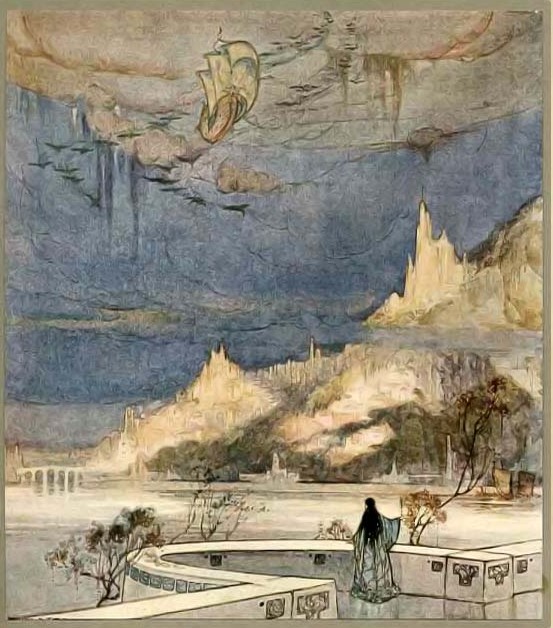
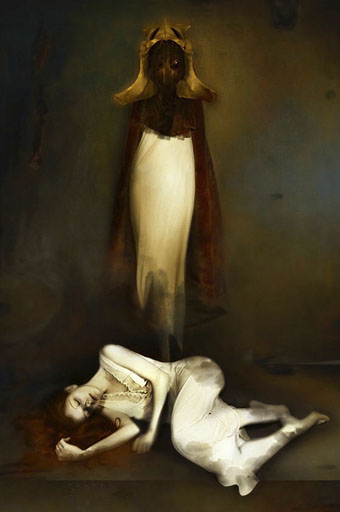
El Banquete Magnético (2011) by Cristina Francov.

Did Vertigo Introduce Computer Graphics to Cinema? asks Tom McCormack. He means Saul Bass’s title sequence which mostly uses still harmonographs but also features some animated moments by John Whitney.

•  Temple of the Vanities by Thomas Jorion. “Pictured here are political monuments and munitions depots, hulking concrete forms that marked the edges of empires.” Related: Paintings by Minoru Nomata.

• Musical reminiscences: Matt Domino on the Small Faces’ psychedelic magnum opus Ogden’s Nut Gone Flake, and Richard Metzger on the sombre splendours of Tuxedomoon.

Harrison is best known as one of the restless fathers of modern SF, but to my mind he is among the most brilliant novelists writing today, with regard to whom the question of genre is an irrelevance. To read his work is to encounter fiction doing what fiction must: carrying out the kinds of thinking and expression that would be possible in no other form. I pass through his novels feeling a mixture of wonder, calmness and disturbance; I end them brain-jarred and unsettled. Metaphysical echoes persist for days afterwards. It feels as if I have had a strabismus induced, causing illusions that slowly resolve into insights.

Robert Macfarlane on M. John Harrison and the reissue of Climbers.

• Divine Machinery: An Interview with Paul Jebanasam. Arvo Pärt, Cormac McCarthy and Algernon Blackwood are folded into his new album, Rites.

Autostraddle shows the evolution of twelve queer book cover designs. As is often the case in cover design, latest isn’t always best.

• “My Definition Of Hell? It’s Other People, At The Cinema!” Anne Billson on the very thing that finished me as a cinema-goer.

• “London in the 1830s was a truly weird and terrifying place.” Spring-Heeled Jack, The Terror of London.

• At Scientific American: The Reading Brain in the Digital Age: The Science of Paper versus Screens.

Van Dyke Parks: “I was victimised by Brian Wilson’s buffoonery.”

Colour film of London in 1927.

Abandonedography

Social Dead Zone

• Tuxedomoon: Tritone (Musica Diablo) (1980) | Desire (1981) | Incubus (Blue Suit) (1981)

Weekend links 156

leonard.jpg

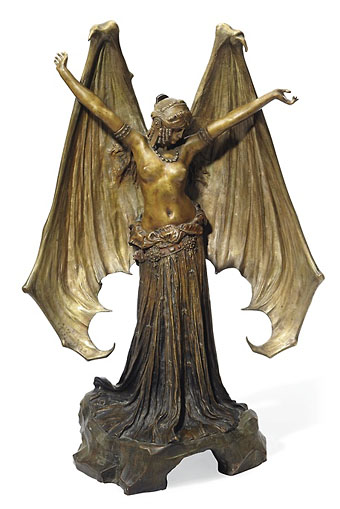
Le Vampire (c. 1903) by Agathon Léonard. Via Beautiful Century.

• Two masters of rumbling atmospherics interviewed at The Quietus: Bobby Krlic aka The Haxan Cloak talks to Maya Kalev while Thomas Köner talks to Joseph Burnett.

Discussions about the arts now have an awkward, paralyzed quality: few judgments about the independent excellences of works are offered, but everyone wants to know who sat on the jury that gave out the award. It’s become natural to imagine that networks of power are responsible for the success or failure of works of art, rather than any creative power of the artist herself.

We’ve reached the point at which the CEO of Amazon, a giant corporation, in his attempt to integrate bookselling and book production, has perfectly adapted the language of a critique of the cultural sphere that views any claim to “expertise” as a mere mask of prejudice, class, and cultural privilege.

Too Much Sociology, an essay by The Editors at n+1

• Prints of Karl Blossfeldt‘s plant portraits can be seen at the Whitechapel Gallery, London.

Stephen J. Gertz on Samuel Roth, “The Most Notorious Publisher In American History”.

• Max Beerbohm is Cranky: Mary Mann on the appeal of the curmudgeon.

• Travel brochure graphics: Graphic design from the 1920s to the 1970s.

• Still returning to its constituent components: Chernobyl’s ghost town.

Thoughtless Grin: a new Arthur Mixtape

Richard Williams: the master animator

Ketch Vampire (1976) by Devon Irons | A Vampire Dances (Symmetry) (1988) by Jon Hassell with Farafina | Vampires (1999) by Pet Shop Boys

Chemiserie Niguet

hankar1.jpg

Spotted at Beautiful Century, this scan of a postcard showing the flower shop which now occupies what was originally the Chemiserie Niguet in Brussels. The shop is in the Rue Royale, and the Art Nouveau storefront was installed in 1896 from a design by Belgian architect Paul Hankar (1859–1901). Considering this is one of Hankar’s few Art Nouveau designs to have survived the depredations of “Brusselization” I was surprised that the only illustration in any of my books was the early plan below. (In fairness, Victor Horta tends to dominate any general discussion of Belgian Art Nouveau architecture.)

hankar2.jpg

Magasin Niguet (1896).

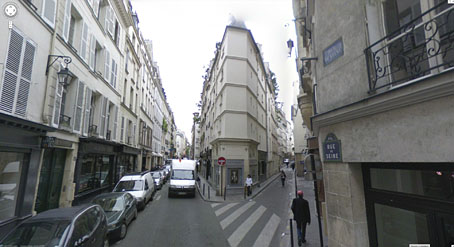
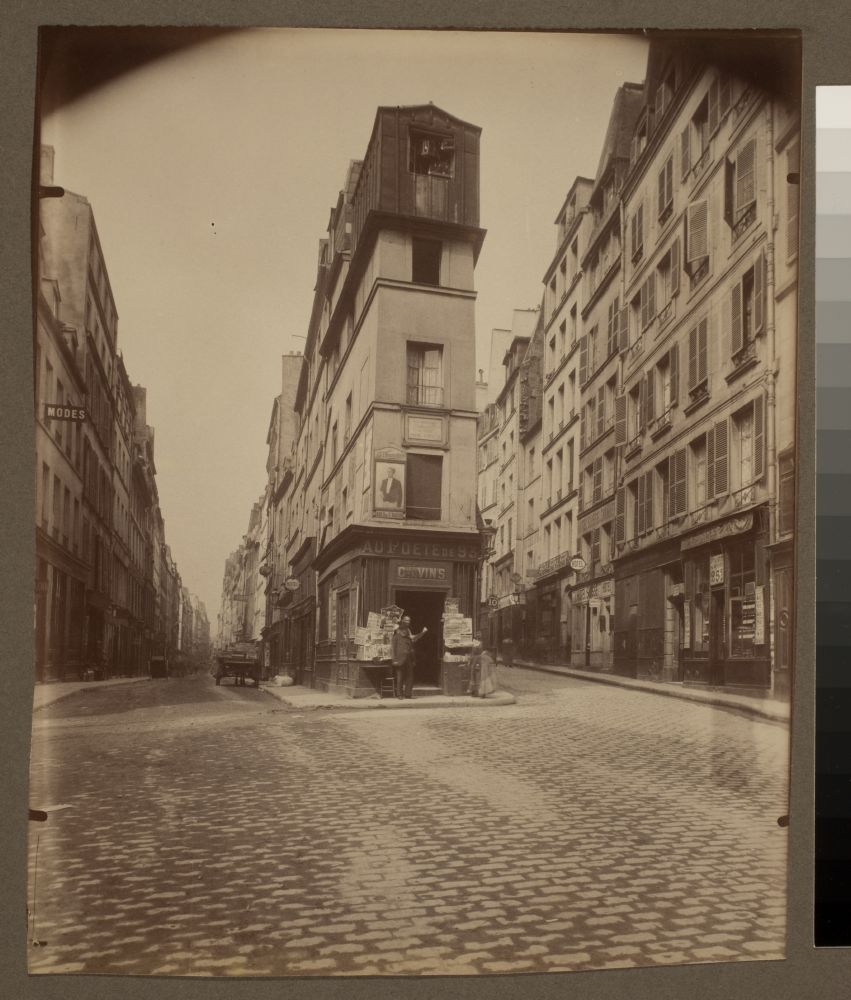
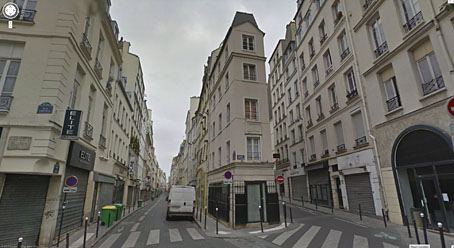
Searching for the shop as it is today on Google Maps reveals the view below. Shame about the camera catching the rubbish awaiting collection. The bland 20th-century facades surrounding the storefront make its presence an incongruous one but at least it’s survived, unlike this Parisian establishment.

hankar3.jpg

Previously on { feuilleton }
Rue St. Augustin, then and now
Hector Guimard elevations
Infernal entrances
Hector Guimard sketches
Temples for Future Religions by François Garas
Elizabetes Iela 10b, Riga
Atelier Elvira
Louis Bonnier’s exposition dreams
The Maison Lavirotte
The House with Chimaeras

Doorways

doorway1.jpg

Another fine book for us collagists, Libro estraordinario di Sebastiano Serlio bolognese : nel quale si dimostrano trenta porte di opera rustica, mista con diuersi ordini, & uenti di opera dilicata di diuerse specie : con la scrittura dauanti, che narra il tutto (1566) is a guide to “porte rustiche”, or old doorways. There are fifty in all, of which I’ve chosen seven random examples. Browse the rest here or download the book here.

doorway2.jpg

doorway3.jpg

doorway4.jpg

Continue reading “Doorways”

Paolo Soleri, 1919–2013

soleri1.jpg

Hexahedron, The City in the Image of Man (1969).

“We must build up, not out,” said Soleri. “The problem is the present design of cities are only a few storeys high, stretching outward in unwieldy sprawl for miles…turning farms into parking lots, and waste enormous amounts of time and energy transporting people, goods and services over their expanses.”

Paolo Soleri, visionary architect, dies aged 93

For obvious reasons, Paolo Soleri’s plans for kilometre-high megastructure cities towering over green landscapes were popular in science fiction books and magazines in the 1970s. Soleri’s solution to unstoppable urban sprawl seems eminently sensible despite the difficulties of building anything on this scale; complaints about undesirability can be countered (in Britain at least) with dismal stories such as this recent report. Or maybe it’s better to live in a Hong Kong shoebox? Soleri devoted most of his life to thinking about how architecture could better serve our limited planetary resources; with Arcosanti he was leading by example.

• LA Times: Paolo Soleri, architect of innovative city Arcosanti, dies at 93
• Arch Daily: Paolo Soleri’s Arcosanti : The City in the Image of Man
Architect Paolo Soleri – a life in pictures
• Flickr: Arcosanti, An Urban Laboratory

soleri2.jpg

Babel IIB, The City in the Image of Man (1969).

Previously on { feuilleton }
The paper architecture of Brodsky and Utkin
Hugh Ferriss and The Metropolis of Tomorrow