Weekend links 207

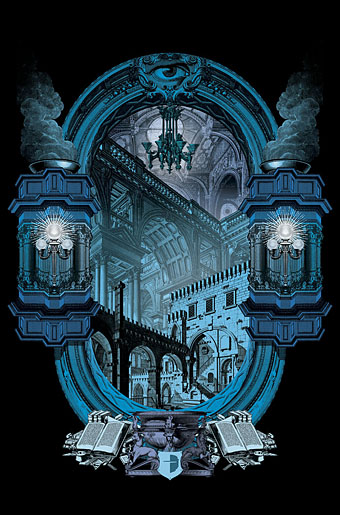
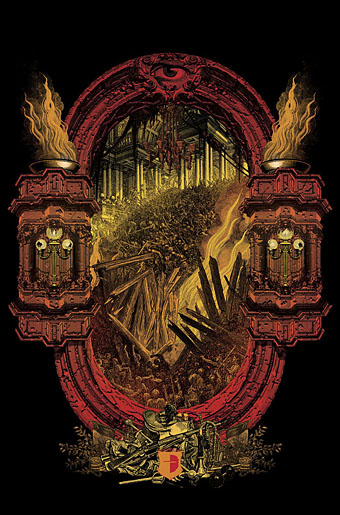
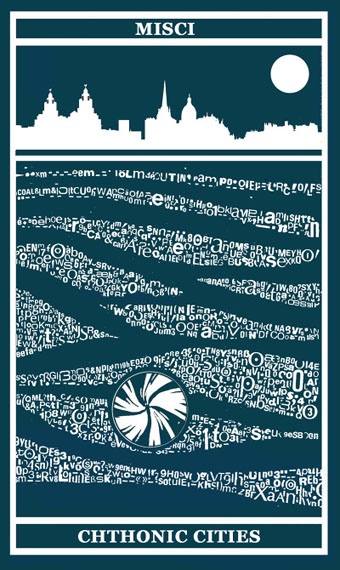
barker.jpg

Chthonic Cities by David Chatton Barker. One of a series of Folklore Tapes screenprints available from Bleep.

• The original version of Kenneth Anger’s Lucifer Rising, the one with the Jimmy Page soundtrack that was completed in 1973, has always been described as lost/stolen/buried or otherwise gone forever. So you’d think the news that a print had been discovered recently by Brian Butler would have received greater attention. There’s a screening in Los Angeles this Thursday. When do the rest of us get to see it?

Chris Marker: A Grin Without a Cat, an exhibition and series of Marker-related events at the Whitechapel Gallery, London. Related: The Encounter of M. Chat & Chris Marker as Told By Louise Traon.

• The trailer for The Gospel According to St Derek, a forthcoming documentary about Derek Jarman. Related: Carl Swanson on why Tilda Swinton is not quite of this world.

Maybe there’s just something conservative at the bedrock of American fiction. […] Or maybe it’s just another symptom of the creeping conservatism that’s infected so many aspects of the culture.

Eric Obenauf talks to author Jeff Jackson whose comments about cultural conservatism could equally be applied to the UK.

• Primitive graphics, inventive graphics, budget Surrealism, and some great theme tunes; it’s Trunk TV, Episode 1: Title Sequences.

• Mixes of the week: Secret Thirteen Mix 110 by Black To Comm, and Intro To Drone For Debcon 1, almost 7 hours of music!

Joseph Burnett reviews Ett, an album of electronic music by Klara Lewis.

The Delian Mode (2009), a film about Delia Derbyshire by Kara Blake.

• Extracts from Tokyo Reverse by Simon Bouisson and Ludovic Zuili.

Dan Piepenbring on The Haunting Illustrations of Alfred Kubin.

• At Strange Flowers: Photos of arcades by Germaine Krull.

• Fish, Fiends, and Fantasy: The Gothic Art of Ian Miller.

• At 50 Watts: Richard Teschner and His Puppets.

• Sonic Foam: Ian Penman on Kate Bush and Coil.

Bits and Pieces

Lucifer (1968) by The Salt | Experiment IV (1986) by Kate Bush | Methoxy-N, N-Dimethyl (5-MeO-DMT) (1998) by Coil

Weekend links 206

komoda.jpg

Nova Express (2014) by Paul Komoda.

• Last week it was Kraftwerk, this week it’s Can in another astonishing 70-minute TV performance from 1970. For those who know where to look in the torrent world there are copies of these recordings circulating there.

JG Ballard: five years on. Extracts from introductions by John Gray, Hari Kunzru, Robert Macfarlane, Deborah Levy, James Lever, China Miéville and Michel Faber for a new series of Ballard editions.

• Mix of the week: Needle Exchange 147 by Inventions. Also at Self-Titled Mag: Suzanne Ciani on her Buchla beginnings, talking dishwashers, and why no one got electronic music in the ’70s.

• At Dangerous Minds: It’s So Far Out It’s Straight Down, a Granada TV documentary from 1967 featuring Paul McCartney, Allen Ginsberg, International Times, Pink Floyd et al.

The Wonderful World of Witches: Portraits of English Pagans. A photo-special from the 1960s at LIFE. Related: From 1974, the US TV ad for Man, Myth and Magic.

• Suspicious Minds: Adam Curtis on Stephen Knight, Jack the Ripper, squatters, heists, From Hell, and why people no longer trust those in authority.

• Here be men with beards and syntezators: Andy Votel‘s Top 10 Early Patch-Bay Polymaths From Eastern Europe.

The New York Public Library has made 20,000 maps available as free, high-res downloads.

• An oscilloscope video by Vincent Oliver & Steve Bliss for Riff Through The Fog by Clark.

Anne Billson interviewed Alejandro Jodorowsky in 1990.

• At BLDGBLOG: When Hills Hide Arches.

Do gay people still need gay bars?

Pixelord Dreams

I’m So Green (1972) by Can | Nova Feedback (1978) by Chrome | Gay Bar (2003) by Electric Six

The world of the future

century21-01.jpg

Pages from the Official Souvenir Program for the Seattle World’s Fair, 1962. Very typical corporate design by RT Matthiesen and Associates but not bad for all that. The pages give an overview of the exposition, punctuated by ads from its sponsors, while the text sets forth the purpose of the event which was intended to give a taste of life in the new Space Age. NASA’s Project Mercury missions were ongoing during the time the fair was being planned so the ethos of the event was very much tied to the obsessions of the time, obsessions fuelled by Cold War competition and a desire for an automated future. The technocratic side of things is to the fore in the booklet which trots out the usual utopian vision of life in “Century 21” as being one of short working-hours, a great deal of leisure, personal air-cars, and revolving houses. My childhood encyclopaedias were filled with this sort of thing which has only given me a lifelong suspicion of any kind of wild futurology, positive or negative. Those books were also filled with pictures of monorails, and the Seattle exposition had a monorail all of its own which I’m pleased to see is still running today.

century21-02.jpg

century21-03.jpg

century21-04.jpg

Continue reading “The world of the future”

Space Needle USA

spaceneedle01.jpg

That observation tower again. Previous posts here have exhausted the Paris Exposition Universelle as a subject so it’s time to look elsewhere, and the Century 21 Exposition which was held in Seattle in 1962 seems as good a place to start as any. If you’re interested in old expositions then it’s always good to find a decent site devoted to them, and the site for the Seattle event is particularly useful. Space Needle USA is one of the many pieces of documentary ephemera available to browse and download, a 76-page commemorative booklet by Howard Mansfield devoted to the design and building of the tower:

The Space Needle, a modernistic totem of the Seattle World’s Fair, was conceived by Eddie Carlson as a doodle in 1959 and given form by architects John Graham Jr., Victor Steinbrueck, and John Ridley. When King County declined to fund the project, five private investors, Bagley Wright, Ned Skinner, Norton Clapp, John Graham Jr., and Howard S. Wright, took over and built the 605-foot tower in less than a year.

Good to see some of the alternative designs, one of which isn’t so different to one of the designs proposed in the 19th century for a London tower that would rival the Eiffel Tower in Paris.

spaceneedle02.jpg

spaceneedle03.jpg

spaceneedle04.jpg

spaceneedle05.jpg

Continue reading “Space Needle USA”

Gigapixel ArtZoom

seattle.jpg

This is a few months old but I just discovered my bookmark of the page. The view is a panorama of Seattle but with a difference since this one encourages you to play hunt the artist. The streets are scattered with many of Seattle’s artists and performers, some of them easier to find than others. Michael Cohen, the director of the project explains:

We first sought out the perfect rooftop location from which to shoot such a panorama. We were lucky enough to find the Bay Vista condominium building, and thanks to the gracious owners, get access to amazing 360-degree views that include the Seattle Center, the Olympic Sculpture Park, and Seattle’s stadiums, as well Mount Rainier, Puget Sound, and Lake Union. We also discussed the project with John Boylan, who has deep roots in the Seattle art scene. He helped us attract great interest from the arts community to come out and help create this celebration of the arts in Seattle. John introduced us to Elise Ballard, who coordinated the efforts of everyone involved in producing the entire piece. And finally, videographer Kris Crews helped us assemble a team to shoot video footage of the artists and performers from the ground.

Art aside, the panorama is detailed enough to be able explore many of the otherwise hidden details of city life such as rooftop gardens and the mechanical paraphernalia that accumulate on the tops of buildings. Nice view of the Space Needle as well.

Elsewhere on { feuilleton }
The panoramas archive