
Weekend links 108

newyorker.jpg

Bob Staake’s cover illustration acknowledges President Obama’s statement last week in favour of gay marriages.

• Related to the above: Gay rights in the US, state by state, an infographic and a useful riposte to people like Orson Scott Card (yes, him again) who claim that gay Americans are equal in everything but the right to marry. On the same theme, “Now Obama’s come out on same-sex marriage, maybe so will I,” says Edmund White (yes, him again), and Eric Berkowitz, author of Sex & Punishment: 4,000 Years of Judging Desire, who writes that “In the period up to roughly the thirteenth century, male bonding ceremonies were performed in churches all over the Mediterranean.”

• The fifth edition of A Humument by Tom Phillips will be published soon by Thames & Hudson. The Tom Phillips website has just been relaunched in a form which now incorporates the notes I made in December about Phillips’ album cover designs.

• The Greenfriars are encouraging people to follow their example and get involved with their local communities (the habits are optional). Kudos for the choice of a Dürer knot.

The action centres on the arrival of a man who may or may not be a prophet, or the devil, or just a violent con-man, in a rotting, rain-drenched Hungarian hamlet. This is the “estate”, apparently some sort of failed collective, where all hope has been lost and all the buildings are falling down. It is inhabited by a cast of semi-crazed inadequates: desperate peasants cack-handedly trying to rip each other off while ogling each other’s wives; a “perpetually drunk” doctor obsessively watching his neighbours; young women trying to sell themselves in a ruined mill; a disabled girl ineptly attempting to kill her cat.

Sátántango by László Krasznahorkai is published in a new translation by George Szirtes

• The Quietus interviewed Kevin Shields following the long-awaited reissue of the My Bloody Valentine catalogue.

• The first volume of Russ Kick’s Graphic Canon (to which I’m a contributor) has been sighted in the wild.

Rise of the Living Type: Stylised 17th century floriated letterforms & grotesque mask sprinkles.

Ed Jansen’s Camera Obscura III, a tour of museums, galleries and venues, 2009–2011.

• io9 reports on the new translation of Roadside Picnic by Arkady & Boris Strugatsky.

Shanghai Expression: Graphic Design in China in the 1920s and 30s.

Liberty Realm, a monograph of drawings by Catharyne Ward.

• 100 mins of Adrian Sherwood‘s best dub productions.

Strange Flowers checked into the Chelsea Hotel.

Chelsea Girls (1967) by Nico | Chelsea Morning (1968) by Fairport Convention | Chelsea Hotel #2, Rufus Wainwright sings Leonard Cohen.
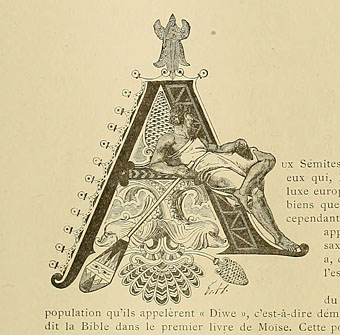
Costume capitals

capital01.jpg

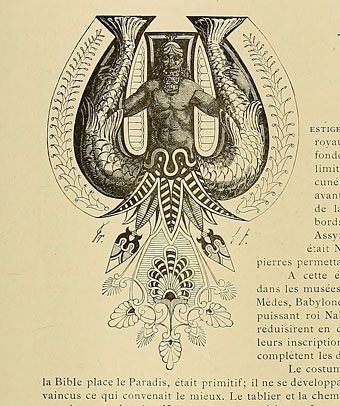
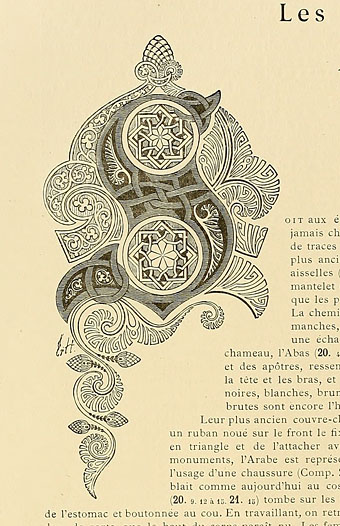
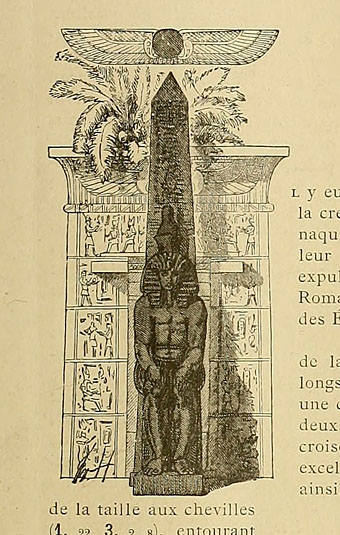
Another gem of a find at the Internet Archive, Le costume, les armes, les bijoux, la céramique, les ustensiles, outils, objets mobiliers, etc. : chez les peuples anciens et modernes (1896) is a lavish two-volume (?) guide to the costumes, artefacts, weapons, etc of various races through the ages. The books were compiled and illustrated by Friedrich Hottenroth (1840–1917) and comprise many detailed coloured plates, but what really caught my attention were the elaborate illuminated capitals used for each of the introductory essays. The common approach in 19th century books is to either have decoration that bears little relation to the content or to apply a single decorative style throughout the book. What’s notable about these designs is the way the style of each letter matches the decorative style of the race or civilisation under discussion. In addition to this feature they’re quite beautifully rendered. The FH initials indicate that they were all Hottenroth’s work. Volume 2 of the set can be found here.

capital02.jpg

capital03.jpg

capital04.jpg

Continue reading “Costume capitals”

Lindsay Kemp’s Salomé

kemp1.jpg

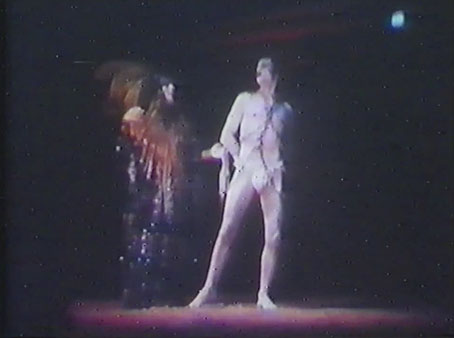
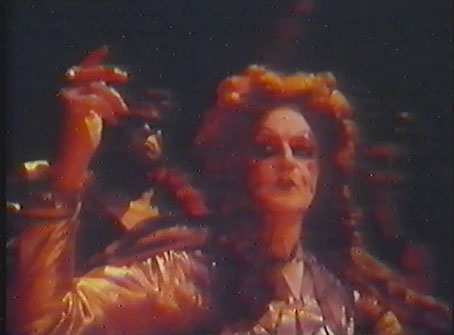
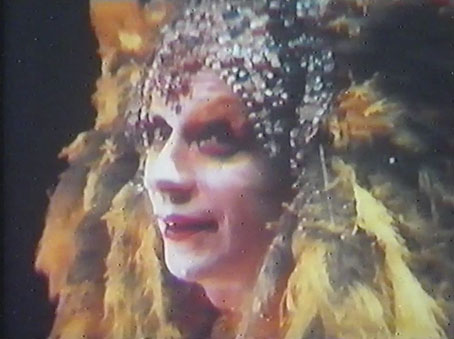
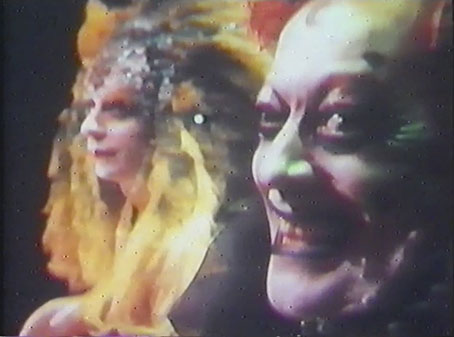
Fragments are all you get with this one, unfortunately, but how tantalising they are. Lindsay Kemp’s 1975 stage production of Oscar Wilde’s play was probably the queerest there’s been to date, with Kemp himself playing Herod’s doomed daughter under a heap of silks and feathers. These stills from a sequence of Super-8 shots of the performance arrive courtesy of Nendie Pinto-Duchinsky, director of the forthcoming Kemp documentary Lindsay Kemp’s Last Dance, a film whose title echoes Ken Russell’s film of the Wilde play. The connections circulate wildly (so to speak) around Kemp’s production: prior to this performance Kemp had acted for Ken Russell, while two of the other actors went on to work with Derek Jarman (as did Kemp). John the Baptist (above) was played by David Haughton who appeared as Ariel in Jarman’s Jubilee; Jack Birkett’s grinning features (bottom, right) appear in many of Jarman’s films. All the more reason to wish these clips were longer.

The Kemp documentary YouTube channel has a few more items related to Kemp’s stage work, notably another tantalising sequence of stills from Flowers (1974), an adaptation of Genet’s Our Lady of the Flowers that also featured Haughton and Birkett.

Update: Thanks to Suzanne in the comments for pointing to her video which includes further film moments including Salomé performing with a live snake à la Salammbô.

kemp2.jpg

kemp3.jpg

kemp4.jpg

Elsewhere on { feuilleton }
The Salomé archive

Previously on { feuilleton }
Mister Jarman, Mister Moore and Doctor Dee
Saint Genet

The Telephone Box

telephonebox.jpg

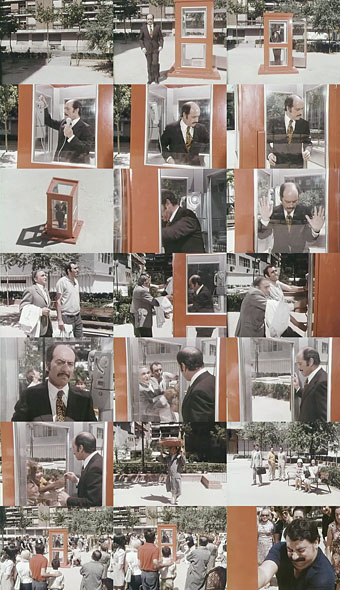
Ah, The Telephone Box, or La Cabina, to give Antonio Mercero’s half-hour film its original Spanish title. Made in 1972, I saw what was probably the first UK TV screening sometime around 1980, and for years afterwards was asking people whether they ever saw that film about the guy stuck in a phone box. Eventually I got in on tape following another TV screening and would foist it on anyone who hadn’t seen it. Thom at Form is Void linked to a YouTube copy a while back, and Stephen Gallagher reminded me of it a few hours ago, so here it is, one of those simple but memorable dramas in which a small problem escalates into a nightmare.

Previously on { feuilleton }
Les Temps Morts by René Laloux

Maurice Sendak, 1928–2012

sendak1.jpg

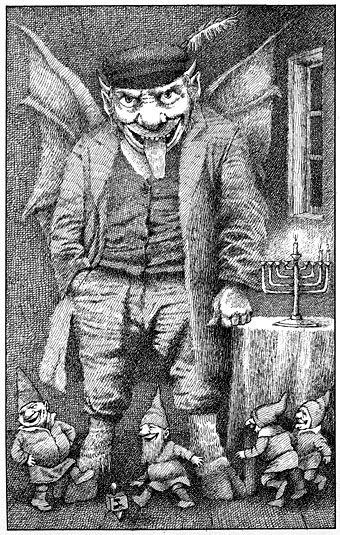
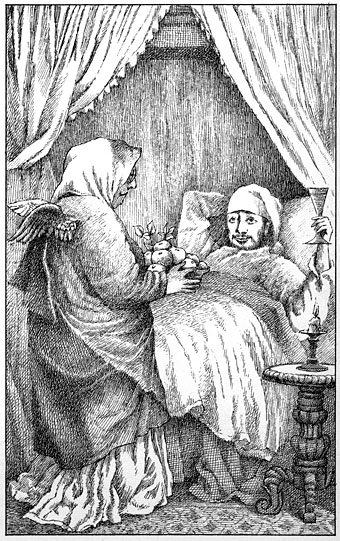
From Zlateh the Goat and Other Stories (1966) by Isaac Bashevis Singer.

All the obituaries of the late Maurice Sendak have focused inevitably on Where the Wild Things Are. That gives me a chance to draw attention to some less familiar Sendak drawings whose finer crosshatching naturally appeals to an inveterate crosshatcher such as myself. The combination of bold characterisation and dense shading makes these pieces look remarkably similar to Mervyn Peake’s illustrations of the 1940s. Sendak spoke to Nick Meglin about some of the influences on his drawing in The Art of Humorous Illustration (1973). Given what he says here it’s evident that he and Peake (who also admired Cruikshank and Rowlandson) shared antecedents:

Many of the artists who influenced me were illustrators I accidentally came upon. I knew the Grimm’s Fairy Tales illustrated by George Cruikshank. I just went after everything I could put my hands on illustrated by Cruikshank and copied his style. It was quite as simple as that. I wanted to crosshatch the way he did. Then I found Wilhelm Busch and I was off again. But happily Wilhelm Busch also crosshatched so the Cruikshank crosshatching wasn’t entirely wasted. And so an artist grows. I leaned very heavily on these people. I developed taste from these illustrators.

The 1860’s, the great years of the English illustrators from whom so much of my work is derived, are familiarly known as “the sixties” to admirers of Victorian book illustration. The influence of Victorian artists such as George Pinwell and Arthur Hughes, to name just two, is evident in the pictures I created for Higglety Pigglety Pop! (Harper and Row, 1967), Zlateh the Goat (Harper and Row, 1966), and A Kiss for Little Bear (Harper and Row, 1968). And I’ve learned from other English artists as well. Randolph Caldecott gave me my first demonstration of the subtle use of rhythm and structure in a picture book. Hector Protector and As I Went Over the Water (Harper and Row, 1965) is an intentionally contrived homage to this beloved teacher.

sendak2.jpg

From Zlateh the Goat and Other Stories (1966) by Isaac Bashevis Singer.

For other fine points in picture book making, I’ve studied the works of Beatrix Potter and William Nicholson. Nicholson’s The Pirate Twins certainly influenced Where the Wild Things Are (Harper and Row, 1963).

A retrospective of my English passion can be found in Lullabies and Night Songs (Harper and Row, 1965). The illustrations for this book, which skip from Rowlandson to Cruikshank to Caldecott and even to Blake, are a noisy pastiche of styles, though I believe they still resonate with my own particular sound. Mr. Rabbit and the Lovely Present (Harper and Row, 1962) is as far as I am aware the only book I’ve done that reveals my admiration for Winslow Homer.

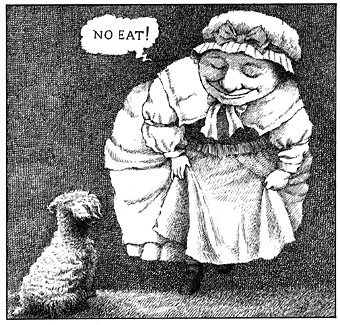
sendak3.jpg

Higglety Pigglety Pop! Or, There Must Be More to Life (1967).

About two-and-a-half years after the publication of Where the Wild Things Are, I finally became conscious of my reviving interest in the art I’ve experienced and loved as a child. The trigger was an exhibit (at The Metropolitan Museum) of pages from Little Nemo in Slumberland, Winsor McCay’s famous newspaper comic strip of the years 1905 to 1911. Before the exhibit I was ignorant of this popular American artist’s pure genius for graphic fantasy. It now sent me scooting back with new eyes to the popular art of my own childhood.

This recognition of personal roots is in no way meant as a triumphant revelation or as reverse snobbism, a put-down of my earlier, more ‘refined’ influences. What I’ve learned from English as well as French and German artists will, if I have my wish, become more absorbed into my creative psyche, blending and living peaceably with my own slice of the past. But of course all this happens on its own or it doesn’t happen at all.

Elsewhere on { feuilleton }
The illustrators archive