School Daze by Patrick Cowley

cowley.jpg

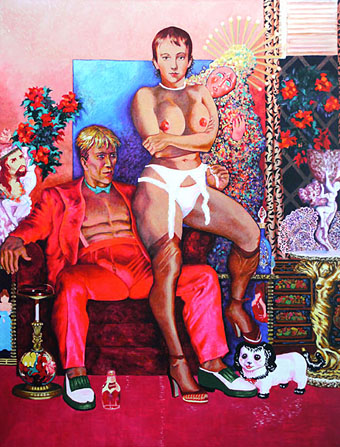
School Daze sleeve designed by Eloise Leigh.

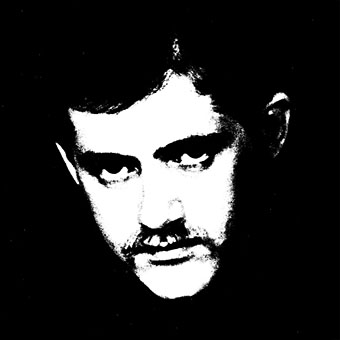
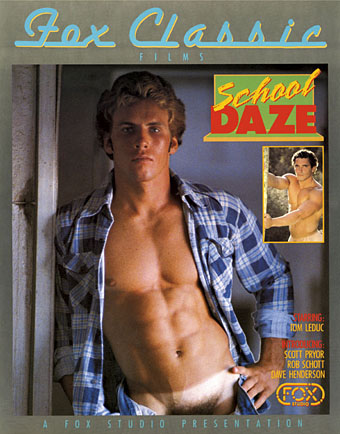
Music made for porn films is nothing if not derivative and unmemorable, assuming it’s been specially made at all and isn’t merely a cheap library track, the aural equivalent of stock footage. This wasn’t necessarily the case when porn cinema was getting established in the America of the 1970s but a huge turnover of anonymous product combined with simple expediency—hours of footage that needed to be soundtracked by something—made falling standards inevitable. The cliché of the cheesy porn soundtrack is such a given that it’s a surprise to encounter anything which is even halfway listenable away from the screen. In the case of this album by Patrick Cowley it’s even more of a surprise to find that such exceptional music has been hiding for years on a couple of gay porn films, School Daze and Muscle Up, from 1980.
foxclassic.jpg

Gay porn would seem the perfect thing to be soundtracked by the creator of an unashamed anthem like Menergy (1981) but the music on School Daze bears little resemblance to Cowley’s Hi-NRG disco hits, not least because some of the tracks were composed as far back as 1973 when Cowley was still in college. The tapes were unreleased until John Coletti, the owner of Fox Studios, asked Cowley for some music which is how these early experiments ended up as porn scores. Experiments they may be, in differing moods and styles, but they’re also very successful ones. Jorge Socarras’s album notes describe Cowley’s wide-ranging musical (and sexual) tastes which would explain why one of the longer tracks, Journey Home, features a didgeridoo of all things. The didgeridoo sound became a considerable dance music cliché in the early 90s but prior to this you’d only find it outside Indigenous Australian music on pastiche numbers such as Flying Doctor by Hawklords or The Dreaming by Kate Bush; Cowley uses the instrument as simply another sound source. Socarras also mentions Cowley listening to Tomita and Wendy Carlos while in college but none of the music here sounds anything like the earlier generation of Moog composers. It also doesn’t sound much like Tangerine Dream or anything that was happening in Europe during the 1970s. If anything, the subdued and often dark atmosphere is a better fit with the post-punk music being produced in Britain around the time the films were released, sombre albums like The Bridge by Thomas Leer & Robert Rental, or instrumental tracks by The Human League. Didgeridoo or not, some of the tracks are pretty gloomy for porn music.

In the autumn of 1982 I was in the process of moving from Blackpool to Manchester, and spent a lot of time shuttling back and forth on coaches listening to tapes on a cheap Walkman clone. A couple of those journeys were soundtracked by Patrick Cowley’s extended remix of I Feel Love by Donna Summer and Industrial Muzac by Throbbing Gristle, a piece of subdued electronica which has been out of circulation for far too long. The music on School Daze fills an unlikely space between the two, there’s even a synth solo like the one that erupts into the Donna Summer remix. Patrick Cowley died in November of that year, one of the earliest casualties of a disease which at that time wasn’t even called AIDS. Listening to School Daze, and to the last album released while he was alive, Mind Warp, you can’t help but wonder what he might have done with the sampling technology that became widespread a couple of years later.

School Daze is available on double-vinyl and CD from Dark Entries who say all proceeds from the album will be donated to Project Open Hand and the AIDS Housing Alliance.

Nightcrawler from School Daze
Mockingbird Dream from School Daze
Dark Entries interviews John Coletti of Fox Studio
Five Things You Need to Know about Gay Electronic Wizard Patrick Cowley

Previously on { feuilleton }
William E. Jones on Fred Halsted
Summer of Love
A Clockwork Orange: The Complete Original Score

Weekend links 191

strongowski.jpg

Two cover designs from Eliash Strongowski’s 30 Days—30 Covers project.

My thanks once again to Dennis Cooper for placing this blog on his end-of-year lists. Meanwhile. one of the albums I designed earlier this year, Cold Mission by Logos, made the 30 Best Album Covers of 2013 list at FACT.

• “Many of their more outlandish ideas never saw fruition: an organ powered by an entire factory, an electro-acoustic orchestra mounted on a fleet of airplanes.” Colin McSwiggen reviews Sound in Z: Experiments in Sound and Electronic Music in Early 20th Century Russia by Andrey Smirnov.

Queer Pagan Punk, a major film retrospective of the work of Derek Jarman, will take place in February and March 2014 at the BFI Southbank, London.

• “For over forty years, Iain Sinclair’s work has combined obsessive myth-making with urban despair. But what do we know about him?” asks Fatema Ahmed.

• “Rather than trying to intercept alien communications, perhaps we should go looking for alien artefacts.”

• Mix of the week: Radio Belbury Programme 12, and Winter Hours, the Cafe Kaput 2013 winter mix.

BEEP BEEP. BLOOP BLEEP: Road Runner cartoons soundtracked by a Eurorack synthesizer.

Historia Discordia: Documenting the Origins, History & Chaos of the Discordian Society.

gebbie.jpg

Pink Boy by Melinda Gebbie.

Suffered From The Night: Queering Stoker’s Dracula edited by Steve Berman.

• At Dangerous Minds: An interview with soundtrack composer Cliff Martinez.

Sarah Schoenfeld puts recreational drugs under the microscope.

• Powerplant Art-déco, a set of photos by Romain Veillon.

Adrian Curry chooses the best film posters of 2013.

Portent’s Content Idea Generator

Tarkovsky at Pinterest

The Sea Named Solaris (1977) by Tomita | Is That What Everybody Wants? (2002) by Cliff Martinez | Reyja (2011) by Ben Frost & Daníel Bjarnason

White Noise: Electric Storms, Radiophonics and the Delian Mode

white_noise.jpg

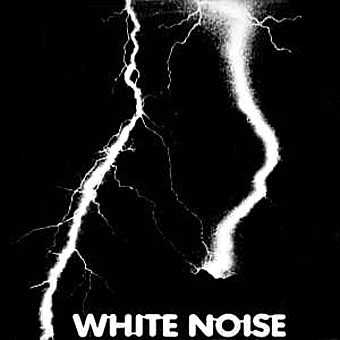
Many sounds have never been heard—by humans: some sound waves you don’t hear—but they reach you. “Storm-stereo” techniques combine singers, instrumentalists and complex electronic sound. The emotional intensity is at a maximum. Sleeve note for An Electric Storm, Island Records, 1969.

An Electric Storm by White Noise is reissued in a remastered edition this week. It’s a work of musical genius and I’m going to tell you why.

Hanging around with metalheads and bikers in the late Seventies meant mostly sitting in smoke-filled bedrooms listening to music while getting stoned. Among the Zeppelin and Sabbath albums in friends’ vinyl collections you’d often find a small selection of records intended to be played when drug-saturation had reached critical mass. These were usually something by Pink Floyd or Virgin-era Tangerine Dream but there were occasionally diamonds hiding in the rough. I first heard The Faust Tapes under these circumstances, introduced facetiously as “the weirdest record ever made” and still a good contender for that description thirty-four years after it was created. One evening someone put on the White Noise album.

It should be noted that I was no stranger to electronic music at this time, I’d been a Kraftwerk fan since I heard the first strains of Autobahn in 1974 and regarded the work of Wendy Carlos, Tangerine Dream, Brian Eno and Isao Tomita as perfectly natural and encouraging musical developments. But An Electric Storm was altogether different. It was strange, very strange; it was weird and creepy and sexy and funny and utterly frightening; in places it could be many of these things all at once. Electronic music in the Seventies was for the most part made by long-hairs with banks of equipment, photographed on their album sleeves preening among stacks of keyboards, Moog modules and Roland systems. You pretty much knew what they were doing and, if you listened to enough records, you eventually began to spot which instruments they were using. There were no pictures on the White Noise sleeve apart from the aggressive lightning flashes on the front. There was no information about the creators beyond their names and that curious line about “the emotional intensity is at a maximum”. And the sounds these people were making was like nothing on earth.

Continue reading “White Noise: Electric Storms, Radiophonics and the Delian Mode”