Raffles, the gentleman thief

raffles1.jpg

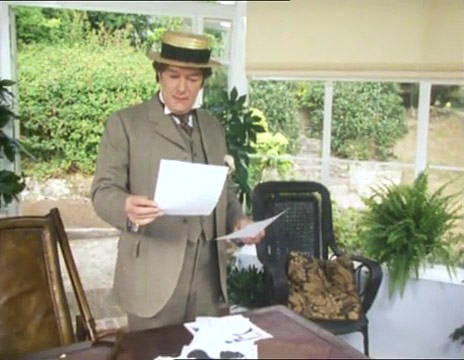
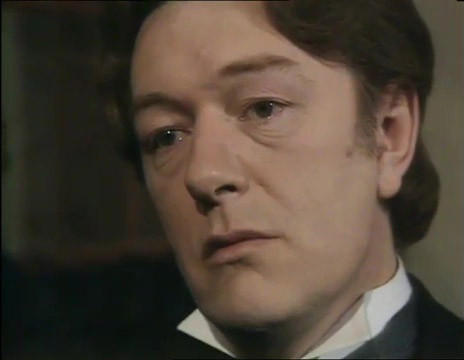
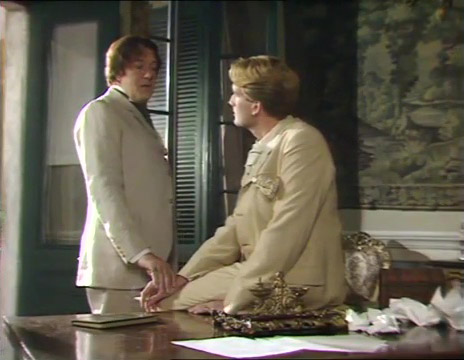
The Raffles that concerns us here is the television incarnation as seen in a series of adventures made by Yorkshire TV in 1977. I recently bought a cheap DVD set of the series, not for reasons of nostalgia (a wretched condition) but out of curiosity and whim. I had a vague recollection of enjoying the few episodes I’d seen, and was hoping for another decent Victorian adventure series along the lines of The Rivals of Sherlock Holmes (1971/1973). Raffles proved to be better than I expected; not quite up to the standards of Granada TV’s peerless adaptations of the Sherlock Holmes stories but thoroughly enjoyable. The production values are better than those in The Rivals of Sherlock Holmes, a well-written series with an impressive cast that was nevertheless compromised by a restricted budget. I’m not really reviewing the Raffles series here, this piece is intended to note a couple of points of interest which, for me, added to its pleasures.

raffles2.jpg

Raffles and Bunny as they were originally. An illustration by FC Yohn from Raffles: Further Adventures of the Amateur Cracksman (1901).

Arthur J. Raffles was invented by EW Hornung, a writer who was, among other things, Arthur Conan Doyle’s brother-in-law. Raffles, like Sherlock Holmes, is a resolute bachelor with a devoted friend and accomplice, but the two men share few other characteristics beyond a talent for outwitting the dogged inhabitants of Scotland Yard. Raffles’ indulgent lifestyle in the bachelor enclave of (the) Albany, Piccadilly, is financed by his burglaries which invariably target aristocrats and the homes of the wealthy. To the general public he’s known as one of the nation’s leading cricket players, a position which gives him access to upper-class social circles from which he would otherwise by excluded. His former school-friend, “Bunny” Manders, is also his partner-in-crime, a position that Bunny is happy to fill after Raffles saves him from bankruptcy and suicide. Conan Doyle disapproved of the immoral nature of the Raffles stories but they were very popular in their day, and they’ve been revived in a number of adaptations for film, TV and radio. George Orwell admired the stories, and writes about them with his usual perceptiveness here, noting the importance of cricket to Raffles’ gentlemanly philosophy of criminal behaviour. I’ve not read any of the stories myself, and I’m not sure that I want now, not when the television adaptations succeed so well on their own terms.

raffles3.jpg

Anthony Valentine and Christopher Strauli.

The TV series was preceded by a pilot episode made in 1975 which saw the first appearances of Anthony Valentine as the dashing Raffles and Christopher Strauli as the fresh-faced Bunny. Valentine and Strauli fit their roles so well it’s difficult to imagine anyone else improving on them, Valentine especially. In the series the pair are supported by many familiar faces from British drama: Graham Crowden, Charles Dance, Brian Glover, Robert Hardy, Alfred Marks, and, in a rare piece of TV acting, Bruce Robinson. Pilot and series were all written by Philip Mackie, and here we have the first noteworthy element since Mackie had earlier adapted six stories for The Rivals of Sherlock Holmes, including the one that features Donald Pleasence as William Hope Hodgson’s occult detective, Thomas Carnacki. Raffles is another rival of Sherlock Holmes, of course, albeit a criminal one, and much more of a mirror image of Holmes than the thoroughly villainous Professor Moriarty. Raffles only breaks the law to improve his bank balance, or as an occasional, daring challenge; he regards theft and evasion from the police as a form of sport, and generally deplores other types of crime. Some of his thefts are intended to punish the victim following an infraction, as with the belligerent South African diamond miner who causes a scene at Raffles’ club, and the Home Secretary who makes a speech in Parliament demanding stiffer penalties for burglary. In one conversation about the morality of their activities Bunny suggests to Raffles that his friend is a kind of Robin Hood figure; Raffles agrees before admitting that he never gives his spoils to the poor.

Continue reading “Raffles, the gentleman thief”

Weekend links 754

picasso.jpg

The Remains of Minotaur in a Harlequin Costume (1936) by Pablo Picasso. Via.

• At Rarefilmm: Long Live the New Flesh: The Films of David Cronenberg, a TV documentary from 1987 which includes contributions from Martin Scorsese and Stephen King. I wrote about this one years ago but at the time the only available copy was chopped into 10-minute segments.

• Coming soon from Strange Attractor: Delinquent Elementals: A Pagan News Anthology, edited by Phil Hine & Rodney Orpheus.

• At Wormwoodiana: Mark Valentine explores the possible influence of the Sherlock Holmes stories on Arthur Machen’s early fiction.

Perhaps there was a Super-Sargasso Sea in the upper atmosphere into which were carried objects from earth—frogs, fish, leaves—and from which they later rained. Perhaps the universe was a living thing, rains of blood its bleeding. Perhaps in 1903 the earth, in its orbit about the sun, passed through the remains of a world destroyed in an interplanetary dispute, the particles falling as rains of dust and redness. Perhaps humanity was controlled. “I think we’re property”, Fort wrote. Or, perhaps not; so skeptical he could not accept even his own authority, he had given up theorizing. “We have expressions: we don’t call them explanations: we’ve discarded explanations with beliefs.”

Joshua Blu Buhs on how Charles Fort came to write The Book of the Damned

• More Alan Moore: “Magic is not this big, spooky, dark thing that’s full of nightmares,” he tells Séamas O’Reilly at the Irish Times.

High-resolution images of 14,000 woodblock illustrations and letterforms free to use at the Plantin-Moretus Museum, Antwerp.

• New music: Music For Bus Stations by Rod Modell; and Between Soil And Sky by Tarotplane.

• At Dennis Cooper’s: Spotlight on…Denton Welch In Youth is Pleasure (1945).

• At the Quietus: The Strange World of…Irena and Vojtech Havlovi.

Apollo Explorer

Pagan Love Song (1959) by Martin Denny | Pagan Lovesong (Vibeakimbo) (1982) by Virgin Prunes | Pagan Sun Temple (2022) by Hawksmoor

Old Marvel versus Sherlock Holmes

oldmarvel4.jpg

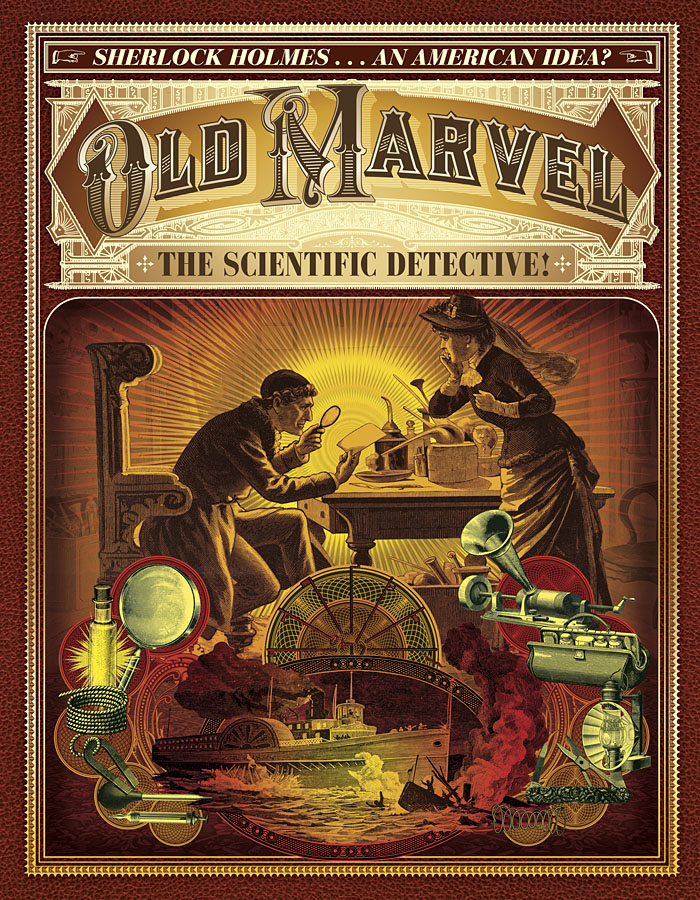
Arriving in the post this week, one of the books whose covers I was creating late last year. Work-wise, the past year has been busier than usual which means I’ve fallen behind with the logging of recent commissions. In the past few months I’ve created several album designs, more book covers, an entire book design (cover plus interior), and also been working on two bigger projects at the same time. Things have calmed down a little now so updates will be forthcoming.

oldmarvel1.jpg

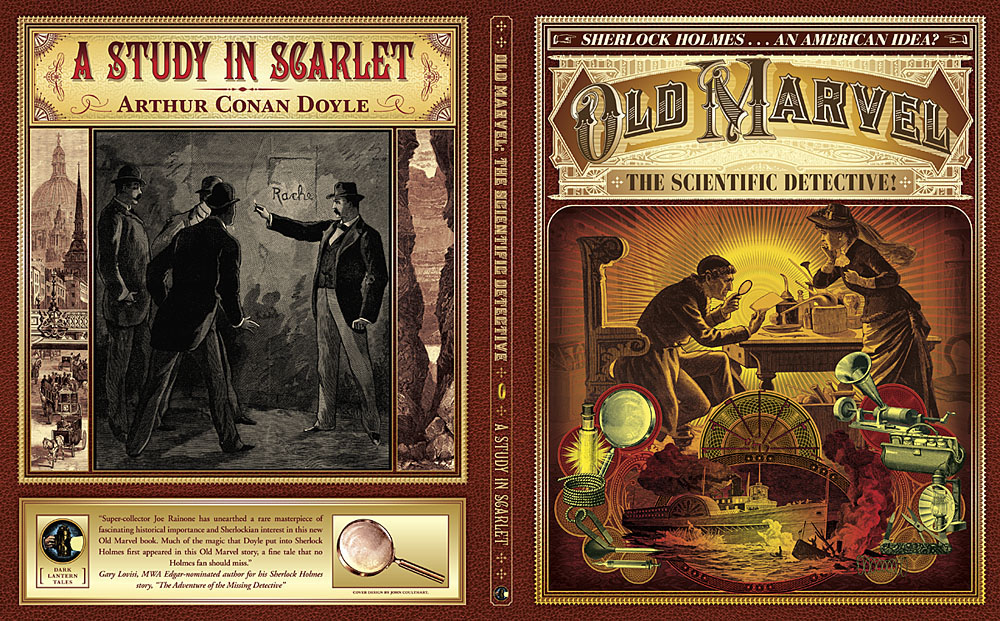
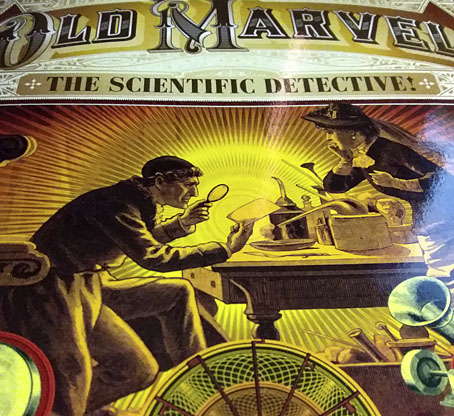
Old Marvel: The Scientific Detective is another design for Mark Williams’ Dark Lantern Tales imprint which once again resurrects a forgotten detective from pulp obscurity, and in a larger format than before. The new volume is significant for presenting a Sherlock Holmes-like character—credited to the pseudonymous “Grip”—who predates Holmes’ first appearance by three years, thereby suggesting a possible inspiration for Arthur Conan Doyle. Holmes collector Joe Rainone provides the details of publication and sets out the available evidence in an informative foreword. The Old Marvel character not only pre-empts Holmes by using his scientific knowledge to solve mysteries but he also pre-empts subsequent generations of spies and investigators with the various gadgets he uses, including what may be the first fictional deployment of an Edison voice recorder. My brief for the cover was to combine the illustration of the character with a vignette showing a shipping disaster from the story plus some of the contents of the detective’s tool kit.

oldmarvel2.jpg

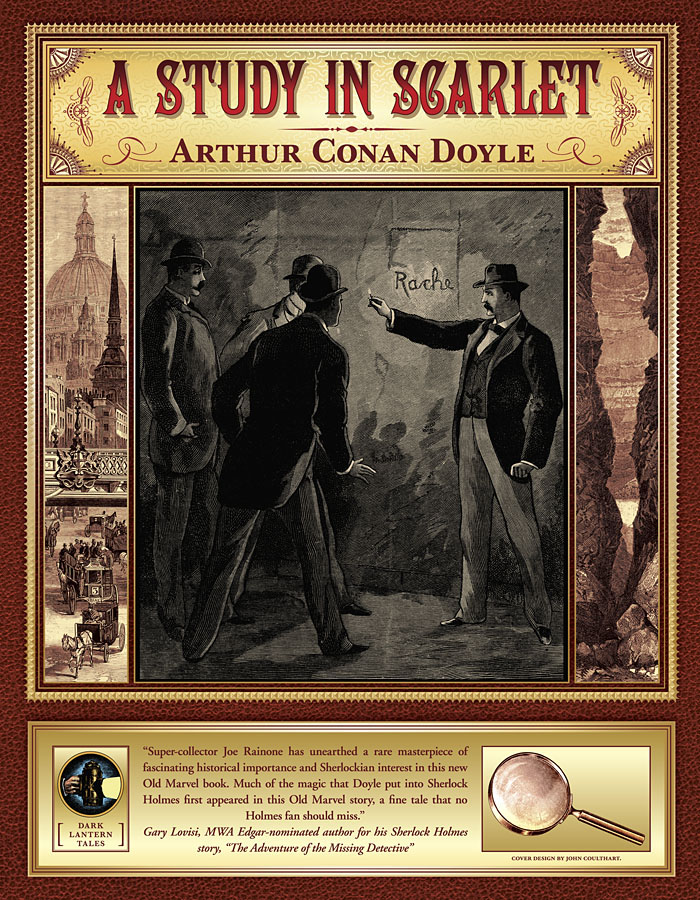
The book is actually two stories in one volume, with the second half being a reprint of the very first Sherlock Holmes novel, A Study in Scarlet. Both stories are presented as semi-facsimiles of their original US printings, together with reproductions of title pages and so on. The Holmes story is reproduced from its appearance in The Illustrated Home Guest in 1892, and includes rare illustrations one of which appears on the cover. Doyle’s first Holmes novel is the most controversial of all his stories—at least if you’re a Mormon—since this is the one where the inhabitants of Salt Lake City are depicted as a murderous religious cult. I filled out the cover with panels showing the two main story locations: a view of London via Ludgate Circus and a canyon in Utah. Finding a period engraving of St Paul’s Cathedral that remained visually interesting when narrowed down in this way took some time.

oldmarvel3.jpg

Previously on { feuilleton }
More detectives
The Joe Phenix Detective Series
Illustrating Sherlock Holmes

Oscar (1985)

oscar1.jpg

I’ve mentioned John Hawkesworth’s three-hour television biography of Oscar Wilde in previous Wilde-related posts, but was never able to point to a viewable copy until now. Oscar was broadcast by the BBC in three parts in 1985, and if it was ever shown again I don’t recall it; I certainly missed capturing it on tape. This was frustrating because I always remembered Michael Gambon’s portrayal of Wilde as being the best I’d seen, but the only reissues for home viewing were long-deleted tapes and discs produced for other countries. Having watched the drama again I’m pleased to find it as good as I remembered, possibly more so since I’ve read a several Wilde biographies in the interim so I’m better able to judge its accuracy.

oscar2.jpg

Oscar examining Aubrey Beardsley’s Salomé illustrations.

As a writer and TV producer John Hawkesworth specialised in period drama, creating and writing episodes for The Duchess of Duke Street, Danger UXB (about wartime bomb disposal), and the celebrated Granada TV Sherlock Holmes series featuring Jeremy Brett’s definitive portrayal of the detective. Oscar was based on biographical books by H. Montgomery Hyde, an MP who lost his seat for his campaigns in the late 1950s and 1960s against the British laws forbidding homosexual acts. Knowing this it’s significant that Hawkesworth’s opening scene in the first episode is a brief parliamentary discussion about the notorious Labouchere Amendment of 1885 (“The Blackmailer’s Charter”) which the narrator informs us would send Oscar Wilde to prison ten years later. Hawkesworth divides his drama into three distinct phases: Gilded Youth (concerning Wilde’s relationship with Alfred Douglas, his artistic success and the ire of the Marquess of Queensberry); Trials (the personal as well as legal variety); and De Profundis (imprisonment and its aftermath).

oscar3.jpg

In the dock at the Old Bailey.

The arc of tragedy is a familiar one, of course, but other dramatisations are seldom as well-balanced as here. Feature films about Oscar Wilde generally have shorter running times so devote their larger budgets to a recreation of the glamorous fin-de-siècle rise and the terrible downfall. Oscar is a typical BBC production of the period, mostly recorded on video in studio sets with occasional film work for exteriors. What we see of Victorian London appears sparse compared to the Sherlock Holmes episodes which were being filmed at this time. Hawkesworth may have been restricted by budget but three hours allows him to pay greater attention to the later episodes, especially the courtroom scenes. Oscar was the first screen biography to include the discussion of sexual details during the trial, as well as to show Wilde alone with a naked boy. This was a considerable advance at a time when gay sex of any kind was a rare sight on British television, and when even the straight variety could cause problems, as it did for Gambon and co. a year later when Dennis Potter’s The Singing Detective inspired the contemptible Mary Whitehouse to complain to the BBC. Hawkesworth also runs through the later years to the very end, a period of decline usually avoided or, as in Brian Gilbert’s Wilde (1997), disingenuously truncated so as to provide a “happy” resolution. Given this, I would have preferred some of the earlier scenes to be longer and to offer a sense of Wilde’s status as a serious thinker about art and aesthetics. Wilde’s flamboyant persona made him famous but he was influential not for his dandyish manner but for his ideas and their articulation in essays, lectures and the plays; his aesthetic theories were the foundation of all his writing. The most famous line from his final poem is a statement of philosophic principle: “Yet each man kills the thing he loves”.

oscar4.jpg

Oscar and Bosie.

Aesthetics aside, the public perception of Oscar Wilde presents a hurdle for dramatisations which risk resurrecting the caricatures that flourished while Wilde was alive. Michael Gambon’s performance shows Wilde as a human being, not merely a charming dispenser of witty aphorisms. This has always seemed to me crucial for any actor; it’s not enough to merely look like Wilde—as Robert Morley and Stephen Fry did—but you have to be able to convey the horrors, the indignity (and, with regard to his wife, the culpability) of his later years. Stephen Fry is a good comic actor but he never could have played the Singing Detective. Gambon’s seductively purring voice is another plus, and he even allows a hint Irish brogue to slip through now and then. Of the other actors, Robin Lermitte looks more like Alfred Douglas than does Jude Law in Brian Gilbert’s film, but Law is better at conveying Bosie’s mercurial and tempestuous character; likewise Tom Wilkinson made the Marquess of Queensbury seem a little more human in Gilbert’s version, at least in the beginning, whereas Norman Rodway presents the man from the outset as a perpetually furious goblin. Missing from Hawkesworth’s drama are Wilde’s good friend Ada Leverson, and his mother, Speranza, whose urging him to stand tall and remain in England when the police were coming for him was one of the factors that sealed his fate.

Oscar may be seen here: Part One | Part Two | Part Three

For now, and possibly the foreseeable future, this is the only way to see this drama so I’d suggest downloading it if you can. It’s a rare work that could easily vanish once again.

Elsewhere on { feuilleton }
The Oscar Wilde archive

Previously on { feuilleton }
The Importance of Being Oscar

Shades of Darkness

sod1.jpg

The end of the year in Britain is as much a time for ghost stories as the end of October, and this is one Christmas tradition (one of the few…) that I’ve always been happy to support. In recent years all of the best of the British TV ghost stories have appeared on DVD, along with some of the minor ones, but exceptions remain. Shades of Darkness was a series of hour-long supernatural dramas made by Granada TV in the 1980s, and so far seems to have only appeared on disc as a now-deleted Region 1 set.

sod2.jpg

The series comprised two short seasons in 1983 and 1986, and dates from the period when Granada was in serious competition with the BBC for well-crafted period drama. Granada’s flagship production was the long-running Sherlock Holmes series, an attempt to film all the Holmes stories with Jeremy Brett in the lead, a mostly successful endeavour that was only compromised at the end by Brett’s failing health. Shades of Darkness shares with the Holmes adaptations some of the same production team (producer June Wyndham Davies and director Peter Hammond) together with well-chosen rural locations in damp and autumnal Lancashire and Cheshire.

sod3.jpg

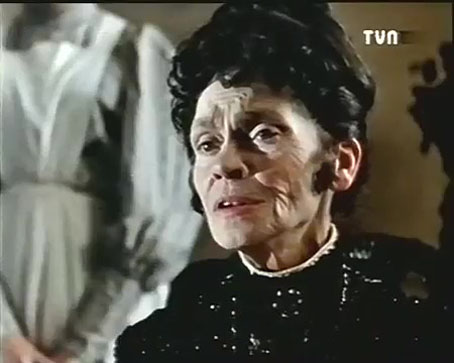
I’d only seen one of these films before, the adaptation by Ken Taylor of Walter de la Mare’s most anthologised story, Seaton’s Aunt. The story is a good choice for a series where the human drama is given as much space as the supernatural although the film doesn’t capture the subtleties or the insidious horror of de la Mare’s best writing. (The copy at YouTube is also blighted with Norwegian subtitles throughout.) I doubt that any adaptation of Seaton’s Aunt could satisfy me but it’s good to see Mary Morris in one of her last roles as poor Seaton’s malign and domineering guardian.

sod4.jpg

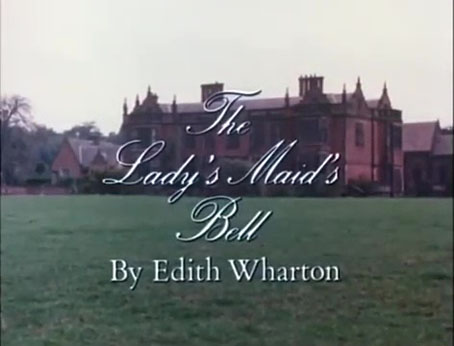
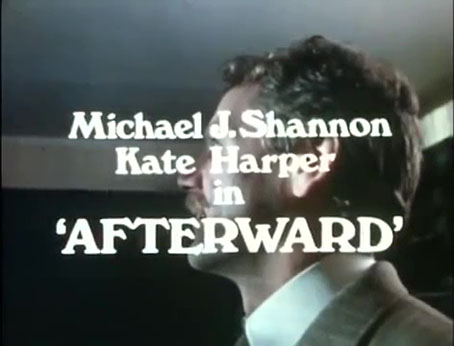
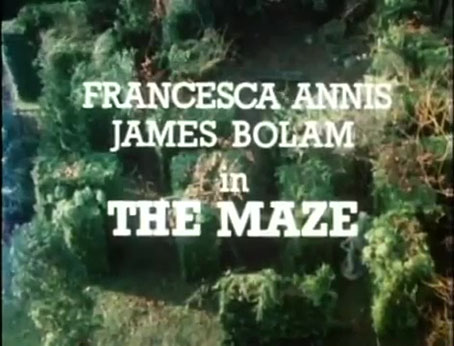
More successful are Afterward by Edith Wharton, another popular entry in ghost-story collections, and The Maze by CHB Kitchin in which Francesca Annis’s post-war housewife is tormented by memories of a dead lover. Kitchin’s story is an odd inclusion among the familiar tales, and I wonder how it came to be chosen when it doesn’t seem to be subject to the same republication as the others. Kitchin was a writer best known for his detective novels but he’s received more attention in recent years for a number of novels with gay themes. The Maze includes a character coded as gay who isn’t treated as an outright villain, an unusual detail in a story first published in 1954.

sod5.jpg

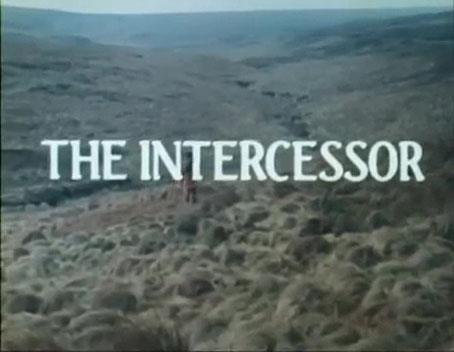
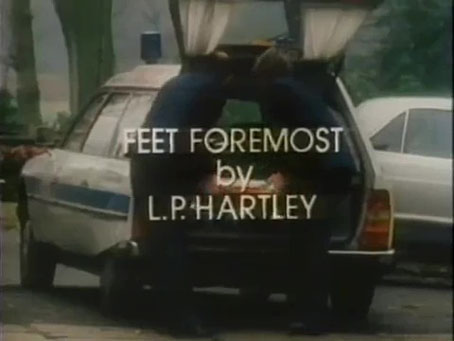
Elsewhere, Hugh Grant has an early role in Elizabeth Bowen’s The Demon Lover, and there are three adaptations by Alan Plater, one of which, LP Hartley’s Feet Foremost, is another frequently collected story which Plater surprisingly mishandles. Plater’s adaptation of The Intercessor by May Sinclair is better, with John Duttine in the role of a writer trying to work in a haunted farmhouse. I saw Duttine on stage a few years after this when he played a similar role as The Actor in the first theatrical run of Susan Hill’s The Woman in Black. It’s possible that The Intercessor secured him the part.

sod6.jpg

All these films are currently on YouTube with the exception of the final episode in season two, The Last Seance by Agatha Christie. Watch them here.

sod7.jpg

sod8.jpg

sod9.jpg

Previously on { feuilleton }
The Return: a ghost story
Nigel Kneale’s Woman in Black
“Who is this who is coming?”