Battersea Power Station

battersea.jpg

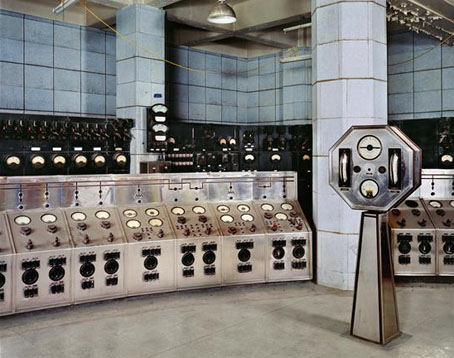
A photograph of the control room of Battersea Power Station, London, by Michael Collins, one of a series which will shortly be on display at the Royal Institute of British Architects.

The images show Battersea Power Station as what Collins describes as a “twentieth century ruined castle” – a building that was built to last, with a high quality structure and interior, including Art Deco walls and ceilings.

Giles Gilbert Scott’s enormous temple of heavy industry continues to sit decaying on the banks of the Thames while property developers come and go. The latest of these, Real Estate Opportunities, has fallen into debt which means proposals to develop the site are once again on hold. A part of me likes the idea of the building sitting there unused and purposeless year after year, like some vast Steampunk Stonehenge; Giles Gilbert Scott’s other Thames-side power station, Bankside, was successfully transformed as Tate Modern, but we know from various proposals that the fate of Battersea, whether as theme park or shopping centre, is likely to be a lot less edifying.

quark1.jpg

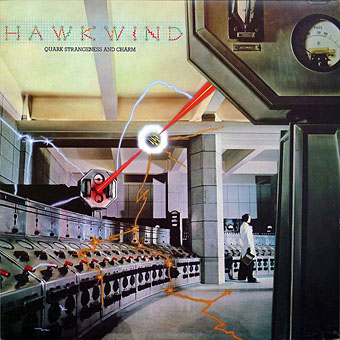
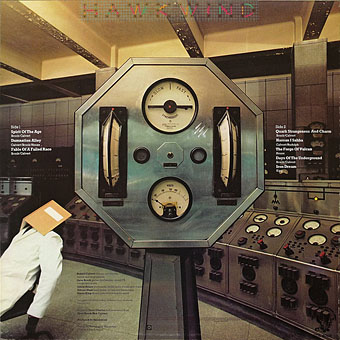
It took redevelopment to transform Bankside from temple of industry to temple of culture but Battersea’s unmistakable presence has a powerful cultural history of its own. Everyone knows the Hipgnosis sleeve design for Pink Floyd’s Animals (1977); less familiar is the photos of the control room which Hipgnosis used for Hawkwind’s Quark, Strangeness and Charm the same year. I tend to prefer the back cover of this sleeve to the front; that octagonal readout device is more interesting than the rather unconvincing sparks and exchanges of energy. And speaking of energy, my former employers are still active, unlike the rancorous Floyd.

quark2.jpg

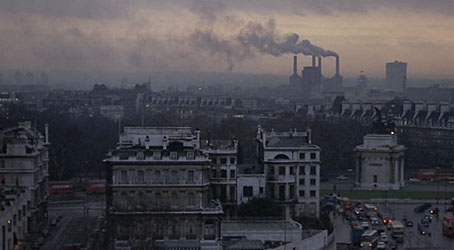
There’s a page here listing other uses of the power station, including its many film appearances which date back to the 1930s. That list mentions the control room’s use as a background for the “Find the Fish” sequence in Monty Python’s The Meaning of Life (1983) but they omit an earlier Monty Python appearance when you briefly see the building in operation during And Now for Something Completely Different (1971). It was closed down a few years later. So here it is, then, belching fumes over west London on a profoundly gloomy winter afternoon.

battersea2.jpg

Elsewhere on { feuilleton }
The album covers archive

Previously on { feuilleton }
The Sonic Assassins
The Bradbury Building: Looking Backward from the Future

Memories of the Space Age

jc60s.jpg

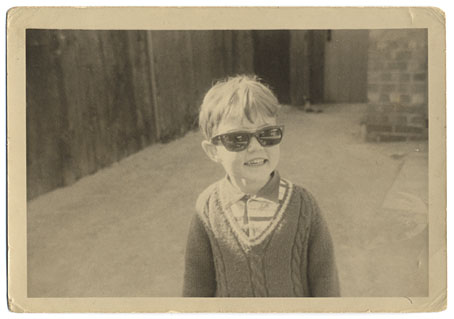
I was a Space Age boy. John Glenn became the first American to orbit the Earth in Project Mercury’s Friendship 7 a month before I was born, and growing up in the 1960s it was impossible to be unaware of the NASA missions. The first encyclopedia I was given in 1967 had a whole chapter about the Mercury and Gemini projects which ran from the late 1950s through to 1966. A subsequent section showed an artist’s impression of how it might look when we were exploring the Moon and the planets. By the time the photo above was taken, in 1968 or ’69, I was obsessed with the Apollo missions and had the names of the astronauts memorised the way others memorised the names of football players. (Everyone knows Neil Armstrong and Buzz Aldrin landed on the Moon; I’ve never forgotten that Michael Collins was the third member of the team, waiting for them in the Command Module.) For a while there was an American boy at school of whom I was deeply jealous; his father was in the USAF and his family had actually been present during the launch of Apollo 8!

Space was everywhere, it became a dominant theme, at least while the Apollo missions lasted. Pop culture of the 1950s had its share of rockets ships and flying saucers but was predominantly filled with Westerns and other Earth-bound adventures. You can see a watershed moment occurring when the hugely popular Gerry Anderson puppet shows went from the cowboy adventure of Four Feather Falls in 1960 to the science fiction of Supercar and, immediately after that, the full-on space adventure of Fireball XL5 in 1961 and ’62. Cowboys couldn’t compete with astronauts; Supercar and subsequent Anderson shows were regularly repeated, Four Feather Falls wasn’t. As well as being enthused by the Anderson shows I enjoyed something called Space Patrol, another science fiction puppet series which few now seem to remember.
airfix.jpg

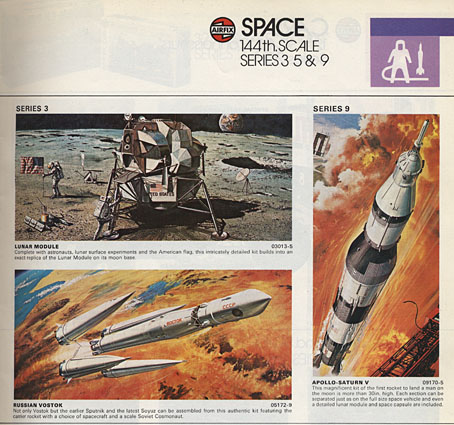
A page from a 1977 catalogue for Airfix model kits. I had the lunar module and the Saturn V. I don’t recall ever being interested in the Russian craft.

I wasn’t watching TV when Neil Armstrong first set foot on the Moon—it was 3.39 am here, I was fast asleep—but that didn’t matter, it was the event rather than the moment which counted. And there were five more landings following Apollo 11, each repeating those first moments and all accepted with the same spirit of innocent enthusiasm. What none of us kids realised at the time was that these events weren’t universally seen as a positive thing. Timothy Leary and Robert Anton Wilson later declared that going into space was the next step in human evolution but you wouldn’t know it looking through the underground press of the period. Appraisal of the NASA missions was filtered through the prisms of the Cold War and the cultural wars of the 1960s, with the entire Apollo enterprise being seen as a spin-off of the US military—the astronauts were all airforce pilots, after all—encouraged by a despised President Nixon and used as a means of embarrassing the Soviet Union. (This latter point tends to forget that the Russians were playing tit-for-tat, and had earlier embarrassed the US with Sputnik and Yuri Gagarin.) No one wanted to support men with crew-cuts who prayed in space and enjoyed country & western music. And few were prepared to concede that a President stoking the Vietnam War might have inadvertently done something worthwhile by continuing Kennedy’s space programme.
moon_it.jpg

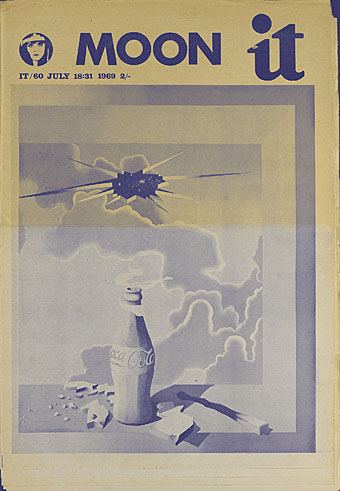
The cover of International Times for July 18, 1969, the Moon mission seen as an exploding Coke bottle which shatters the sky. An editorial within complains about the hoisting of an American flag on the Earth’s satellite.

There was a similar hostility in the attitudes of some of the younger breed of sf writers of the time who saw the Moon missions being praised and supported by the old guard of sf and, like the counterculture freaks, were disappointed by the conservative character of the astronauts. I only know this retrospectively, of course, but the complaints have always seemed rather purposeless; those men were test pilots, what else were people expecting? Equally dismaying was the amount of times throughout the 70s and 80s you’d hear black musicians only referring to the space missions in terms of a waste of money. What happened, I’d want to know, to Sun Ra’s “Space is the place”, to the elegant science fiction of Samuel R Delany, and to Parliament’s Mothership Connection? (For a more positive attitude we now have Afrofuturism.)

My own disappointment came in 1972 when it became evident that the whole show was over. As Tom Wolfe notes, after the Moon landing there was nowhere left to go. I developed a taste for written science fiction which lasted for several years but I’ve wondered sometimes whether that sense of an interplanetary future being brought to a dead stop isn’t the reason why I’ve since regarded all visions of the future as suspect. Everything in the 1960s told us that by 2009 we’d have bases on the moon and probably Mars; some of us might be living in Gerard K O’Neill‘s space colonies. When that future, which for a while seemed not only likely but inevitable, can be so easily short-circuited, why should we believe any others presented to us?

Related links:
NASA’s pages for the Apollo missions
Wired: The Moon Landings: Fact, Not Fiction
Wired: The Science of Apollo 11
Geeta Dayal on Apollo: Atmospheres and Soundtracks
by Brian Eno with Daniel Lanois and Roger Eno

Pink Floyd’s Moon-Landing Jam Session
Armstrong and Aldrin’s “lost Lunar City”
Julius Grimm’s map of the Moon from 1888

Previously on { feuilleton }
Apollo liftoff
Earthrise
East of Paracelsus

More Barney Bubbles

reasons.jpg

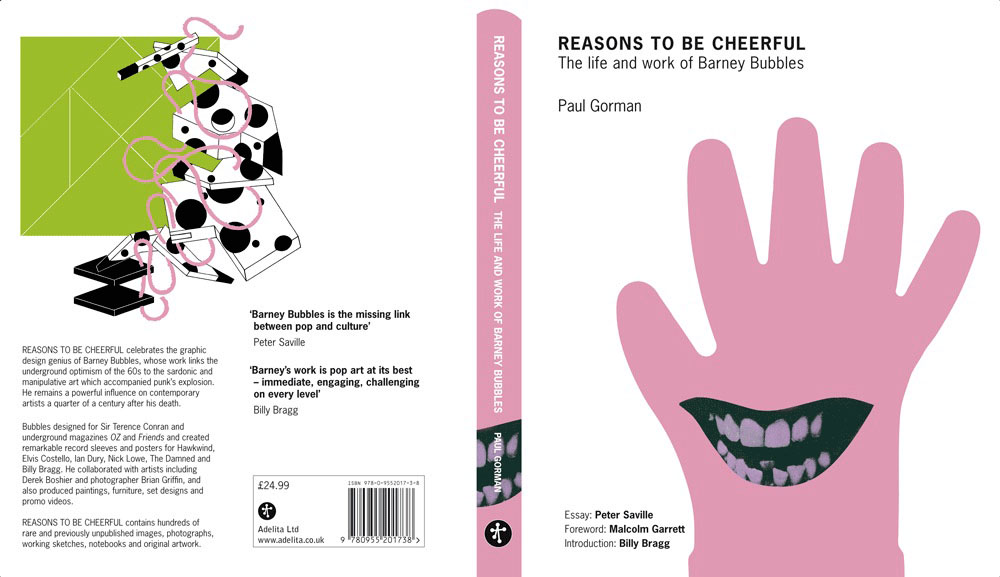
For those who’ve been eagerly awaiting Paul Gorman’s Barney Bubbles monograph, here’s the latest. Readers in the UK may also like to know there’s a feature about the book in the current issue of The Word. By coincidence, if you turn the page in the magazine there’s another feature about the Rob Gretton book I designed recently, 1 Top Class Manager. And for coincidence overload, designer Peter Saville turns up in both volumes.

Reasons To Be Cheerful: The Life and Work of Barney Bubbles
By Paul Gorman

“Barney Bubbles is the missing link between pop and culture” Peter Saville

REASONS TO BE CHEERFUL is a lavishly illustrated celebration of the creative legacy of one of the most mysterious yet influential figures in graphic design: Barney Bubbles.

Bubbles – who died 25 years ago – links the colourful underground optimism of the 1960s to the sardonic and manipulative art which accompanied punk’s explosion a decade later.

Producing extraordinary artwork under the shroud of anonymity and a number of pseudonyms, in the 60s Bubbles created early posters for the Rolling Stones, brand and product design for Sir Terence Conran and psychedelic lightshows for the Pink Floyd.

He was also responsible for the art direction of underground magazines Oz and Frendz and the masthead for rock weekly the NME, and is best known for a plethora of stunning record sleeves, logos, insignia and promo videos for musicians and performers, from counter-culture collective Hawkwind to new wave stars Elvis Costello, Ian Dury, Nick Lowe, Graham Parker, The Damned, Billy Bragg, Squeeze, Depeche Mode and The Specials.

Meticulously researched with 600 images, REASONS TO BE CHEERFUL is the first and definitive investigation into Bubbles’ life and work, with interviews and contributions from family and close friends, college pals and workmates as well as collaborators including pop artist Derek Boshier, author Michael Moorcock and photographer Brian Griffin.

Incorporating many previously unpublished images, REASONS TO BE CHEERFUL is also the only comprehensive collection of Bubbles’ output over a 30-year period: every important record sleeve, poster and advertisement as well as examples of his excursions into abstract portraiture, book design and furniture, supported by student sketchbooks, working drawings, film proposals and personal photographs and correspondence.

Singer-songwriter Billy Bragg has contributed the foreword, graphic designer Peter Saville an essay on the significance of Bubbles’ oeuvre and his contemporary Malcolm Garrett a personal memoir.

REASONS TO BE CHEERFUL is published on December 4 2008.

Trim size: 280mm x 230mm
Binding: Hardback
Pages: 224
Words: 55,000
Images: 600
RRP: £24.99

And while we’re on the subject, Barney Bubbles enthusiasts Rebecca & Mike left news on the original BB posting about a forthcoming exhibition of work by photographer Brian Griffin.

On show will be the newspaper ‘Y’, the books ‘Copyright 1978′ and ‘Power’, and associated posters, including the ‘coat hanger and scarf’ poster for Brian’s photo show in 1980. All of these (apart from ‘Power’) will be available to buy too (we think)… so, if you want to, you can bag yourself an early Christmas present (and help put some turkey on Brian’s table!)

Here’s the details: Brian Griffin, 15 November – 8 December 2008 , Monday – Saturday 11 – 6, at ‘England & Co.’, 216 Westbourne Grove, London W11 2RH.

The ‘Y’ newspaper’s got a real chunky red button on the cover (in a little plastic bag); symbolic of the nuclear button we-thinks, and there’s a great concentric circle graphic on the cover too, which is reminiscent of a few things, like the back of the not-used Dury ‘4000 Weeks Holiday’ LP sleeve design and also the front of the never released ‘Station BPR’ LP sleeve (which was due to be the second release on Billy Bragg’s ‘Utility’ label). There’s also an illustration in ‘Y’ by Nazar Ali Khan of ICU fame.

The ‘Copyright 1978′ booklet is cool too; with nearly every one of Brian’s photos in it being accompanied by thumbnail graphics by Barney, which contain cryptically encoded comments. The one that always sticks in our mind is the one that questions whether it is good or bad to receive awards for your work.

Previously on { feuilleton }
Reasons To Be Cheerful, part 2
Reasons To Be Cheerful: the Barney Bubbles revival
Barney Bubbles: artist and designer

Rick Wright, 1943–2008

rw.jpg

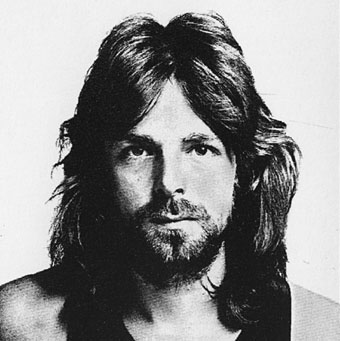
Rick Wright in 1971.

As has been noted nearly everywhere by now, Pink Floyd keyboardist Rick Wright went to the Great Gig in the Sky earlier this week, and I’m sure the inevitability of using the title of his most famous composition in this way wouldn’t have surprised him. I may as well note here that he was always credited as Rick on the albums following Piper at the Gates of Dawn, not Richard. I saw Pink Floyd perform The Wall in the cavernous bounds of Earl’s Court, London in August 1980 so I suppose I can claim to have seen him play, if watching a speck on a distant stage counts as seeing anyone. Wright’s falling out with the increasingly fractious Roger Waters saw him treated as a session musician by that point and while the show was impressively bombastic I can’t bear to hear that dreary and hysterical album any more. (Unless it’s Scissor Sisters covering Comfortably Numb.) Far better to remember Wright for his psychedelic songs such as Remember A Day from A Saucerful of Secrets.

Update: Thom reminds me that French musician Hector Zazou also died earlier this month.

White Noise: Electric Storms, Radiophonics and the Delian Mode

white_noise.jpg

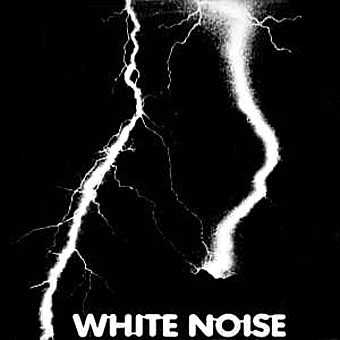
Many sounds have never been heard—by humans: some sound waves you don’t hear—but they reach you. “Storm-stereo” techniques combine singers, instrumentalists and complex electronic sound. The emotional intensity is at a maximum. Sleeve note for An Electric Storm, Island Records, 1969.

An Electric Storm by White Noise is reissued in a remastered edition this week. It’s a work of musical genius and I’m going to tell you why.

Hanging around with metalheads and bikers in the late Seventies meant mostly sitting in smoke-filled bedrooms listening to music while getting stoned. Among the Zeppelin and Sabbath albums in friends’ vinyl collections you’d often find a small selection of records intended to be played when drug-saturation had reached critical mass. These were usually something by Pink Floyd or Virgin-era Tangerine Dream but there were occasionally diamonds hiding in the rough. I first heard The Faust Tapes under these circumstances, introduced facetiously as “the weirdest record ever made” and still a good contender for that description thirty-four years after it was created. One evening someone put on the White Noise album.

It should be noted that I was no stranger to electronic music at this time, I’d been a Kraftwerk fan since I heard the first strains of Autobahn in 1974 and regarded the work of Wendy Carlos, Tangerine Dream, Brian Eno and Isao Tomita as perfectly natural and encouraging musical developments. But An Electric Storm was altogether different. It was strange, very strange; it was weird and creepy and sexy and funny and utterly frightening; in places it could be many of these things all at once. Electronic music in the Seventies was for the most part made by long-hairs with banks of equipment, photographed on their album sleeves preening among stacks of keyboards, Moog modules and Roland systems. You pretty much knew what they were doing and, if you listened to enough records, you eventually began to spot which instruments they were using. There were no pictures on the White Noise sleeve apart from the aggressive lightning flashes on the front. There was no information about the creators beyond their names and that curious line about “the emotional intensity is at a maximum”. And the sounds these people were making was like nothing on earth.

Continue reading “White Noise: Electric Storms, Radiophonics and the Delian Mode”