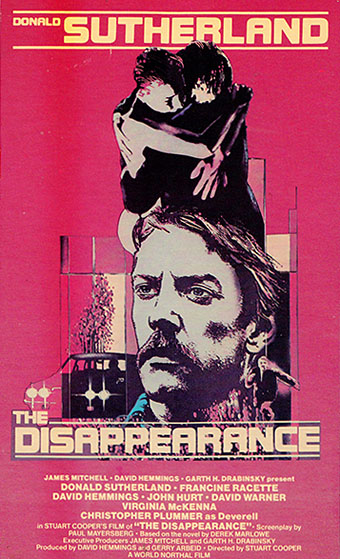
The Disappearance, a film by Stuart Cooper

disappearance1.jpg

If you’re an obsessive cineaste there’s a good chance you maintain a mental list of the films you’d like to see, the films you’d like to see again, and the films you’d like to see reissued on DVD. The vagaries of distribution and ownership often conspire to make older films fall out of sight even when they’ve been produced and promoted by major studios, have had TV screenings and so on. This was famously the case with five of Alfred Hitchcock’s features—Vertigo and Rear Window among them—which managed to remain out of circulation for two decades; more notoriously there was Stanley Kubrick’s neurotic embargo on any screening of A Clockwork Orange in the UK which meant that my generation of Kubrick-watchers had to make do with a variety of pirate VHS recordings.
marlowe.jpg

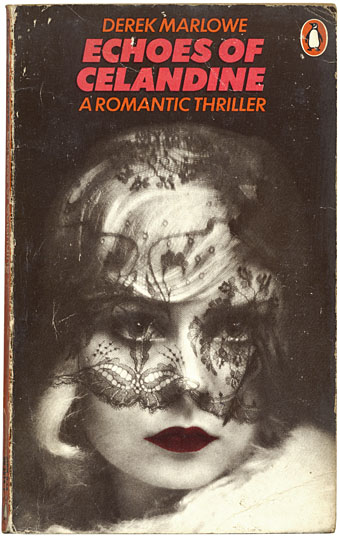
Penguin edition, 1973. Photo by Van Pariser.

DVD reissues have chipped away at my “must see again” list with the result that Stuart Cooper’s The Disappearance (1977) recently found itself at the top of the catalogue. This film has never been as inaccessible as some: it received at least two TV screenings in the UK, and was available on VHS cassette for a time. There was also a DVD release although by the time I started looking for it the only available copies were secondhand ones commanding high prices. A year or so ago I read Derek Marlowe’s Echoes of Celandine (1970), the novel on which the screenplay is based, and as a result became more eager than ever to see the film again. Having finally watched a very poor-quality transfer of a VHS copy on YouTube I now feel sated, even if the experience was unsatisfying.

The Disappearance is one of those odd productions that ought to have all the ingredients to make a very memorable film but which never works as well as you might hope. The screenplay was by Paul Mayersberg, written between his two films with Nicolas Roeg, The Man Who Fell to Earth (1976) and Eureka (1983); there’s a great cast: Donald Sutherland, David Warner, Peter Bowles, David Hemmings (who also produced), John Hurt, Virginia McKenna, Christopher Plummer; Kubrick’s cameraman of the 1970s, John Alcott, photographed the film shortly after winning an Oscar for his work on Barry Lyndon; the source material is very good: Marlowe’s novel is described as “a romantic thriller” but when the quality of the writing easily matches any literary novels of the period such a description makes it sound more generic and pot-boiling than it is.

Continue reading “The Disappearance, a film by Stuart Cooper”
Weekend links 196

wellcome1.jpg

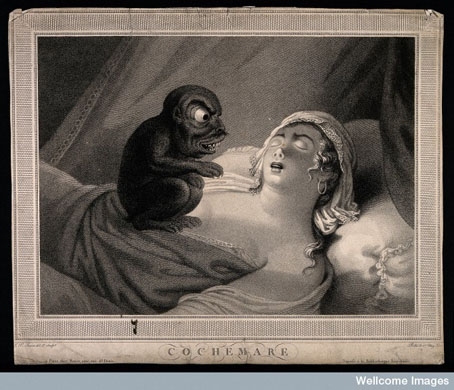
Cochemare (1810) by Jean Pierre Simon. One of 100,000 high-resolution images now available from Wellcome Images.

• Ted Morgan’s Literary Outlaw: The Life and Times of William S. Burroughs (1990) was a solid biography blighted by a bizarrely bad-tempered and judgemental attitude towards many of Burroughs’ friends and colleagues. Morgan says Burroughs disliked the book (he also says his subject died in 1993, not 1997…) so I’m looking forward to the new biography by Barry Miles, Call Me Burroughs: A Life. There’s a curious detail in Jeremy Lybarger’s piece about August Derleth, HP Lovecraft’s publisher and lifetime champion, causing a fuss after the Chicago Review published extracts from Naked Lunch in 1958. Burroughs enjoyed Lovecraft’s fiction but it’s unlikely that Lovecraft would have been anything other than appalled by Burroughs’s work. Barry Miles will be holding a Q&A session at the ICA, London, next month following a screening of Howard Brookner’s restored documentary, Burroughs: The Movie.

• Mix of the week: Secret Thirteen Mix 105 by Sturqen. At 3quarksdaily Dave Maier writes in praise of drones (the musical variety), and links to three mixes.

• Interviews: Haakon Nelson talks to Harold Budd, Joseph Burnett talks to William Basinski, John Stezaker talks to Nicolas Roeg.

Derek responded to an invitation to address [AIDS] hysteria by lining the gallery with a set of tarred and feathered mattresses loaded with the traces of queer love-making and then framing them against wallpaper made from Xeroxed, blood-spattered front pages. In the middle of all this he then constructed a makeshift barbed-wire cage that imprisoned and protected a pair of apparently naked lovers – usually a pair of handsome, sleeping boys, but for one afternoon at least Tilda Swinton dropped by, just to make the point that the boys didn’t have an exclusive stake in or artistic rights to this crisis. Between the walls and the cage, the air of the gallery was thick with tension and hatred – sometimes literally so, as visitors to the gallery objected vociferously to what they were seeing.

Neil Bartlett on celebrating Derek Jarman 20 years after his death.

• William Friedkin’s Wages of Fear remake, Sorcerer (1977), receives an overdue reissue on DVD/Blu-ray in April.

James Knowlson asks “What lies beneath Samuel Beckett’s half-buried woman in Happy Days?”

• The UK’s web filtering seems to be blocking common sense says Jane Fae.

wellcome2.jpg

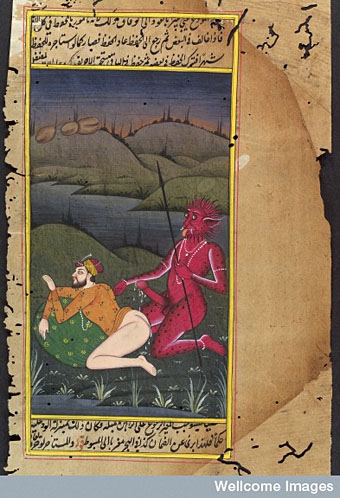
A devil buggering a man (19th century).

• The poetry of Hart Crane, from the American epic to personal belonging.

The Sonny Sharrock Quartet play Stupid Fuck, live 1988.

Pinterest nightmares

Borogoves

• Lutinemusic: Espera | Died Of Love | All I Have Is Gold

Martin Sharp, 1942–2013

sharp1.jpg

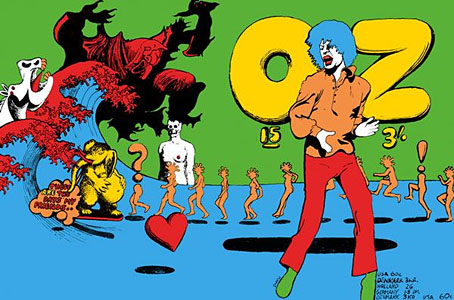
Oz magazine no. 15, October 1968.

The psychedelic art of Australian artist Martin Sharp has featured here on several occasions. Unlike his British and American contemporaries who maintained a single graphic style, Sharp was a versatile artist whose work could range from loose, often cartoony drawing and painting to very detailed collage designs; he was also as happy as any other artist of the period to plunder art history, as the cover for issue 15 of Oz demonstrates. The Mick Jagger figure from that cover was later reworked as a poster for “Turner’s Purple Orchestra”, one of a number of pieces of Sharp art which can be glimpsed throughout Donald Cammell & Nicolas Roeg’s Performance (1970).

sharp7.jpg

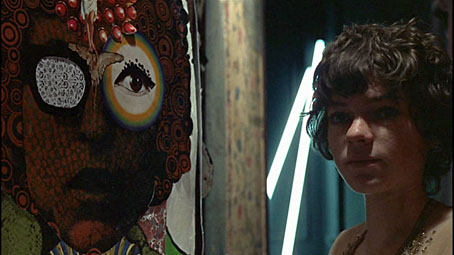
Performance (1970): Michele Breton and a Martin Sharp collage.

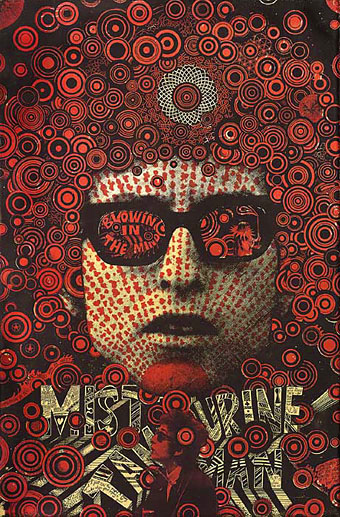
Sharp’s involvement with Oz magazine, and the creation of a handful of endlessly reproduced designs—the Bob Dylan Mr Tambourine Man poster, Jimi Hendrix in a Jackson Pollock explosion, the sleeve art for Cream’s Disraeli Gears—makes his art some of the most visible of the period. People may not necessarily know the name but they’ll recognise the work.

In 2009 Sharp’s Oz colleague Germaine Greer wrote a warm appraisal of the artist and his work. A few more examples follow. There’s a great selection of posters and other art and design here.

The GuardianMartin Sharp, Australian artist who came to symbolise the ’60s | Martin Sharp in pictures

sharp2.jpg

Mister Tambourine Man (1966).

Continue reading “Martin Sharp, 1942–2013”

Canal view

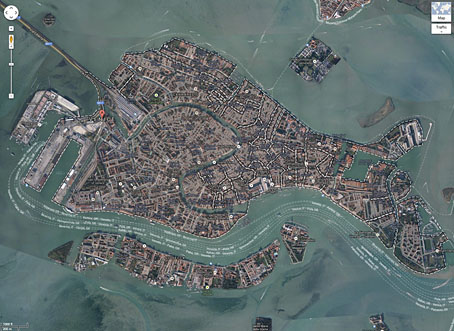
venice1.jpg

Having followed the development of Google’s Street View from the outset I couldn’t really avoid noting this new addition. The effortlessly photogenic city of Venice deserves the Street View treatment more that most cities, and while Google hasn’t explored every last corner there are enough canals, piazzas and streets photographed to allow some serious derives. If I wasn’t busy at the moment chasing an illustration deadline I’d be spending some time clicking my way around the place.

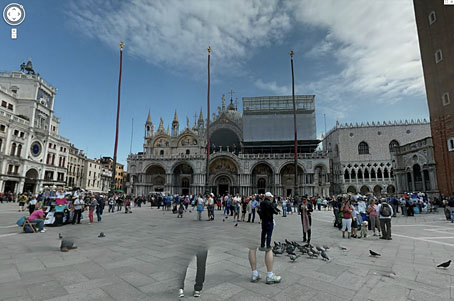
venice2.jpg

Piazza San Marco.

The Google blog has more information about the extent of the work and points the way to some less well-known areas. Below you’ll find my directions to a location from Don’t Look Now.

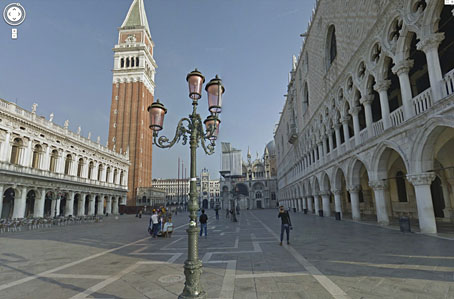
venice3.jpg

Piazza San Marco.

Continue reading “Canal view”

Weekend links 184

lefler.jpg

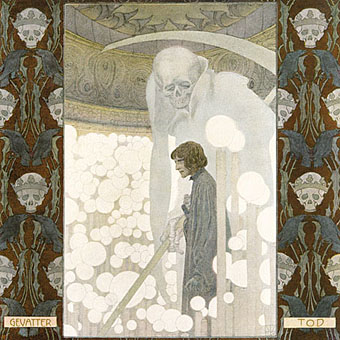
Gevatter Tod (Godfather Death, 1905) by Heinrich Lefler. Via Beautiful Century.

An inevitable hangover from Halloween this week. At 50 Watts: A Modern Dance of Death (c. 1894) by Joseph Sattler, Harry Clarke Revisited, and more Ex Libris Mr Reaper | At Design Observer: Keith Eggener on When Buildings Kill: Sentient Houses in Fiction and Film | At Dangerous Minds: An interview with horror soundtrack composer Fabio Frizzi | Clive Hicks-Jenkins on illustrating the ghost stories of MR James.

Punk 45: The Singles Cover Art of Punk 1976–80, a book by Jon Savage & Stuart Baker with an accompanying compilation album on Soul Jazz Records. Savage & Baker selected a handful of favourite covers here.

De humani corporis fabrica by Vesalius is back in print as a beautiful two-volume hardback edition. See sample pages here.

…the business of the writer is to find something out for yourself and to stick by it. To forge a new mythology out of materials pertinent to the moment. Otherwise you’re at the mercy of their mythology, which is a destruction of language, above everything else. This non-language, this bureaucratic-speak of the global corporate entities, is a horror in the world. So that strange language we started with – that piece of Kerouac – I think is more valuable than ever.

Iain Sinclair (yes, him again) talking to James Campbell about his new book, American Smoke.

Bob Mizer & Tom of Finland, an exhibition at the Museum of Contemporary Art, Los Angeles.

• From 2010: The Bridget Riley Look, The Bridget Riley Sound, Bridget Riley’s Rolling Papers.

The Strange and Mysterious History of the Ouija Board. Related: Ouija Boards at Pinterest.

Highway 62 posted some close-ups of my adaptation of The Call of Cthulhu.

• “This is not a coincidence”: Max Dax talks to Andrey A. Tarkovsky.

Anthony Lane‘s Foreword to The Big New Yorker Book of Cats.

• At AnOther: Nicolas Roeg on Mirrors and Memory.

Toys and Techniques: a blog.

Death And The Lady (1970) by Shirley & Dolly Collins | Clang Of The Yankee Reaper (1975) Van Dyke Parks | All And Everyone (2011) by PJ Harvey