Weekend links 295

dupre.jpg

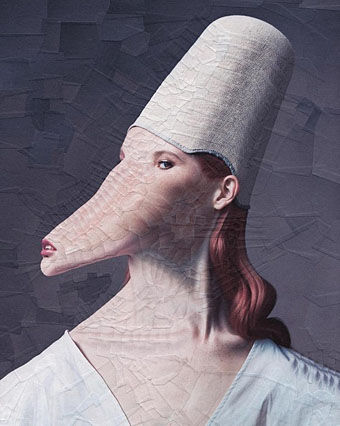
Untitled (2014) by Lola Dupré. Via.

Announcement of the week (if not the month/year) is the news that the BFI will be releasing all of the BBC dramas directed by Alan Clarke on DVD/Blu-ray in May. In addition to the long-awaited appearance on disc of Penda’s Fen (1974) we can expect a previously unseen director’s cut of Clarke’s last TV film, The Firm (1989), the DVD premier of Baal (1982) with David Bowie, plus many other works including some from the 1960s that were believed lost. (And it should be noted that this isn’t everything of Clarke’s; he also worked occasionally for ITV and later directed feature films for Channel 4.)

The BFI attention is a tribute to an exceptional director that’s overdue. Clarke has long been a cult figure among the British actors who worked with him, and among directors such as Harmony Korine and Gaspar Noé, but the tendency of TV to give one-off dramas a single screening has meant that much of his best work has been unavailable for years outside old VHS tapes. Clarke is important for having persistently chosen difficult subjects which he directed with a flair and intensity usually only found in cinema. When he died in 1990 the BBC repeated a handful of his films but the only ones given repeated DVD release have been the violent dramas with the big names attached: Scum (1979, with Ray Winstone), Made in Britain (1982, with Tim Roth), and The Firm (with Gary Oldman). Clarke’s oeuvre is much more than a parade of nihilistic villains, as will become evident later this year.

• A psychedelic video directed by Peter Strickland for Liquid Gate (ft. Bradford Cox) by Cavern of Anti-Matter. The debut album from Cavern of Anti-Matter, Void Beats/Invocation Trex, will be out later this month.

Celebrating Dusseldorf, the city that birthed Krautrock. (Article loses points for not mentioning producer Conny Plank.)

All Rivette’s features might be regarded as different kinds of horror films; Céline et Julie vont en bateau is his first horror comedy. The anxiety and despair of Paris Nous Appartient and La Religieuse, L’Amour Fou and Spectre seem relatively absent, yet they perpetually hover just beyond the edges of the frames. We still have no privileged base of ‘reality’ to set against the fictions, each of which is as outrageous as the other; and along with Borges, we can’t really say whether it’s a man dreaming he’s a butterfly or a butterfly dreaming he’s a man—although we may feel, in either case, that he and we are just on the verge of waking.

Jonathan Rosenbaum on work and play in the house of fiction: Jacques Rivette’s Out 1 and Céline and Julie Go Boating

• Mixes of the week: Finders Keepers Radio Show Krautrock Special, and The Ivy-Strangled Path Vol. XV by David Colohan.

• At Dangerous Minds: Super strange sculptures (by Shary Boyle) only the dark and demented could love.

• Beautiful Brutalites: S. Elizabeth questions Arabella Proffer about her paintings.

KTL is a musical collaboration between Peter Rehberg and Stephen O’Malley.

• Why study art when you can make it? The strange world of…This Heat.

Sarah Galo on the explicitly sexual female artists that feminism forgot.

Irmin Schmidt‘s favourite music (this week).

• LSD: My life-saving drug by Eric Perry.

The Occult Activity Book

Twenty Tiny Cities

Der LSD-Marsch (1970) by Guru Guru | Krautrock (1973) by Faust | Düsseldorf (1976) by La Düsseldorf
Digging the Rubble

rubble01.jpg

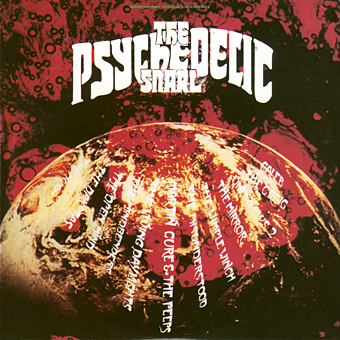
1: The Psychedelic Snarl.

A few words in praise of Rubble, the 20-disc collection of (mostly) British psychedelic singles released by the Bam Caruso label from 1984 to 1991. A reader of Rob Chapman’s Psychedelia and Other Colours would find the Rubble series an indispensable companion to the second half of the book which explores the unique styles of British psych. Ideally you’d read the book while having these and other compilations close at hand, something I didn’t manage so I’ve been going through the discs myself this week, listening out for some of the many singles that Chapman discusses. The Rubble title is a nod to Lenny Kaye’s 1972 collection Nuggets: Original Artyfacts from the First Psychedelic Era, 1965–1968, the first reappraisal of the garage/psych era whose success spawned Nuggets II: Original Artyfacts from the British Empire and Beyond, 1964-1969, a not-so-good attempt to do the same for the UK, and Children of Nuggets: Original Artyfacts from the Second Psychedelic Era, 1976-1995. The original Nuggets was followed by the long-running Pebbles series which sprawls over 28 discs collecting obscure garage singles.

rubble02.jpg

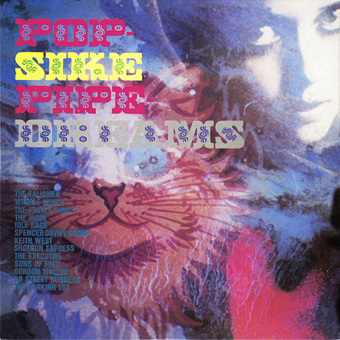
2: Pop-Sike Pipe Dreams.

What I like about the Rubble series, apart from its covering a favourite zone of musical history, is the way that each volume is titled in a suitable manner beyond a mere number: the title of volume 8, All The Colours Of Darkness could have been used by Coil during their LSD period. Then there’s the sleeve designs by the great Phil Smee, one of the founders of Bam Caruso, the collector of many of the featured singles, and a first-rate artisan of psychedelic graphics: there’s a Louis Wain cat on volume 2, and more of those letterforms by Roman Cieślewicz on volume 10. Smee deserves a post of his own but covering such a lengthy career would be a daunting task: Discogs lists 784 separate releases, and that’s only his design work. The design on the first run of Rubble albums was credited to “Harvey S. Williams”, a Smee pseudonym playing on the name of Elektra Records art director William S. Harvey. Harvey S. Williams was also the designer of the short-lived and rather wonderful Bam Caruso magazine, Strange Things Are Happening, issues of which are advertised in the inner sleeves of the early Rubble albums. (The magazine borrowed its title from a 1968 single by Rings and Things which is featured on Rubble 4.)

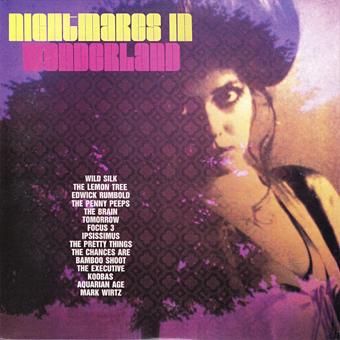
rubble03.jpg

3: Nightmares In Wonderland.

The Rubble series has been reissued on CD many times, and is currently available as The Rubble Collection, a glossy cube containing all 20 discs in card sleeves together with two booklets that reprint Phil Smee’s original sleeve notes and band photos. The Rubble albums sound a little rough today when many of the songs which were taken directly from old singles have been resurrected and can be heard elsewhere in better quality. Subsequent compilations have also cherry-picked many of the better selections but this is still the ideal place to start if you want to immerse yourself in the toyshop/kitchen sink surrealism that is British psychedelia.

• See also: Richard Norris reminiscing about working at Bam Caruso, and choosing 20 favourite British psych records.

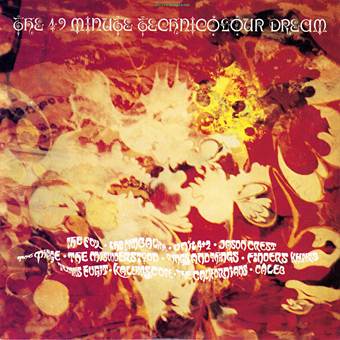
rubble04.jpg

4: The 49 Minute Technicolour Dream.

Continue reading “Digging the Rubble”

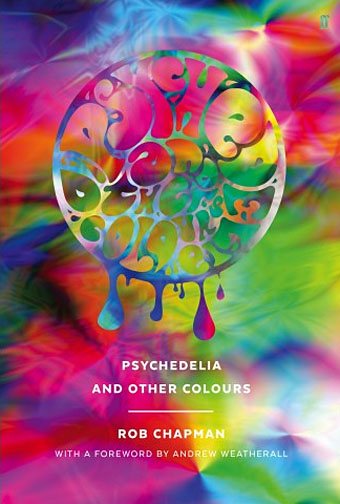
Psychedelia and Other Colours by Rob Chapman

psychedelia.jpg

My mother thought well enough of The Beatles in the 1960s to buy two of their albums—Beatles For Sale and Help!—and she continued to enjoy the Fab Four’s songs up to the point when (in her words) “they went funny”, by which she meant the period after Rubber Soul when they dropped the beat stylings, picked up sitars and took to recording drums and guitars in reverse. They were also taking drugs, of course, hence the funniness, and this rapid evolution—from loveable moptops to freaked-out weirdos in a matter of months—is the subject of Rob Chapman’s huge study of psychedelia as a cultural phenomenon, the period from around mid-1965 to late 1969 when Western youth “went funny” en masse.

This isn’t an undocumented era but Chapman’s book provides an overdue counterweight to the American focus of earlier studies such as Jay Stevens’ Storming Heaven: LSD and the American Dream (1987). Psychedelic art evolved in San Francisco but it’s an irony of the form that many of the wildest, most typically psychedelic concert posters were promoting acts that were only marginally psychedelic in their sound or, in the case of the older jazz, soul and blues acts, weren’t psychedelic at all. Chapman is more interested in the multi-media light shows than the poster art, and he reaches back in his early chapters to the origin of the San Francisco light shows in the avant-garde art of the Modernist era (especially László Moholy-Nagy’s Light-Space Modulator of the 1920s) and the art schools of the 1950s; he also traces the familiar journey of LSD from the Sandoz laboratories in Switzerland and the clinics of America to the front pages of newspapers and magazines. One of the most remarkable and unlikely aspects of psychedelia was the way in which a short-lived poly-cultural phenomenon maintained an aura of danger and illegality late into the 1960s even while psychedelic aesthetics were filtering into every facet of mainstream life: films, fashion, decor, advertising, even children’s television—all bloomed briefly with vivid colours and melting typography.

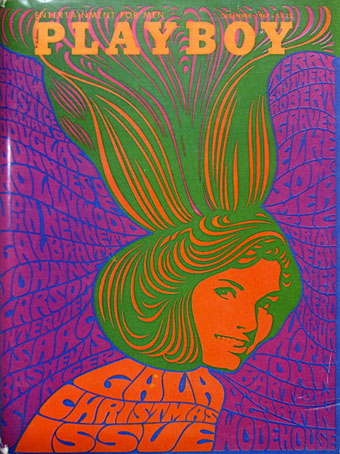
playboy.jpg

Playboy gets hip to the trip, December 1967. Art by Wes Wilson.

Chapman touches on all of this but the bulk of his study is concerned with the music which was always the core of psychedelic culture, even if many of the artists involved were only following a trend (or, to be less charitable, jumping on a bandwagon). American groups are given their due, and Chapman has some smart things to say about the often neglected surf boom of the early 60s; as noted here last month, the first piece of popular music to use “LSD” in its title was LSD-25 (1960), a surf instrumental by The Gamblers. Surf bands and garage bands mutated into psychedelic groups but there was often little change in the overall sound beyond adding an effect or two to the instrumentation. Adulterated or processed sound is what I usually look for in psychedelic music, the psychedelic experience being one of distorted or exaggerated perception. Adulteration (or lack of it) is the most obvious factor that differentiates American psych from its British equivalent: White Rabbit by Jefferson Airplane is a great song (its final line is fixed to every page of this blog) but is psychedelic only as a result of its lyrical context. Musically, the song is a simple rock bolero next to which Strawberry Fields Forever sounds like a broadcast from another planet.

Continue reading “Psychedelia and Other Colours by Rob Chapman”

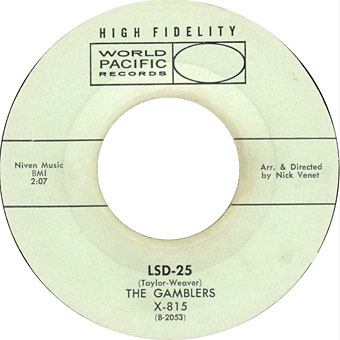
LSD-25 by The Gamblers

lsd25.jpg

A post last year concerned some of the songs that have flaunted their acid credentials by incorporating the letters L-S-D in their titles, the most famous being (of course) Lucy In The Sky With Diamonds. While it might be an idea to follow that post by tracking down songs with the word LSD in their title, a quick glance at Discogs shows an entire blotting pad of potential candidates. So I’ll let someone else do the leg-work on that one.

This post is less ambitious, prompted by a brief history of surf music in Rob Chapman’s Psychedelia and Other Colours. The Gamblers receive a mention for being the first group to record a piece of music with LSD in the title: LSD-25 was the B-side of their first single, Moon Dawg!, released in 1960. Moon Dawg! has the distinction of also being one of the first (if not the first) surf singles, and was later covered by The Beach Boys on their debut album, Surfin’ Safari (1962). With its hyperactive drums and twanging guitar Moon Dawg! certainly sounds like a surf number, whereas LSD-25 is more like one of Link Wray’s smouldering instrumentals. I’d heard the A-side on a Cramps-related singles compilation, Loose Lips Might Sink Ships, but hadn’t heard LSD-25 before so this is a welcome discovery. Someone had to be first with the LSD reference (chosen at random by a studio engineer according to Chapman), and we could have done much worse than this.

The Gamblers only recorded one more single before disbanding but guitarist Eliot Ingber had a distinguished career playing with Frank Zappa’s Mothers of Invention, Little Feat, Captain Beefheart (as Winged Eel Fingerling), and (I didn’t know this) as a member of The Peter Peter Ivers Band (sic) on Terminal Love (1974). You may not know Ivers’ name but you’ll probably know his voice when it appears in David Lynch’s Eraserhead in the guise of the Lady in the Radiator singing In Heaven.

Previously on { feuilleton }
More trip texts
Trip texts
Acid albums
Acid covers
Lyrical Substance Deliberated
The Art of Tripping, a documentary by Storm Thorgerson
Enter the Void
In the Land of Retinal Delights
Haschisch Hallucinations by HE Gowers
The art of LSD
Hep cats

Weekend links 275

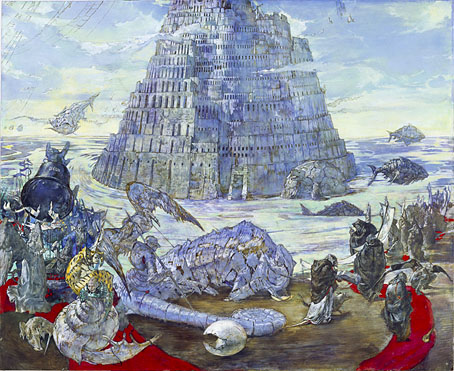
wessi.jpg

A painting from the Projekt Babelturm series by Wessi.

• “The first thing I would say is that I have no idea what authentic psych music is, and I have no wish to pursue that either. To me the idea of real psych is a paradox. I can’t see how you can have such a thing as real psychedelia when the whole thing is based on a psychedelic drug that gives you hallucinations and illusions and layers and layers of unreality.” Rob Chapman talking to Ben Graham about his new book, Psychedelia And Other Colours.

Elsewhere in a rather psychedelic week: Rob Young reviewed Chapman’s book for the New Statesman; Dangerous Minds posted “Hypnotic video of how a psychedelic masterpiece is made“; and in Germany a homeopathy conference “ended in chaos in Germany after dozens of delegates took a LSD-like drug and started suffering from hallucinations.”

• Coming soon from Dark Entries (so to speak), another collection of Patrick Cowley‘s music for gay porn films.

Jonathan Barnbrook works some quotes from JG Ballard into the British Road Sign Project.

• “Sorcery is more popular than football in Morocco,” says writer and filmmaker Abdellah Taïa.

• “If you’re going to make something, you should try and be wild,” says Mica Levi.

• Coca-Cola Milanese: Patrick Ellis considers the state of the world’s fair in 2015.

• Hear two pieces from Collapse, the forthcoming album by Drew McDowall.

• Mix of the week: Secret Thirteen Mix 162 by Ketev (Yair Elazar Glotman).

Emptyset’s Signal transforms Earth’s ionosphere into sound art.

Paul Laffoley: The Force Structure of the Mystical Experience.

• Fuck off, Star Wars, Ben Wheatley’s High Rise is on its way.

Ideologic Organ

Psychedelic Ride (1967) by The Ides | Psychedelic Warlords (Disappear In Smoke) (1974) by Hawkwind | Psychedelic Sewing Room (1989) by Bongwater