Weekend links 805

strausfeld.jpg

A poster by Peter Strausfeld for a 1966 screening of Alphaville and La Jetée.

• At Bandcamp Daily: “Caroline True obsesses over compilations so you don’t have to,” says Erick Bradshaw. I recommend CTR’s compilations.

• At The Wire: Read an extract from Music Stones: The Rediscovery Of Ringing Rock by Mike Adcock.

• At Colossal: Pastoral landscapes brim with patterns in luminous paintings by David Brian Smith.

One of the markers that sets Mamoru Oshii apart from his peers is his willingness to allow place to speak for itself. From the seasonality captured in his works, like the first two Patlabor films, to the otherworldly environments of Ghost In The Shell 2: Innocence (all projects in which Ogura was also involved heavily) and even the fantasy scapes of his Angel’s Egg, Oshii’s attention to place, and allowing it to be a player in the story, gives as much voice to world building, as he does to characterisation. This attentiveness and patience for place, allows us to settle deeply inside a worldview that is often simultaneously familiar but unerringly alien.

Lawrence English talks to art director Hiromasa Ogura and composer Kenji Kawai about their work on Oshii’s Ghost in the Shell

• At the BFI: Leigh Singer suggests where to begin with the films of Lucile Hadžihalilović.

• Necromodernist Architectures in Contemporary Writing: an essay by David Vichnar.

• New music: Hydrology by Loula York; Love Letters Via Echelon by Nerthus.

• There’s more Intermittent Eyeball Fodder at Unquiet Things.

• The Strange World of…Early Cabaret Voltaire.

• Winners of the Drone Photo Awards 2025.

Lautréamont’s Apocrypha

Drone Um Futurisma (1992) by Cusp | ABoneCroneDrone 1 (1996) by Sheila Chandra | Suspicious Drone (2009) by Demdike Stare

Weekend links 796

wright

Academy by Lamplight (1770) by Joseph Wright of Derby.

• “He recounts, for example, the death of the custom of ‘Stephening’ in Drayton Beauchamp, Buckinghamshire, where ‘all the inhabitants used to go on St. Stephen’s Day to the Rectory, and eat as much bread and cheese, and drink as much ale as they chose, at the expense of the Rector’. Stephening was discontinued by the Rector, as the event ‘gave rise to so much rioting’.” Ross MacFarlane on A Collection of Old English Customs, and Curious Bequests and Charities (1842).

• “He should be known as a film music revolutionary”: Milos Hroch on revitalising the legacy of Czech composer Zdeněk Liška.

• At The Wire: Read an extract from Ian Thompson’s Synths, Sax And Situationists: The French Musical Underground 1968-1978.

Wright’s choice of subject matter was not only contemporary, but bordered on the heretical. In his candlelight paintings of the orrery, the air pump and the alchemist at work, he not only employed dramatic lighting and plunging shadows to heighten the drama, but the scenes themselves dealt in mortality and the insignificance of man in relation to the natural world, as well as suggesting that the scientist was now usurping the divine creator.

Charlotte Mullins on the chiaroscuro paintings of Joseph Wright of Derby

• New music: Daylight Daylight by Steve Gunn; Hard Ware by Patrick Cowley; WhiteOut by Lawrence English.

• At Spoon & Tamago: GAKUponi: A self-sustaining loop of fish and plants that hangs on the wall.

• Mix of the week: DreamScenes – September 2025 at Ambientblog.

• At the BFI: Anton Bitel chooses 10 great German horror films.

• At Unquiet Things: A conversation with Benz and Chang.

• RIP Robert Redford.

The Fish (Schindleria Praematurus) (1972) by Yes | Fish Culture (1980) by Marc Barreca | Filter Fish (1995) by Leftfield

Weekend links 776

hoffmeister.jpg

Illustration by Adolf Hoffmeister for a Czech edition of The First Men in the Moon by HG Wells.

• It’s good to hear that Czech animator Jiří Barta is back at work on his long-gestating feature film based on the Golem legend. The new iteration looks like a reimagining of the entire project.

• Among the new titles at Standard Ebooks, the home of free, high-quality, public-domain texts: The First Men in the Moon by HG Wells.

• This week in the Bumper Book of Magic: Ben Wickey breaks down more of his Great Enchanters pages.

• At Colossal: Charles Brooks photographs the interiors of musical and scientific instruments.

• At Igloomag: Philippe Blache on neo-noir, doom jazz and related atmospheric music.

• At The Daily Heller: The book-brick that is the 1,264-page Emigre Specimen Encyclopedia.

• New music: Changing States by Matmos, and Of Shadow Landscapes by Skotógen.

• At the BFI: Josh Slater-Williams selects 10 great Japanese time-travel films.

• Lawrence English remembers the sound-art pioneer Alan Lamb.

Tunde Adebimpe’s favourite albums.

Time Machine (1967) by Satori | Time Machine (1968) by Lemon Tree | Turn Back Time (1971) by Time Machine

Weekend links 763

parent.jpg

I Live in Shock (1955) by Mimi Parent.

• At Public Domain Review: “Ben Hecht’s Fantazius Mallare (1922) is at turns obtuse, grotesque, and moralizing—and sought to provoke the obscenity trial of the century. Only it didn’t, quietly vanishing instead. Colin Dickey rereads this failed satire, finding a transcendent rhythm pulsing beneath the novel’s indulgent prose.”

• “There are no surprises when a pallet of CDs arrives at my office, but when a pressing plant alerts me to a shipment of records headed my way I start to worry.” John Brien, head of Important Records, on the problems involved in the manufacture of vinyl albums.

• The sixth installment of Smoky Man’s exploration of The Bumper Book of Magic has been posted (in Italian) at (quasi).

They were building a vast alternative religion with a lack of dictates but no shortage of rituals and icons. They’d pass through the end of the world to get there first; the next album was based on a vision of the Four Horsemen of the Apocalypse slaughtering their animals and constructing a earth-gouging machine from their jawbones, demonstrating they weren’t quite intending to settle down yet. It would take them far from mainstream culture, and indeed mainstream gay culture given their repeated disdain for sanitised queerness, and into enigmatic territory. Having scared away most fans of synth pop and industrial with provocation, and the weak and tyrannical with ambiguity, they were unencumbered and “allowed to mature in the dark”, sustained by a cult following (you rarely encounter a tepid fan of Coil, most are acolytes).

Darran Anderson looking back at Coil’s debut album, Scatology

• At Smithsonian Magazine: See 15 winning images from the Close-Up Photographer of the Year Competition.

• At The Daily Heller: How did pink become a colour? Meanwhile, Steven Heller’s font of the month is Vibro.

• New music: Even The Horizon Knows Its Bounds by Lawrence English.

SciURLs: A science news aggregator.

Shackleton’s favourite albums.

• RIP Marianne Faithfull.

The Pink Panther Theme (1963) by Henry Mancini | The Pink Room (1988) by Seigen Ono | Pink (2005) by Boris

Weekend links 734

mechau1.jpg

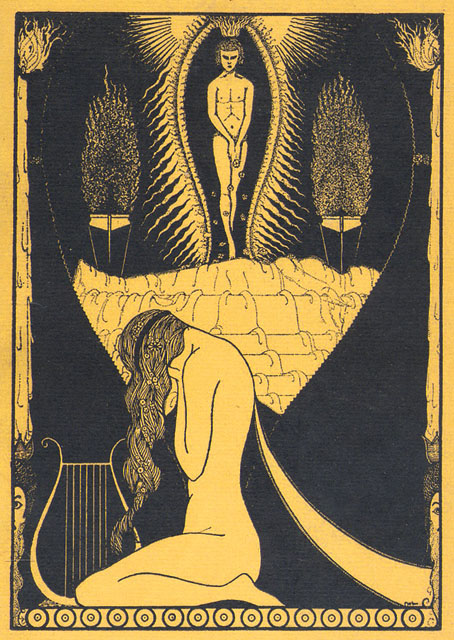
Illustration by Frank Mechau for The Love of Myrrhine and Konallis (1926) by Richard Aldington.

• At A Year In The Country: The Delaware Road: “A surreal post-war Albion and Quatermass meets Tinker, Tailor, Soldier, Spy.”

• At Colossal: Rajesh Vora photographs the unique Punjabi tradition of adorning homes with sculptural water tanks.

• At Unquiet Things: The fragile eternity of Margaretha Roosenboom’s floral still lifes.

mechau2.jpg

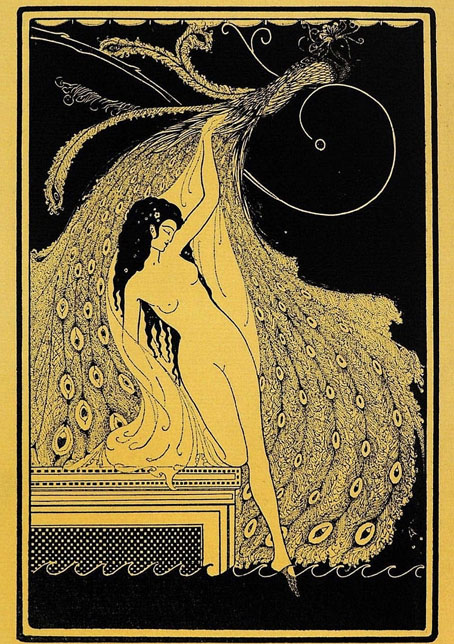
Illustration by Frank Mechau for The Love of Myrrhine and Konallis (1926) by Richard Aldington.

• New music: Damaged by Ghost Dubs, and Selene by Akira Kosemura & Lawrence English.

• At Public Domain Review: Allison C. Meier on The Dance of Death across centuries.

• RIP Shelley Duvall. Related: Anne Billson on Shelley Duvall: her 20 greatest films.

• At Dennis Cooper’s: Galerie Dennis Cooper presents…Félicien Rops.

• Steven Heller’s font of the month is Sisters.

Eno Williams’ favourite records.

Two Sisters (1967) by The Kinks | All Your Sisters (1996) by Mazzy Star | Two Sisters (2017) by Gel-Sol