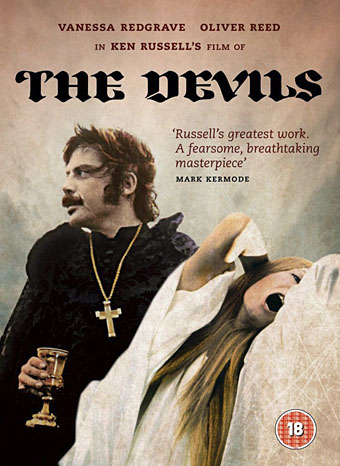
The Devils on DVD

devils01.jpg

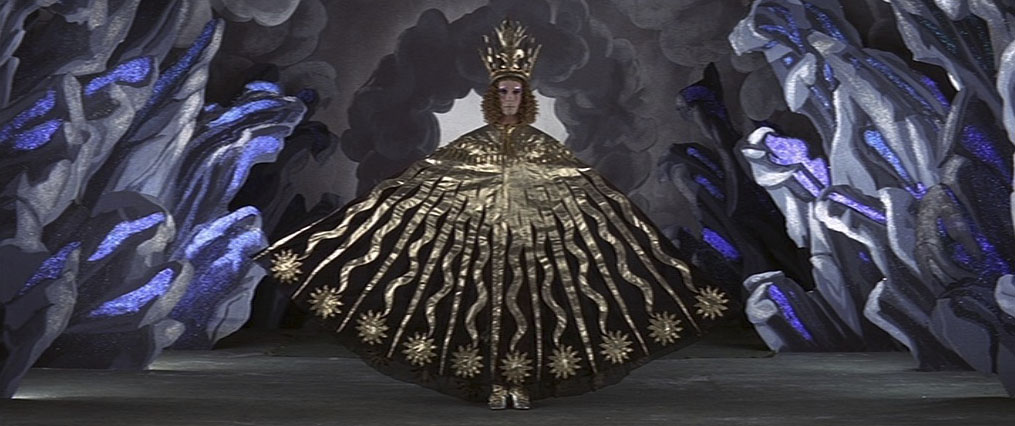
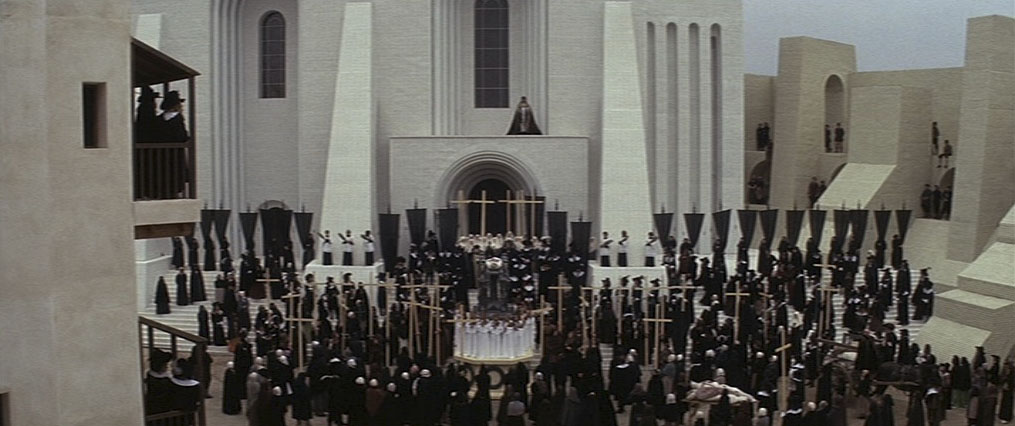
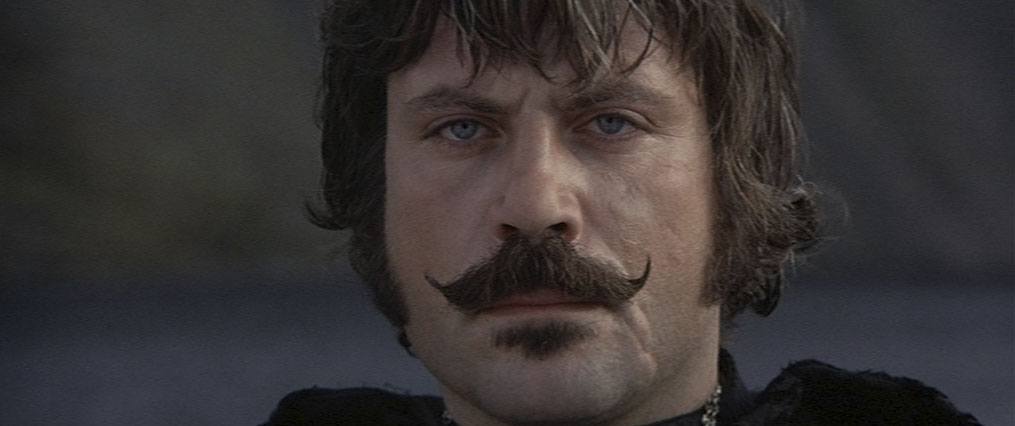
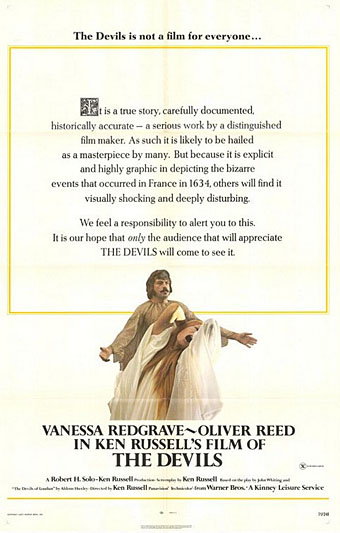
No Blu-ray as yet but this is another excellent BFI release so it looks and sounds fantastic. There’s been some grumbling that the 1971 director’s cut is still being embargoed by Warner Brothers but when the rest of the film looks so pristine I find it difficult to get worked up over a few missing shots of writhing nuns. Among the extras there’s an early Ken Russell short, Amelia and the Angel (1958), and a second disc of supplementary material, including Paul Joyce’s 48-minute documentary about the making of the film, Hell on Earth. Inside the booklet there’s a photo of set designer Derek Jarman looking very young and sweet. A few screen grabs follow to make Russell enthusiasts in Region 1 jealous. (Hi Thom!)

devils02.jpg

devils03.jpg

devils04.jpg

Continue reading “The Devils on DVD”

Ken Russell, 1927–2011

thedevils.jpg

May–September 1970, Ladbroke Grove: Ken asked me what would most upset an English audience. Louis XIII dining al fresco, carelessly shooting peacocks on the lawn between courses. “Impossible,” said Ken. “How would you do that?”

“Make some dummies, stand them on the lawn and detonate them.”

“No, you’d have to shoot real peacocks. It wouldn’t work otherwise.”

Derek Jarman, Dancing Ledge (1984)

It hardly seems worth adding to the Russell eulogies when The Guardian over the past few hours has been so profligate with their stories you might think they’d offed the director in order to boost their readership. For my part I’ll keep it brief and say I used to be guilty of taking Ken Russell for granted, he seemed so ubiquitous when his feature films were turning up all the time on British television. He was fortunate to make the most of that brief moment when American studios were nurturing a handful of world-class talents in the UK. A shame it didn’t last. Derek Jarman, after working on The Devils and Savage Messiah, designed a production of Stravinsky’s The Rake Progress that Russell directed in 1982. Discussing that period in Dancing Ledge he says: “Ken is deeply disillusioned with the cinema, the end of a love affair. Whenever the subject comes up there is sadness, tales of betrayal and hopes dashed.” About British cinema in general, Jarman had this to say:

The English film world is mesmerized by Oscars, and almost any project has to pass the Hollywood test. All indigenous work has to be historic and “quaint” – Brideshead or Chariots of Fire, a dull and overrated TV film, fit the bill. All the rest take their chances.

The BFI is finally releasing The Devils on DVD in March 2012. Unlike The King’s Speech it never won any Oscars. No need to guess which one I’d rather watch.

Guardian obituary | Ken Russell: a career in clips
• The Independent: Farewell to the wild man of cinema
Telegraph obituary
Fuck Yeah Ken Russell

Previously on { feuilleton }
Salome’s Last Dance

Weekend links 86

alastair.jpg

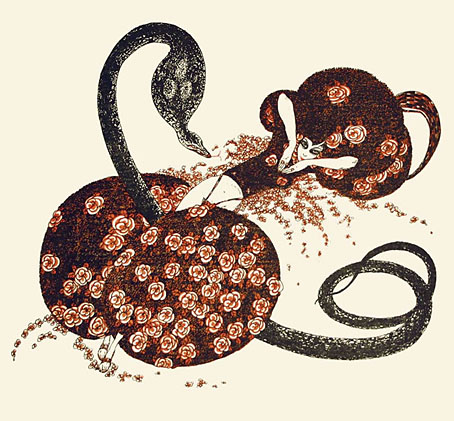
Salammbô by Alastair (Hans Henning Voigt) from Harry Crosby‘s Red Skeletons (1927). Dover published a new collection of Alastair’s drawings in September.

A Taste of Honey showed working-class women from a working-class woman’s point of view, had a gay man as a central and sympathetic figure, and a black character who was neither idealised nor a racial stereotype.” RIP Shelagh Delaney. Related: Shelagh Delaney’s Salford (1960), directed by Ken Russell, and all 47 minutes (!) of The White Bus (1967), Lindsay Anderson’s strange, pre-If…. short, written by Shelagh Delaney, filmed in and around Manchester.

Since birth I’ve craved all things psychedelic, the energy and beauty of it. The pleasure… […] But in the US the exploration of consciousness and its powers—or really any curiosity about anything at all—is actively discouraged, because the system is so corrupt that it depends on people being virtually unconscious all the time. Burroughs cracked that code long ago. Spirituality here equals money; no one seems to be able to think, never mind explore their own consciousness.

Laurie Weeks: Making Magic Out of the Real

• Ian Albinson shows us The Title Design of Saul Bass while Ace Jet 170 has a copy of the new Bass monograph.

Kris Kool (1970) at 50 Watts, Philip Caza’s lurid, erotic, psychedelic comic strip.

lilien.jpg

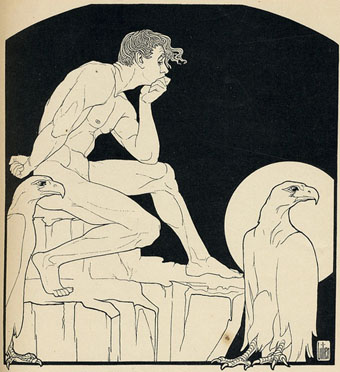
Götz Krafft by EM Lilien from a collection at Flickr.

Serious Listeners: The Strange and Frightening World of Coil.

The Octopus Chronicles, a new blog at Scientific American.

• We now live in a world where there are Ghost Box badges.

Kilian Eng interviewed at Sci-Fi-O-Rama.

Dalí Planet

Bedabbled!

A Taste of Honey (1962) by Acker Bilk | A Taste of Honey (1965) by Herb Alpert’s Tijuana Brass | A Taste of Honey (Moog version) (1969) by Martin Denny.

Weekend links 64

magritte.jpg

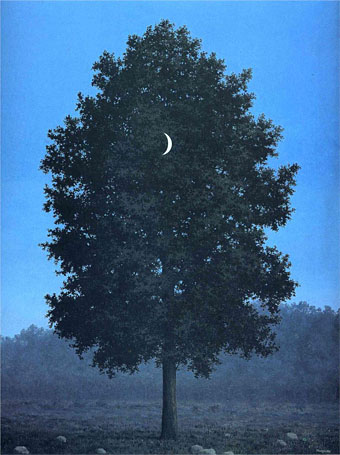
The Sixteenth of September (1956) by René Magritte.

To Magritte admirers, The Sixteenth of September is a deceptively realistic work painted in 1956, one of a series in which the artist plays tricks with light and time of day. It shows a crescent moon impossibly shining through the dark mass of a tree, against a dawn sky.

To [Marc] Bolan fans, the painting has an entirely different significance: 16 September 1977 was the date the singer was returning home in the small hours from a night out, in a Mini driven by his girlfriend Gloria Jones. […] Fans say the tree in the painting closely resembles the sycamore the car crashed into, and the moon was at the same phase on 16 September 1977. (more)

• New Yorkers finally got a successful vote for gay marriage making New York state the sixth and largest in the US giving full marriage rights to its gay citizens. One of America’s conservative journals, National Review, made the striking point that forty years ago New York was in the vanguard of gay liberation while Spain under Franco was a dictatorship with no gay rights at all. No one then would have bet on Spain beating New York to gay marriage rights as it did in 2005. Allow me to note that we still only have civil unions here in the UK.

• Related: Queer Beacon: LGBT spaces in New York City by Kian Goh, and at Scientific American: The Intelligent Homosexual’s Guide to Natural Selection and Evolution, with a Key to Many Complicating Factors by Jeremy Yoder.

• A pair of intrepid photographers breach the midnight security at St Paul’s Cathedral to bring back photos of the building rooftop. Related (and looking like a good location for a British equivalent of Stalker), photos of the disused Thorpe Marsh Power Station, Yorkshire.

• Mixtape of the month: the ATP I’ll Be Your Mirror collection by Portishead, a great blend of rock, rap and electronic odds-and-ends. Also a dash of Alan Moore & Stephen O’Malley.

Eddie Campbell is blogging again. Welcome back to the madhouse, Eddie. His smart and witty daughter, Hayley Campbell, continues to file regular bulletins from her London bunker.

• Your Tumblrs this week: Fuck Yeah Ken Russell and Fuck Yeah Powell & Pressburger.

Robot Flâneur: Exploring Google Street View.

Paris Visages by Marco Gervasio.

• “Push the button, Max!

Written On The Forehead (2011) by PJ Harvey.

Wild Salomés

wildesalome.jpg

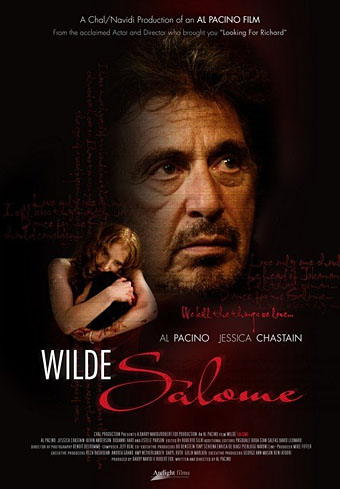
So there’s a poster for Al Pacino’s forthcoming drama-documentary about the Oscar Wilde play but I’ve yet to see any release details. The tagline connects Salomé with The Ballad of Reading Gaol: “We kill the thing we love.”

salome1986.jpg

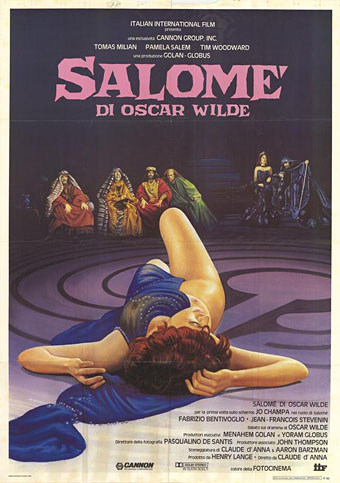
Searching around for posters turned up this item for an Italian-French co-production of the Wilde play directed by Claude d’Anna. I’ve not seen this but it can’t be any worse than Ken Russell’s version so it may be worth seeking out.

salome1953.jpg

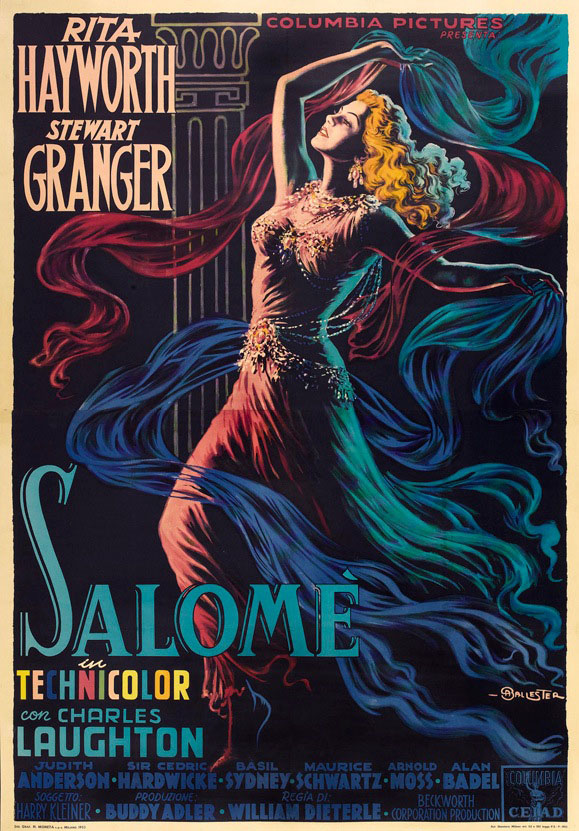
Far better poster-wise is this splendid creation by Anselmo Ballester for the Italian release of the 1953 Hollywood film (which isn’t based on the play). Rita Hayworth was too old for the role, and the film is simultaneously lavish and dull in the way that so many sword-and-sandal epics manage to be, but the poster is a gem. This site has many more examples of Ballester’s poster art.

Elsewhere on { feuilleton }
The Oscar Wilde archive
The Salomé archive