More trip texts

parry1.jpg

More psychedelia of a sort. Anthologist Michel Parry, who died last year, was a familiar name to British readers of fantasy, horror and science fiction for his themed collections: Beware of the Cat (1972; horror stories about cats), The Devil’s Children (1974; horror stories about children), The Hounds of Hell (1974; horror stories about dogs), Jack the Knife (1975; Jack the Ripper stories), The Supernatural Solution (1976; occult investigators), Sex in the 21st Century (1979), and so on.

Parry also compiled multi-volume anthologies throughout the 1970s, two of which have always stood out for me: the Mayflower Books of Black Magic Stories ran to six volumes presenting a wide range of occult fiction that included a number of obscure tales from Victorian and Edwardian writers; for Panther Books he compiled three collections of drug-related fantasy and SF stories that are just as varied, and may even be unique for the way they place authors as such as Lord Dunsany and Norman Spinrad together in the same volume. Both series are very much of their time—occult psychedelia!—and are worth seeking out, if you can find them. I emphasise the last point because it’s taken me a while to find a copy of Strange Ecstasies that wasn’t being offered for bizarrely inflated prices; my paperback habit has its limits… None of these anthologies have been reprinted so they’ll become increasingly scarce. For more invented drugs, there’s a good list at Wikipedia.
parry2.jpg

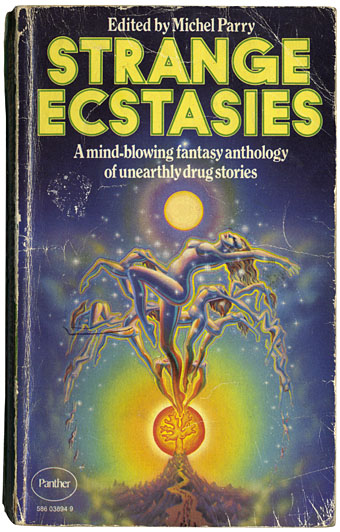
Cover art by Bob Haberfield.

Strange Ecstasies (1973)
The Plutonian Drug (1934) by Clark Ashton Smith
The Dream Pills (1920) by FH Davis
The White Powder (1895) by Arthur Machen
The New Accelerator (1901) by HG Wells
The Big Fix (1956) by Richard Wilson
The Secret Songs (1962) by Fritz Leiber
The Hounds of Tindalos (1929) by Frank Belknap Long
Subjectivity (1964) by Norman Spinrad
What to Do Until the Analyst Comes (1956) by Frederik Pohl
Pipe Dream (1972) by Chris Miller
parry3.jpg

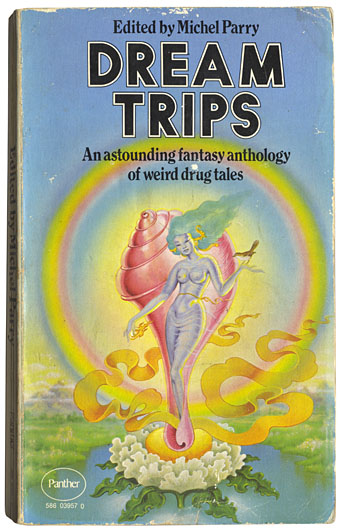
Cover art by Bob Haberfield.

Dream Trips (1974)
The Hashish Man (1910) by Lord Dunsany
As Dreams Are Made On (1973) by Joseph F. Pumilia
The Adventure of the Pipe (1898) by Richard Marsh
Dream-Dust from Mars (1938) by Manly Wade Wellman
The Life Serum (1926) by Paul S. Powers
Morning After (1957) by Robert Sheckley
Under the Knife (1896) by HG Wells
The Good Trip (1970) by Ursula K. Le Guin
No Direction Home (1971) by Norman Spinrad
The Phantom Drug (1926) by AW Kapfer
parry4.jpg

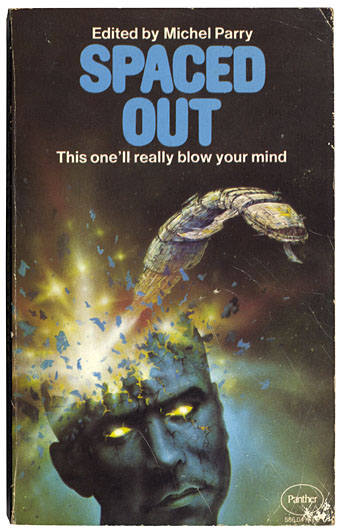
Cover art by Brian Froud.

Spaced Out (1977)
The Deep Fix (1964) by Michael Moorcock
All the Weed in the World (1961) by Fritz Leiber
The Roger Bacon Formula (1929) by Fletcher Pratt
Smoke of the Snake (1934) by Carl Jacobi
Melodramine (1965) by Henry Slesar
My Head’s in a Different Place, Now (1972) by Grania Davis
Sky (1971) by RA Lafferty
All of Them Were Empty— (1972) by David Gerrold

Previously on { feuilleton }
Trip texts
Acid albums
Acid covers
Lyrical Substance Deliberated
The Art of Tripping, a documentary by Storm Thorgerson
Enter the Void
In the Land of Retinal Delights
Haschisch Hallucinations by HE Gowers
The art of LSD
Hep cats

Fantastic art from Pan Books

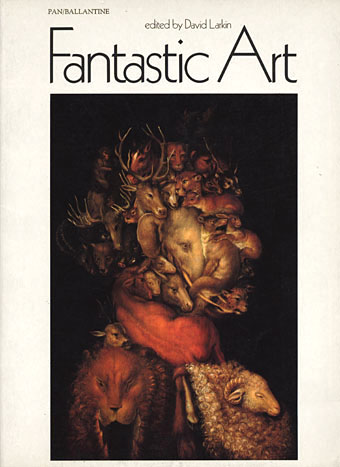
larkin_fantastic.jpg

Fantastic Art (1973).
Cover: Earth by Arcimboldo.

I’d thought of writing something about this book series even before I started this blog since there’s very little information to be found about it online. I can’t compete with the serious Penguin-heads, and I’m not much of a dedicated book collector anyway, but I do have a decent collection of the art books that Pan/Ballantine published in the UK throughout the 1970s. The books were published simultaneously by Ballantine/Peacock Press in the US, and nearly all were edited by David Larkin, with Betty Ballantine overseeing the American editions. Two of the series, the Dalí and Magritte, were among the first art books I owned. Over the years I’ve gradually accumulated most of the set, and I always look for their distinctive white spines in secondhand shops.

The Pan books were a uniform size, approximately A4 (297 x 210 mm), with a single picture on each recto page surrounded by generous margins. The reproductions were excellent, printed on quality paper, and all featured specially-commissioned introductions (JG Ballard for the Dalí book) with those pages printed on textured sheets. Each book was beautifully designed, the opening pages and introductions often featuring black-and-white vignettes if the artists in question produced line drawings. David Larkin’s focus was on art that tended to the fantastic, visionary or imaginative, something that was in vogue throughout the Seventies after psychedelic art had ransacked the Victorian and Edwardian eras for inspiration a few years earlier. Aubrey Beardsley had been rediscovered in the mid-Sixties (turning up on the cover of Sgt. Pepper) and underground magazines such as Oz and IT helped create a renewed interest in art that would look good when you were stoned or tripping. The Pan books weren’t “head books” as such but its probably fair to say that the series was supported and made possible by the prevailing attitudes of the time.

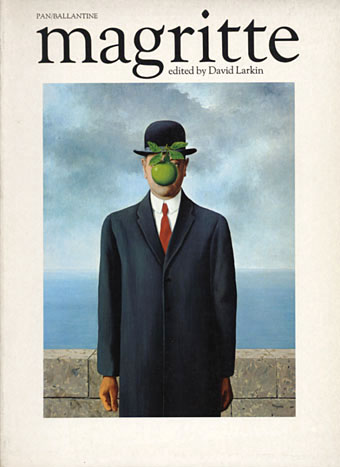
larkin_magritte.jpg

Magritte (1972).
Cover: The Son of Man.

As the series developed the format evolved away from fine art towards contemporary fantasy art, and as a result became less interesting for me, although the success of the Frank Frazetta books undoubtedly meant that this was the way the sales were going. The demand for the Ernst and Rousseau titles can be gauged by the remainder cut-outs on their covers. The final volumes (which I’ve never bought) featured artists such as Brian Froud (The Dark Crystal), Alan Lee (The Lord of the Rings) and others, with their Faeries, Giants, Castles and Gnomes books. I’m still missing a couple of the earlier numbers which I could now order online but that would spoil the game of letting chance deliver the goods, wouldn’t it?

Fantastic Art is easily my favourite, a great collection of visionary work through the ages beginning with Bosch and proceeding through Goya, John Martin, Richard Dadd, the Symbolists and the Surrealists to what was then contemporary work by artists such as Hundertwasser. This was one of the first of the series and seems to be the key volume in the way it provides an overview of the art that would follow.

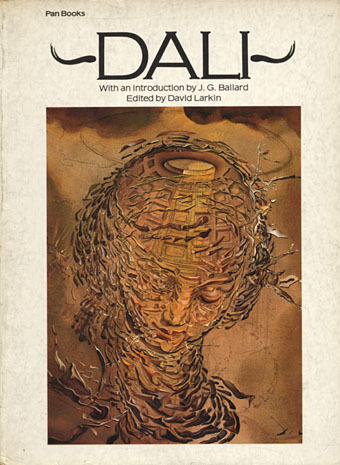
larkin_dali.jpg

Dali (1974).
Cover: Raphaelesque Head Exploding.

A great introduction by JG Ballard in this one, replete with the usual phrases about “the dark causeways of our spinal columns”.

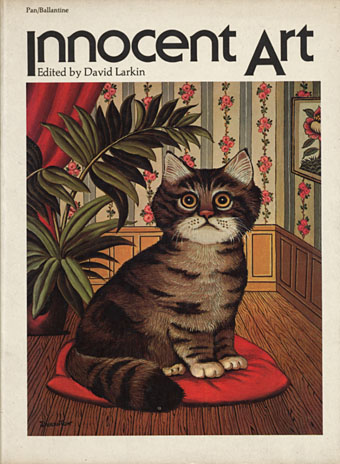
larkin_innocent.jpg

Innocent Art (1974).
Cover: Cat by André Duranton.

A collection of what used to be called naive painting, ie: work by unschooled “Sunday painters” such as Rousseau. Outsider art is the preferred term these days even though the work itself hasn’t always changed.

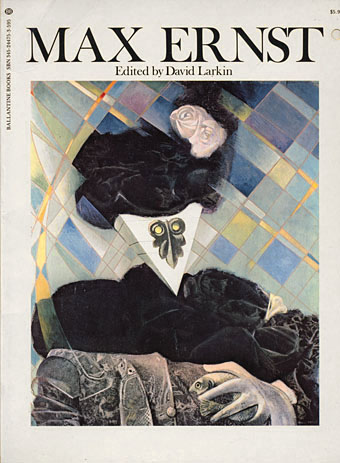
larkin_ernst.jpg

Max Ernst (1975).
Cover: Euclid.

Ernst’s later work in this book was the most abstract and experimental of the series. Europe After the Rain was printed across a fold-out sheet so that its full width could be displayed.

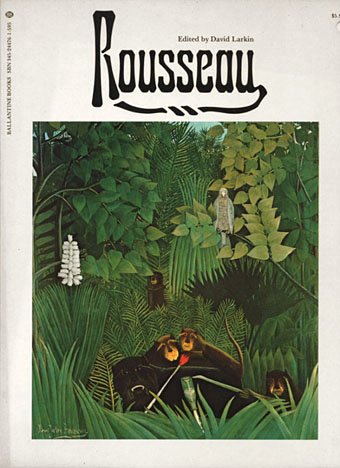
larkin_rousseau.jpg

Rousseau (1975).
Cover: The Merry Jesters.

larkin_dreamers.jpg

The English Dreamers (1975).
Cover: The Bridesmaid by John Everett Millais.

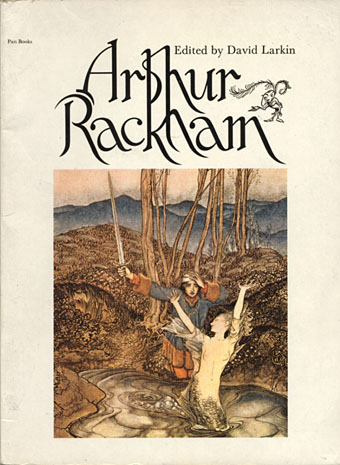
larkin_rackham.jpg

Arthur Rackham (1975).
Cover: Clerk Colville (from Some British Ballads).

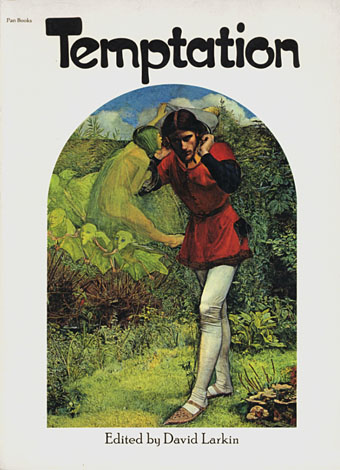
larkin_temptation.jpg

Temptation (1975).
Cover: Ferdinand Lured by Ariel by John Everett Millais.

An unusual collection with a wide range of pictures (Bosch, Alma-Tadema, Balthus). Mainly concerns sexual temptation for female bodies but also includes Biblical and other temptations.

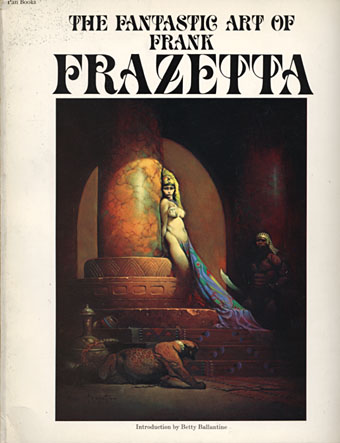
larkin_frazetta1.jpg

The Fantastic Art of Frank Frazetta (1975).
Cover: Egyptian Queen.

The book that launched a thousand metal albums. Volume One here was the first attempt to collect Frazetta’s work and was easily the most popular title of the series, going through many reprintings and prompting three follow-up volumes. Many of the reproductions are superior to their equivalents in Taschen’s later Icon collection. This was the first one I bought after the Surrealist books and, while I’ve never been a muscle obsessive, I couldn’t help but notice all the male flesh on display.

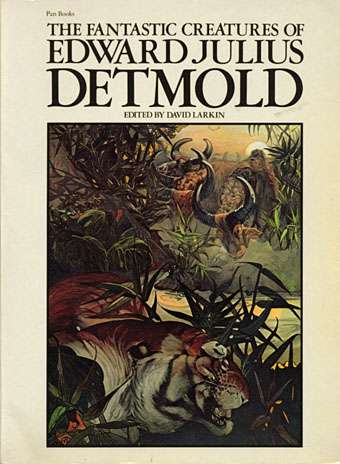
larkin_detmold.jpg

The Fantastic Creatures of Edward Julius Detmold (1976).
Cover: Shere Khan in the jungle (from The Jungle Book).

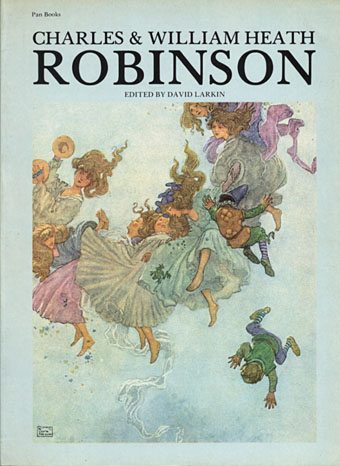
larkin_robinson.jpg

Charles and William Heath Robinson (1976).
Cover: Elfin Mount (from Hans Andersen’s Fairy Tales).

A collection of the Robinsons’ fairy tale paintings. A break from the format with a blue cover.

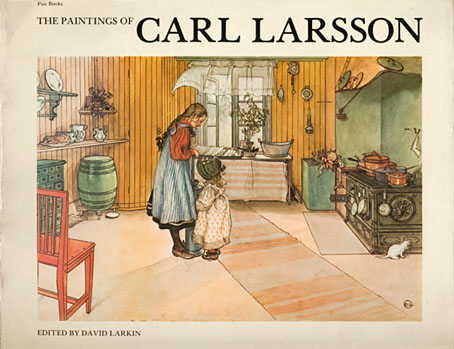
larkin_larsson.jpg

The Paintings of Carl Larsson (1976).
Cover: The Kitchen.

Another break with the format, the book being printed landscape to suit Larsson’s drawings and paintings. As with the Ernst book, a fold-out page was a special feature.

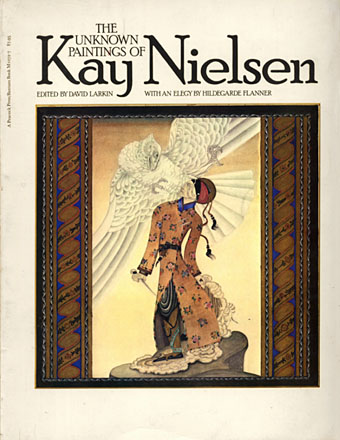
larkin_nielsen.jpg

The Unknown Paintings of Kay Nielsen (1977).
Cover: The Tale of the Third Dervish.

A collection of Nielsen’s work derived from Turkish and Persian miniatures.

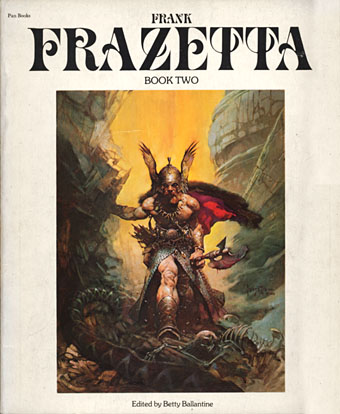
larkin_frazetta2.jpg

Frank Frazetta, Book Two (1977).
Cover: Dark Kingdom.

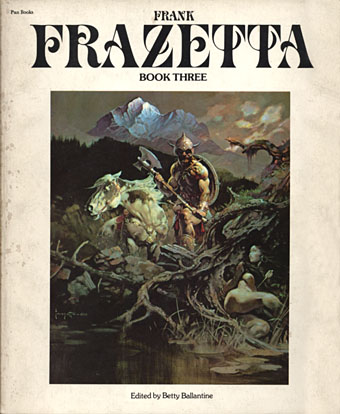
larkin_frazetta3.jpg

Frank Frazetta, Book Three (1978).
Cover painting: Nightwinds.

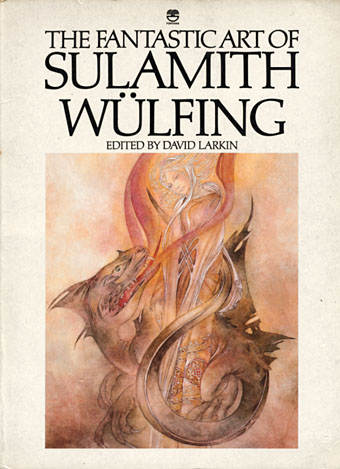
larkin_wulfing.jpg

The Fantastic Art of Sulamith Wülfing (1978).
Cover: The Big Dragon.

Part of the series but published by Fontana/Collins, not Pan.

Elsewhere on { feuilleton }
The fantastic art archive
The book covers archive
The illustrators archive