Gervase and Patrick

gervaise-patrick.jpg

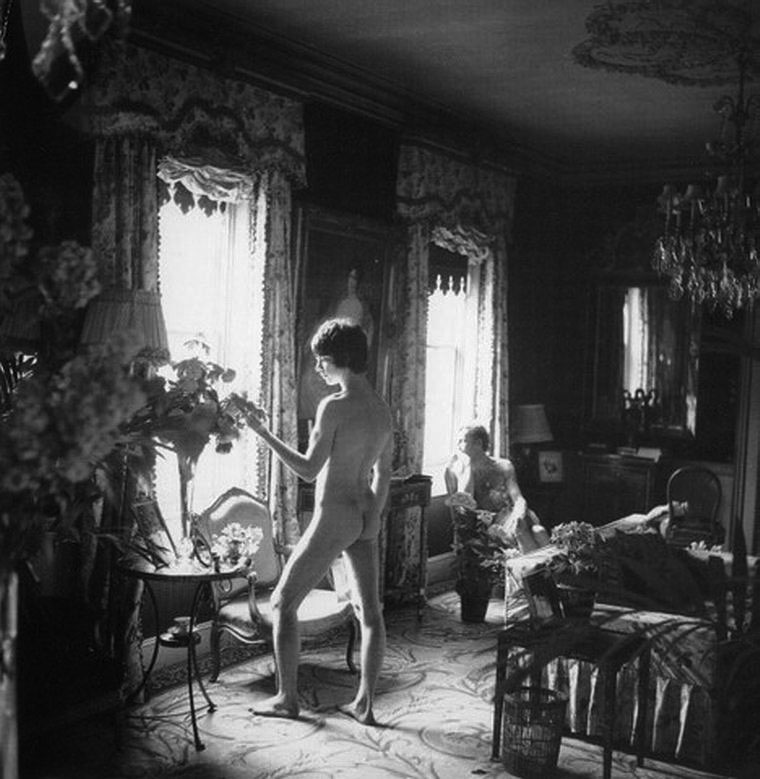
Gervase (left) & Patrick Procktor (right).

Once upon a time in the 1960s: painter Patrick Procktor and friend photographed by Cecil Beaton at Beaton’s home; no wonder David Hockney used to come and visit. Procktor made Gervase Griffiths the subject of his work on more than one occasion, see here and here. Thanks to Little Augury for the picture details.

Update: For more about Procktor, see Patrick Procktor: Art and Life (2010) by Ian Massey.

Previously on { feuilleton }
Further back and faster

Echoes of Aubrey

life2.jpg

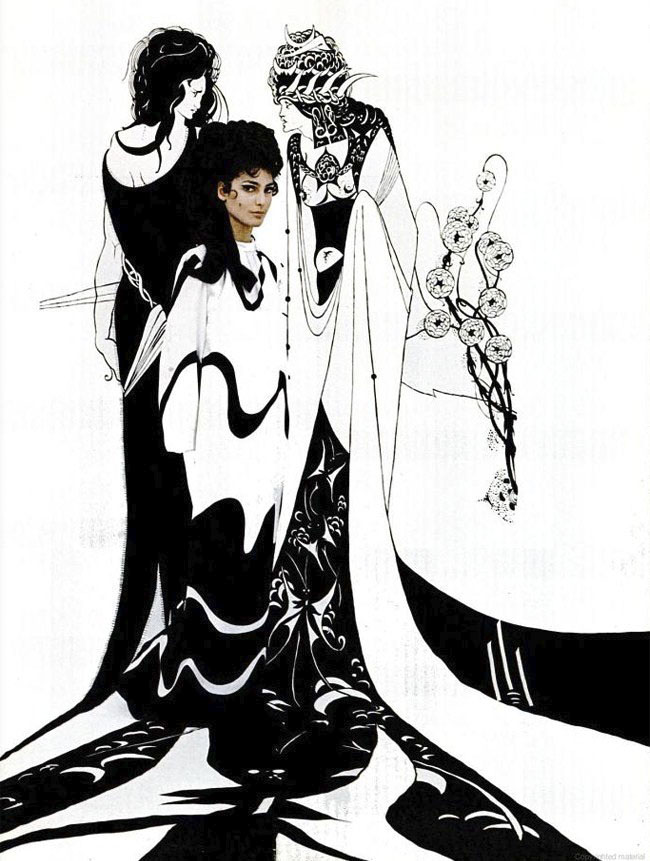
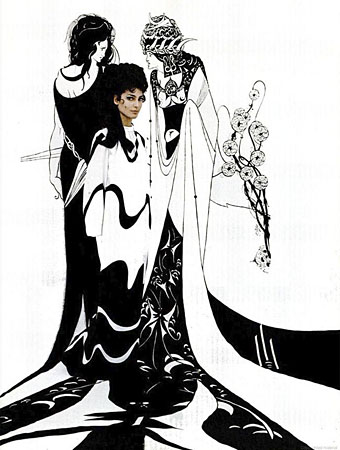
More of Aubrey Beardsley’s posthumous influence and more of the delightful collision between the 1890s and the 1960s. Monsieur Thombeau turned up this striking fashion shoot from LIFE magazine for 1967 showing a model posed against one of the Salomé drawings. A couple of days after this was posted, a reader wrote to point me to this list of films featuring Beardsley artwork. Most of those I knew about already but I certainly hadn’t heard of Death Bed: The Bed That Eats (1977), a low-budget horror film about which we’re told:

A large, black, four-poster bed, possessed by a demon, is passed from owner to owner. The demon was a tree, who became a breeze and seemingly fell in love with a woman he blew past. The demon then took human form and conjured up a bed. While he was making love with the woman she died and his eyes bled onto the bed, causing it to become possessed. Those who come into contact with the bed are frequently consumed by it (victims are pulled into what is apparently a large chamber of digestive fluids beneath the sheets). The bed demonstrates a malevolent intelligence as well as some psychokinetic and limited telepathic abilities to manipulate dreams. A running commentary or chorus is supplied by the ghost—if that is the correct word—of an artist (who would appear to be Aubrey Beardsley, though this is never stated directly) trapped behind a painting on the wall.

That’s a posthumous fame Aubrey never would have anticipated. If anyone has seen this, let us know what you thought.
carryon.jpg

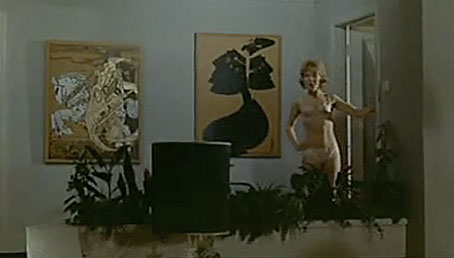
Carry On Loving (1970).

Absent from the list of films is Ken Russell’s Salome’s Last Dance, which features the Salomé pictures again in its title sequence, and Carry On Loving, one of the dreadful British sex comedies which has an entire scene set in a modish pad decorated with Beardsley prints. Watch the scene in question here, if you must.
galleryfive.jpg

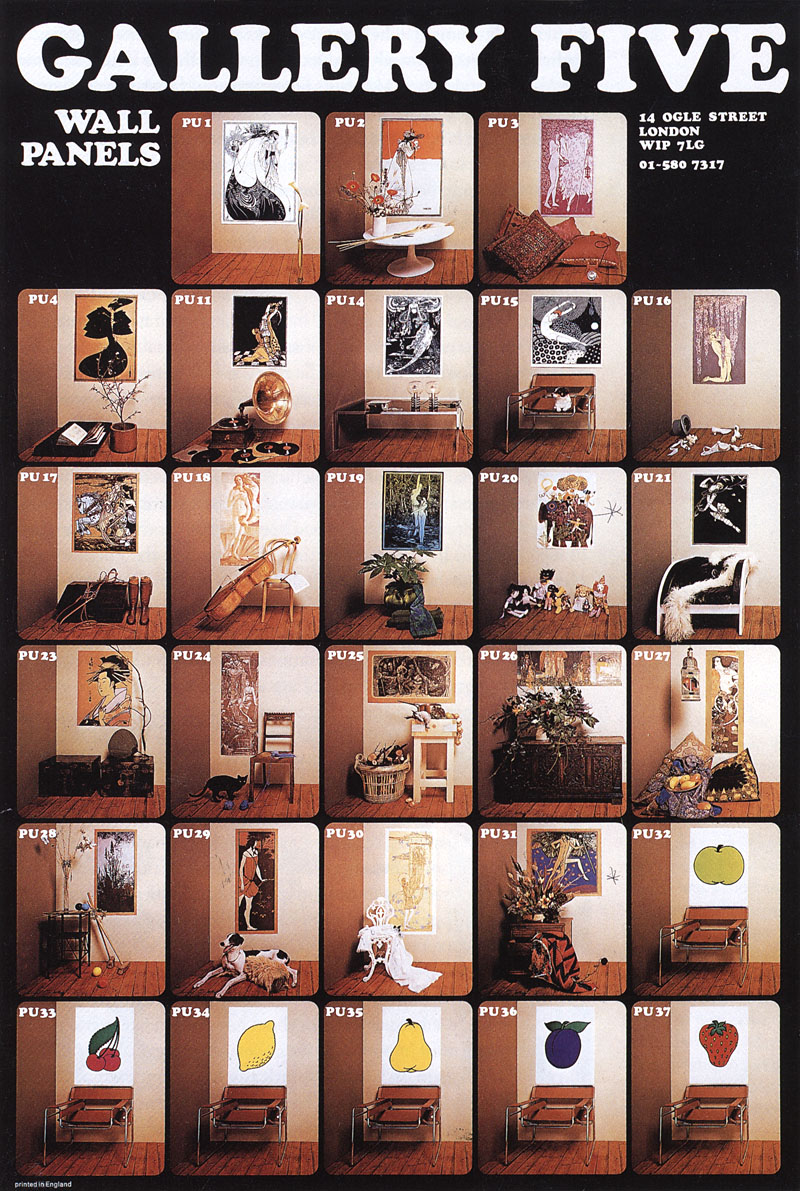
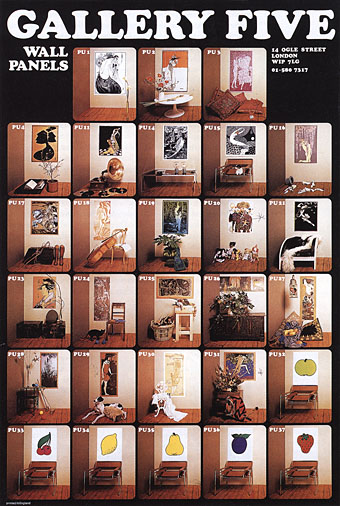
The prints were produced by a London company, Gallery Five, in the late 60s, and their ad shows they were also selling works by Kay Nielsen (seen in the Carry On clip), John Austen, Charles Ricketts, George Barbier, Jessie King and others. Gallery Five did much to popularise Beardsley’s art among people who might otherwise have never noticed his work, and their products turn up in many films and TV dramas of the period. Finally—although it’s by no means the last word on this subject—the V&A has two great Beardsley-derived ads for Elliott Boots by Paul Christodoulou here and here.

Elsewhere on { feuilleton }
The Aubrey Beardsley archive
Deutsche Kunst und Dekoration #1

dkd01-01.jpg

Last year saw an exploration here of the fecund pages of Jugend magazine so in the same spirit I’m embarking on a serial delve into Jugend‘s more serious contemporary Deutsche Kunst und Dekoration. I’ve made a couple of posts in this direction already but these were done before I’d had a chance to look properly through the editions at the Internet Archive, the first thirty of which form a collection which comprises some 7500 pages. Since few people would want to download and sort through that mountain these posts can serve as a select guide to the contents.

dkd01-02.jpg

Deutsche Kunst und Dekoration was published by Alexander Koch in Darmstadt and the first volume is dated October 1897–March 1898. Jugend was a humour magazine so the contents tend to be frivolous and lighthearted, Koch’s title by contrast was a guide to the best of German contemporary art and design and has the advantage of featuring furniture and architectural designs as well as graphic material. The content of this first edition is relatively sedate compared to some of the later numbers when the Art Nouveau style builds up a head of steam. There’s some astonishing design work in subsequent issues, as well as further illustration discoveries like Marcus Behmer. Watch this space.

Continue reading “Deutsche Kunst und Dekoration #1”

Art Deco bindings

deco1.jpg

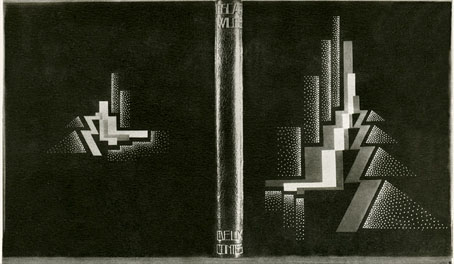
Contes Oscar Wilde (c. 1928), design by Paul Bonet.

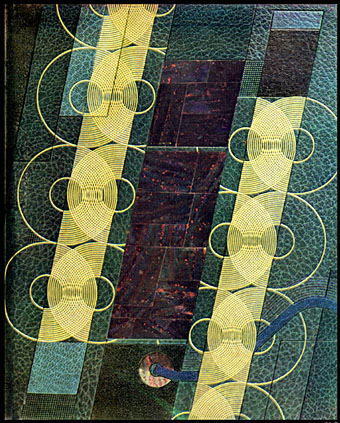
Two selections from this gallery of bookbindings from the 1920s. Few books receive this kind of treatment today but it’s by no means a lost art, The Guild of Book Workers has examples of recent designs.

deco2.jpg

La Canne de Jaspe (c. 1925), design by Pierre Legrain.

Elsewhere on { feuilleton }
The book covers archive

Previously on { feuilleton }
Prismes
The art of Thayaht, 1893–1959
The Mentor
The art of Cassandre, 1901–1968
The Decorative Age
The World in 2030

Alastair’s Carmen

alastair1.jpg

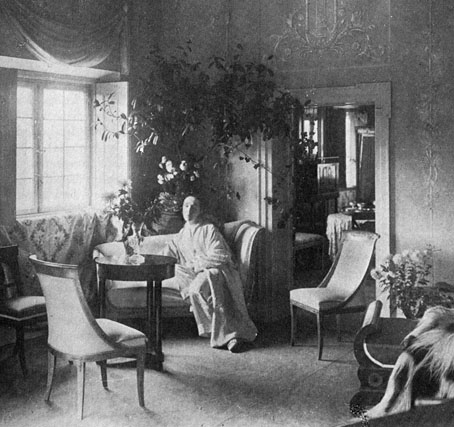
“The artist at home” from Alastair: Illustrator of Decadence (1979) by Victor Arwas.

More Beardsley derivations in the form of some illustrations by Hans Henning Voigt (1887–1969), better known as Alastair, and an artist who more than anyone carried the Beardsley style and the fin de siècle ethos into the 20th century. If the photograph above is anything to go by he seemed to take Beardsley’s effete and languid characters as role models for an equally effete and languid manner.

alastair2.jpg

The drawings here are a selection from twelve pieces for a 1920 edition of Prosper Mérimée’s Carmen, the novel upon which Bizet based his opera. Alastair for me has always been an artist whose enthusiasm for his subject matter outpaced his technique, his figure drawing can be rather weak at times which perhaps explains some of his more eccentric costume designs. Every so often the weakness becomes a virtue when it provides a surprising composition. Carmen didn’t seem to inspire him as much as other works, his illustrations for Oscar Wilde’s Salomé are a lot better and I may post some of them here if I can find a way of scanning my Victor Arwas book without spoiling it. There still isn’t much else of his work on the web but S. Elizabeth did make a start recently with her post A Decadent Parade of Outrageous Fancies at Coilhouse.

alastair3.jpg

Continue reading “Alastair’s Carmen”