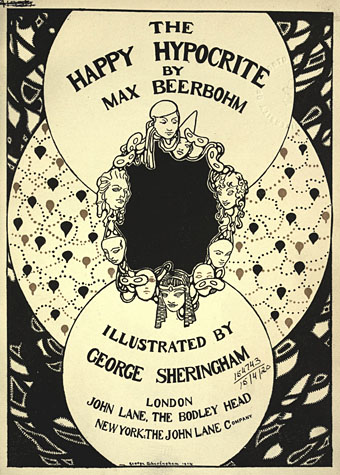
The Happy Hypocrite by Max Beerbohm

beerbohm01.jpg

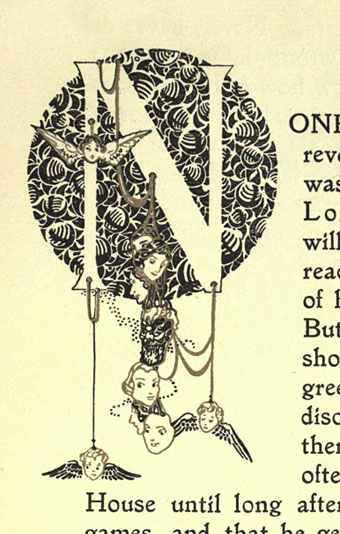
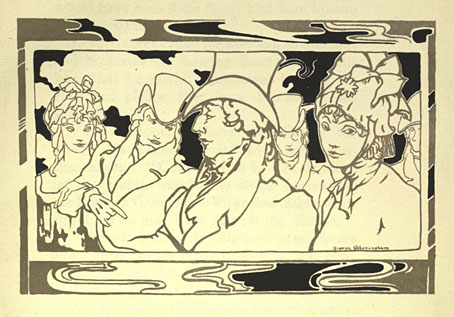
The spirit of the 1890s persists in this 1915 edition of a story the splendid Max wrote originally for The Yellow Book in 1896. Originally subtitled “A Fairy Tale for Tired Men”, The Happy Hypocrite is a typically light-hearted affair concerning the misadventures of one Lord George Hell. The setting is the Regency era so beloved of many of the London Decadents, Aubrey Beardsley included, and the rather fine illustrations are by George Sheringham whose style was distinctive enough to avoid any Beardsley pastiche. The copy preserved at the Internet Archive includes a number of full-colour plates but time and the vicissitudes of reproduction haven’t done them any favours, hence the concentration here on the monochrome drawings.

beerbohm02.jpg

beerbohm03.jpg

Continue reading “The Happy Hypocrite by Max Beerbohm”

The art of Aloys Zötl, 1803–1887

zotl.jpg

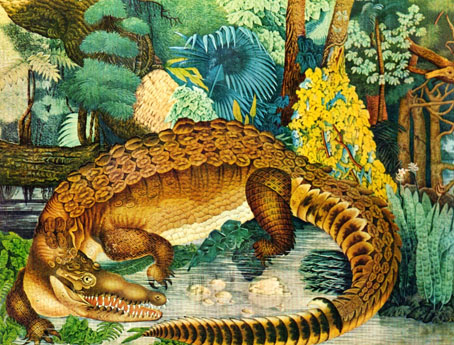
Le caïman (1849).

Two things that everyone seems able to tell you about Austrian artist Aloys Zötl is that his idiosyncratic bestiary was hailed by André Breton as a Surrealist precursor, and that Zötl’s paintings were published in a lavish edition by Ricci in 1977 with accompanying text by Julio Cortázar. Typically for a Ricci book, those editions now sell for excessive sums so we’re left to scour the web for his pictures. Considering their age and Surrealist connections its surprising that there isn’t a decent online collection anywhere. A number of prints can be found on those auction sites which blight the pictures they don’t own with watermarks. Better to look at the examples on this blog or this page at the André Breton site where the copies are small but include quotes from the Ricci volume.

Elsewhere on { feuilleton }
The fantastic art archive

Previously on { feuilleton }
Fantastic art from Pan Books

Max Reinhardt’s Dream

mnd1.jpg

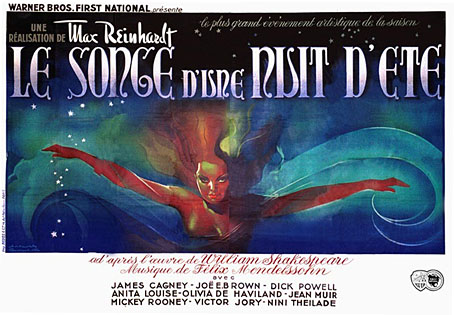
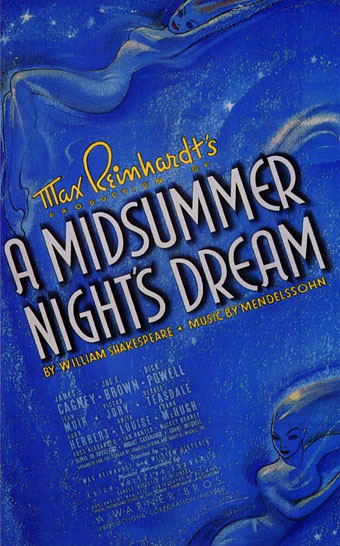
In which the great German theatre director goes to Hollywood to show America how to stage Shakespeare. Nearly everyone who was anyone in pre-war German cinema passed through Max Reinhardt’s Deutsches Theater in Berlin so it seemed natural that he’d gravitate eventually to film himself. The 1935 production of A Midsummer Night’s Dream was directed by William Dieterle but it’s very much a Reinhardt production, especially in the fantastic opening of Act II where the fairies dance into the moonlit sky on paths of mist accompanied by Mendelssohn’s music. With its blend of music, dance and lavish production design Dieterle’s film gives us some idea of the harmonising artistry at work in Reinhardt’s stage productions.

mnd2.jpg

There are other reasons to recommend this version over later adaptations, not least James Cagney’s performance as Bottom. A fifteen-year-old Mickey Rooney played Puck although he’s frequently more annoying than mischevious. Then there’s the mystery of whether that’s the young Kenneth Anger uncredited in the role of The Changeling Prince. Anger has always claimed it was him (he was a child actor for a while), Anger biographer Bill Landis agrees but plenty of other people have disputed the claim in recent years. The best viewing I had of the sequence in which the Changeling appears was on a big screen in a season of Kenneth Anger’s films in 1990. Whether Anger played the part or not, the charm of Dieterle’s film subtly invests The Magick Lantern Cycle, from the glittering surfaces in Eaux D’Artifice and the artificial forest in Rabbit’s Moon, to the appearance of Mickey Rooney’s Puck on a TV screen in Scorpio Rising. Anger’s later works were productions of Puck Films, their motto “Lord, what fools these mortals be!”

Ideally the magical opening of Act II would be on YouTube but it seems not. This scene, however, gives an idea of the atmosphere, while Doctor Macro has stills and more information.

Previously on { feuilleton }
The Midsummer Chronophage
Another Midsummer Night
A Midsummer Night’s Dadd
William Heath Robinson’s Midsummer Night’s Dream

Cthulhu under glass

bl-exhibition.jpg

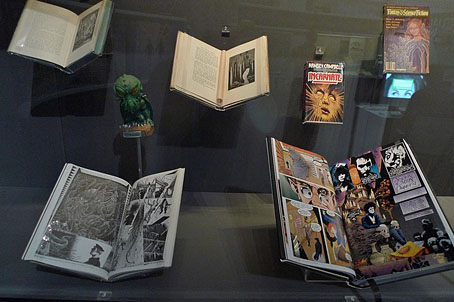
Having had two separate visitors to the British Library’s Out of this World exhibition tell me that some of my work was featured there, it’s been a good to finally discover what was on display. Many thanks to John Keogh for notifying me of his exhibition photo set which includes the above shot of the relevant display case. This is an odd collection for what’s been widely advertised as a science fiction event. Pages from my 1988 adaptation of The Call of Cthulhu are in there along with other fantasy and horror titles including Neil Gaiman’s Sandman, Incarnate by Ramsey Campbell, an edition of Fantasy & Science Fiction with Robert Holdstock’s Mythago Wood on the cover, and a Sidney Sime illustration for Lord Dunsany’s Gods of Pergana. Cthulhu originates out of this world, of course, and that phrase is general enough to encompass other genres.

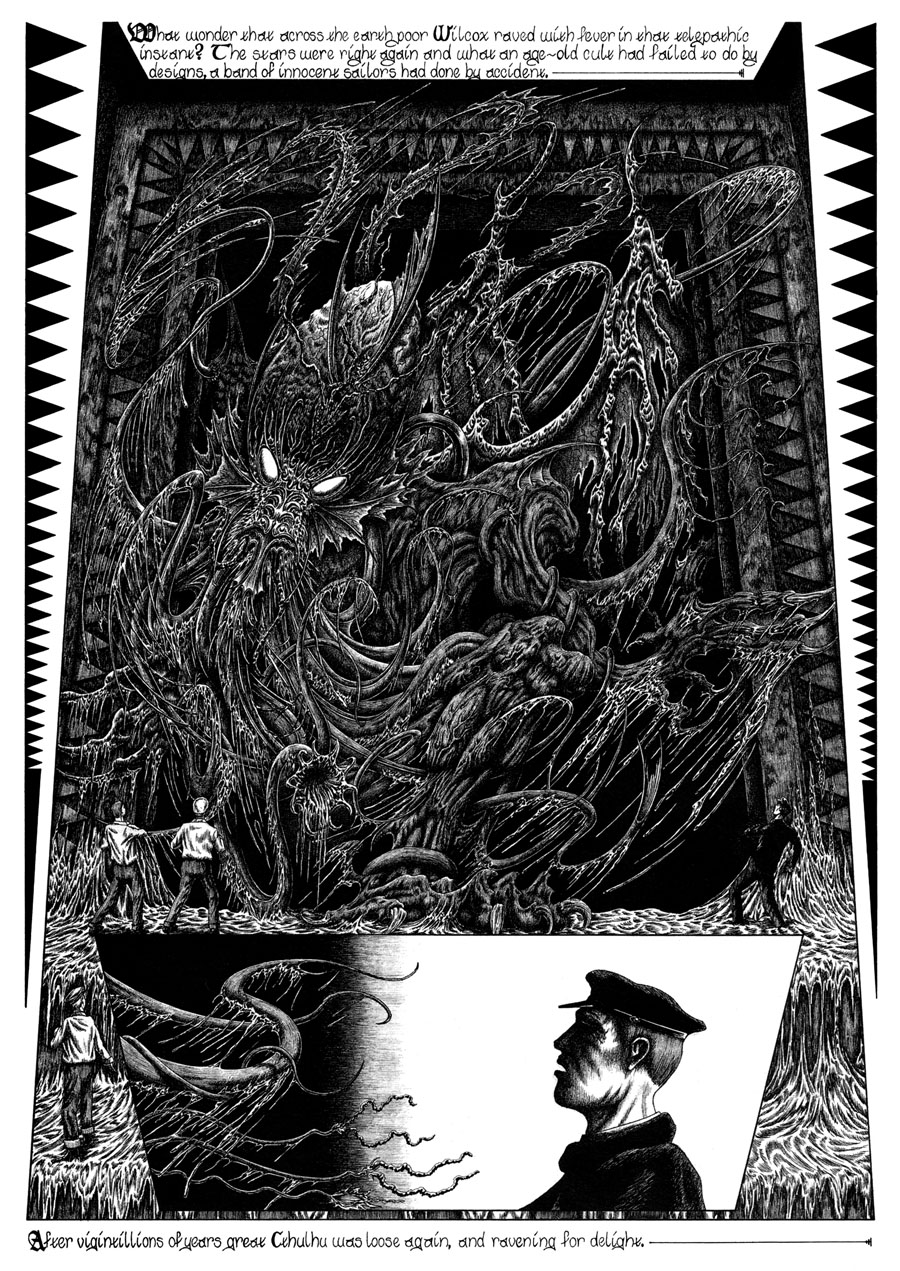
coulthart-cthulhu.jpg

This page from the climax of Lovecraft’s story was the first drawing I made of the living Cthulhu, all earlier representations following Lovecraft’s scheme of the creature manifesting throughout history in different human artworks and religious icons. Since most of those representations are highly stylised I wanted to make the awful reality seem a lot more visceral and even incoherent, hence the mass of flailing tentacles and ropes of slime. This is also the only full view you receive, everything else is fragmentary and allusive so there’s space for the reader’s imagination. I think the book in the library display is the Lovecraft anthology The Starry Wisdom but The Call of Cthulhu is also present in my Haunter of the Dark collection which includes a couple more portraits of “the green, sticky spawn of the stars”.

Out of this World is a free exhibition which will run to September 25th, 2011.

Elsewhere on { feuilleton }
The Lovecraft archive

Weekend links 63

solaris.jpg

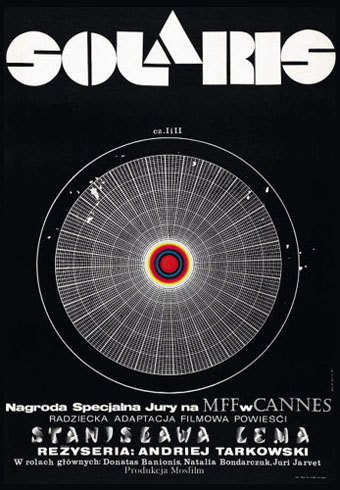
Polish poster by Andrzej Bertrandt for Andrei Tarkovsky’s 1972 film of Solaris.

• Stanisław Lem’s Solaris receives its first ever direct English translation by Bill Johnston (only on Audible for the moment), all previous editions having been sourced from a poor French translation. An all-too-common state of affairs for non-English fiction where bad or bowdlerised translations persist for years.

• Now that Minnesota politician Michelle Bachmann is running for US president it’s a good time to examine her views when (theoretically) her actions could one day impact on us all. The Daily Beast gathered together some of her worst pronouncements, including the following about gay people: “It’s a very sad life. It’s part of Satan, I think, to say that this is gay.” Her husband describes his attempts to counsel (ie: cure) gay teenagers with the words “Barbarians need to be educated.” It’s no surprise that both these people find confirmation of their views in the usual narrow interpretation of Christian doctrine. Not all American Christians are this ignorant or offensive, of course. The Heartland Proclamation calls for “an end to all religious and civil discrimination against any person based on sexual orientation and gender identity and expression”.

Journalist Andrew Sullivan in 2003 proposed a label for people like Bachmann: “I have a new term for those on the fringes of the religious right who have used the Gospels to perpetuate their own aspirations for power, control and oppression: Christianists. They are as anathema to true Christians as the Islamists are to true Islam.” It’s a term that ought to have more widespread use.
solaris-czech.jpg

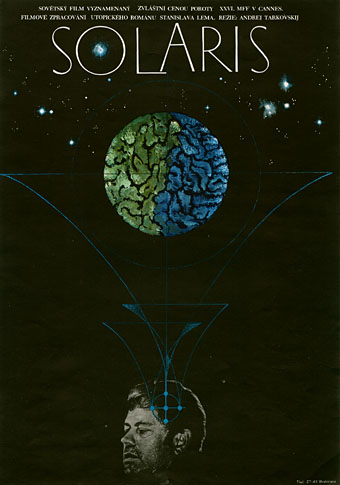
Czech poster for Solaris. No designer credited.

• Probing the secrets of psilocybin: “Scientists at the Johns Hopkins University School of Medicine have zeroed in on the dose levels of the ‘sacred mushroom’ chemical capable of yielding positive, life-changing experiences, while minimizing the chance of transient negative reactions in screened volunteers under supportive, carefully monitored conditions.”

• Rick Poynor relates a visit to the Frederic Marès Museum, Barcelona, home to the 50,000 objects Marès collected over his lifetime. Further details of the collection can be found at the museum website.

In her 1969 essay “The Pornographic Imagination,” [Susan] Sontag insisted that Story of O could be correctly defined as “authentic” literature. She compared the ratio of first-rate pornography to trashy books within the genre to “another somewhat shady subgenre with a few first-rate books to its credit, science fiction.” She also maintained that like science fiction, pornography was aimed at “disorientation, at psychic dislocation.”

If so, that aim is far more interesting than what most generic “mainstream” novels set out to do. No one could describe O as predictable or sentimental. Its vision was dark and unrelenting; everything about it was extreme. Sontag also compared sexual obsession (as expressed by Réage) with religious obsession: two sides of the same coin.

Carmela Ciuraru on the story of The Story of O by Pauline Réage.

• “No hay banda! There is no band. It is all an illusion.” David Lynch will be opening a Club Silencio in Paris (Montmartre, of course). Facebook pages here and here.

• Sad to say that Chateau Thombeau is now closed but Thom has begun a more personal journal here.

• Picture galleries of the Vorticists at the Tate here and here. Related: Into the Vortex.

• Illuminated Persian pages from 1604 at BibliOdyssey.

• Tape drawings by Chris Hosmer.

• Miles Davis and co. at the Isle of Wight Festival, 1970: part 1 | part 2 | part 3 | part 4