Dark arts

pvd05.jpg

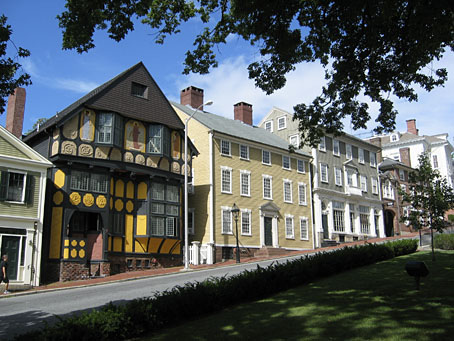
Thomas Street, Providence: on the left is the Fleur-de-Lys Studios; two doors along is the Dodge House Gallery which housed an additional part of the art exhibition; the Providence Art Club is the red-brick building next door.

I’m back from Providence, returned early on Tuesday but took the day off to recover from jet lag. The city was hot and humid for much of the time but I didn’t mind that, it was good to be able to walk around in the evening without a jacket, something that seldom happens here. I don’t go to many conventions so although NecronomiCon was the best I’ve been to, there isn’t a great deal of competition. I always enjoy meeting and talking to creators of any stripe—writers, artists, filmmakers, editors, etc—and it’s a pleasure to meet readers face to face, but conventions in general aren’t always attractive in themselves. NecronomiCon was inviting for being relatively small and with a strong focus not just on Lovecraft but on weird fiction as a whole: there were panels on Clark Ashton Smith, Lord Dunsany, Robert Chambers, and one on the legacy of what M. John Harrison designated “the New Weird”. I’ve been told that if there’s a NecronomiCon in 2017 the intention is to develop this area of discussion.
pvd07.jpg

And then there’s Providence itself: Lovecraft’s stories will read in a very different light now I’ve visited the city that inspired so much of his work. The one walking excursion I took to College Hill was curtailed by an afternoon of 30-degree temperatures but I did get to see a small part of Angell Street where Lovecraft lived for many years, and I also walked down Benefit Street as far as house number 135, familiar to readers as The Shunned House. The architecture of Providence is a delight, not only the Colonial buildings but the also the more recent vernacular styles of the Downtown area. Even the heat seemed connected to Lovecraft and his abhorrence of cold weather; in later years he took sightseeing trips down to Florida so I’m sure he wouldn’t have complained about the hot sun or the swampy air.
pvd06.jpg

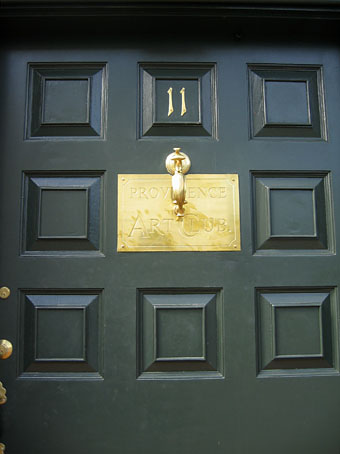
The massive and weighty door of the Art Club.

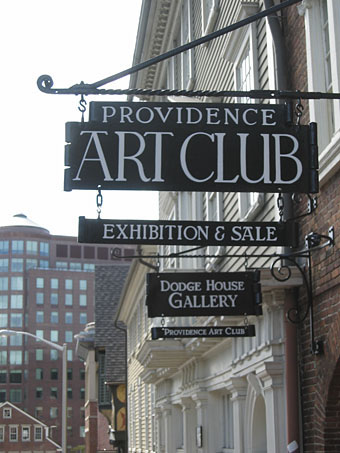
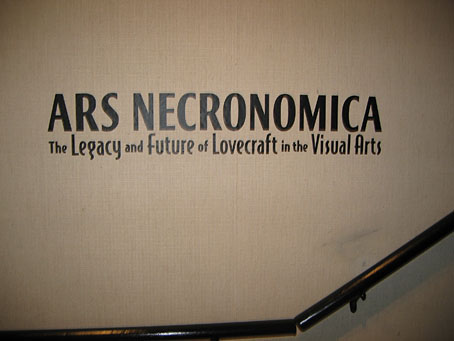
The main reason to be there was for the art exhibition, of course, and for that the venue couldn’t have been better. The Providence Art Club is mentioned in The Call of Cthulhu as a rather staid organisation that disapproves of Henry Anthony Wilcox who works down the street at the Fleur-de-Lys Studios; I spoke to a couple of current Art Club members, and was amused to hear that the establishment still maintains a somewhat conservative position. But the presence of so much bizarre and grotesque art in the gallery was evidence of a loosening of attitudes that Wilcox and Pickman couldn’t have managed in their day. A selection of my photographs follows below; I took over 250 photos but really should have taken more, especially of the buildings. The Providence Art Club has a good collection of photos from the opening night, some of which include me caught uncomfortably in front of a camera lens.
pvd18.jpg

Some acknowledgements: I’ve already thanked Niels-Viggo Hobbs and The joey Zone for inviting me there but I’ll do so again. Big thanks also to Carmen Marusich who spent most of her time behind the counter at Lovecraft Arts & Sciences in the Arcade; to print-wrangler Brian Mullen who very generously spent an afternoon ferrying me around various stores in search of a phone charger before smartly suggesting I try the USB port in the TV at the hotel (something I should have thought of); and to Michael Rose and company at the Providence Art Club for allowing us into their beautiful building. Shouts and thanks to: Sara Bardi, Michael Bukowski, Syl Disjonk, Jason C. Eckhardt, Bob Eggleton, Dave Felton, Stephen Gervais, Mike Knives, Robert H. Knox, Allen Koszowski, Henrik Möller, Mallory O’Meara, Gage Prentiss, Skinner, Jason Thompson, Frank H. Woodward (at last!), Josh Yelle, and all those who bought artwork, offered compliments or came to see the art and the panel discussions.

Finally…Earth! I’ve been listening to the band a great deal this year so I’m predisposed to enjoy any live event, but their performance in the gilded splendour of the Columbia Theatre on Federal Hill really knocked me out. An outstanding set with great sound and great support acts too, especially Elder. All this taking place a couple of streets away from the location of Lovecraft’s Starry Wisdom church; I was in seventh heaven.

And now the photos…
pvd16.jpg

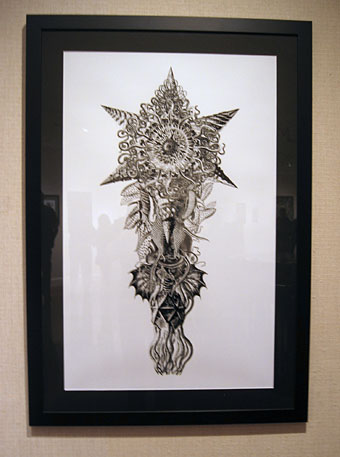
The title page entity from Lovecraft’s Monsters which was named Tentacles for the exhibition.
pvd17.jpg

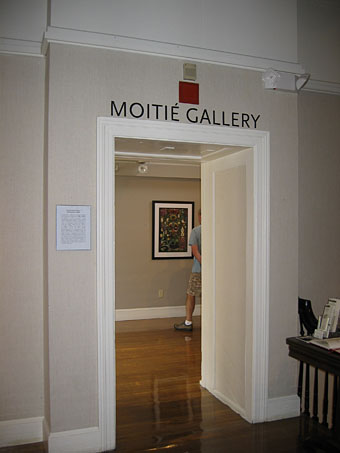
My works were in a gallery room on their own, guarded by the title page thing from Lovecraft’s Monsters.
Continue reading “Dark arts”

Polaroids

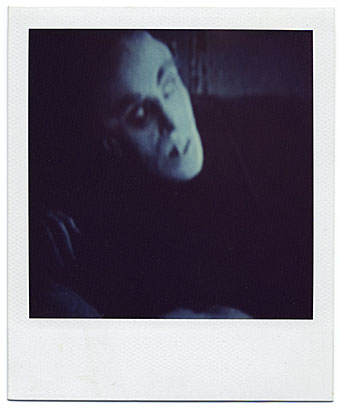
polaroid1.jpg

I was given a Polaroid Instant Camera some years ago, not the cult SX-70, a later model. I still have it somewhere but never used it very much. The film cartridges were still available in shops, but at around £1 a shot Polaroids always seemed like a costly indulgence unless you had some specific use for them which I never did. The photo of Murnau’s Nosferatu was taken from a TV screen, and seems to be the only print I kept.

krims.jpg

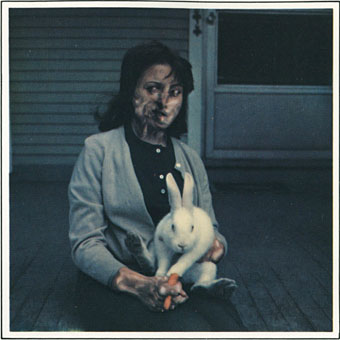
Radiation Victim Holding a Rabbit and Carrot (1974) by Les Krims.

This post was prompted by a search for the Polaroid manipulations made by Les Krims in the 1970s. Krims was one of the first people (the first?) to exploit the potential of the print’s slow processing to create surreal and grotesque images. Krims self-published a collection of these as Fictcryptokrimsographs in 1975. The Francis Bacon-like “radiation victim” is one of the more restrained examples, many of the others being male and female nudes in various stages of mutation.

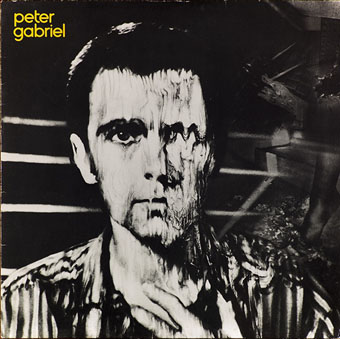
gabriel1.jpg

Peter Gabriel (1980).

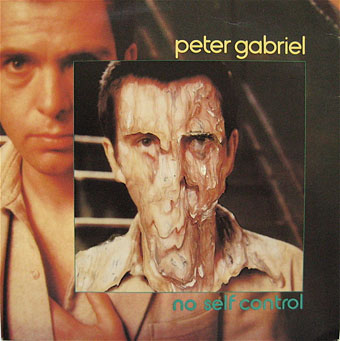
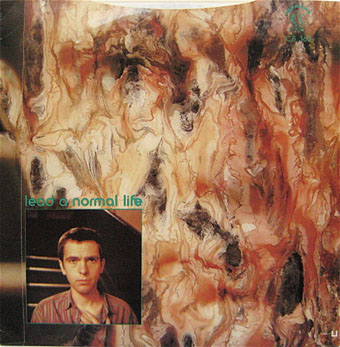
The mutation technique was more famously employed by the Hipgnosis design team and Peter Gabriel for the cover art of Gabriel’s third album. (Americans insist on calling this album “Melt” even though it was never titled as such.) The technique was also used for photos on the inner sleeve and on two of the single releases.

gabriel2.jpg

No Self Control (1980). Front and back sleeve of 7-inch single.

gabriel3.jpg

steadman.jpg

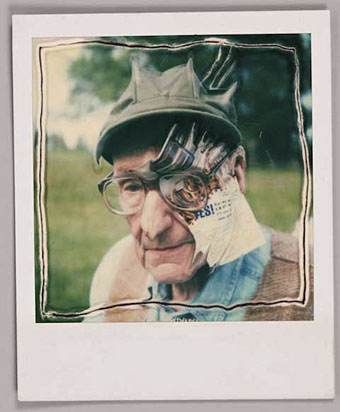
William Burroughs by Ralph Steadman.

Also in 1980, Ralph Steadman says discovered the same technique while on holiday in Turkey. I recall him discussing his own manipulations, which he calls “Paranoids”, on TV around this time. There’s no indication that Steadman was aware of Krims or the Gabriel album but he’s continued to use the technique ever since. The Burroughs portrait was one of a series created in 1995 when Steadman paid a visit to Lawrence, Kansas. There’s film of the meeting here although I’m more interested in the older TV film on the same page which shows Steadman creating a new composite portrait by drawing onto the emulsion.

Previously on { feuilleton }
Portrait

Weekend links 268

paul.jpg

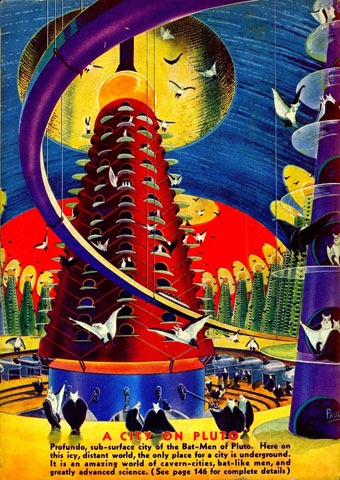
A City on Pluto (1940) by Frank R. Paul. Related: Paul’s predictions about life on other planets.

23 Skidoo’s Peel Session from September 16th, 1981. Only 18 minutes of music but I’m thrilled for its being unique material that’s never been given an official release. There are many more Peel Sessions at the uploader’s channel, not all of which were reissued on the Strange Fruit label. Download favourites in their as-broadcast form (some with John Peel’s introductions) before they vanish or get blocked like the 1981 Cabaret Voltaire session. Related: Wikipedia’s list of Peel Sessions.

• Mixes of the week comprise two collections by Jon Dale of strange and beguiling Italian music: The Prevarications Of The Sky Against The Earth and La Verifica Incerta; the Summer Window Mix (“telly detritus, new-not-new synth nonsense & off-colour pop oddities”) by Moon Wiring Club; and Secret Thirteen Mix 158 by Haunter Records.

• “Hello, this is David Bowie. It’s a bit grey out today but I’ve got some Perrier water, and I’ve got a bunch of records…” Two hours of the Thin White Duke playing favourite music on BBC Radio One, 20th May, 1979.

Some of Vidal’s guests were writers, not exactly his favorite group. “Writers are the only people who are reviewed by people of their own kind,” Vidal said in an interview. “And their own kind can often be reasonably generous—if you stay in your category. I don’t. I do many different things rather better than most people do one thing. And envy is the central fact of American life.”

Frank Pizzoli reviews Sympathy for the Devil: Four Decades of Friendship with Gore Vidal by Michael Mewshaw

• Yair Elazar Glotman’s new album, Études, conjures “bone-rattling resonance, thick, alien-like atmospheres, and percussive fragments”. Stream it in full here.

• London’s Lost Department Store of the Swinging Sixties: Inge Oosterhoff on the splendours of Biba.

• It’s that Ungeziefer again: Richard T. Kelly on 100 years of The Metamorphosis by Franz Kafka.

• The History of Creepy Dolls: Linda Rodriguez McRobbie explores the uncanny valley.

• At Dangerous Minds: Matt Groening tells the story of The Residents in 1979.

• The NYT collects NASA’s photos from the New Horizons Pluto flyby.

The Museum of Imaginary Musical Instruments

Written on the Body: tattoos in cinema

The Doll’s House (1981) by Landscape | Voodoo Dolly (1981) by Siouxsie and the Banshees | Devils Doll Baby (1986) by Sonny Sharrock

The recurrent pose 56

purdy.jpg

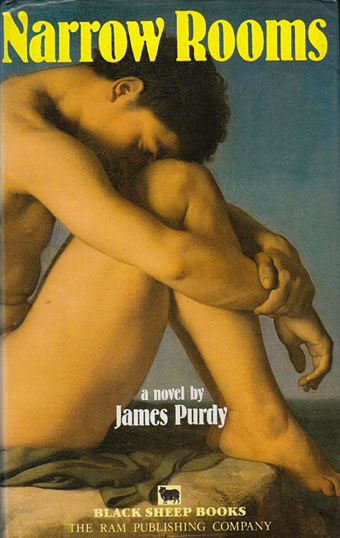
A pair of literary poses for this increasingly sluggish series. Both these titles are gay-themed to a greater or lesser degree. James Purdy (1914–2009) received much praise from contemporaries while he was alive but, like Angus Wilson, he’s one of those writers’ writers you don’t hear about today. Outsiders were a favourite Purdy theme, and he wrote several novels about gay characters, of which Narrow Rooms is considered something of a classic. I’ve not read it but going by descriptions the use of Flandrin’s painting on this cover from 1980 would seem a little lazy. This later use on the cover of Teleny (another gay classic) at least suits the French theme. (Thanks to Sander for the tip!)

rolfe.jpg

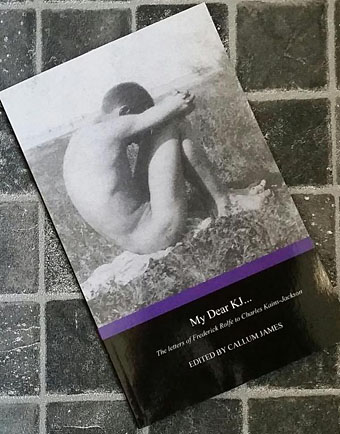
The second volume hasn’t been published yet but Callum James posted the cover proof on Twitter a few days ago so I hope he doesn’t mind my showing it here. The book is a collection of letters by Frederick Rolfe aka Baron Corvo. I don’t know whether this is one of Rolfe’s own photos but he enjoyed photographing naked youths so even if it isn’t his work it suits the book. Further news about the publication should be announced at Front Free Endpaper.

Elsewhere on { feuilleton }
The recurrent pose archive

Vortographs

coburn1.jpg

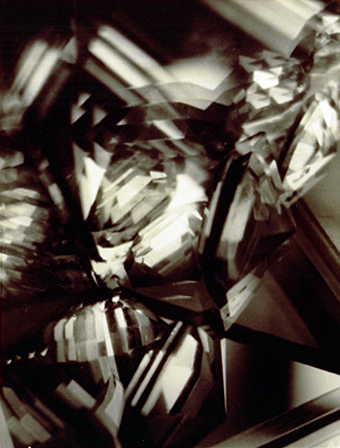
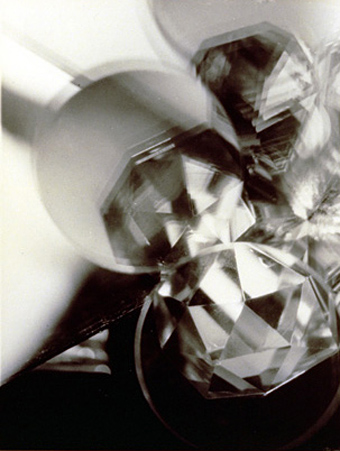
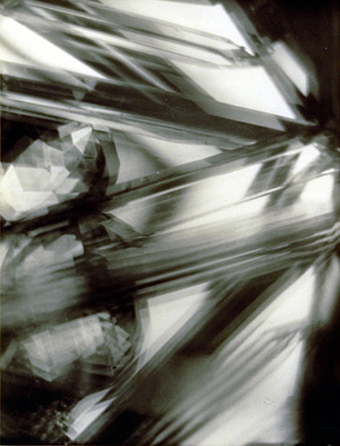
Reading this article by Richard Shone about the Vorticists, I was struck by passing mention of Alvin Langdon Coburn’s “Vortographs”. Coburn was an American photographer whose most commonly reproduced works are his portraits, some of which included leading members of the Vorticist circle such as Wyndham Lewis and Ezra Pound, and a number of pictorial early works. The Vortographs date from 1917, and were an attempt to produce photographs that fragmented the world in a manner similar to Vorticist painting, a process that necessitated the creation of a kaleidoscope-like “Vortoscope”. Seventeen of the results may be seen at the George Eastman collection. After a century of pictorial excess these don’t look so radical today but they’re some of the earliest examples of deliberately abstract photography, and to the world of 1917 they would have been even more shocking than the paintings they were hung beside.

coburn2.jpg

coburn3.jpg

Previously on { feuilleton }
Blast
Wyndham Lewis: Portraits
The Door in the Wall