The Residents: Twenty Twisted Questions

residents.jpg

The art/music/performance group known as The Residents has been pushing their work into the media landscape for over 40 years but you could be forgiven for not knowing this. The Residents were delving into their own brand of the sinister and absurd years before the world had heard of David Lynch, but unlike Lynch their work has never been gained the mass audience that feature film and network television offers. The Residents were independent record producers before punk, in part because the music on their early albums was so far from the mainstream that few record companies would have dared take the risk.

residents2.jpg

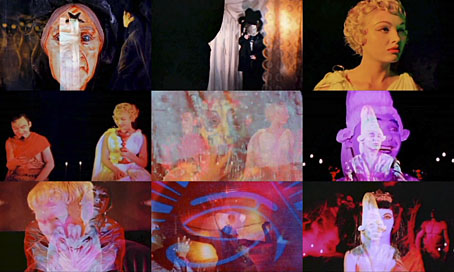
Hello Skinny (1980).

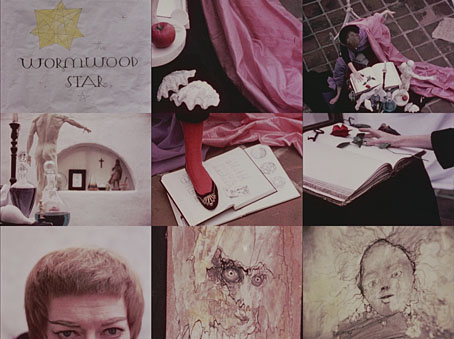
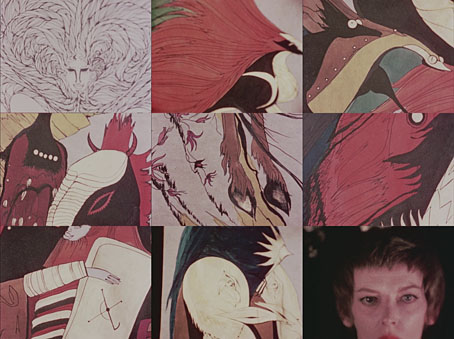
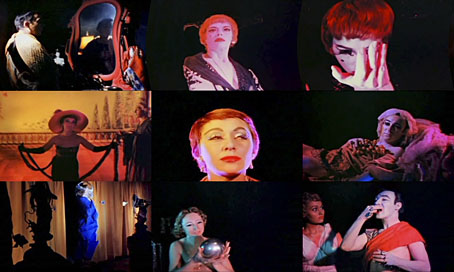
Twenty Twisted Questions (1992) is a laserdisc compilation of their early films and music videos which can now be viewed at Ubuweb. I’ve always preferred the earlier material (up to The Mole Show), in part because its analogue nature retains a strangeness that the later productions lack. You get the impression of them carving out new territory on the earlier albums; later on things seemed to become more formulaic as they gained a wider audience. The laserdisc selection covers the first 20 years so you can judge for yourself. My favourites among the films are Hello Skinny, and the four One-Minute Movies from The Commercial Album (1980). If you can’t take all of it, at least stick around to watch those.

residents3.jpg

One-Minute Movies: The Act Of Being Polite (1980).

The art of Marijke Koger

koger1.jpg

Love Life (1966).

A slight return to The Fool, and specifically the work of Marijke Koger. Since The Fool was a collective it can be difficult separating out the work of individuals but all of these examples are credited as hers in Norman Hathaway & Dan Nadel’s excellent Electrical Banana (2011) book. The nature of the collective also tends to downplay the contribution of women to psychedelic art, with Koger tending to receive less individual credit than Bonnie MacLean does for her US concert posters. Koger’s Love Life design is very advanced for 1966, and could easily have been created at almost any time in the next decade. The Bob Dylan poster below is the most florid representation of Mr Zimmerman I’ve seen, an image that fits the times more than Dylan’s persona which remained resolutely untouched by acid culture.

It’s no surprise with this subject that Sweet Jane has already looked at the work of The Fool. There’s more photos and designs to be found at A Dandy in Aspic (many of them from the Electrical Banana book) while Bang The Drum All Day has some of the graphics produced for Brian Epstein’s Sunday Night at the Saville concerts.

koger3.jpg

Fashion drawing (1966).

koger4.jpg

Lucy (1966).

koger5.jpg

Love Bob Dylan (1967).

koger2.jpg

Tiger Man (1970).

Previously on { feuilleton }
The Fool album covers
Through the Wonderwall

The Fool album covers

fool.jpg

The Fool (1968).

Many people know the work of design collective The Fool even if they couldn’t tell you the name or the names of any of the individuals involved.  The accelerated career trajectory of Dutch artists Marijke Koger and Simon Posthuma took them from a hippie enclave on the isle of Ibiza in 1966, to London and work for The Beatles throughout 1967 thanks to their distinctive brand of rainbow-hued psychedelia. Marijke Koger says the name The Fool was chosen after they met Crowley-obsessed blues singer Graham Bond who introduced them to the Tarot deck. Barry Finch and Josje Leeger later joined Koger and Posthuma. For The Beatles the group created the short-lived mural for the Apple boutique in Baker Street (removed after complaints), the decoration on John Lennon’s piano, and the inner sleeve for the Sgt Pepper album. The gatefold interior of the album was going to incorporate a Fool painting but Robert Fraser apparently persuaded the band to replace this with a group photo. The Fool themselves (and their decor) appear in the Beatles-produced feature film, Wonderwall (1968).

beatles.jpg

Proposed interior for the Sgt Pepper album (1967).

Given all this sudden visibility it’s surprising they weren’t more in demand for album cover designs although they were also busy producing florid outfits for other groups. The Beatles clothes on the All You Need is Love broadcast are Fool creations. Of the album covers, the one for The Incredible String Band is probably the most well-known. This small collection reminds me I still haven’t heard Evolution by The Hollies. The work on that cover led to a collaboration with Graham Nash on an album by The Fool (and session musicians) in 1968. The collective split up in 1969 with Marijke Koger and Simon Posthuma relocating to California.

Marijke Koger-Dunham’s site
Simon Posthuma’s site

beatles2.jpg

Sgt Pepper inner sleeve.

incredible.jpg

The 5000 Spirits Or The Layers Of The Onion (1967) by The Incredible String Band.

hollies.jpg

Evolution (1967) by The Hollies. Clothes and design by The Fool, photo by Karl Ferris.

degroot.jpg

Picknick (1967) by Boudewijn De Groot.

move.jpg

Move (1968) by The Move.

Elsewhere on { feuilleton }
The album covers archive

Previously on { feuilleton }
Through the Wonderwall

Weekend links 168

bell.jpg

Window to the Universe (1967) by Roberta Bell. From Summer of Love: Psychedelic Posters from SCMA currently showing at the Smith College Museum of Art, Northampton, MA.

Sympathy for the Shoggoth: China Miéville’s Revolution of the Weird Tale, an essay by Christina Scholz which features one of my Cthulhu pictures among its embellishments. Related: “‘New Strange’ stories hold a chilling mirror to life” says Rick Kleffel discussing Robert Aickman and others. And speaking of Aickman (so to speak), Reese Shearsmith has recently recorded Aickman’s Cold Hand in Mine for Audible.

• An erotic alphabet book from the Soviet Union circa 1931, created to promote adult literacy. Who says porn can’t be educational?

Angelystor is a new 39-minute composition by Phil Legard which he describes as “often heavy, Saturnine and melancholic”.

• James Ward’s postcards of the Post Office Tower. Related: film of the revolving restaurant at the top of the Tower in 1967.

•You Might Never Find Your Way Back: Shirley Jackson’s Hangsaman by Nicholas Rombes.

satty.jpg

Stone Garden (1967) by Wilfried Sätty.

High Over Blue is “a mind-warping 20-minute freakout” by Moon Duo.

• Queer Visual Splendour: Jon Macy discusses his erotic comics.

The Origin of the Pilcrow, aka the Strange Paragraph Symbol.

• Mix of the week: the Kranky 20th Anniversary Mixtape.

Ten Amazing Cheeses and their Literary Counterparts.

PingMag looks at the past and present of Ginza.

Mind Gardens (1967) by The Byrds | The Garden (1981) by John Foxx | The Toy Garden (2006) by Helios

Psyché Rock

henry1.jpg

Messe Pour Le Temps Present (1967).

Electro-acoustic composer Pierre Henry probably wouldn’t thank you for calling Psyché Rock his finest moment but it’s a favourite of mine. It’s also his most well-known composition although most people know it as a putative inspiration for Christopher Tyng’s theme to Futurama. The YouTube version here is the original mix. Many other uploads are later remixes which disgracefully downplay the wonderful out-of-time synth shrieks.

henry2.jpg

Too Fortiche / Psyché Rock / Teen Tonic / Jericho Jerk (1967). Credited to “Les Yper-Sound”.

Psyché Rock was the second track on Messe Pour Le Temps Present, an album of music composed in part with Michel Colombier. (It was also released on an EP with three other Henry/Colombier tracks, and later as a single in its own right.) The Messe section of the album was the score for a Maurice Béjart dance piece, a small example of which can be seen here. There’s also this silly dance sequence from French TV featuring stripping meter maids.

perrey.jpg

Moog Indigo (1970).

Another French composer, Jean-Jacques Perrey,  looked from inner to outer space in 1970 with E.V.A., a track on his Moog Indigo album. This sounds very similar to Psyché Rock, albeit less wild and much more groovy, and may also be an inspiration for the Futurama theme. This train of associations has given E.V.A. a life beyond its album release.

futurama.jpg

As to Futurama, there’s a mass of clips and themes of differing lengths out there. I’ll mention Fatboy Slim’s remixes only to say that I’ve never been very enamoured of Quentin’s compositions so the less said about him (and them), the better. Les Jerks Électroniques De La Messe Pour Le Temps Présent Et Musiques Concrètes De Pierre Henry Pour Maurice Béjart was available on CD as recently as 2009 in a package which shows some of the equipment used to produce its sounds.

Previously on { feuilleton }
The music of Igor Wakhévitch