Weekend links 809

hubacher.jpg

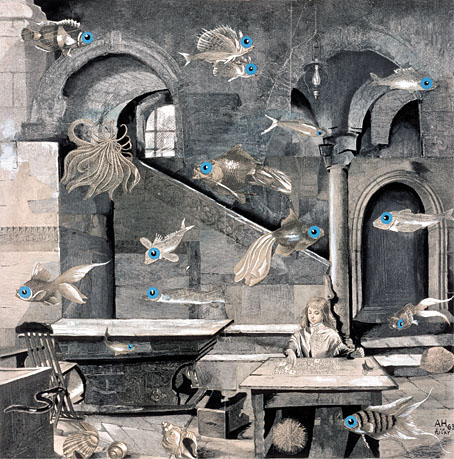
Atlantis by Sarah Hubacher.

• Regular readers will know Leigh Wright from his Wyrd Daze creations which I’ve linked here many times in the past. (The same goes for his frequent Mixcloud compilations.) Leigh’s wife died recently which means he now has to return to the UK from Canada where he doesn’t have permanent resident status. His request for help is here.

Melinda Gebbie’s Greatest Fits: “Ranging from painting, illustration, Comix, portraiture, eroticism and so much more, this fully illustrated and beautifully presented book is a glimpse into the unique mind of a woman forged in the fire of counterculture.”

• At The Daily Heller: Adrian Wilson’s collection of elaborate vintage fabric stamps is explored in a two-part feature here and here.

• Mixes of the week: DreamScenes – December 2025 at Ambientblog, and ASIP – Reflection on 2025 at A Strangely Isolated Place.

Dennis Cooper’s favourite fiction, poetry, non-fiction, film, art, and internet of 2025. Thanks again for the link here!

• At Colossal: “Field Kallop meditates on universal patterns through bold chromatic compositions.”

• “Scientists discover massive underwater ruins that may be a lost city of legend.”

• New music: The King In Yellow by Blarke Bayer.

• RIP Rob Reiner.

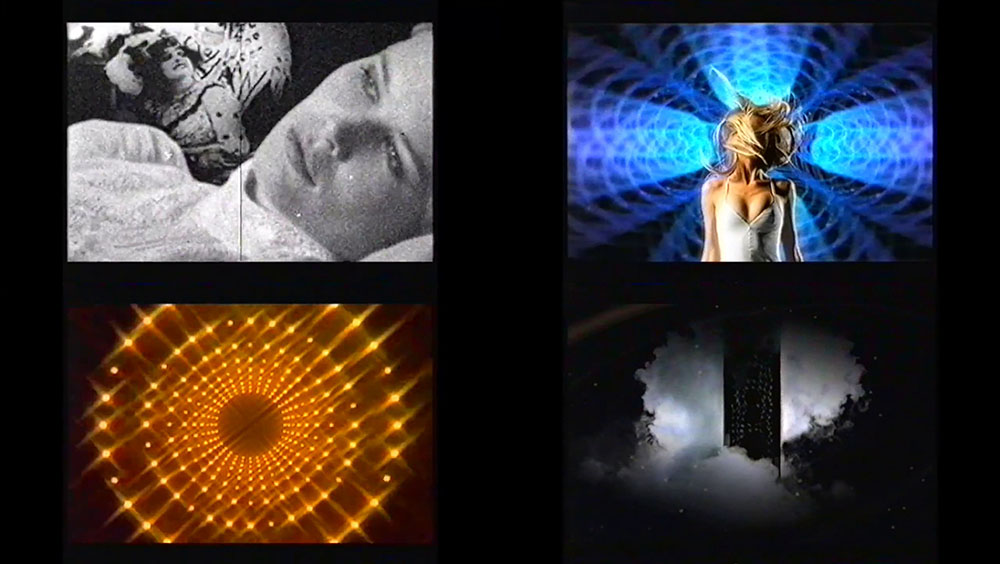
Atlantis (1955) by Les Baxter | The Atlantis Healing Harp (1982) by Upper Astral | A Man For Atlantis (2000) by Broadcast

Fire in the Blood: Harry Clarke

clarke1.jpg

An all-too-short run through the biography of Harry Clarke, Fire in the Blood was made by Irish TV channel RTE in 2016 as part of a series devoted to the Celtic Revival. Camille O’Sullivan is the guide to Clarke’s life and work in a film which includes some commentary from Clarke expert Nicola Gordon Bowe, among others. 24 minutes isn’t enough time to cover the full range of the artist’s work but any Clarke documentary is better than none, and this one has a number of points in its favour. Clarke’s stained-glass windows are given a prominent place in the discussion, a reminder that stained-glass production was Clarke’s primary business even while his success as an illustrator increased. The stained-glass medium is an especially attractive one for a TV documentary—the colours of the windows glow on the screen in a manner they can never do on a page—and you could easily fill an hour with a discussion of Clarke’s remarkable glasswork alone. The end of the film includes some discussion about the scandal of Clarke’s last major work in the medium, the so-called Geneva Window, commissioned by the Irish government as a gift for the League of Nations then disowned when Clarke’s choice of subject (and the manner of its depiction) was deemed unsuitable. As with earlier objections to the work of Aubrey Beardsley, the complaints seem scarcely credible today but the window ended up being sold to an American collector.

clarke2.jpg

On the illustration side we get to see pages from a little-known work of Clarke’s, the frame designs for the pages in Ireland’s Memorial Records, a multi-volume record of the names of Irish soldiers who died in the First World War. Nicola Gordon Bowe’s Clarke studies show the title page but seeing all the frames in print wasn’t possible until the publication of Harry Clarke’s War by Marguerite Helmers. The silhouettes of the soldiers embedded in each frame form a sequential narrative describing the progress of the war amid knotted borders that hark back to the page designs of the Book of Kells.

Elsewhere on { feuilleton }
The illustrators archive

Previously on { feuilleton }
Harry Clarke’s illustrated Swinburne
More Harry Clarke online
Harry Clarke online
Harry Clarke record covers
Thomas Bodkin on Harry Clarke
Harry Clarke: His Graphic Art
Harry Clarke and others in The Studio
Harry Clarke’s Fairy Tales of Charles Perrault
Harry Clarke in colour
The Tinderbox
Harry Clarke and the Elixir of Life
Cardwell Higgins versus Harry Clarke
Modern book illustrators, 1914
Illustrating Poe #3: Harry Clarke
Strangest Genius: The Stained Glass of Harry Clarke
Harry Clarke’s stained glass
Harry Clarke’s The Year’s at the Spring
The art of Harry Clarke, 1889–1931

Illustrating Hyperborea

hyperborea00.jpg

The Book of Hyperborea (1996). Cover art by Robert H. Knox.

“My Hyperborean tales, it seems to me, with their primordial, prehuman and sometimes premundane background and figures, are the closest to the Cthulhu Mythos, but most of them are written in a vein of grotesque humor that differentiates them vastly.” — Clark Ashton Smith

Since re-reading Clark Ashton Smith’s The Tale of Satampra Zeiros I’ve been revisiting more of Smith’s stories set in the lost world of Hyperborea. And having put together a post some years ago that gathered all the original illustrations for Smith’s Zothique cycle, I thought I’d try and do the same for another of his story series. As I noted in the earlier post, we’re fortunate today that it’s so easy to see illustrations that in the past would have been impossible to find unless you owned (or had access to) a huge collection of pulp magazines. Pulp illustrations aren’t always very good—in the case of the early issues of Weird Tales, they’re frequently amateurish—but those that illustrate new fiction for the first time are historically important if nothing else.

pennington1.jpg

Lost Worlds: Volume 1 (1974). Cover art by Bruce Pennington. Lost Worlds was a single-volume collection published by Arkham House (USA) and Neville Spearman (UK). The Panther paperback covers by Bruce Pennington could easily be used on other books but these were the first Smith volumes I owned.  

The first Hyperborea stories were among Smith’s earliest prose fantasies, owing something to Lord Dunsany on the one hand (HP Lovecraft detected a Dunsanian quality), and the writers of antiquity on the other, the name “Hyperborea” (“Behind the North Wind”) being borrowed from the Greeks. The northern location is about the only feature of the continent that the Greek writers would recognise, Smith’s world being a temperate pre-Ice Age realm of mountains and verdant jungles. Dinosaurs and megafauna share the lands with human inhabitants for whom sorcery is a common practice. As with Zothique, the cycle was an influential one. Lin Carter in the introduction to his Ballantine collection, Hyperborea (1971), suggests that the name of the continent might have prompted Robert E. Howard to set his Conan stories in “the Hyborean Age”. This could be the case: Howard and Smith were writing for the same publications, and the first Conan story was published in Weird Tales shortly after The Tale of Satampra Zeiros; but Howard was also reading the Greeks as well. A more substantial influence may be found in Fritz Leiber’s Nehwon, a world in which aspects of Hyperborea and Zothique are combined. Sword and sorcery begins “behind the North Wind”, in other words, although there’s very little sword-play in Smith’s fiction, that was Leiber and Howard’s department.

pennington2.jpg

Lost Worlds: Volume 2 (1974). Cover art by Bruce Pennington.

The original Hyperborea illustrations are fewer than those for Zothique. As with the later cycle, several of the stories are unillustrated, while others were given lacklustre artwork. In the earlier post I followed the story order chosen by Lin Carter which attempted to contrive an internal chronology for the cycle. Carter did the same with his Hyperborea collection so I’ve followed his example once again. Later collections, like Will Murray’s Book of Hyperborea, tend to order the stories by publication date.

hyperborea01.jpg

The Seven Geases, Weird Tales, October 1934.

An illustration of Tsathoggua by Smith himself. The toad-god turns up in person in this story.

hyperborea02.jpg

The Weird of Avoosl Wuthoqquan, Weird Tales, June 1932.

Continue reading “Illustrating Hyperborea”

Weekend links 808

kometen.jpg

Comets from Meyers Konversationslexikon (1885–90).

• At The Daily Heller: Steven Heller reviews A Life in Ink, a new monograph about the art of Ralph Steadman. Heller is full of praise for Steadman, and discusses commissioning his work for The New York Times. But in his bewilderment at Steadman’s lack of a knighthood he seems unaware of the degree to which state honours are frequently refused by Britons, especially those who position themselves in opposition to the established order. Americans are obsessed with awards and “halls of fame”, and appear to regard Britain’s state honours as something like the Oscars with a royal seal, rather than what JG Ballard once described as “a Ruritanian charade that helps to prop up the top-heavy monarchy.” If Steadman has deliberately shunned the honours list he’d be joining a venerable company.

• “In mid-19th century Italy, two eccentric aristocrats set forth on parallel projects: constructing ostentatious castles in a Moorish Revival style. Iván Moure Pazos tours the psychedelic chambers of Rochetta Mattei, optimised for electrohomeopathic healing, and Castello di Sammezzano, an immersive, orientalist fever dream.”

• New music: Ithaqua by Cryo Chamber Collaboration is this year’s installment in the Lovecraft-themed album series (previously) from Cryo Chamber. Also this week: Analog 2025 by Various Artists; and Flux (music for a performance by still still / Marta & Kim) by Rutger Zuydervelt and Lucija Gregov.

For all their bravura and maximalism, Powell and Pressburger understood the power of leaving things out, building into their films chasms that the mind must leap, gaps that the imagination must fill. Like Joan Webster, we discover that we don’t want things to be made too easy. We want to catch our own fish rather than have them delivered, to swim in the ocean rather than in a pool.

Imogen Sara Smith on I Know Where I’m Going, one of the films from Michael Powell and Emeric Pressburger’s golden decade, the 1940s

• Among the new titles at Standard Ebooks, the home of free, high-quality, public-domain texts: In the Days of the Comet by HG Wells.

• At the BFI: David Parkinson selects 10 great Sherlock Holmes films and TV adaptations.

• Winning entries for the Capture The Atlas Northern Lights Photographer of the Year.

• Books and original drawings by Austin Osman Spare on sale at Gerrish Fine Art.

• At Unquiet Things: The art of Chie Yoshii.

Kohoutek-Kometenmelodie (1973) by Kraftwerk | Cometary Wailing (1981) by Bernard Xolotl | Kometenmelodie Part 1 (1994) by 300,000 VK

Tsathoggua rising

tsathoggua.jpg

I said last week that I’d almost finished reworking my portrait of Tsathoggua for the Lovecraft book, and here it is. Tsathoggua first came into the world in a Hyperborea story by Clark Ashton Smith, The Tale of Satampra Zeiros, before being incorporated into the Cthulhu Mythos by HP Lovecraft who refers to the god-creature in several of his stories. Where Smith describes a hideous toad-like being, Lovecraft avoids being too closely bound by material specifics, referring to an “amorphous” entity which suggests a range of possibilities for illustration. To be fair to Smith, there is an amorphous and very deadly creature lurking in the temple of Tsathoggua in The Tale of Satampra Zeiros but we never learn whether this is Tsathoggua itself or some other being.

The amorphousness of Lovecraftian entities is a factor which is too often ignored in the world of weird illustration. Cosmic horror thrives on the fluidity of physics and physical matter but many illustrators seem content to copy one another instead of inventing new teratisms, a process that results in the accretion of stereotypes. Cthulhu, as I’m always reminding people, explodes into pieces after being struck by a ship at the end of The Call of Cthulhu, the remnants then recombining when the ship sails away from the scene. Lovecraft never intended his “spawn from the stars” to resemble the accreted stereotype we see today, a kind of Jolly Green Giant with squid mask and bat wings, reaching a brawny and very human arm towards the viewer. The ultimate expression of cosmic amorphousness may be found in the Shoggoths, those alien entities whose default condition is a mass of shapeless, iridescent protoplasm.

It was the amorphous nature of Tsathoggua that I wanted to honour with my original Photoshop creation in 1999. The starting point was a photograph of a cephalopod (I forget now whether it was an octopus or a squid) torn from an old issue of National Geographic. My initial experiments with the picture weren’t intended to develop into Tsathoggua; I didn’t have anything specific in mind when I started but at some point during the production of The Great Old Ones I decided to turn the picture into Smith’s entity with the addition of a toad-like head. Rather than mould the rest of the picture into more recognisable organic shapes it was left in a largely amorphous state. The eye-like shape at the top is a complete mystery to me now, I can’t say why it was there but it felt right so there it stayed. Alan Moore’s text for Tsathoggua identifies the creature with the Kabbalistic sphere of Geburah, “Strength”, a zone imbued with the martial qualities of the planet Mars. This is one of the more arbitrary assignations in The Great Old Ones—there’s nothing especially warlike about the toad-god—but something had to occupy the space, and I’d already finished the picture before Alan started writing his pieces. For the new version I’ve redrawn some areas of the original, but most of the work has been a case of sharpening edges and improving the contrast and modelling. The spiky, crown-like upper half has been emphasised a little in order to complement the martial aspect. And the bulging, convex appearance of the original has been slightly enhanced, giving the impression that the creature’s gravitational mass is of a sufficient density to bend the light around it. None of this should be taken as a negation of Smith’s description of a squatting, pot-bellied toad-god. The icons of the Great Old Ones created by human beings are exactly this: human attempts to represent alien monstrosity. Some acolyte who happens to envision the real Tsathoggua might stammer that “It looked like…a giant toad!” thereby giving a form to the subsequent iconography. But the map is not the territory. Cthulhu doesn’t, and shouldn’t look like the statues either. The Jolly Green Giant needs to ditch the mask and wings and get back to selling canned vegetables.

Elsewhere on { feuilleton }
The Lovecraft archive

Previously on { feuilleton }
H.P.L.
The Return of the Crawling Chaos
Lettering Lovecraft
Weird ekphrasis and the Dunwich Horrors
Kadath and Yog-Sothoth
Another view over Yuggoth