Weekend links 247

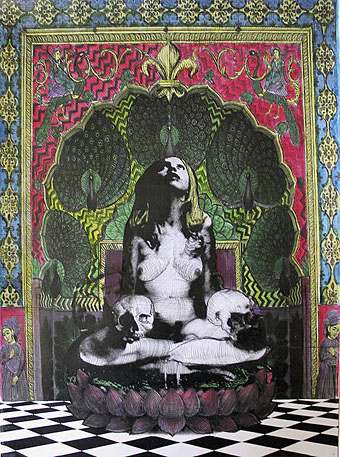
buratti.jpg

Encounter with the Priestess by Robert Buratti.

• “We were gothy, we loved the New York thing and people like Suicide, Dave loved Throbbing Gristle, we both loved the Sheffield bands…we loved the darkness to that kind of electro.” Marc Almond talking to Simon Price. Also at The Quietus, Cat’s Eyes choose their favourite soundtracks.

• “When he reveals that all he wants is to deliver a breakfast sandwich, the enigma of his desire is not so much dispelled as redoubled—why on earth would anyone want to do that?” Adam Kotsko on the unheimlich nature of old Burger King ads.

• “…commercial design is full of politics, to be a commercial designer is a political decision.” Jonathan Barnbrook talking to Katrina Schollenberger.

You need to know who Billy Wilder was. You need to know the names of people who are no longer alive. Because it’s very important—it’s what our history is made of. You need to see the movies the way they were—with the racism, the violence, and the censorship. All the things that let you see what the movie past had been so you understand where we are! But really nobody’s interested in that right now. Their interests are so bifurcated.

Joe Dante discussing film production past and present with Michael Sragow.

• From 1983: The Encyclopedia of Ecstasy, Vol. 1, a publication which creator Alistair Livingston describes as a “psychedelic goth punk fanzine”.

• Mixes of the week: No One’s There, a collection of post-punk electronica by Abigail Ward, and Secret Thirteen Mix 146 by Te/DIS.

• Frans Masereel’s My Book of Hours is “a crucial example of the power of stories without words,” says Stefany Anne Golberg.

Miles Davis and band in concert, 18th August, 1970. Pro-shot, 45 minutes.

• Lots of good reading and cultural connections at Celluloid Wicker Man.

A world map of micro-nations

Tokyo in dense fog

Tainted Love/Where Did Our Love Go? (1981) by Soft Cell | Tainted Love (1985) by Coil | Titan Arch (1991) by Coil with Marc Almond
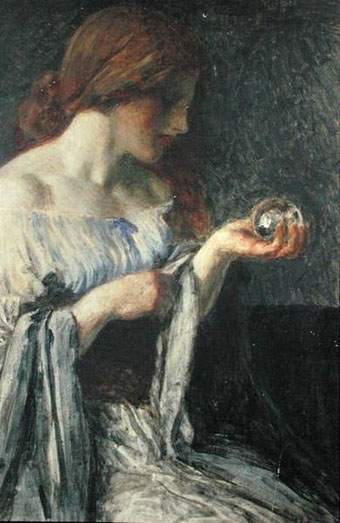
Crystal balls

crystal04.jpg

The Crystal Ball (c. 1900) by Robert Anning Bell.

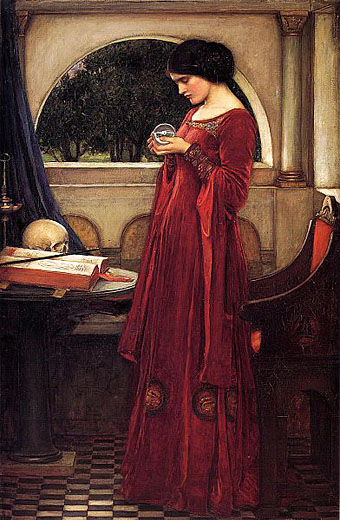
Crystal balls in art, film and the pulp magazines.

crystal05.jpg

The Crystal Ball (1902) by John William Waterhouse.

crystal02.jpg

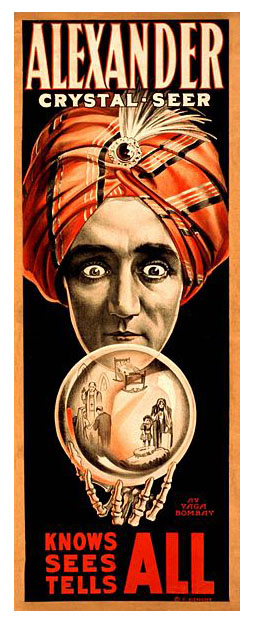
Alexander, Crystal Seer (1910).

Continue reading “Crystal balls”

The kosmische design of Peter Geitner

geitner07.jpg

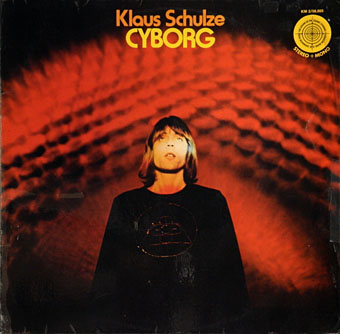
Cyborg (1973) by Klaus Schulze.

More German music design. Once you start delving into the music produced in Germany between 1969 and 1975 you eventually notice that a) the good albums generally have decent cover designs, and b) there are many justly forgotten albums with astonishingly tasteless artwork. Most of the well-known names were smart enough to craft a visual identity: Kraftwerk’s efforts have been explored here recently but there was also the Gothic Surrealism of Falk-U Rogner’s photo montages for Amon Düül II (worthy of a post in themselves); Neu! followed the lead of Kraftwerk with strikingly minimal presentation; Faust’s debut album was released on transparent vinyl in a clear sleeve while their second album was an all-black sleeve with a series of strange pictures inside, one for each song. Can are a notable exception in having no clear identity.

geitner23.jpg

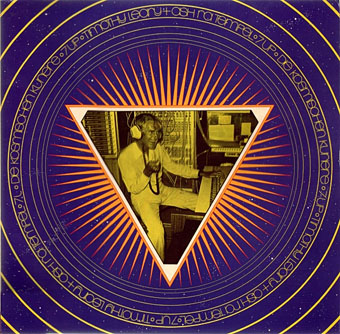
Peter Geitner is unique in this scene in being the only graphic designer you can find who was creating any kind of consistent identity for a label and a group of artists. Almost all the work here is for Rolf-Ulrich Kaiser’s short-lived Kosmische Musik which replaced the earlier Die Kosmischen Kuriere. Both labels were offshoots of Ohr Records (Tangerine Dream’s original home), and catered mostly to the musicians based in Berlin, with a later detour to Switzerland. All the releases feature Geitner’s recurrent motifs of radiating stars and sunburst graphics. I think one of the reasons I like Geitner’s design is because I have a tendency to use similar spiky sunbursts in my own work. Whatever Geitner did after the collapse of Kosmische Musik I’ve yet to discover.

geitner22.jpg

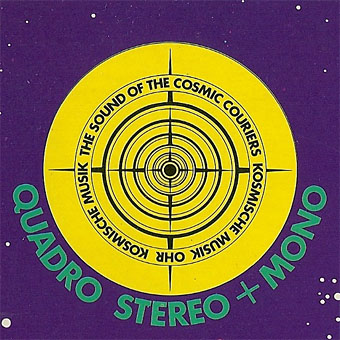
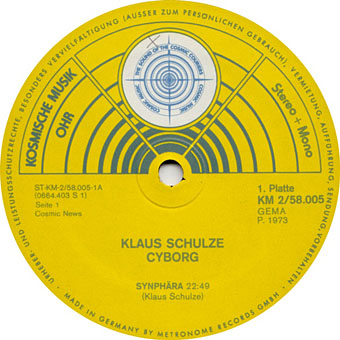
The standard design for the vinyl labels. Many of the albums were released as quadrophonic mixes so the star logo also signifies multi-directional sound. Klaus Schulze’s album is nothing if not cosmic, four sides of treated strings and swirling synth noise.

geitner03.jpg

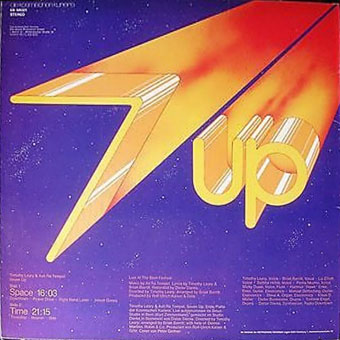
Seven Up (1973) by Timothy Leary & Ash Ra Tempel.

This is a reissue design that replaces the more common sleeve with its Walter Wegmüller doodles and poor layout. I didn’t used to like the music very much either, two sides of bluesy jams with Tim Leary and cohorts bellowing over the top. But it’s a historical oddity, a rare connection between the US psychedelic scene and the German music which took psychedelia in new directions.

geitner04.jpg

Continue reading “The kosmische design of Peter Geitner”

Reworking Kraftwerk (again)

kraftwerk00.jpg

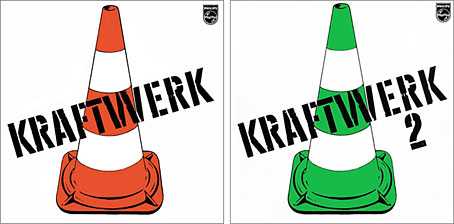
Kraftwerk (1970); Kraftwerk 2 (1972). Design by Ralf Hütter.

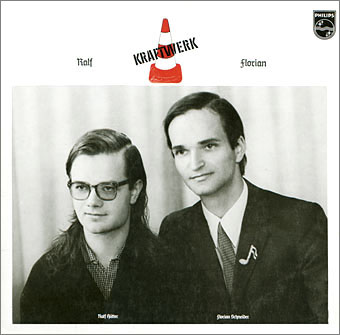
Recent posts about Kraftwerk’s design history had me wondering how the group might present the first three albums if these repudiated works were allowed back into the catalogue. Kraftwerk, Kraftwerk 2, and Ralf and Florian haven’t been officially reissued for decades now, and I remain sceptical that Ralf Hütter (or the recently departed Florian Schneider) are willing to taint their carefully cultivated discography with those awkward, experimental albums. This is highly unusual in the music world where everything by a commercially successful group tends to be reissued on a regular basis.

raf.jpg

Ralf and Florian (1973). Design by Ralf Hütter & Florian Schneider. Photo by Robert Franck.

Kraftwerk are unique in this, and also in subjecting their approved releases to incremental adjustments. This was mostly strikingly seen in 2009 when the 8 albums were reissued in a box as The Catalogue. Not only had further changes been made to the cover art but two of the albums had amended titles: Electric Café was now Techno Pop (as it would have been titled if released earlier in the 1980s), and Tour De France Soundtracks had become Tour De France. The cover art changes had already been previewed in the version of The Catalogue that briefly appeared as a promo set in 2004 only now it was evident that more human traces were being removed from the albums, notably on the cover of The Man-Machine which swapped the band photo for the El Lissitzky-derived graphics. All of this needed to be taken into account when I had the idea last week of roughing out designs for how the first three albums might be reissued in a box set today.

cover1.jpg

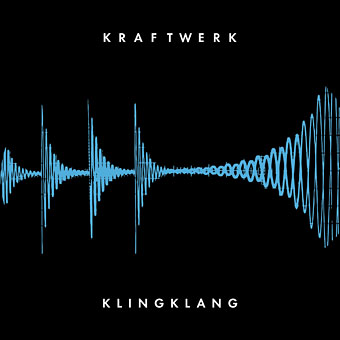
First the title: there’s no way of knowing what Ralf Hütter might call a collected set but mundane choices like Three Albums or Kraftwerk 70–73 seem unlikely. I decided on Klingklang, the name of the first piece of music on the second album, and also the name of Kraftwerk’s studio and publishing company. This would no doubt cause endless (endless) confusion but it still seems apt. The cover design uses Futura, a German typeface that’s been a feature of many Kraftwerk graphics over the years. The oscilloscope wave is taken from the front and back cover of the double-album reissue of Kraftwerk and Kraftwerk 2 on the Vertigo label in 1972. I always liked that cover, and the graphic suits the often raw electronic sound of those albums as well as the minimal nature of the current design.

cover2.jpg

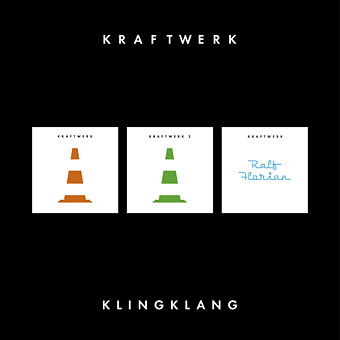
This would be the back of the proposed box, showing the albums within as The Catalogue does.

kw1.jpg

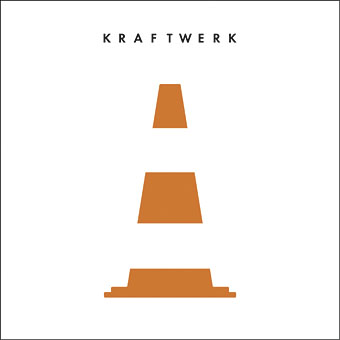
All German traffic cones still follow this standard, apparently, so the design hasn’t dated at all. (See this post for Kraftwerk’s cone obsession.) Using negative space for the white bands works well.

Continue reading “Reworking Kraftwerk (again)”

A Darkness Made of Beating Wings, a film by Dave Colohan

darkness.jpg

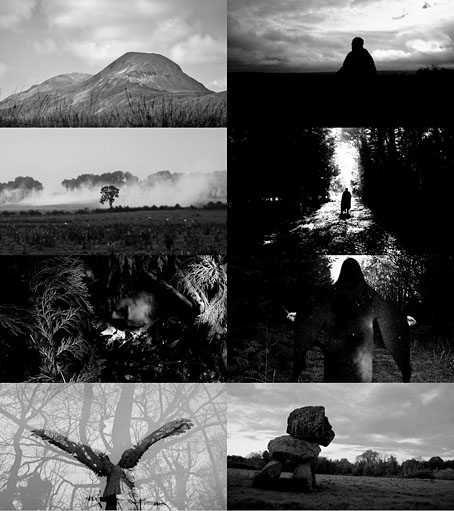
When Dave Colohan was in touch late last year he mentioned work on a new film which is now available for viewing at Vimeo. A Darkness Made of Beating Wings is another meditation on the sombre beauties of the Irish landscape (with additional shots of the Inner Hebrides) only this time there’s more textual substance in the figure portrayed by Ciarán MacAoidh, a traveller caught between the Celtic past and present, shadowed all the while by a spectral figure. Deliciously atmospheric work once again, with monochrome photography by Mick Carey.

Given all the Celtic business, I thought the hills seen at the beginning might be the Paps of Anu in Kilarney but searching revealed that they’re a different set of breast-shaped hills, the Paps of Jura in the Hebrides, which I’d not heard of before. The isle of Jura produces one of my favourite brands of malt whisky so this adds an additional note of approval.

Previously on { feuilleton }
Newlyborn, a film by Dave Colohan