Red Shift by Alan Garner

redshift1.jpg

“I know things, and feel things, but the wrong way round. That’s me: all the right answers at none of the right times. I see and can’t understand. I need to adjust my spectrum, pull myself away from the blue end. I could do with a red shift. Galaxies and Rectors have them. Why not me?”

Red Shift by Alan Garner

More fields in England. It’s good to find this TV film on YouTube since I’ve been telling people about it for years. Red Shift (1973) is classed as the last in Alan Garner’s initial run of fantasy novels, although it’s arguable whether it’s a work of fantasy at all. The themes are typical Garner: the Cheshire landscape, and the long hand of the historic past reaching into the present. Instead of a single story there are three interwoven narratives taking place in different eras: Roman Britain, with an invading legion (based on the lost Ninth Legion) being hunted down by the natives; the English Civil War, and the true story of a massacre that took place at a village church; the present (1973) with teenager Tom struggling to maintain a relationship with his girlfriend, Jan, who’s leaving to study as a nurse. Tom’s narrative is the principal one but each thread contains echoes of the others. Connecting them all is a stone axe head buried by one of the Roman soldiers which is found by a villager hundreds of years later then rediscovered in turn by Tom. It’s a fascinating novel which prefigures Alan Moore’s Voice of the Fire (1996) for the way a single location is examined at different periods of history.

redshift2.jpg

The 75-minute film of Red Shift (1978) was made for the BBC’s Play For Today strand, as was that cult item of mine, Penda’s Fen (1974), and the two have much in common. Writer David Rudkin talked about the “layer upon layer of inheritance” in the Malvern Hills where Penda’s Fen is set, a description that could equally apply to Red Shift. Both plays have intelligent teenage boys as their central characters, and both are demanding rites-of-passage dramas. The great Alan Clarke directed Penda’s Fen while Red Shift was directed by John Mackenzie, better known for (among other things) The Long Good Friday (1980). Garner and Mackenzie collaborated on the screenplay for Red Shift which necessarily condenses the novel. I’d say it does this successfully but then I’ve read the book so may be too familiar with the story as a whole. Success or not, this is another remarkable piece of television drama which you can’t imagine being made today. But it is on YouTube, and for that we may be grateful. Watch it here.

Previously on { feuilleton }
Children of the Stones
Penda’s Fen by David Rudkin

Weekend links 167

field.jpg

Poster by Luke Insect & Kenn Goodall.

In recent years I’ve had little patience for British cinema: too much dour “realism” with little of Alan Clarke’s vitality, too many comedies that aren’t funny, too many Hollywood calling cards, too much Colin Firth… So it’s been a pleasure to see Peter Strickland’s Berberian Sound Studio followed this month by Ben Wheatley’s A Field In England, a pair of films that stand out by daring to be different in a medium which seems to grow more creatively conservative with each passing year. A Field In England adds to the micro-genre of weird British films set around the time of the English Civil War. In place of witchfinders and devil worshippers we have magic, murder, madness, and a field of hallucinogenic mushrooms. Wheatley, like Strickland, takes risks that wouldn’t be allowed with a bigger budget which makes me excited to see what they’ll be doing next. A Field In England is already out on DVD & Blu-ray. The trailer is here. The director talked to Mat Colegate about the genesis of the film (spoiler alert). There’s more big hats and cloaks in this list of ten 17th century films.

• “I like to look at men…the way they look at women,” photographer Ingrid Berthon-Moine says about her pictures of sculpted testicles.

Roger Dean has finally sued James Cameron over the designs for Avatar. Will be interesting to see how this one turns out.

• Google has taken its Street View cameras to Battleship Island, “the most desolate city on earth“.

• The strange fantasy novels of Edward Whittemore are available again in digital editions.

Julia Holter talks about her forthcoming Gigi-inspired album Loud City Song.

• At Pinterest: Maneki-neko, the beckoning cat of good fortune.

Beautiful Books: Decorative Publishers’ Cloth Bindings.

• The abstract paintings of Hilma af Klint (1862–1944).

Lee Brown Coye illustrates August Derleth in 1945.

Bill Laswell’s discography intimidates the collector.

• Mix of the week: Kit Mix #23 by Joseph Burnett.

• The Soundcarriers: Last Broadcast (2010) | Signals (2010) | This Is Normal (2012)

The Running Jumping & Standing Still Film

lester1.jpg

The Beatles’ second feature, Help!, was released on Blu-ray last month. The origin of the film’s visual humour and frenetic style can be found in this short directed by Richard Lester over two weekends in 1959, a collaboration between Lester, Spike Milligan, Peter Sellers and others. It may be nothing more than ten minutes of sight gags but it was enough for The Beatles to seek out Lester as director of their first two features. (Leo McKern, the actor in the opening shot, also appears in Help!) Considering the subsequent influence of those films—from The Monkees’ TV show on into numerous pop videos—this little film is very influential indeed. Watch it here.

lester2.jpg

Previously on { feuilleton }
Petulia film posters

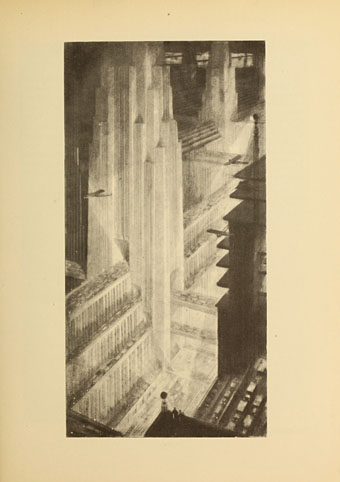
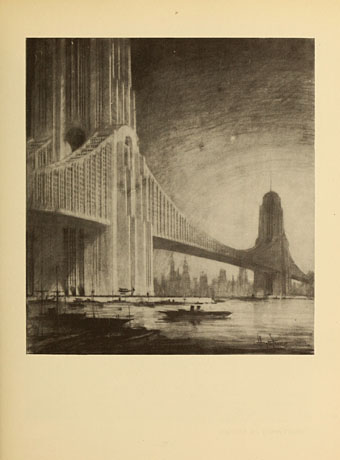
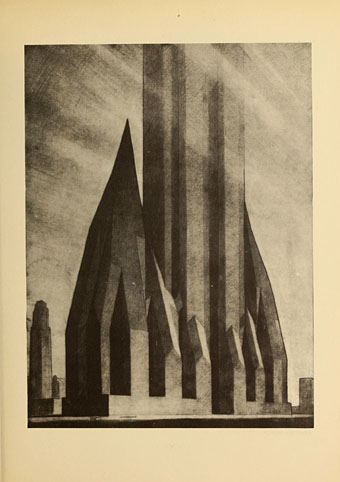
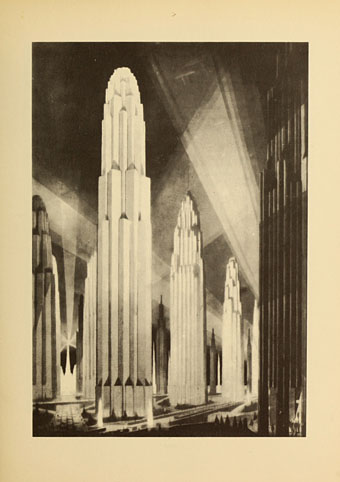
Mistaken Memories Of Mediaeval Manhattan

eno1.jpg

The first ambient film, at least in the Brian Eno sense of the term, although one can think of other examples prior to this, not least Andy Warhol’s Empire (1964) which is possibly alluded to in a sequence showing the Empire State Building in the distance. Eno filmed several static views of New York and its drifting cloudscape from his thirteenth-floor apartment in 1980–81. The low-grade equipment (and NTSC video) give the images a hazy, impressionistic quality. Lack of a tripod meant filming with the camera lying on its side so the tape had to be re-viewed with a television monitor also turned on its side. The assembled videos were later screened in galleries with music from some of the Ambient series of albums, and also two unique pieces.

eno2.jpg

An edited suite of seven pieces running 47 minutes was released on VHS tape in 1987. Like the original recordings, these could only be viewed by turning your TV on its side, something I used to think was a combination of the hazardous and foolhardy to all but the most diehard Eno aficionados. Television sets in the 1980s were either portable things in cheap plastic enclosures (some with curved sides), or cathode-tube monsters that would require two people two handle, assuming they weren’t screwed to a stand. I’ve yet to hear of anyone other than Eno himself who ever went to this trouble to watch a single video recording. It’s notable that recent DVD reissues of these videos, and the later Thursday Afternoon, have included horizontal as well as vertical versions.

The screen grabs here are from a 26-minute edit of the suite. The 14 Video Paintings DVD is currently out-of-print but a vertical copy can be found at Ubuweb.

Previously on { feuilleton }
Brian Eno: Imaginary Landscapes
Thursday Afternoon by Brian Eno
Moonlight in Glory
Tiger Mountain Strategies
Generative culture
My Life in the Bush of Ghosts

Weekend links 166

foxxbelbury.jpg

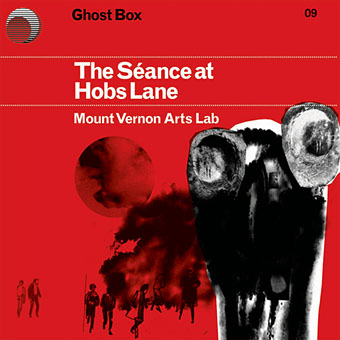
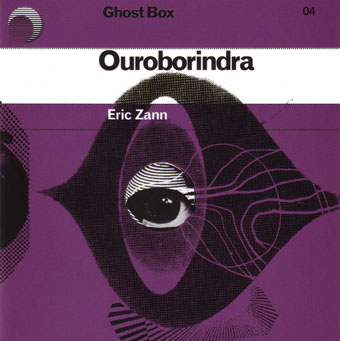
The Julian House cover art for the forthcoming collaboration between John Foxx and Belbury Poly (here renamed) has been revealed. Single no. 9 in the Ghost Box Listening Centre Study Series is now available.

• In addition to new Ghost Box records there’s more Hauntological (for want of a better term) cinema on the way this summer with the DVD/BR release of Ben Wheatley’s A Field in England. The potted description at Movie Mail is “a monochrome psychedelic trip into magic and madness set during the English Civil War”. Julian House has made a trailer. Meanwhile at Fangoria, there’s a PIF mixtape from The Advisory Circle. This accompanies an interview with John Krish, director of the most bizarre of the UK’s many strange and alarming public information films from the 1970s.

• More mixes: The hour-long OH/EX/OH show for The Geography Trip on Chorlton FM. “Expect slumber / tension / euphoria in almost equal measures.” It’s marvellous. At Self-Titled mag there’s DJ Food with O Is For Orange: Boards of Canada, Broadcast, The Books, etc.

Tangiers is a computer game based on the fiction of William Burroughs. Jim Rossignol talked to Alex Harvey about the development of the project.

walpurgisnacht.jpg

Walpurgisnacht (1917) by Amadeus. A drawing that could easily be from the late 1960s. If anyone knows the full name of the artist, please leave a comment. Via Beautiful Century.

Rebecca J. Rosen asks “What would the night sky look like if the other planets were as close as the moon?”

• The mystery of Charles Dellschau and the Sonora Aero Club.

The Surreal Cave Paintings Of Stockholm’s Metro Stations.

• At 50 Watts: More strange art from Marcus Behmer.

Ry Cooder in 1970. Directed by Van Dyke Parks!

The Post Office Tower: now you see it…

• At Little Augury: 99 Meninas.

Sartori In Tangier (1982) by King Crimson | City Of Mirage (2010) by John Foxx