Tangerine Dream in concert

tdc1.jpg

I was going to call this post “Remote Viewing”, after the last track on Tangerine Dream’s Exit album, but the reference is too obscure. Having spent the past week listening to the Pilots Of Purple Twilight box I thought I’d see what concert video might be available from the period covered by the recordings, 1980–83. Thank to some recent YouTube uploads there’s more than I expected. A couple of things are notable about these TV performances: the first is that two of them feature the same annoyingly mismatched audio and video that spoiled Tony Palmer’s record of the group playing in Coventry Cathedral in 1975; the second is that all the footage is from Continental Europe. Tangerine Dream were very popular in the UK throughout the 1970s and 80s—they were on a British record label, after all, and toured here extensively every couple of years—but Palmer’s film is the only record of a British TD concert. These videos aren’t always the highest quality but they make up for the negligence of the BBC and ITV.
tdc2.jpg

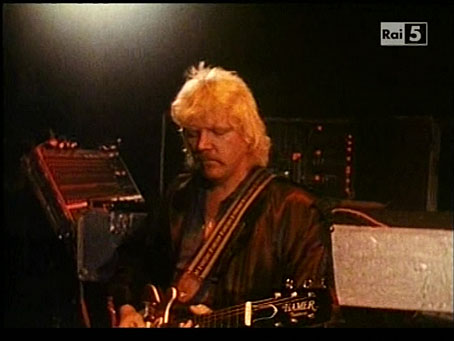
Palasport, Bologna, 20th October, 1980.

Mismatched audio and video in the opening scenes, followed by an interview with the group in Italian and German. The audio and video is in synch after this, and includes rare footage from this period of Edgar Froese playing guitar on Diamond Duster, an uptempo piece that evolved into Diamond Diary for the Thief soundtrack. I’m not always keen on Edgar’s meandering live solos but this is still good to see. Also of note for synth-heads is how much of the group’s equipment was still the analogue modular gear they were using in the 1970s.
tdc3.jpg

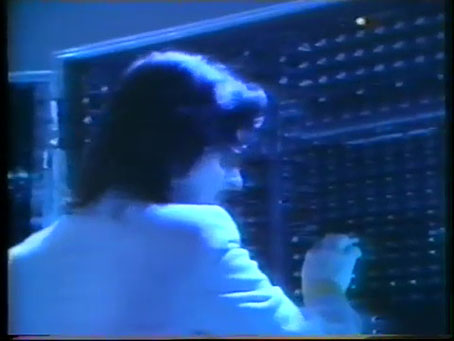
Platz der Republik, West Berlin, 29th August, 1981.

A big concert in the group’s home city. The opening shows them playing Kiew Mission, the first time they did so in concert with a live singer providing the vocals. The audio for this piece, however, is an overdub from the Exit album.
tdc4.jpg

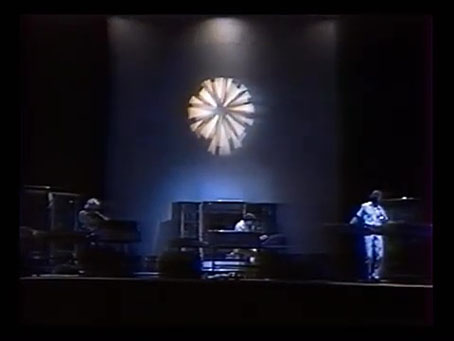
Lycabettus Theatre, Athens, 30th August, 1983.

A shame this isn’t better quality because it’s the best of the lot: 85 minutes of the group performing (with no overdubs) preceded by 10 minutes of an interview in English for Greek TV. The concert itself features a more elaborate light show than usual, while the first half of the show includes new compositions that later turned up on the live Poland album.
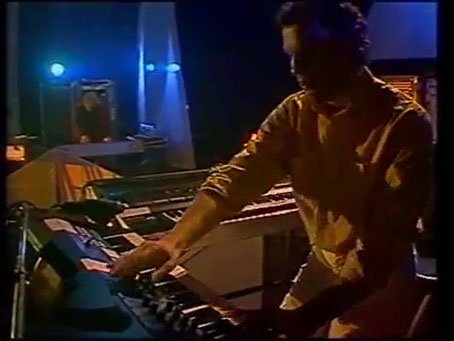
tdc5.jpg

Warsaw Ice Stadium, 10th December, 1983.

And speaking of which (and linked here before), half an hour of the two-hour Warsaw concert. The earlier YouTube copy featured additional footage of a dancer in a studio but this version is sans dancer.

Previously on { feuilleton }
Pilots Of Purple Twilight
Synapse: The Electronic Music Magazine, 1976–1979
German gear
Edgar Froese, 1944–2015
Synthesizing
Tangerine Dream in Poland
Electronic Music Review
Tonto’s expanding frog men
A Clockwork Orange: The Complete Original Score
White Noise: Electric Storms, Radiophonics and the Delian Mode

Weekend links 542

gysbrechts.jpg

The Reverse of a Framed Painting (between 1668 and 1672) by Cornelis Norbertus Gysbrechts.

• New music with a cinematic flavour: Disciples Of The Scorpion (Main Theme) Heavy Mix by The Rowan Amber Mill is a taster for the group’s forthcoming imaginary soundtrack, Disciples Of The Scorpion (also a sequel of sorts to The Book Of The Lost); The Quietened Dream Palace is this year’s final themed compilation from A Year In The Country. The subject this time is abandoned cinemas, past and present.

San Francisco Moog: 1968–72 by Doug McKechnie, a collection of early synthesizer music using a modular instrument that was later bought by Tangerine Dream. “The quiescent, meditative pulse of the music has much more in common with what would come to be known as the Berlin school of German electronic music than anything coming out of the US at the time,” says Geeta Dayal.

• Sarah Davachi released a new album recently, Cantus, Descant, so The Quietus asked her to discuss her favourite albums. Related: XLR8R has a mix of the music that Davachi regards as influences. Kudos for the choice of Why Do I Still Sleep by Popol Vuh, an overlooked piece from the end of the group’s career.

When I use relevance as a filter for determining what books to read, I’m failing to make myself available for an authentic encounter with otherness, something genuine art always offers. I’m presuming that I can guess, from the barest plot summary, whether a book will be useful in my life. But how can I know what I will find relevant about a work before I have submitted myself to the experience? I don’t think we are likely to be transformed by art if we try to determine that encounter in advance. Part of the vulnerability necessary for transformation is the recognition that I am, to a great extent, a mystery to myself. How could I know what I need?

Garth Greenwell on the idea that a novel is only worthwhile if it is somehow “relevant”

• “For a long time I had been encouraged by the world of fine art to remove references to the spiritual from my work,” says Penny Slinger in a piece by Hettie Judah exploring the resurgence of interest in occult art. Good to see S. Elizabeth and her book on the subject receiving a mention.

• Arriving on Region B blu-ray later this month is Spring (2014) by Justin Benson & Aaron Moorhead, which 101 Films describes as Richard Linklater channeling HP Lovecraft. I enjoyed Benson & Moorhead’s Resolution (2012) and The Endless (2017) so this one is on pre-order.

• Topical books dept: The Man in the High Chair and Other Tyrannies by Kurt Fawver, a benefit publication for the California Coalition for Women Prisoners.

• We never know exactly where we’re going in outer space: Caleb Scharf on the difficulties of aiming for distant objects in an ever-changing universe.

• Submissions open soon for the contemporary Dada journal Maintenant 15, with a theme of “Humanity: The Reboot”. Details here.

• At Dennis Cooper’s: Harry Smith, Filmmaker Day.

Pandemonium – Spring (1985) by Peter Principle | Silent Spring (2006) by Massive Attack feat. Elizabeth Fraser | Spring Stars (2009) by Simon Scott

That old black magic: A Dark Song

adarksong1.jpg

Catherine Walker.

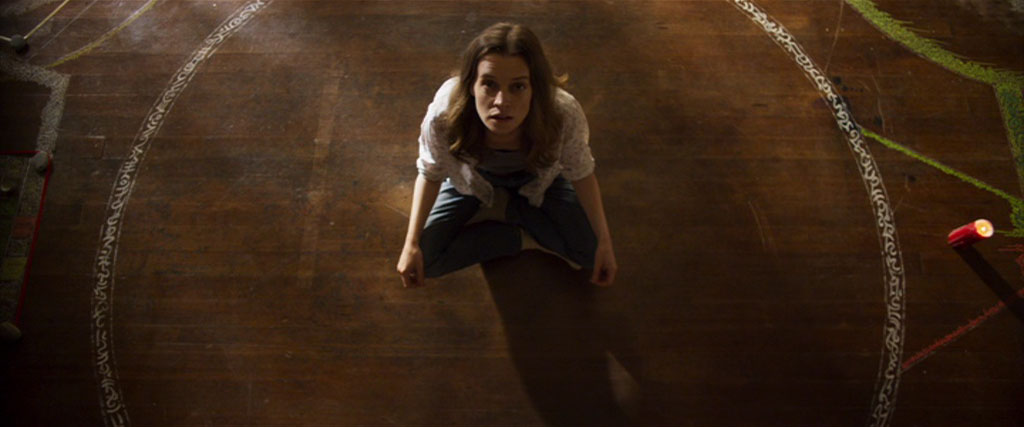
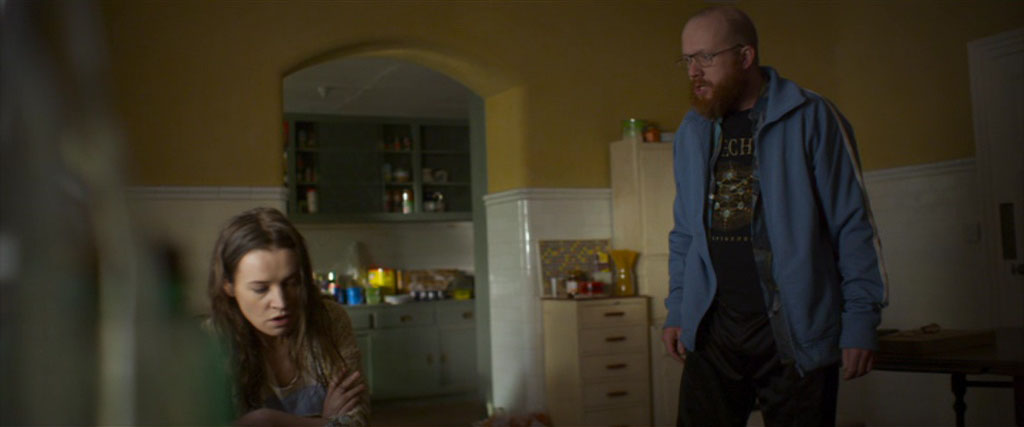
Among the Halloween viewing this year was A Dark Song (2016), a debut feature written and directed by Liam Gavin. I’d known about this one for some time thanks to recommendations from friends but for various reasons hadn’t seen it until now. Part of the interest was nakedly egotistical: one of the lead characters wears a T-shirt bearing a design based on the Epigenesis album cover that I created for Melechesh in 2010. The cover art—a variation on the Kabbalistic Tree of Life—suits the occult theme of the film, while Steve Oram’s character is also the kind of person who might be a metal-head.

adarksong2.jpg

Steve Oram in that shirt.

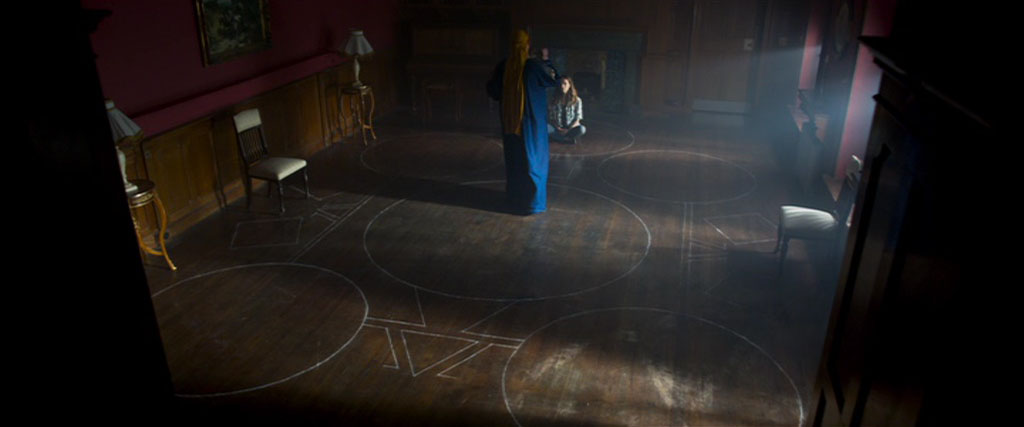
Ego matters aside, it’s the occult business that really sets this film apart. Had I known earlier that the story concerns an enactment of the famously arduous Abra-Melin ritual I’d have sought it out much sooner. Catherine Walker plays Sophia, a woman looking for supernatural vengeance following the murder of her young son. Her ritual guide, Oram’s Joseph Solomon, is evidently her last resort after attempts to hire other occultists have failed. Her determination forces her to engage the man despite his obvious unsuitability as a mentor for the Abra-Melin’s psychic assault course. Solomon is a surly recovering alcoholic; once the ritual begins he turns into a belligerent bully. With the pair locked into a remote house that neither of them can leave for fear of the occult consequences, the ensuing battle of wills makes an already hazardous ritual all the more dangerous.

adarksong3.jpg

Continue reading “That old black magic: A Dark Song”

Pilots Of Purple Twilight

td1.jpg

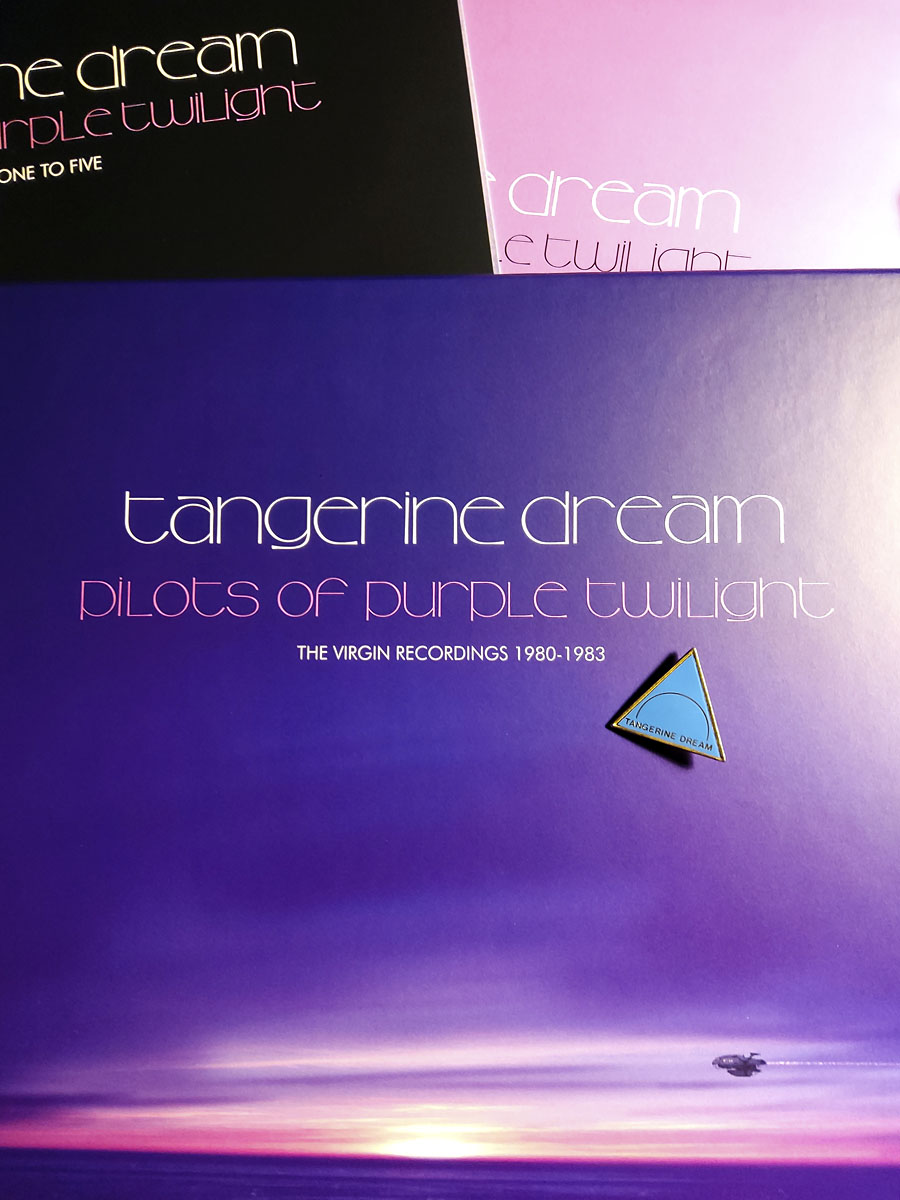
1982 tour badge not included.

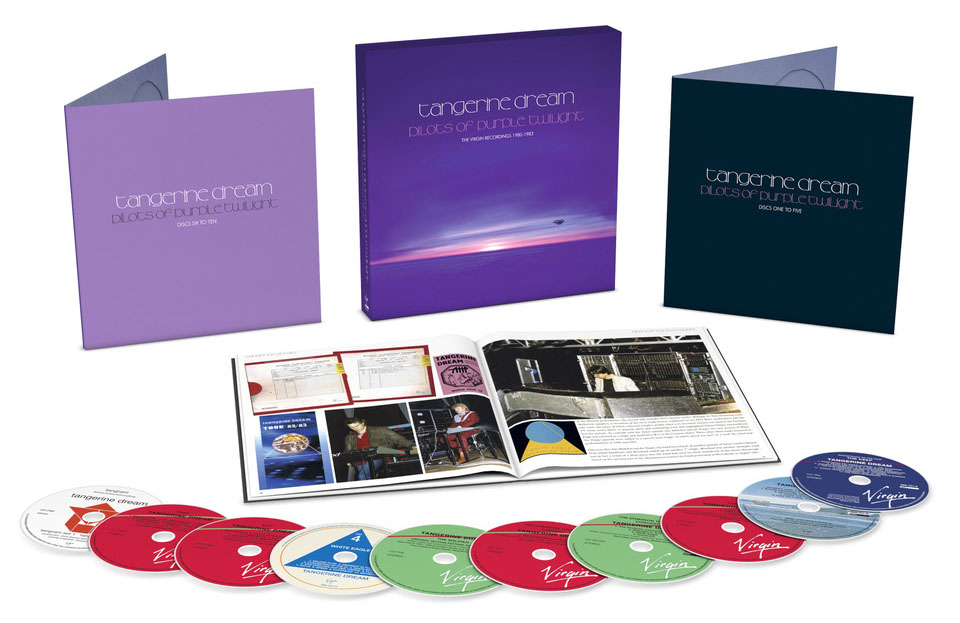
This arrived at last, after the usual shenanigans with Parcelforce and their blink-and-you-miss-em deliveries: 10 compact discs plus a large book that documents the final third of Tangerine Dream’s years on the Virgin label, when Johannes Schmoelling had joined to fill the gap left by Steve Jolliffe. These were all albums I bought as they were released, and I also saw the group for the first time on their 1982/83 tour, a performance from which is documented on the Logos live album. Consequently, I’ve always liked this period, and don’t regard it as lesser than the Peter Baumann years. The two phases of the group’s evolution are very different, in part because the technology they were using by 1980 was very different from the more cumbersome electronics of the 1970s: synthesizers were now polyphonic, sequencers were much more programmable, and digital synthesis had arrived. Tangerine Dream were early users of the PPG Wave, a digital synthesizer that allowed the recording and playback of sound samples. The Wave sound is prominent on all the albums from the Schmoelling period, giving the music a very different character to the earlier Moog-and-Mellotron recordings.

td3.jpg

Pilots Of Purple Twilight doesn’t contain as many revelations as the previous In Search Of Hades box but there are some rarities here which are either making their first appearance on CD or their first official release in any form. The Logos album was 50 minutes of a much longer set from the Dominion Theatre, London, which is now available in full on two discs. (The original Logos album appeared in the shops only five or six weeks after it was recorded, something that amazed and delighted me at the time.) The full concert had been available in the past as part of the fan-produced Tangerine Leaves bootleg series but the recording was typical of the low quality that distinguishes the Leaves discs from the superior Tangerine Tree series. By 1982 the improvisation quotient in Tangerine Dream’s live performances had diminished, so the Dominion concert provides a representative snapshot of the tour as a whole. Some of the new music—the so-called Logos suite—appeared later in the soundtrack of Michael Mann’s cult horror film, The Keep (1983), and another of the rarities here is a variant of one of several discs that have been released as The Keep soundtrack. Unfortunately for Keep enthusiasts, the disc in the Pilots box is the least interesting of the two main Keep releases, comprising a small amount of music which did appear in the film together with a much larger percentage that didn’t. Voices In The Net refers to the 1997 limited-edition release of this music as having been “tangentized” which is their term for old recordings that Edgar Froese later reworked. This pushes the music even further away from the original soundtrack recordings of 1982/82; one of the tracks, Arx Allemand, is a terrible faux-Baroque confection that even Rick Wakeman would reject as sub-standard. The new disc also omits 3 tracks from the 1997 release: Sign In The Dark, Weird Village, and Love And Destiny. There is a Keep soundtrack that features more of the actual music from the film but for that you’ll have to search torrent or bootleg sites for Tangerine Tree Volume 54.

td2.jpg

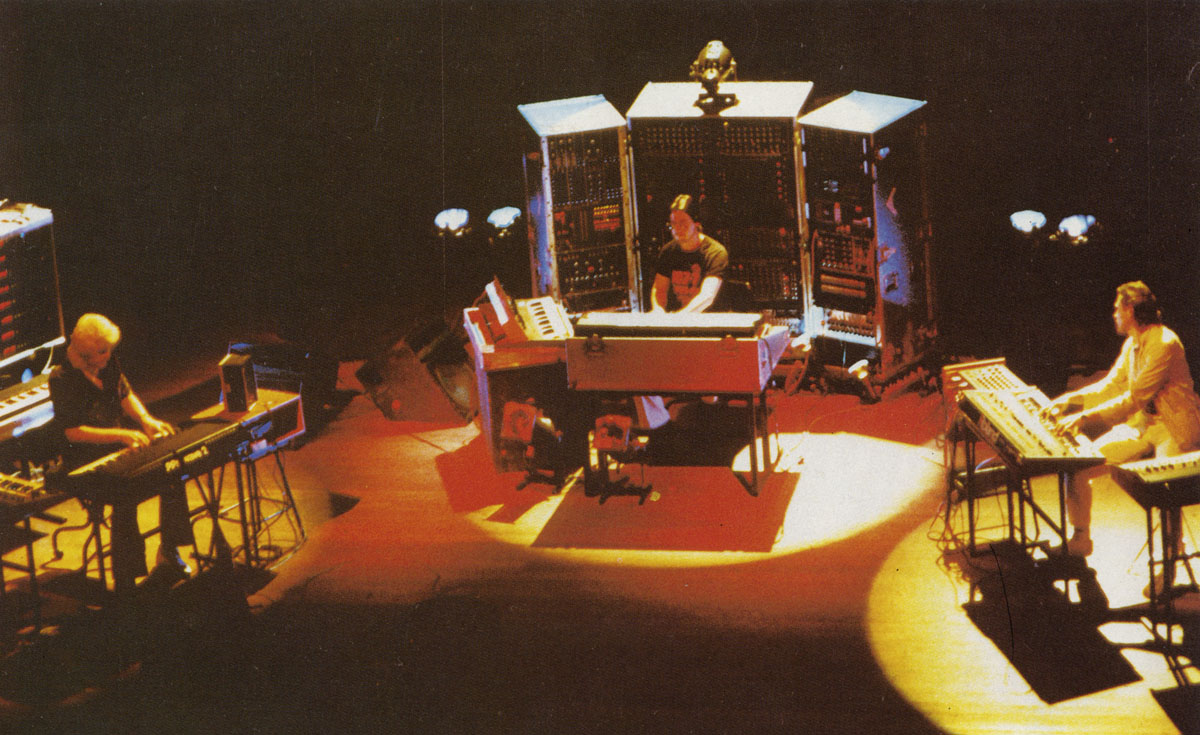
Edgar Froese, Chris Franke and Johannes Schmoelling performing in Perth, Australia, in February 1982. Edgar is playing a PPG Wave 2 while Johannes has a Roland keyboard, probably a Jupiter 8.

Continue reading “Pilots Of Purple Twilight”

Weekend links 541

finlay.jpg

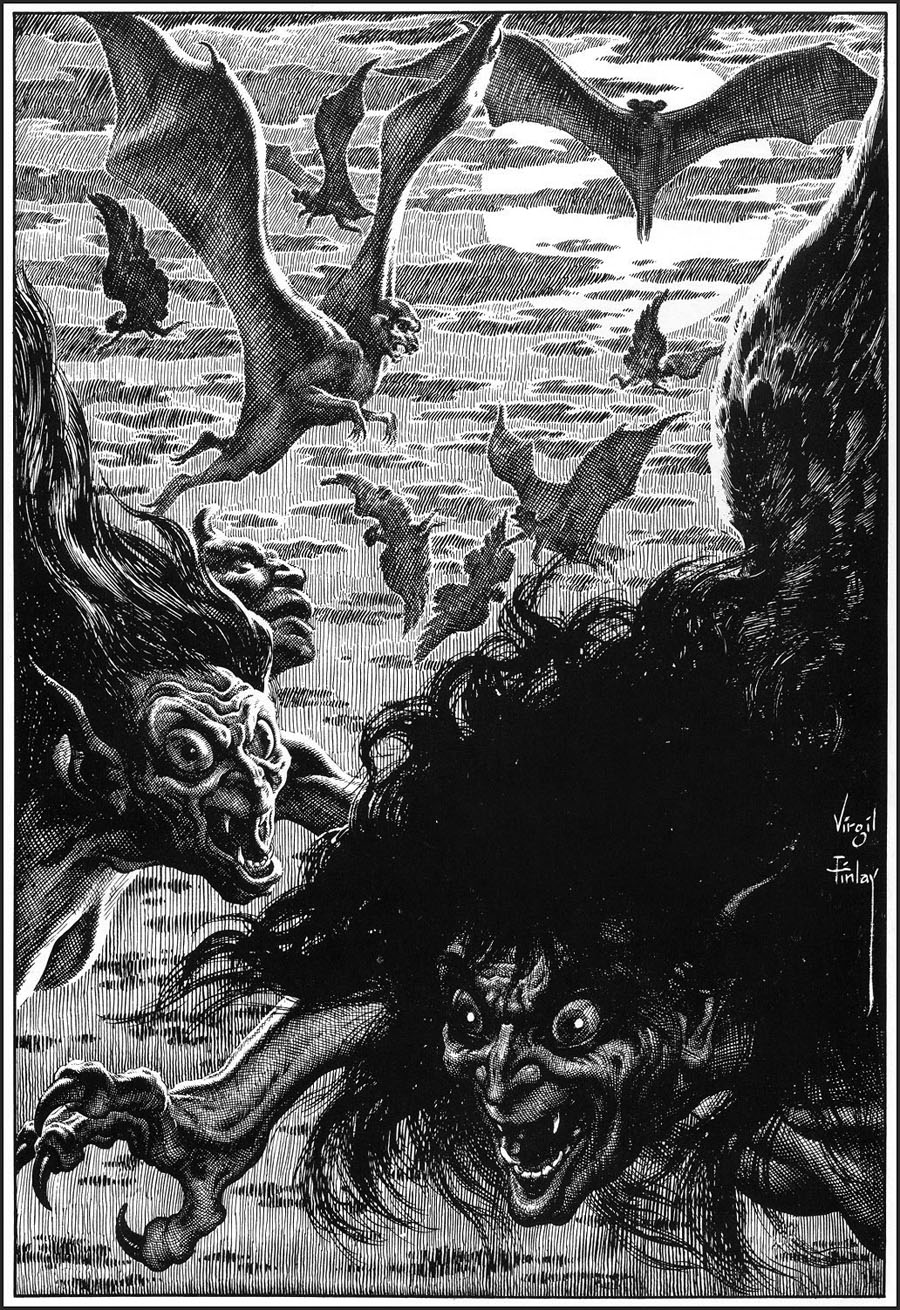
Virgil Finlay illustrates Hallowe’en in a Suburb by HP Lovecraft for Weird Tales, September 1952.

• Literary Hub does Halloween with an abundance with Draculas, a lazy option but the pieces are good ones nonetheless: Olivia Rutigliano attempts to rank the 50 best (screen) Draculas, and also recalls the Broadway production designed by Edward Gorey. At the same site, Katie Yee discovers that The Addams Family (1991) is really about the importance of books.

• The inevitable film lists: the always reliable Anne Billson selects the scariest ghosts in cinema; at Dennis Cooper’s, TheNeanderthalSkull curates…DC’s Weirdo Halloween Horror Movie Marathon, a list featuring a couple of oddities which have appeared in previous weekend links.

• More books bound with human skin: Megan Rosenbloom, author of Dark Archives: A Librarian’s Investigation into the Science and History of Books Bound in Human Skin discusses the subject with S. Elizabeth.

Beyond all this, however, readers are most likely to read De Quincey for his compellingly strange writing on opium and its effect on the mind. For it is opium, rather than the opium-eater, he writes in Confessions, who “is the true hero of the tale”. He explains the drug cannot of itself create imaginative visions—the man “whose talk is of oxen” will probably dream about oxen. But for De Quincey, with his love for reverie, it gives “an inner eye and power of intuition for the vision and the mysteries of our human nature”. Wine “robs a man of his self-possession: opium greatly invigorates it”. It “gives an expansion to the heart and the benevolent affections”. “This”, he claims, “is the doctrine of the true church on the subject of opium: of which church I acknowledge myself to be the only member.”

“Thomas De Quincey’s revelatory writing deserves greater attention,” says Jane Darcy

• New music: Weeping Ghost by John Carpenter is a preview of the forthcoming Lost Themes III; Moments Of Clarity is a new album of psychedelic(ish) songs from Professor Yaffle.

• “How now, you secret, black, and midnight hags!” Sean Connery (RIP) was often playing kings in later life but he started early with this performance as Macbeth in 1961. (Ta to TjZ for the link!)

• Mixes of the week: a (non-Halloween) guest mix by Paul Schütze for Toneshift, and the by-now traditional Samhain Séance Mix from The Ephemeral Man.

Clive Hicks-Jenkins’ big new adventure: an illustrated “reinvention” of Jean Cocteau’s La Belle et la Bête.

Drew McDowall (of Coil, et al) talks Musick, magick and sacred materiality.

• “No one loves the smell of a Kindle,” says Thomas O’Dwyer.

Brüder des Schattens (1979) by Popol Vuh | Nosferatu (1988) by Art Zoyd | Vampires At Large (2012) by John Zorn