Phantom, a film by Toshio Matsumoto

phantom.jpg

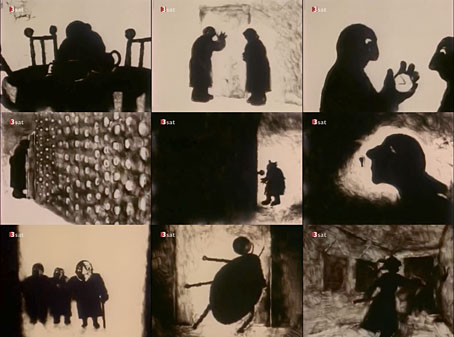
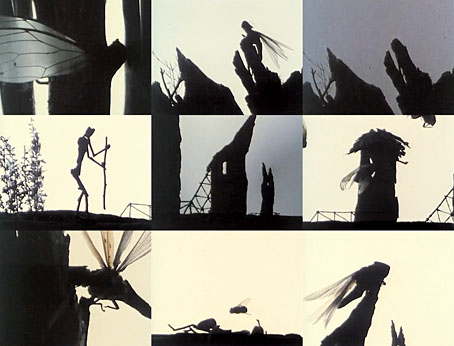
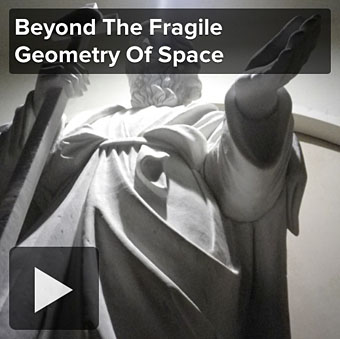
Yet another short film by Matsumoto, Phantom (1975) differs from the previous examples by being less abstract but thoroughly inexplicable. Disconnected sequences—a naked woman on a beach; a man performing yoga asanas outdoors; an eyeball floating over a city; two people walking round a flickering statue—are intercut with close-ups of a woman’s face. As with Atman, most of the footage looks like it was shot on infra-red film. Once again, a Japanese composer provides the score that hold the piece together, this one being the work of Jo Kondo. Watch it here.

Previously on { feuilleton }
White Hole, a film by Toshio Matsumoto
Atman, a film by Toshio Matsumoto
Metastasis, a film by Toshio Matsumoto

Temptations

catalogue.jpg

Exhibition catalogue.

In one of the many recent features about Leonora Carrington I noticed a mention of her Temptation of St Anthony painting from 1945 (see below). This was one of eleven works on the theme submitted by different artists for a competition staged to promote Albert Lewin’s The Private Affairs of Bel Ami (1947), a film adaptation of the Guy de Maupassant novel. Carrington is often mentioned when this competition is discussed, along with the other big names, Max Ernst (the winner) and Salvador Dalí. But you seldom see mention of any of the other competitors, hence this post, an attempt to find all of the competition entries.

carrington.jpg

Leonora Carrington. St. Anthony is often shown with a pig companion but only Carrington depicted the animal for this competition. When asked why the saint had three heads, she replied “Why not?”

Albert Lewin didn’t make many films but he had a predilection for arty subjects, The Private Affairs of Bel Ami being preceded by adaptations of The Moon and Sixpence (1942) and The Picture of Dorian Gray (1945). All three films star George Sanders, and all feature special colour sequences when a painting is revealed. 1945 was the peak of America’s brief infatuation with Surrealism (Hitchcock had Dalí working on Spellbound at this time) so Lewin asked a number of Surrealists to take up the challenge. I was surprised to find that Stanley Spencer was one of the entrants, a name you almost never see in this company; less surprising was Ivan Albright whose painting of the decayed Dorian Gray is one of the highlights of Lewin’s earlier film. Leonor Fini was also asked to take part but she didn’t produce anything. The judges were Marcel Duchamp, Alfred J. Barr, Jr, director of the Museum of Modern Art, and art dealer Sidney Janis. Ernst won a cash prize variously reported as $2500–3000, while the other entrants received smaller sums. The paintings toured the USA and Britain during 1946–7.

As to the film, I can’t say what this is like because it’s one I’ve yet to see but Self-Styled Siren’s witty review goes into some detail. Hollywood apparently had problems with the adult subject matter (Sanders’ character is described as a sexually predatory social climber), and Lewin was forced to tone things down.

albright.jpg

Ivan Albright.

Albright’s contribution is so frenzied and detailed it approaches psychedelia. Best seen in this large view at Flickr.

Continue reading “Temptations”

Weekend links 255

farneti.jpg

The Owls by Carlo Farneti for a 1935 edition of Les Fleurs du Mal. Via Beautiful Century although the scans probably came originally from 50 Watts.

• “…a project that seemed under a curse comprising greed, peculiar French copyright laws, jealousies and grudges, bad judgment, complicated ownership disagreements, a messy estate, and a list of individuals who believed they had some legal, financial, moral, or artistic right to the film itself.” Josh Karp on the tangled history of The Other Side of the Wind, always the most interesting of Orson Welles’ unfinished feature films.

• Producer Conny Plank is remembered for his work with a host of German artists but he also recorded a session with Duke Ellington and His Orchestra in 1970. Grönland Records is releasing the session in July, and they’ve posted Afrique (take 3 vocal) as a taster.

• “And that’s what a lot of social media by authors is starting to look like, to feel like: being smacked in the face, repeatedly, by hundreds of fish.” Delilah S. Dawson wants authors to leave off the incessant self-promotion.

“In everybody, there is an inner bestiary,” she claimed, and her pictures are overrun with animals and animal-headed creatures; sometimes sinister, sometimes acting as guides to the unconscious, as in The Pomps of the Subsoil (1947). As her interests grew more hermetic her paintings abandoned all trace of the world beyond. If the figures occupy any sort of space it’s rarely more than the planes of a room in muted browns or greys, and in many the surface is overlaid with geometric patterns that seem to imply some mystical framework.

Alice Spawls on the art and life of Leonora Carrington

• “How a pro-domme, a Russian diplomat, US intelligence and Mary Tyler Moore’s landscaper conspired to create a dance classic.” Dave Tompkins on The Dominatrix Sleeps Tonight.

• “Battersea, in fact, is a fairly simple climb, made ready by the builders who are destroying it.” Katherine Rundell on climbing Battersea Power Station at night.

• Mixes of the week: Secret Thirteen Mix 148 by Mlada Fronta, and The Ivy-Strangled Path, Volume V, by David Colohan.

Erté illustrates a gay romance in Lytton Strachey’s Ermyntrude and Esmeralda (1913 but not published until 1969).

• Dangerous Minds looks back at “The most unusual magazine ever published”, Man, Myth & Magic.

David Chase on the writing, directing and editing of the final scene of The Sopranos.

Magic Man (1969) by Caravan | The Myth (1982) by Giorgio Moroder | Magick Power (1987) by Opal

White Hole, a film by Toshio Matsumoto

whitehole.jpg

Another short film by Matsumoto. This one was made in 1979, and seems to employ video effects, but the results are cosmic and psychedelic enough to have appeared ten years earlier. The electronic score is by Joji Yuasa. An entrancing 6-minute trip. Watch it here.

Previously on { feuilleton }
Atman, a film by Toshio Matsumoto
Metastasis, a film by Toshio Matsumoto

Blade Runner vs. Metropolis

br01.jpg

Given the chronology this should really be “Metropolis vs. Blade Runner” but most people are more familiar with Ridley Scott than Fritz Lang so I’ve let Blade Runner determine the order of the shots.

metropolis01.jpg

These shot comparisons aren’t exactly news but they’ve become more evident since rewatching the restored print of Metropolis. Among other things, the rediscovered footage yielded a scene with a character reading a newspaper that’s a match for Harrison Ford’s first appearance. The similarities extend, of course, to the thematic: futuristic megacities, flying vehicles, the creation of artificial human beings. Both films also end with a struggle to the death on the roof of a building. The cinematographer for Blade Runner was Jordan Cronenweth; Metropolis was the work of Karl Freund, Günther Rittau and Walter Ruttmann.

br02.jpg

metropolis02.jpg

br03.jpg

metropolis03.jpg

Continue reading “Blade Runner vs. Metropolis”