Welles at 100

welles.jpg

Orson Welles: A First Biography (1946) by Roy Alexander Fowler.

Happy birthday, Orson. The premature celebrity biography is nothing new, as this small volume from the Coulthart library demonstrates. Welles was only 31 in 1946 but was already the director of three feature films. If I’m less of a Welles obsessive today it’s because many of the films and radio plays that were once inaccessible can now be easily seen and heard, although a handful of unfinished projects still wait in the wings. The following is a selection of some favourite Wellesiana, old and new.

• The Mercury Theatre On The Air: Recordings of Welles’ theatre troupe at the Internet Archive and at the dedicated website. The Mercury production of The War of the Worlds is the essential one, of course, but I’m also partial to their production of Dracula which featured Agnes Moorehead playing Mina Harker, Welles as the Count, and a suitably spooky score by Bernard Herrmann. The production of Around the World in 80 Days was later expanded by Welles into an ambitious (and expensive) stage musical in collaboration with Cole Porter.

The Night America Trembled (1957) is a TV dramatisation of the alarmed reaction of some Americans to the War of the Worlds broadcast. Presented live by Ed Murrow, the drama features Warren Beatty, James Coburn, Warren Oates, and Ed Asner (who later presented the BBC’s RKO Story). Closer to Welles is The Night That Panicked America (1975) a TV movie recreation of the original broadcast with Paul Shenar as the director.

Newsreel footage of the final scenes of the so-called Voodoo Macbeth from 1936. As part of the WPA program to return Americans to work, Welles directed an all-black cast with the action of the play moved to Haiti. As usual, Welles wasn’t afraid of rearranging the Bard’s words, and this staging ends with the same lines as his 1948 film version: “Peace! The charm’s wound up.”

• My favourite Welles book is still This is Orson Welles (1992), a collection of Peter Bogdanovich’s interviews edited by Jonathan Rosenbaum. Bogdanovich’s interview tapes can be heard at the Internet Archive.

Orson Welles’ Horrorshow: Colin Fleming on Welles’ Macbeth, “the horror film no one likes to call a horror film”.

Peter Bradshaw on Citizen Kane and the meaning of “Rosebud”.

Six actors who have played Orson Welles onscreen

Previously on { feuilleton }
The Fountain of Youth
The Complete Citizen Kane
Return to Glennascaul, a film by Hilton Edwards
Screening Kafka
The Panic Broadcast

The Fountain of Youth

fountain.jpg

From Orson Welles’ most famous work to a rare TV play I hadn’t seen before. The Fountain of Youth was a 25-minute adaptation of a John Collier story, Youth from Vienna, made for Desilu in 1956. Welles had returned to Hollywood after a long absence, hoping that his reputation for unreliability might have subsided enough for him to find more work there. The deal with Desilu was for a series of adaptations of short stories of which The Fountain of Youth was the pilot episode. It’s no surprise to read that the series wasn’t taken up by the networks because its storytelling technique—combining Welles’ narration with still-frame montage, rapid background changes, flash cuts, and characters mouthing dialogue in Welles’ voice—was considered too sophisticated for the American public. A screening of the pilot two years later won an award.

The copy at YouTube is terrible quality but this is still great viewing for Welles enthusiasts. The technical aspects aren’t so surprising today but they show how much of an innovator Welles could be whatever the medium he was working in. Watch out for Nancy Kulp—better known as Miss Hathaway from The Beverly Hillbillies—in a minor role.

Previously on { feuilleton }
The Complete Citizen Kane
Return to Glennascaul, a film by Hilton Edwards
Screening Kafka
The Panic Broadcast

The Complete Citizen Kane

ck1.jpg

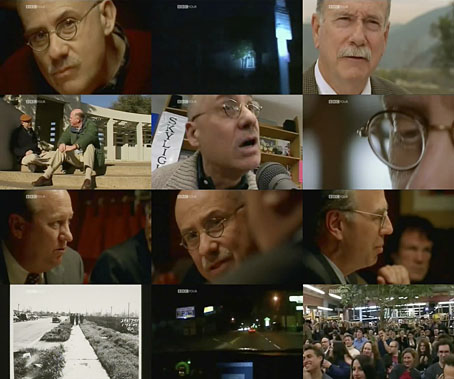
The Orson Welles centenary approaches so the posts this week will be devoted to one of my favourite film directors. The Complete Citizen Kane was an especially generous BBC documentary—comprehensive, authoritative and 90 minutes in length—screened in 1991 for the 50th anniversary of Welles’ most celebrated film. Christopher Swayne and Charles Cabot were the producers, and the narration is by Leslie Megahey, producer and interviewer of The Orson Welles Story (1982), a two-part documentary for the BBC’s Arena that ran for 165 minutes. Megahey’s Welles film was a definitive work for persuading Welles and his collaborators to discuss the director’s entire career at length. Clips of the long Welles interview turn up in The Complete Citizen Kane, as do clips from a later BBC series, The RKO Story (1987), which devoted a whole programme to Welles’ time at the studio.

ck2.jpg

The Complete Citizen Kane captures the attention at the outset by showing you a film that never existed, Orson Welles’ Heart of Darkness, the film that would have been Welles’ first project for RKO before it was cancelled due to expense. Helping narrate the evolution of Citizen Kane is William Alland, the actor who played the investigative reporter in the film, and also the voice of the News on the March sequence. Despite obvious sympathies, the documentary devotes some time to Pauline Kael’s controversial Raising Kane essay, and the fraught question of who contributed what to the finished screenplay. The Complete Citizen Kane ends with an extract from a radio show featuring Orson Welles talking to HG Wells shortly after Welles had shocked America with his adaptation of The War of the Worlds. All arts documentaries should be this good.

Previously on { feuilleton }
Return to Glennascaul, a film by Hilton Edwards
Screening Kafka
The Panic Broadcast

How Wings Are Attached to the Backs of Angels, a film by Craig Welch

angels.jpg

Craig Welch’s 11-minute film was made in 1996. It’s a beautifully drawn and conceived piece of work, vaguely surreal as animated films often are but also with some Symbolist qualities:

Welch has stated that one of the original influences for the film was Arnold Böcklin’s painting Isle of the Dead as well as Norman McLaren’s 1946 NFB animated short A Little Phantasy on a 19th-century Painting, which incorporates the Böcklin work.

A pity, then, that Welch doesn’t appear to have made anything since. Watch How Wings Are Attached to the Backs of Angels here. (And thanks to Jescie for the tip!)

Previously on { feuilleton }
Secret Joy of Falling Angels, a film by Simon Pummell
Les Jeux des Anges by Walerian Borowczyk
L’Ange by Patrick Bokanowski

Weekend links 256

beardsley.jpg

Of a Neophyte, and How the Black Art Was Revealed unto Him by the Fiend Asomuel. Aubrey Beardsley for the Pall Mall Magazine, 1893.

• The occult preoccupations of the 1970s appear to be in the ascendant just now. Whether this is mere nostalgia or something in the zeitgeist remains to be seen but BBC Radio 4 aired an hour-long documentary on the subject this weekend entitled Black Aquarius. The guest list implies an inevitable focus on film and television but Matthew Sweet covered a lot of ground, taking in the Hermetic Order of the Golden Dawn, Aleister Crowley, Dennis Wheatley, The Process Church, and Alex Sanders, the public face of British witchcraft in the 1960s and 70s. Earlier this week at AnOther the focus was on Maxine Sanders, High Priestess of the Alexandrian coven and putative fashion icon even though she was generally photographed naked. Maxine and husband Alex are unavoidable when reading about UK occultism in the 1970s; among other things they were occult advisors to Satanic rock band Black Widow, and also released an album of their own in 1970, A Witch Is Born. Of more interest is Sacrifice by Black Widow, a 55-minute concert for German TV’s Beat Club.

• Jacques Rivette’s OUT 1 (1971) is a film more talked about than seen, in part because of a running time that exceeds 12 hours. So news of a Blu-ray release later this year is very welcome.

• “Bruce LaBruce: taking zombie porn and gay homophobic skinheads to MoMA”. The director goes through his filmography with Nadja Sayej.

• “Art is anarchistic, and when it becomes categorized, it loses impact.” RIP Bernard Stollman, founder of the amazing ESP-Disk record label.

• Magickal (and pseudonymous) synth music by Mort Garson: Black Mass (1971) by Lucifer, and The Unexplained (1975) by Ataraxia.

Kevin Titterton on Angelo Badalamenti and the soundtrack that made Twin Peaks.

• Mix of the week: Secret Thirteen Mix 149 by Robert Aiki Aubrey Lowe.

Rare Decay, a free bonus track from Aurora by Ben Frost.

Alan Garner is celebrated in a new collection, First Light.

• At Dangerous Minds: The Residents’ radio special, 1977.

Black Sabbath (1969) by Coven | Black Sabbath (1970) by Black Sabbath | Her Lips Were Wet With Venom (Satan Oscillate My Metallic Sonatas 1 & 2) (2006) by Boris & Sunn O)))