Saki: The Improper Stories of HH Munro

saki.jpg

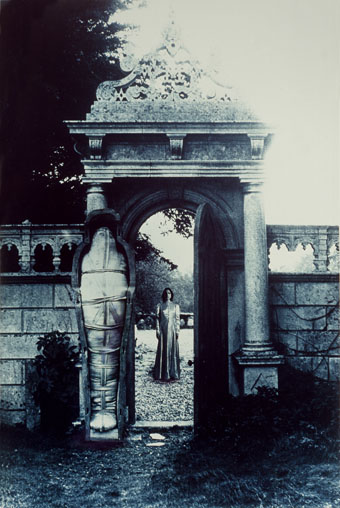
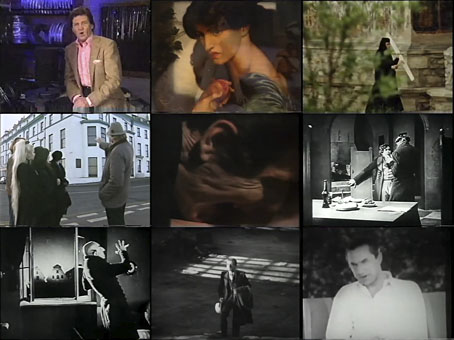
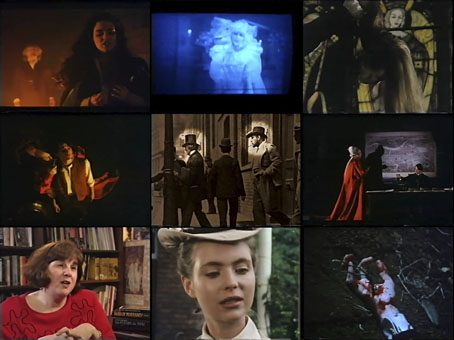
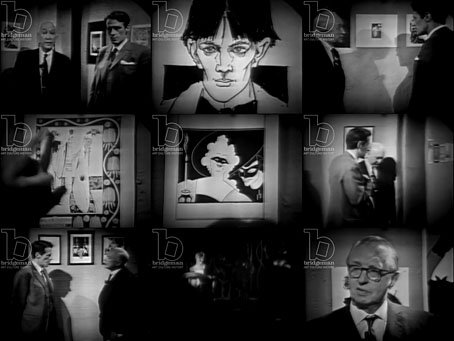
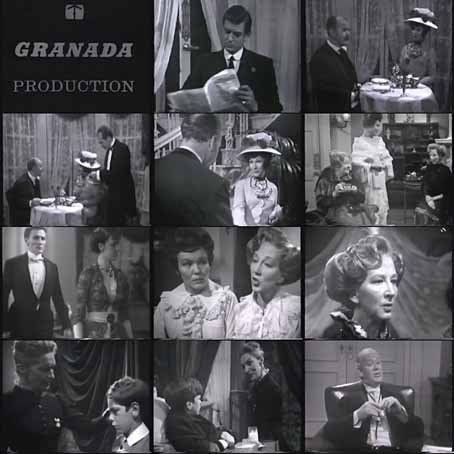
I thought I’d written about this some time ago but it appears not so the present post can serve as a way to honour the talents of the late Fenella Fielding. The obituaries this week have inevitably emphasised her roles in the Carry On films, a series of alleged comedies that I’ve never liked, and which weren’t much liked by several of the actors who appeared in them. Fenella Fielding did much more than this, of course, especially in the theatre, on radio and in television, including appearances such as the one here from a collection of adaptations of the peerless short stories of Hector Hugh Munro, better known as Saki. Granada TV made a whole series of these in 1962, broadcasting this anthology in 1985 following the death of producer Philip Mackie. Fenella appears in the second story, A Holiday Task, as the forgetful Mary Drakmanton, and she fits so well with into Saki’s world that I really wish I’d suggested to my colleagues at Savoy Books a reading or two by Fenella from Saki. She enjoyed reading Colette for Savoy, and chose the selections herself, one of which concerned Colette’s homosexual friends. Given this, I can imagine Fenella teasing out some of the sly gay humour that runs like a scarlet thread through Saki’s Clovis stories.

The other pieces in this Granada collection are The Stampeding of Lady Bastable, The Way to the Dairy, Sredni Vashtar and A Defensive Diamond. The story editor was Gerald Savory who later did such an excellent job adapting Dracula for the BBC.

Previously on { feuilleton }
Fenella Fielding reads Colette

Weekend links 426

slinger.jpg

Self Preservation (1970–77), a collage by Penny Slinger from the series An Exorcism.

• RIP John Calder, one of the most important British publishers of the last century whose death was acknowledged in the Washington Post (and in the Telegraph, a paper that would have given him no support during his censorship battles) but at the time of writing hasn’t been mentioned at all in the increasingly useless Guardian. The omission in the latter seems even more surprising when Calder himself wrote obituaries for the paper, and they ran an archive piece two weeks ago for the 50th anniversary of Calder & Boyars’ successful court defence of Last Exit to Brooklyn. “Publishing is an industry run by capitalists now.

• Another 50th anniversary: David Bushman asked Alan Moore for his memories of Patrick McGoohan’s superb TV series The Prisoner.

Michael Moorcock in conversation with Hari Kunzru at Shakespeare and Company, Paris.

Stephen O’Malley presents Acid Quarry Paris – In Session with Richard Pinhas (Heldon).

• When a rock is a stone: Louise Steinman on finding Robert Smithson’s Spiral Jetty.

• Victorians, Vaults, and Violet Water: a profusion of links at Greydogtales.

• Mix of the week: FACT mix 666 by Róisín Murphy.

• The amazing adventures of Melinda Gebbie.

Starbirthed

Exorcism (1971) by Lucifer | The Final Calling (Physical Exorcism) (1984) by CTI | Exorcism Of The Hippies (2010) by Mater Suspiria Vision

The South Bank Show: Dracula

sbs1.jpg

While illustrating Dracula earlier this year I was listening to Wojciech Kilar’s soundtrack to Francis Coppola’s Dracula to sustain the vampiric mood. I also watched Coppola’s film again, it’s an adaptation I enjoy a great deal despite its flaws. (This post detailed some of the plus points.) The South Bank Show‘s programme devoted to Dracula on page and screen was broadcast in early 1993, timed for the opening of Coppola’s film in the UK. I watched this when it was first shown, and remembered it being a good one but neglected to go searching for it back in January. I also remembered it being more about Coppola’s film than it is, although there’s still enough to make it a substantial promo piece.

sbs2.jpg

The territory here may be familiar but the evolution of Stoker’s novel is contextualised by some expert commentators—Leonard Wolf, Elaine Showalter (with a copy of Bram Dijkstra’s Idols of Perversity at her side) and Christopher Frayling—while discussion of the film adaptations includes Christopher Lee, Francis Coppola, James V. Hart (the screenwriter of Coppola’s film), Gary Oldman, Winona Ryder and others. Among the film clips there are several scenes from Count Dracula, Gerald Savory’s 1977 adaptation for the BBC. This is surprising since The South Bank Show was screened by the BBC’s rival, ITV. But Savory’s Count Dracula is still the most faithful screen adaptation that I’ve seen (and possibly the most faithful to date) so it’s a worthwhile choice, and one whose naturalism makes a sober contrast to Coppola’s Sturm und Drang.

Previously on { feuilleton }
Illustrating Dracula
Illustrating Frankenstein
Dracula and I by Christopher Lee
The Dracula Annual
Nightmare: The Birth of Horror
Albin Grau’s Nosferatu
Count Dracula
Symbolist cinema

Weekend links 415

varo.jpg

The Creation of the Birds (1957) by Remedios Varo.

• “I think my music is very modern and very old. Together.” Sandy Robertson interviewed Popol Vuh’s Florian Fricke for Sounds in 1981. The Fricke-directed Sei Still Wisse ICH BIN referred to in the feature may be viewed here. Further Vuh-ing: Popol Vuh on Beat Club, 1971; a news clip of the group from the same year; a filmed improvisation from around the same time (Florian still had his Moog); and the group miming to recorded music from a year or two later.

• More Rammellzee (see last week): Gothic Futurism, a video collage based on Rammellzee’s treatise of the same name. Probably the only place you’ll ever see Rammellzee, the late Glenn Branca and art historian Kenneth Clark thrown together.

• After releasing 5 albums, Disjointed Oddities And Other Such Things is the first EP of “odd strange electronics, psych, Radiophonics, drone and quirky folk” by Keith Seatman.

Alina Cohen on Remedios Varo, a Spanish Surrealist painter whose work has been receiving increased attention in recent years but whose life remains under-examined.

• More German music: “I grew up in total ruins”—Irmin Schmidt of Can on LSD, mourning and musical adventures.

• Mixes of the week: FACT mix 655 by Matthewdavid, and The Monday Is Okay mix by JQ.

Olivia Laing, Sarah Wood and Philip Hoare discuss Modern Nature by Derek Jarman.

National Geographic has digitized its collection of 6,000+ vintage maps.

• At Bandcamp: The Transcendental Sound of Moroccan Gnawa Music.

Joe Fletcher on the nightmarish dream logic of Bruno Schulz.

Levi Stahl on the mind of Donald E. Westlake.

Affenstunde (1970) by Popol Vuh | Toy Planet (1981) by Irmin Schmidt & Bruno Spoerri | Adithaim (2005) by The Cracow Klezmer Band

Aubrey Beardsley and His World

beardsley.jpg

This US TV programme isn’t the greatest quality, and it’s blighted throughout with a large watermark, but it’s a revelatory piece both for Aubrey Beardsley enthusiasts and Oscar Wilde aficionados. Camera Three was a CBS arts show which presented Aubrey Beardsley and His World on 12th March, 1967, as a preview for the Beardsley exhibition which had just opened in New York. This was the same landmark exhibition that made such a splash the year before at the V&A in London, and V&A curator Brian Reade appears in the programme to discuss Beardsley’s importance with host James Macandrew. It’s good to see Reade again (he was also in a later BBC documentary) since his Beardsley monograph is a great favourite of mine; as is typical of the period, he looks and sounds very upper class but his scholarship is always authoritative.

Ordinarily this would be enough to satisfy me, even though the programme only runs for 27 minutes and doesn’t tell me anything about Aubrey that I didn’t know already. The great revelation comes near the end with the appearance of Vyvyan Holland, the younger son of Oscar Wilde. Holland not only admired Beardsley’s work but actually met him in 1895 shortly before the artist’s untimely death. Holland was 9 years old at the time, and was taken to visit Aubrey by his mother; he was 81 in 1967, and died himself later that year so we’re very fortunate that he was captured on tape at all. The programme also includes a short extract from Alla Nazimova’s 1923 film of Salomé, with costumes and decor all based on Beardsley’s drawings. Watch it here.

Elsewhere on { feuilleton }
The Aubrey Beardsley archive