Welles at 100

welles.jpg

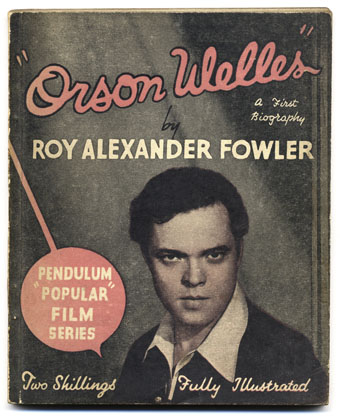
Orson Welles: A First Biography (1946) by Roy Alexander Fowler.

Happy birthday, Orson. The premature celebrity biography is nothing new, as this small volume from the Coulthart library demonstrates. Welles was only 31 in 1946 but was already the director of three feature films. If I’m less of a Welles obsessive today it’s because many of the films and radio plays that were once inaccessible can now be easily seen and heard, although a handful of unfinished projects still wait in the wings. The following is a selection of some favourite Wellesiana, old and new.

• The Mercury Theatre On The Air: Recordings of Welles’ theatre troupe at the Internet Archive and at the dedicated website. The Mercury production of The War of the Worlds is the essential one, of course, but I’m also partial to their production of Dracula which featured Agnes Moorehead playing Mina Harker, Welles as the Count, and a suitably spooky score by Bernard Herrmann. The production of Around the World in 80 Days was later expanded by Welles into an ambitious (and expensive) stage musical in collaboration with Cole Porter.

The Night America Trembled (1957) is a TV dramatisation of the alarmed reaction of some Americans to the War of the Worlds broadcast. Presented live by Ed Murrow, the drama features Warren Beatty, James Coburn, Warren Oates, and Ed Asner (who later presented the BBC’s RKO Story). Closer to Welles is The Night That Panicked America (1975) a TV movie recreation of the original broadcast with Paul Shenar as the director.

Newsreel footage of the final scenes of the so-called Voodoo Macbeth from 1936. As part of the WPA program to return Americans to work, Welles directed an all-black cast with the action of the play moved to Haiti. As usual, Welles wasn’t afraid of rearranging the Bard’s words, and this staging ends with the same lines as his 1948 film version: “Peace! The charm’s wound up.”

• My favourite Welles book is still This is Orson Welles (1992), a collection of Peter Bogdanovich’s interviews edited by Jonathan Rosenbaum. Bogdanovich’s interview tapes can be heard at the Internet Archive.

Orson Welles’ Horrorshow: Colin Fleming on Welles’ Macbeth, “the horror film no one likes to call a horror film”.

Peter Bradshaw on Citizen Kane and the meaning of “Rosebud”.

Six actors who have played Orson Welles onscreen

Previously on { feuilleton }
The Fountain of Youth
The Complete Citizen Kane
Return to Glennascaul, a film by Hilton Edwards
Screening Kafka
The Panic Broadcast

Lucian’s True History

lucian01.jpg

Lucian is Lucian of Samosata whose True History (also known as A True Story) is often regarded as one of the earliest works of science fiction. The book is a satirical work, but unlike many earthbound satires this one concerns a journey into outer space, encounters with the inhabitants of various planets, and descriptions of interplanetary war.

lucian02.jpg

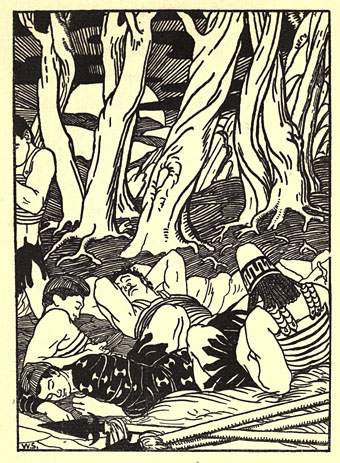
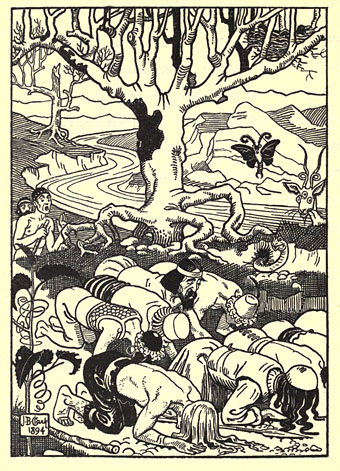
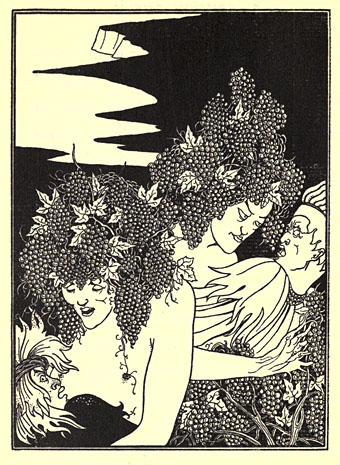
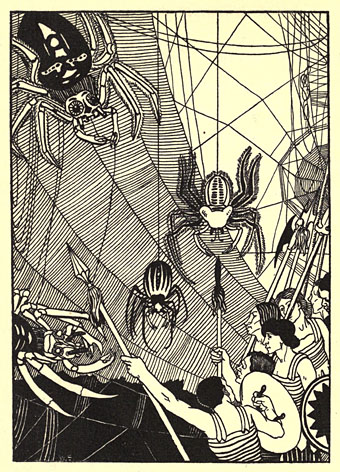
These illustrations are from the 1894 edition which included contributions by Aubrey Beardsley that were the artist’s earliest drawings after the enormous labour of the Morte d’Arthur. Beardsley was eager to illustrate the book which he found more stimulating than the Mallory but when commissions arrived for Wilde’s Salomé and The Yellow Book he found himself overworked. (The publishers also rejected two of the more grotesque drawings.) William Strang and JB Clark filled out the rest of the book. The Beardsley illustrations are familiar from the larger collections but I’d not seen the Strang and Clark drawings until now. Content-wise this was the strangest book that Aubrey worked on, and I can’t help but wonder how he might have illustrated the rest of it if he’d had the time.

lucian03.jpg

lucian04.jpg

Continue reading “Lucian’s True History”

Philip K. Dick: A Day in the Afterlife

pkd1.jpg

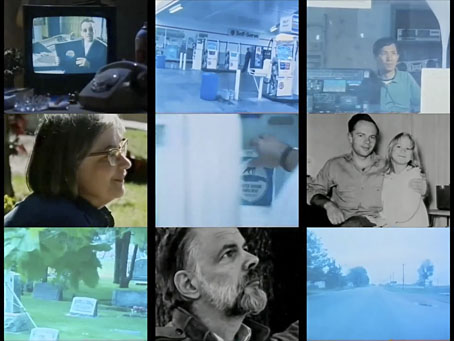
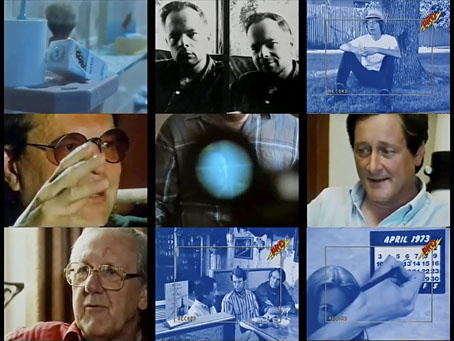
Blade Runner turns up in Nicola Roberts’ television documentary but not for long. Back in 1994 it was still possible to discuss a popular writer by concentrating on the books alone rather than padding the running time with film and TV derivations. The BBC’s Arena strand excelled at these 50-minute biographies of significant cultural figures.

pkd2.jpg

The last time I watched this documentary was on a big TV screen in a house in Los Angeles. Stepping out into the California sun a couple of hours later was like stepping into a Philip K. Dick novel, a slippage between the real and the fictional that Dick himself might have appreciated. Among the luminaries discussing the author’s slippery narratives are Brian Aldiss, Jim Blaylock, Elvis Costello, Anne Dick (PKD’s third wife), Tessa B. Dick (PKD’s fourth wife), Thomas M. Disch, Terry Gilliam, Kleo Mini (PKD’s second wife), Tim Powers, Kim Stanley Robinson and Fay Weldon. There’s also video footage of Dick being interviewed in the late 70s/early 80s. Watch it here.

Previously on { feuilleton }
Blade Runner vs. Metropolis

Blade Runner vs. Metropolis

br01.jpg

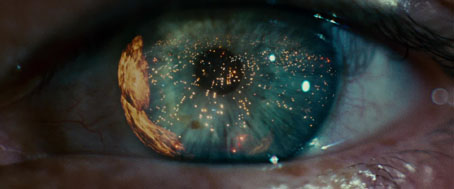
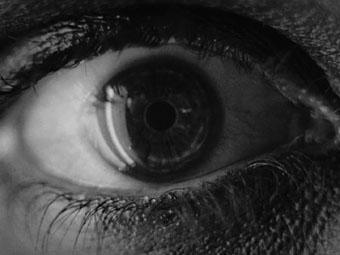
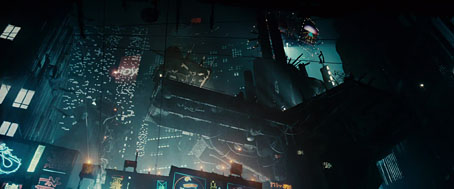
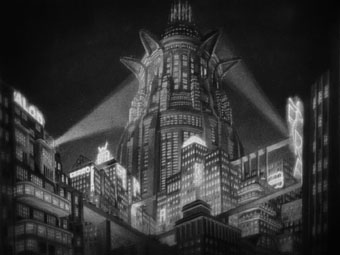
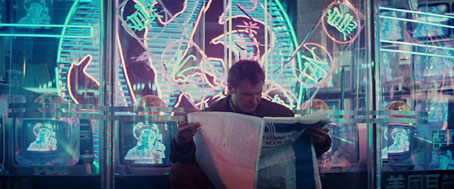
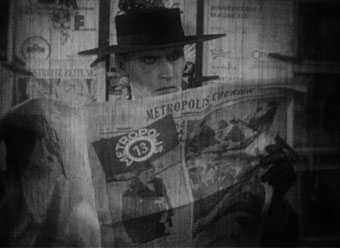
Given the chronology this should really be “Metropolis vs. Blade Runner” but most people are more familiar with Ridley Scott than Fritz Lang so I’ve let Blade Runner determine the order of the shots.

metropolis01.jpg

These shot comparisons aren’t exactly news but they’ve become more evident since rewatching the restored print of Metropolis. Among other things, the rediscovered footage yielded a scene with a character reading a newspaper that’s a match for Harrison Ford’s first appearance. The similarities extend, of course, to the thematic: futuristic megacities, flying vehicles, the creation of artificial human beings. Both films also end with a struggle to the death on the roof of a building. The cinematographer for Blade Runner was Jordan Cronenweth; Metropolis was the work of Karl Freund, Günther Rittau and Walter Ruttmann.

br02.jpg

metropolis02.jpg

br03.jpg

metropolis03.jpg

Continue reading “Blade Runner vs. Metropolis”

Weekend links 254

scdc.jpg

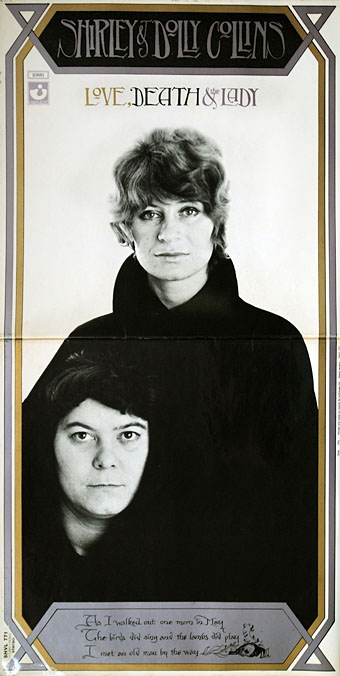
Gatefold sleeve for Love, Death and the Lady (1970) by Shirley & Dolly Collins. Photo by Allan Willmoth. No designer credited.

• “When you look at a lot of modern album covers, the art school obsession with the Helvetica kind of undermines it. So instead of looking at an artefact that comes from another place entirely, you are looking at an artefact that has been caught and tamed and made corporate.” Roger Dean talking to Liv Siddall about cover design in the 1970s.

• Erik Davis talks to Stephen Finley, author of Esotericism in African American Religious Experience, about hoodoo and metaphysical blackness. Related: Sun Ra’s Afrofuturist masterwork, Space Is The Place, has been reissued by Harte Recordings as a limited DVD, CD and hardcover book.

• “…she has managed to unearth a coal-seam of neglected songs and stories, incantations of the working people from across the English-speaking planet with their edge of discord left intact, the harmonies frayed by hard-won experience.” Alan Moore on the great Shirley Collins.

[MR] James’s influence, or his example, has rarely been more strongly with us than now. For there is presently apparent, across what might broadly be called landscape culture, a fascination with these Jamesian ideas of unsettlement and displacement. In music, literature, art, film and photography, as well as in new and hybrid forms and media, the English eerie is on the rise. A loose but substantial body of work is emerging that explores the English landscape in terms of its anomalies rather than its continuities, that is sceptical of comfortable notions of “dwelling” and “belonging”, and of the packagings of the past as “heritage”, and that locates itself within a spectred rather than a sceptred isle.

Such concerns are not new, but there is a distinctive intensity and variety to their contemporary address. This eerie counter-culture—this occulture—is drawing in experimental film-makers, folk singers, folklorists, academics, avant-garde antiquaries, landscape historians, utopians, collectives, mainstreamers and Arch-Droods alike, in a magnificent mash-up of hauntology, geological sentience and political activism. The hedgerows, fields, ruins, hills and saltings of England have been set seething.

Robert Macfarlane on the eerieness of the English countryside

• Lots of mixes to choose from this week: Songs from a Railway Station at Dusk by Abigail Ward; mix series The Ivy-Strangled Path by David Colohan is now up to Volume IV; a trove of occult psychedelia from The Ghost of the Weed Garden.

• “Blood Meridian was released on April 28, 1985 to little initial acclaim, but would later gain recognition as one of the most significant novels of the late 20th century.” Ted Gioia on the rise and fall of the Western.

• From the past week’s zones of research: the Gregory Pendennis Library Of Black Sorcery, and Vault Of Evil: Brit Horror Pulp Plus!

• At Dangerous Minds: Zappa meets claymation in the wonderful VHS rarity The Amazing Mr. Bickford.

Synthesizer manuals at the Internet Archive.

• Pages from The Graphic Canon at Pinterest.

Sabbath, a new song by Jenny Hval

French book covers

The Cruel Mother (1967) by Shirley Collins | The Unquiet Grave (1968) by Shirley Collins | Go From My Window (1970) by Shirley & Dolly Collins