Weekend links 763

parent.jpg

I Live in Shock (1955) by Mimi Parent.

• At Public Domain Review: “Ben Hecht’s Fantazius Mallare (1922) is at turns obtuse, grotesque, and moralizing—and sought to provoke the obscenity trial of the century. Only it didn’t, quietly vanishing instead. Colin Dickey rereads this failed satire, finding a transcendent rhythm pulsing beneath the novel’s indulgent prose.”

• “There are no surprises when a pallet of CDs arrives at my office, but when a pressing plant alerts me to a shipment of records headed my way I start to worry.” John Brien, head of Important Records, on the problems involved in the manufacture of vinyl albums.

• The sixth installment of Smoky Man’s exploration of The Bumper Book of Magic has been posted (in Italian) at (quasi).

They were building a vast alternative religion with a lack of dictates but no shortage of rituals and icons. They’d pass through the end of the world to get there first; the next album was based on a vision of the Four Horsemen of the Apocalypse slaughtering their animals and constructing a earth-gouging machine from their jawbones, demonstrating they weren’t quite intending to settle down yet. It would take them far from mainstream culture, and indeed mainstream gay culture given their repeated disdain for sanitised queerness, and into enigmatic territory. Having scared away most fans of synth pop and industrial with provocation, and the weak and tyrannical with ambiguity, they were unencumbered and “allowed to mature in the dark”, sustained by a cult following (you rarely encounter a tepid fan of Coil, most are acolytes).

Darran Anderson looking back at Coil’s debut album, Scatology

• At Smithsonian Magazine: See 15 winning images from the Close-Up Photographer of the Year Competition.

• At The Daily Heller: How did pink become a colour? Meanwhile, Steven Heller’s font of the month is Vibro.

• New music: Even The Horizon Knows Its Bounds by Lawrence English.

• SciURLs: A science news aggregator.

• Shackleton’s favourite albums.

• RIP Marianne Faithfull.

• The Pink Panther Theme (1963) by Henry Mancini | The Pink Room (1988) by Seigen Ono | Pink (2005) by Boris

Weekend links 762

max.jpg

Aquarius from the 1971 Astrologicalendar by Peter Max. Via.

• AOS of London: Psychogeographia Zosiana is a map guide to the London of Austin Osman Spare with accompanying illustrations by Ben Thompson. The book also contains an interview transcript in which Alan Moore talks about the importance of Spare’s work, and a contextual history by Gavin W. Semple.

• Emigre was “…a (mostly) quarterly magazine published from 1984 until 2005 in Berkeley, California, dedicated to visual communication, graphic design, typography, and design criticism.” The magazine ran for 69 issues which can be downloaded here.

• “The ultimate reason for initiating something ambitious is not to fulfill certain notions but to find out what surprises might emerge.” Stewart Brand, quoted in a long read by Alec Nevala-Lee about the Clock of the Long Now.

• At the Criterion Current: David Hudson on David Lynch’s life and work, an overview of the reaction to last week’s news. I was surprised to find my comments about Alan Splet included in the collection.

• At Wormwoodiana: Mark Valentine on the connections between Charles Williams’ The Place of the Lion and an obscure piece of fiction (or is it?) by Ruaraidh Erskine.

• At Public Domain Review: Illustrations by Jay van Everen from The Laughing Prince: A Book of Jugoslav Fairy Tales and Folk Tales (1921).

• At Colossal: Beguiling botanicals fluoresce in Tom Leighton’s otherworldly photographs.

• New music: Glory Fades by Yair Elazar Glotman & Mats Erlandsson.

• Old music: Cités Analogues by Lightwave.

• At Dennis Cooper’s: Georges Perec Day.

• The Clock Strikes Twelve (1959) by Bo Diddley | Clock Factory (1993) by The Sabres Of Paradise | Clock (1995) by Node

Weekend links 760

varo.jpg

Ermitaño Meditando (1955) by Remedios Varo.

• Public Domain Review announces the Public Domain Image Archive. I’ve added it to the list. Meanwhile, the PDR regular postings include Francis Picabia’s 391 magazine (1917–1924).

• Among the new titles at Standard Ebooks, the home of free, high-quality, public-domain texts: The Well at the World’s End by William Morris.

• At Smithsonian Magazine: “See 25 incredible images from the Wildlife Photographer of the Year Contest”.

The ideas are more complex than the presentation suggests, but not vastly. Neither is it exactly breaking new ground. Art is everywhere, they say, from fingernails to fine dining; art is not a message to be decoded, but takes on new meanings in the mind of each viewer; art allows us to experience emotions in a “safe” context, like a form of affective practice; art helps us to imagine new worlds, thereby expanding the boundaries of what’s possible in the real world. The point isn’t to be original, though, but to distil a lifetime’s worth of practical wisdom and reflection. The result is a kind of joyous manifesto: just the thing to inspire a teenager (or adult) into a new creative phase. Eno and Adriaanse conclude with a “Wish”: that the book helps us understand that “what we need is already inside us”, and that “art – playing and feeling – is a way of discovering it”.

Brian Eno and Bette Adriaanse talking to David Shariatmadari about their new book, What Art Does: An Unfinished Theory

• “Crunchie: The Taste Bomb!” DJ Food unearths four psychedelic posters promoting Fry’s Crunchie bars.

• New music: Music For Alien Temples by Various Artists, and Awakening The Ancestors by Nomad Tree.

• At Wormwoodiana: Mark Valentine lays out a history of the Tarot in England.

• Sun Ra & His Intergalactic Research Arkestra live on German TV, 1970.

• At Dennis Cooper’s: Chris Marker Day (restored/expanded).

• At the BFI: Anton Bitel on 10 great Mexican horror films.

• Matt Berry’s favourite albums.

• Tarot (Ace of Wands Theme) (1970) by Andrew Bown | Tarotplane (1971) by Captain Beefheart And His Magic Band | Tarot One (2012) by Tarot Twilight

Copyright-free images

images.jpg

In recent discussions about AI ethics I’ve been seeing the same question raised by commenters, something like the following: “Okay, this stuff is bad…but if we shouldn’t use it then what can I use instead for my book cover/album cover/Substack article…?” This post is intended to provide one answer to the question, a guide to some of the more substantial alternatives for those who complain they can’t afford to hire a human being to decorate their work. Many of these archives have been around for years but searching for single images doesn’t always bring you to a useful copyright-free solution right away, especially if you’re using Google’s deteriorated service.

• Wikimedia Commons. An obvious yet indispensible resource, especially for illustration research, and one that’s continually updated and improved. I only noticed recently that Wikimedia now has very large scans of Ernst Haeckel’s Kunstformen der Natur that are much better quality than the books at the Internet Archive.

• The Internet Archive. And speaking of which… The Internet Archive has its own images section but for years now I’ve been mining the texts section looking for illustrated books. This isn’t an ideal solution for most purposes, not when the best material is often hidden under blank library covers, but persistence can be rewarding, especially where old engravings are concerned. Many of the 19th-century illustrations sold by stock libraries may be found here for free.

• Gallica. The public face of the Bibliothèque Nationale of France, and a very useful resource despite being cursed with a slow and buggy interface. There’s also a Gallica app but you’re better off using the website.

• Library of Congress. Excellent for anything to do with US history. Also a great selection of photochromes, among other things.

• NYPL Digital Collections. “Explore 1,060,155 items digitized from The New York Public Library’s collections.”

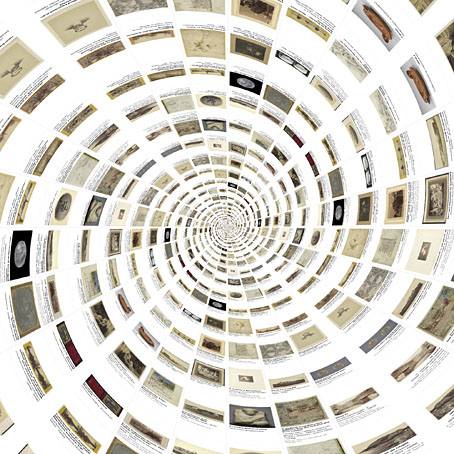
• Public Domain Image Archive. “Explore our hand-picked collection of 10,046 out-of-copyright works, free for all to browse, download, and reuse. This is a living database with new images added every week.”

• Smithsonian Open Access & Smithsonian Image Gallery

• Biodiversity Heritage Library. Animals and plants.

• Wellcome Collection. Public domain medical (and related) images.

• Metropolitan Museum of Art Open Access.

• The Getty Museum Open Content.

• The British Library Flickr Albums. A shame it’s Flickr, they really ought to have a dedicated site of their own for images.

• Europeana. “Discover Europe’s digital cultural heritage.”

• David Rumsey Map Collection. Maps, maps and more maps.

• NASA Image and Video Library. NASA materials have always been free to use so long as you also credit their source.

• ESO. ESO is the European Southern Observatory which is housed at a number of sites in the Chilean Atacama Desert. As with NASA, the high-resolution images created there are free to use so long as credit is included.

• National Library of Medicine. “Images from the history of medicine.”

• Pixabay. “Stunning royalty-free images & royalty-free stock.”

• Pexels. “The best free stock photos, royalty free images & videos shared by creators.”

• Unsplash. “All images can be downloaded and used for personal or commercial projects.”

• Exotic Animal Photo Reference Repository. “Artists creating derivative or transformative works without Generative AI have blanket permission to reference these photos.”

• Heidelberg Universitäts-Bibliotek: Art and satirical periodicals. An invaluable resource for European periodicals of the late 19th/early 20th centuries, with downloadable of scans of The Studio, The Yellow Book, Ver Sacrum, Pan, Jugend, and many other titles. Heidelberg is only one of many university libraries which now make parts of their collection available as free downloads. I’d love to point the way to the best of the others but I don’t have a useful list to hand. A recent discovery, however, is Polona, the site for the National Library of Poland which has a large quantity of prints and photographs as well as whole books. Happy searching!

Update: Added a few more links.

Weekend links 756

crane.jpg

A Diver (no date) by Walter Crane.

• At Worldbuilding Agency: The first part of a long interview with Bruce Sterling concerning “the pursuit of deliberate oxymorons as a creative strategy, worldbuilding in the context of history and futurity, Berlusconi on the moon and more”. With questions from Paul Graham Raven, and my cover art for Bruce’s Robot Artists and Black Swans.

• “With its focus on the 1970s career of Leonard Rossiter and its mordant metaphysics of the moist, Sophie-Sleigh Johnson’s Code: Damp might just be the most original book yet to emerge from Repeater publishing,” says Tim Burrows.

• “A definitive guide to the work of William S Burroughs’ on screen.” It’s a guide but it’s hardly definitive when there’s no mention of the four films Burroughs made with Anthony Balch.

• A catalogue of lots at the forthcoming After Dark: Gay Art and Culture online auction. Homoerotic art, photos, etc, also historic porn and a few garments worn by Divine.

• New music: Jay recommends the high-grade motorik en espanol dance-rock of Sgt Papers; Topology Of A Quantum City by Paul Schütze; Overtones by Everyday Dust.

• This week’s obligatory Bumper Book of Magic entry: Ben Wickey at Alan Moore World talks about his work on the book’s Great Enchanters comic strips.

• At Dennis Cooper’s it’s Malcolm Le Grice’s Day. Le Grice’s death was announced earlier this month.

• At The Wire: The magazine’s contributors’ charts showing their favourite music of the past year.

• A new website for the Sanborn Fire Maps and their decorated title pages.

• Mix of the week: DreamScenes – December 2024 at Ambientblog.

• At Public Domain Review: Albert Kahn’s autochromes.

• Burroughs Called The Law (1960s) by William S. Burroughs | Language Is A Virus From Outer Space (Live) (1984) by Laurie Anderson | Burroughs Don’t Play Guitar (1996) by Islamic Diggers