The Thing: Artbook

thing01.jpg

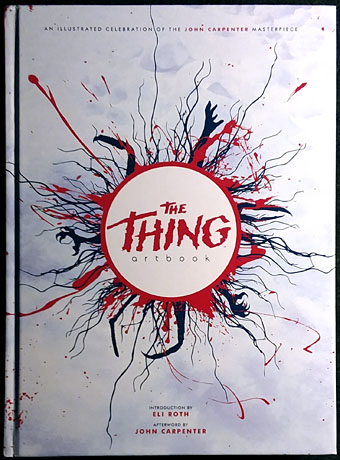
It was just over a year ago that I was asked to contribute to The Thing: Artbook, and the thing itself (so to speak) turned up in the post a few days ago. This is a large, heavyweight volume of 400 colour pages, stuffed to the slavering gills with fanged abominations (and more than a few Kurt Russells), a suitably excessive tribute to an excessive film.
thing02.jpg

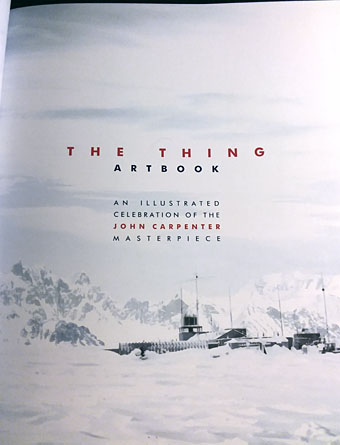
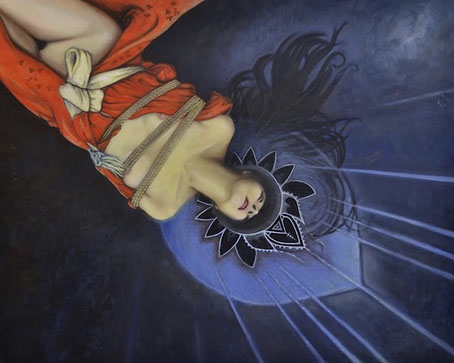
Publishers Printed In Blood have previewed a fair amount of the artwork over the past year but the variety of interpretations of John Carpenter’s (and, lest we forget, John W. Campbell’s) monsters is quite overwhelming. After wondering how (or if) they were going to order contributions from 375 different artists, the book turns out to be divided into sections based on lines of dialogue from the film, a clever idea when much of the imagery reprises the same scenes or characters. My piece, which you can see below the fold, is in the “Nobody trusts anybody now” section.
thing03.jpg

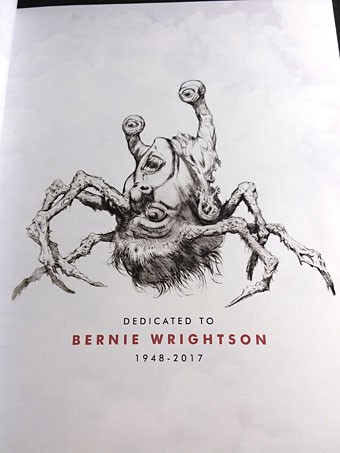
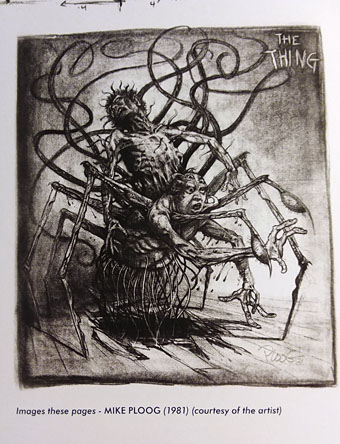
One surprise was the dedication to Berni Wrightson who died earlier this year. As for Mike Ploog’s original designs for the film’s creatures, I was hoping there might be more of these but the book does open with a couple of Ploog’s drawings.
thing04.jpg

thing05.jpg

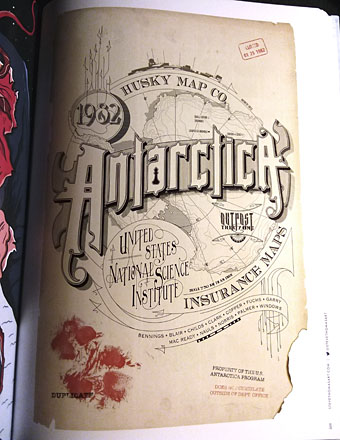
I’ve resisted the temptation to post favourites by other artists aside from this piece by Steve Thomas. This one stood out for me since it’s a riff on the same lettering designs from fire insurance maps that I pastiched myself a few years ago for Lavie Tidhar’s The Bookman Histories. Not all the artists produced monster art, there are quite a few contributions like this which present the film via infographics or pastiche.
Continue reading “The Thing: Artbook”

Weekend links 381

siner.jpg

States of Ecstasy 1 by K. Lenore Siner some of whose work may be seen in Witch-Ikon: An Exhibition of Contemporary Witchcraft Imagery at Mortlake & Company, Seattle.

Emily Temple compiles a list of “40 creepy book covers”. A shame that she (or Lithub) can’t also credit more of the artists and designers responsible. Searching titles at ISFDB would turn up many of the missing names.

• Blogging has suffered in recent years from the onslaught of social media but some persist in maintaining the form as a creative act. Poemas del río Wang is one such, its scope best seen in this alphabetical index.

• Mixes of the week: XLR8R Podcast 510 by Moodprint, Secret Thirteen Mix 232 by Alex XIII Maerbach, a mix for The Wire by Sadaf, and FACT mix 621 by NHK yx Koyxen.

Out next month: Mute: A Visual Document, being a visual history of Mute Records by Terry Burrows and Daniel Miller.

Nick Soulsby on “the myth and majesty of Vangelis’ timeless Blade Runner soundtrack”.

Compound in the new album by Yair Elazar Glotman. Stream it in full here.

Killed by Roses (1963): Eikoh Hosoe’s photographs of Yukio Mishima.

Oriental Traditional Music from LPs & Cassettes

• Hours and hours of Blue Jam. Oo ab welcome.

• 65 books of prints by Katsushika Hokusai.

Alpha (1976) by Vangelis | Rêve (1979) by Vangelis | Flamants Roses (1979) by Vangelis

Eugène Thivier’s Nightmare

thivier1.jpg

October is the month of nightmares so now seemed a suitable moment to air this sculpture, The Nightmare (1894) by Eugène Thivier, which I’ve had bookmarked for some time. Thivier (1845–1920) seems to be one of those artists who produces a single striking work with little else in the oeuvre to match it. The subject is a familiar one, of course, a variation on the sleeper menaced by an incubus or other creature of the night. A previous October post was devoted to Fuseli’s celebrated painted version; similar pictorial examples abound but sculptures of the theme are scarce. Thivier’s work is in the Musée des Augustins in Toulouse. Wikimedia Commons has a few more photos of the poor woman and her nocturnal tormentor.

thivier2.jpg

thivier3.jpg

Previously on { feuilleton }
Fuseli’s Nightmare

Weekend links 380

hasaka.jpg

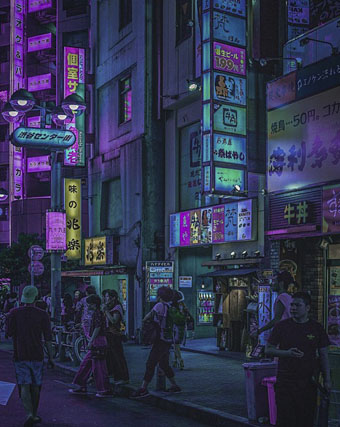
Night Out, Shibuya, a photograph by Yoshito Hasaka. One of a remarkable series.

• Rixdorf Editions is a new publishing venture from Strange Flowers’ James Conway which “…aims to cast light on an era which is misunderstood to the extent that it is thought of at all. I speak of the German Empire, specifically the Wilhelmine period from 1890 to 1918.” The first two titles, both translated by Conway himself, are Berlin’s Third Sex (1904), a study of the city’s queer demi monde by the pioneering Magnus Hirschfeld; and The Guesthouse at the Sign of the Teetering Globe (1917), a collection of strange stories by Franziska zu Reventlow.

• Patrick McGoohan’s enigmatic TV series, The Prisoner, premiered 50 years ago this week. Among the series’ many stylistic hallmarks was the use of Berthold Wolpe’s Albertus typeface, as detailed at We Made This.

• Three of Bill Nelson’s home-produced instrumental albums from the 1980s—Sounding The Ritual Echo, Das Kabinet, and La Belle Et La Bête—are reissued in November.

Photos by Heinrich Klaffs of German group Faust performing live (for the first time?) in 1971. Klaffs’ other photos are worth looking at as well.

• Mixes of the week: XLR8R Podcast 509 by Laylla Dane, and Secret Thirteen Mix 231 by New Hip Tiki Scene.

• At Spoon & Tamago: Altered landscapes meticulously rendered in pencil by Shinji Ogawa.

• “Why are UK and US book jackets often so different?”asks Danuta Kean.

Samantha Manzella on eight of the world’s remaining gay bookstores.

• At greydogtales: F. Marion Crawford & the Screaming Skull.

Tunnel View, a previously unheard demo by Broadcast.

Zealandia: Earth’s Hidden Continent

Seeland (1975) by Neu! | Neu Seeland (1992) by Terminal Cheesecake | Osprey’s Odyssey (2010) by Seeland

Weekend links 379

horst.jpg

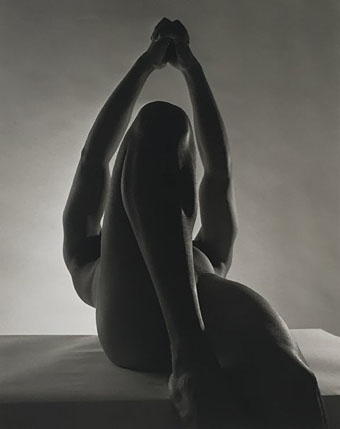
Male Nude, Leg Up (1952) by Horst. From a series of photo prints at Wessel + O’Connor Fine Art until 5th November.

• At Bandcamp: “Tuareg guitar mixed with traditional rural folk”: Eghass Malan by Les Filles de Illighadad; “Pan dimensional spacecraft hover over ancient pyramids on worlds undreamed of”: Lemurian Dawn by Memnon Sa.

Songs of Discomposure: Quietus writers pick their most disturbing pieces of music. Also at The Quietus: John Foxx on his collaborations with Harold Budd and Ruben Garcia.

Eros In Arabia, the first album by Richard Horowitz, has been deleted since 1981, and is consequently very difficult to find. Freedom To Spend are reissuing it next month.

JG Ballard—The Interview Concordance. A companion to the concordance of Ballard’s published works. Some of the interviews may be found here.

• At Dangerous Minds: The Male Figure: Bruce of Los Angeles and the perfection of midcentury beefcake.

• Mixes of the week: XLR8R Podcast 508 by Jennifer Cardini, and Secret Thirteen Mix 231 by Alex XIII.

Post Punk: a set of postage stamp designs by Dorothy for punk and post-punk bands.

• At Spoon & Tamago: Kanban: The exquisite art of historic Japanese store signs.

• At Greydogtales: Photography of the Folk Horror Revival.

The Spomenik Database

• The Secret Life Of Arabia (1977) by David Bowie | Arabian Knights (1981) by Siouxsie And The Banshees | Arabiant (2002) by Radar