Weekend links 122

jackson.jpg

Transmitter Crowbar Discharge Unit, Bates Linear Accelerator. Photo by Daniel Jackson from his Dark Machines series.

The language we use for writing about art is oddly pornographic: We know it when we see it. No one would deny its distinctiveness. Yet efforts to define it inevitably produce squeamishness, as if describing the object too precisely might reveal one’s particular, perhaps peculiar, investments in it. Let us now break that unspoken rule and describe the linguistic features of IAE in some detail.

IAE has a distinctive lexicon: aporia, radically, space, proposition, biopolitical, tension, transversal, autonomy. An artist’s work inevitably interrogates, questions, encodes, transforms, subverts, imbricates, displaces—though often it doesn’t do these things so much as it serves to, functions to, or seems to (or might seem to) do these things. IAE rebukes English for its lack of nouns: Visual becomes visuality, global becomes globality, potential becomes potentiality, experience becomes…experiencability. […] Whatever the content, the aim is to sound to the art world like someone worth listening to, by adopting an approximation of its elite language.

International Art English by Alix Rule & David Levine

For years I’ve been calling it Artspeak: the frequently disingenuous, misleading or merely confused jargon that passes for descriptive writing in the art world. Alix Rule and David Levine apply the more neutral label of International Art English. In a lengthy essay at Triplecanopy they reveal the origins of IAE’s terminology and show why the stuff has spread like semantic kudzu.

• “What a bizarre focal point Anish Kapoor’s spiral callipers are: a Laocoönian observation platform strangled in red steel at a cost of many millions, while electricity pylons, with their austere elegance, once hymned by the poets of the 1930s, have been removed, at enormous cost, from the same site to be buried in the radioactive tilth of landfill dumps and industrial detritus.” Iain Sinclair reports on the Olympics.

Alfred Kubin in…Nottingham! The Other Side, an exhibition of “haunting drawings of death, trauma and fantastical creatures inhabiting imaginary worlds”, running to the end of September.

Francis Ford Coppola and Stewart Copeland discuss the making of Rumble Fish (1982). Over at The Rumpus there’s Coppola talking about his career and his latest film, TWIXT.

Eraserhead: The Making of a Cult Classic. In the 1980s Kenneth George Godwin interviewed everyone responsible for making David Lynch’s film. Fascinating reading.

Skin Job, the debut poetry collection by Evan J. Peterson, is twenty-one poems about monsters, horror, and science fiction. Evan made a trailer.

• Wood, brass and “the latest advances in nanotechnology”: Teka, an OLED lamp by Aldo Cibic and Tommaso Corà.

Tonite Let’s All Make Love in London (1967): Peter Whitehead’s film of the capital at its swinging height.

“Beam Us Up, Mr. Scott!”: Why Misquotations Catch On by Maria Konnikova.

Hari Kunzru‘s ten favourite books about underground London.

The Periodic Table of Heavy Metals.

Alan Garner: A life in books.

Fuck yeah, manuscripts!

• (HR) Giger Counter.

• This week was all about Vangelis in the 1970s: Creation du Monde (1973) | Spiral (1977) | Himalaya / Summit (1979).

H.P. Lovecraft: The Complete Fiction

lovecraft1.jpg

Illustration by Sven Geier, design by Jo Obarowski and Rebecca Lysen.

HP Lovecraft would have been as surprised as anyone if he could have witnessed the tremendous posthumous triumph he and his work have achieved.

Thus leading Lovecraft biographer and scholar ST Joshi in the introduction to this suitably monstrous book. H.P. Lovecraft: The Complete Fiction was published in a new edition last year after first appearing in 2008 as part of Barnes & Noble’s Leatherbound Classics Series. My drawing of Dagon from 1999 adorns the silvered endpapers, and the reason for this belated mention is because I was only sent copies this week after moaning about not having seen a copy in a Tor.com post about the series. In truth the oversight was partly my own fault: one hazard of this line of work is that artwork is requested months (or even years) in advance of publication, so if the work in question is a reprint it’s easy to forget all about it as you get involved with other things.

lovecraft2.jpg

So anyway, this is a handsome volume of over a thousand pages, not quite leather, it’s more of a leatherette with the design blocked into it. Sven Geier’s cosmic illustration has been given an iridescent finish, and the copies I was sent have metallic silver on the edges as well as a purple ribbon which makes a better match with the colour scheme. The contents comprise all of Lovecraft’s solo fiction (no collaborations, in other words) from the juvenilia through to the non-fiction of his Supernatural Horror in Literature essay. In addition to the introduction there’s a short note from ST Joshi for each story. Needless to say, I’m very pleased to be associated with Lovecraft’s work in this way.

Anyone considered buying a copy should note that the book is currently cheaper at B&N than at Amazon. Also, complaints about typos would appear to apply to the earlier edition although I’ve not had a chance to read any of the stories.

My Dagon picture below appears here larger than it has done before. The drawing was done with a Biro pen, something I’ve always liked using, then tweaked slightly in Photoshop to blur the lines a little and bring out the highlights. I’m not sure now the tweaking was necessary so I may dig out the original at some point to see how it compares.

dagon.jpg

Dagon (1999) by John Coulthart.

Elsewhere on { feuilleton }
The Lovecraft archive

The art of Ismael Álvarez

alvarez1.jpg

Sangre Virgen.

Yeah, trust me to pick the gore-drenched teen out of a gallery of otherwise wholesome drawings… Ismael Álvarez is a Spanish artist with a nice clean line, a sense of humour and an imagination that can encompass comic imagery like the pictures below or run to full-on erotica. Of the latter there’s a separate gallery replete with the Enormous Cocks that now seem de rigueur for a certain kind of gay art in the same way that Enormous Breasts are a feature of much straight erotica. I’m not complaining—heaven forbid!—merely acknowledging a trend. In addition to his art, Señor Alvarez also maintains a blog and creates his own YouTube broadcasts, all of which are of course in Spanish.

alvarez2.jpg

My boy is a monster (cock).

alvarez3.jpg

Oh My Cock.

Elsewhere on { feuilleton }
The gay artists archive

Weekend links 119

peterderome.jpg

The BFI’s recent DVD release of Peter de Rome’s gay porn films has been mentioned here a couple of times already but I only bought a copy this week. It’s a remarkable release for a number of reasons, not least for showing how much attitudes towards pornography in Britain have changed in recent years. De Rome’s films are explicit enough to ensure that in the 1970s and 1980s anyone caught selling them in the UK might have been imprisoned. That you can now buy them uncut from a high street shop on a disc packaged with the usual care by the British Film Institute means another small part of our iniquitous past has gone for good. Among the extras there’s a documentary with the 88-year-old director discussing his work. This week he talked to BUTT magazine who also have one of his shorter films from the DVD, Hot Pants, on their site.

• “Reading this book, it is hard not to feel that the largest mental health problem – the really crazy thing – is society’s attitude to drugs in general and LSD in particular…” Phil Baker reviews Albion Dreaming: A Popular History of LSD in Britain by Andy Roberts.

• “Loved by aristocrats and immortalized in literature, Denham Fouts remains virtually unknown in his own hometown.” Richard Wall on The World’s Most Expensive Male Prostitute.

The very etiology of rabies is mythic: once the bite heals and the virus has traveled to the brain, “the wound will usually return, as if by magic, with some odd sensation occurring at the site.” Then there’s the fact that no definitive diagnosis can be made without taking a biopsy of the sick animal’s brain, leaving only one gory solution: decapitation.

Rabies is horror’s muse. In almost all iterations of the genre, those we most trust suddenly turn strange: a boyfriend morphs into a wolf at midnight, a fiancé turns out to be harboring a mad first wife in the attic, a friend is bit by a zombie and goes berserk.

Alice Gregory reviews Rabid: A Cultural History of the World’s Most Diabolical Virus by Bill Wasik and Monica Murphy.

• The Horror of Philosophy: Erik Davis talks to Eugene Thacker about Lovecraft, medieval mysticism, and thinking the world-without-us.

Eagle Scouts Returning Our Badges: A Tumblr for those protesting the current anti-gay stance of the Boy Scouts of America.

• His Father’s Best Translator: Lila Azam Zanganeh on the late Dmitri Nabokov.

Les Liaisons dangereuses: illustrations by Alastair (Hans Henning Voigt).

• Andrea Scrima looks at Robert Walser’s Der Spaziergang (The Walk).

10 Great Places to Meet Lesbians If You Have a Time Machine.

• Jesse Bering in Scientific American asks “Is Your Child Gay?

As Above, So Below (1981) by Tom Tom Club | Genius Of Love (1981) by Tom Tom Club | Mea Culpa (1981) by Brian Eno & David Byrne.

Hodgson versus Houdini

whhhh.jpg

William Hope Hodgson and Harry Houdini.

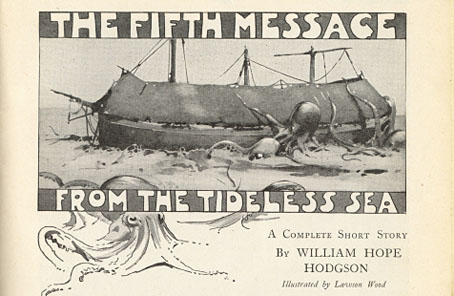
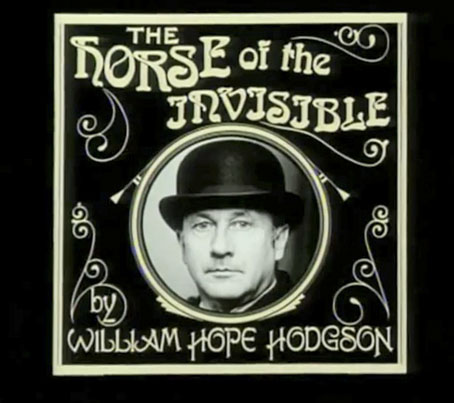
Work this week has had me scouring the Internet Archive’s scanned books more than usual for source material. You’ll see the fruits of this in due course, but the search turned up a small book from 1922, The Adventurous Life of a Versatile Artist: Houdini, an anonymous account of the escapologist’s career padded out with many newspaper reports of his exploits in various cities. One of these is the notorious meeting between Houdini and writer William Hope Hodgson on the stage of the Palace Theatre, Blackburn, Lancashire, in 1902. Hodgson was still running his School of Physical Culture in the town at this time, and was otherwise unknown. He only began writing the weird fantasy for which he’s celebrated when the school failed and he needed to earn a living some other way.

The following account has been reprinted often enough in collections of Hodgson ephemera but this is the first time I’ve seen it in a Houdini book. Houdini was a hero of mine when I was 12 or 13, not so much for his escapology but for his magic tricks. I had an obsession with stage magic for a while, and had read and re-read JC Cannell’s The Secrets of Houdini (1932), a book which exposed for the first time the workings of Houdini’s tricks and many of his escape acts. It was a surprise after discovering Hodgson’s work to read about the Houdini encounter. Strangest of all is that Hodgson’s books were later championed by HP Lovecraft who ghost-wrote Under the Pyramids (aka Entombed with the Pharaohs or Imprisoned with the Pharaohs) for Houdini, a story published in Weird Tales in 1924. I’ve wondered for years whether Houdini or Lovecraft were aware of this connection. Probably not. Hodgson in 1902 was unknown, and Houdini’s career and fame were such he would have been far too busy to dwell on the matter or care what happened to the diminutive bodybuilder who treated him so badly that evening.

*

AN EPISODE IN HOUDINI’S LIFE.

Star, Blackburn, England, Saturday, Oct. 25, 1902.

MANACLED BY A STRONG MAN.
TRUSSED TILL MIDNIGHT.
Unparalleled Scenes at the Palace Theatre.

Never in the history of Blackburn or music hall life has there been witnessed so remarkable a scene as occurred last night. Houdini, the Handcuff King, and Mr. Hodgson, principal of the School of Physical Culture, provided a big sensation for the patrons of the Palace Theatre, Blackburn.

Houdini, who has been appearing at the Palace during the week, claims to be able to release himself from any of the regulation shackles or irons used by the police of Europe or America, and offered nightly to forfeit £25 if he failed to prove his claim. Mr. Hodgson, of the Physical Culture School, Blackburn,took up the challenge, stipulating that he was to use his own irons and fix them himself. Houdini consented, and deposit the £25 with the editor of the Daily Star.

The trial of skill and strength was fixed to take place last night, and the crowd which came together to witness it crammed the theatre literally from floor to ceiling — even standing room being ultimately unobtainable.

Shortly after ten o’clock the parties to the challenge faced each other, and excitement at once became intense.

Mr. Hodgson produced 6 pairs of heavy irons, furnished with clanking chains and swinging padlocks. These were carefully examined by Houdini, who raised some disappointment and much sympathetic cheering by stating that his claim was that he could escape from “regulation” irons. The “cuffs ” brought by Mr. Hodgson, he said, had been tampered with — the iron being wrapped round with string, the locks altered, and various other expedients adopted to render escape more difficult.

Mr. Hodgson’s answer, given dramatically from the stage,was that he stipulated that he should bring his own irons.

Houdini again protested that Mr. Hodgson was going beyond the challenge, but added that he was quite willing to go on, if only the audience would give him a little time in which to deal with the extra difficulties.

This announcement was greeted with great cheering, and the work of pinioning proceeded.

First, Mr. Hodgson, with the aid of a companion, fixed a pair of irons over Houdini’s upper arm, passing the chain behind his back and pulling it tight, and fixing the elbows close to the sides.

To make assurance doubly sure, he fixed another pair in the same way, and padlocked both behind.

Then, starting with the wrists, he fixed a pair of chained “cuffs” so that the arms, already pulled stiffly behind, were now pulled forward. The pulling and tugging at this stage was so severe — the strong man exercising his strength to some purpose — that Houdini protested that it was no part of the challenge that his arms should be broken.

He also reminded Mr. Hodgson that he was to fix the irons himself.

This led to Mr. Hodgson’s assistant retiring.

Proceeding, Mr. Hodgson fixed a second pair of “cuffs” on the wrists and padlocked both securely, Houdini’s arms being then trussed to his side so securely that escape seemed absolutely impossible.

Still Mr. Hodgson was not finished with him.

Getting Houdini to kneel down, he passed the chain of a pair of heavy leg irons through the chains which bound the arms together at the back. These were fixed to the ankles,and after a second pair had been added, both were locked,and Houdini now seemed absolutely helpless.

A canopy being placed over Houdini in the middle of the stage, the waiting began, and excitement grew visibly every minute.

Meanwhile Mr. Hodgson and others kept strict watch on the movements of Houdini’s wife and brother (Hardeen), who were both on the stage.

At the end of about 15 minutes the canopy was lifted and Houdini was revealed lying on his side, still securely bound.It was at first thought he had fainted, but he soon made it known that all he wished was to be lifted up. This Mr. Hodgson refused to do, at which the now madly excited audience hissed and ” booed ” him for his unfair treatment, and Hardeen lifted his brother to his knees. The curtain of the cabinet was again closed.

Another 20 minutes passed, and again the curtain was lifted. This time Houdini said his arms were bloodless and numb owing to the pressure of the irons, and asked to have them unlocked for a minute so that the circulation could be restored.

Mr. Hodgson’s reply, given amidst howls, was: “This is a contest, not a love match. If you are beaten, give in.”

Great shouting and excited calling followed, which was renewed when Dr. Bradley, after examining Houdini, said his arms were blue, and it was cruelty to keep him chained up as he was any longer.

Still Mr. Hodgson was obdurate, and the struggle proceeded, Houdini again appealing for time.

Fifteen minutes more: Houdini appeared and announced that one hand was free.

This was the signal for terrific cheering, which was continued after the canopy was dropped.

At intervals Houdini now appeared, and announced further progress in his escape; and when, shortly after midnight, he came out with torn clothing and bleeding arms, and threw the last of the shackles on the stage, the vast audience stood up and cheered and cheered, and yelled themselves hoarse to give vent to their overwrought feelings. Men and women hugged each other in mad excitement. Hats, coats, and umbrellas were thrown up into the air, and pandemonium reigned supreme for 15 minutes.

Houdini, when quietness had been restored, said he had been doing the handcuff trick now for 14 years, but never had he been subjected to such brutality as that to which his bleeding arms and wrists gave witness.

When Houdini again obtained a hearing, it was to state that, not only had the irons been altered, but the locks had been plugged.

It was well after midnight when the huge audience left the theatre, and broke up into excited, gesticulating groups.


Previously on { feuilleton }
Weekend links: Hodgson edition
Druillet meets Hodgson