Ignacio Goitia interviewed

goitia.jpg

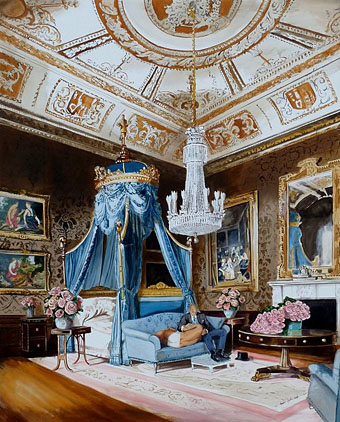
Acrílico sobre tela (My Other Self, 2009).

Back in 2010 I wrote the following about Ignacio Goitia:

Ignacio Goitia is a Spanish artist whose depictions of opulent aristocracy manage to be subversively homoerotic thanks to the addition of figures we can interpret as boyfriends, sex slaves or wish-fulfilling phantasms; Ludwig II would no doubt approve of the sentiment even if he disagreed with some of the decor.

Earlier this year John Wisniewski sent me a short interview he’d done with Mr Goitia which I’m ashamed to say it’s taken me this long to post. My apologies to John and Ignacio. (I’d have been tempted to ask what’s with all the giraffes?)

*

John Wisniewski: When did you begin drawing and painting?

Ignacio Goitia: I have always, since I can recall, loved drawing and painting. When I was a child, I would spend endless hours with my colour paints, and as soon as I was able, I enrolled myself to different art schools and academies.

Later on I got accepted in the Superior Beaux Art faculty at the University of the Basque Country in Bilbao. Since I finished those five years of University, this is all I have been doing, paint.

JW: When was your first art exhibition? What was the reaction to your work?

IG: Since my first exhibition, the public reaction to my work, has been in general, very positive, although, there is always the sceptics, that relate modernity with abstraction and minimalism, conceptualism… Despite this, with the passing of the years, my work has gained many followers in those circles. In all my exhibits the amount of people that has made an effort to visit them, its been quite large.

JW: What inspires you to paint or draw? How do you choose a subject?

IG: My first source of inspiration are my travels. I find it photographing the buildings, monuments, streets and people that catch my attention. I am passionate about architecture, and love discovering in it, the evolution of human thought.

Once in my studio, I select the sceneries that better adapt to the concept that I wish to express. After that, I start introducing the people and subjects, distributing them in the different spaces, until I get the adequate composition that better express my thought. This work of preparation and distribution, is a process that takes several days.

JW: Do you hope to exhibit your work in the USA at sometime? What do you think the reception will be for your work in the USA?

IG: I have exhibited during Art Basel Week in the HACS gallery in Miami in the Year 2007 and 2008. The reception was very good.

I am also participating with a good chance in the Creatives Rising project with See Me and will be featured in the digital projections over facades in NYC next October. We are in the process for an exhibit in Miami and NYC in the near future. Most of the people that I have been dealing in the USA are having a very positive and enthusiastic response.

JW: How is your painting uniquely Spanish and how is it universal?

IG: I think being born in Spain and specifically in the Basque Country has influenced in some of my work, but is something that is not in the back of my mind, and it is not a source of thought when I paint. The scenarios that I create are inspired in many places around the world, and the subjects could belong to different nationalities.

It’s also true, that I have also use as backdrop, cities like Bilbao or Madrid, and there are blinks of folklore and culture belonging to the Basque country or Spain, and I introduce them in some of my work, but not often. I consider my paintings something less related to a particular culture, or universal, there are something more personal and an individual thought on how I see the world, as a result of my own interests and ideas. •

Elsewhere on { feuilleton }
The gay artists archive

Weekend links 184

lefler.jpg

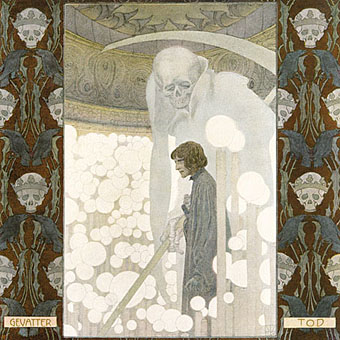
Gevatter Tod (Godfather Death, 1905) by Heinrich Lefler. Via Beautiful Century.

An inevitable hangover from Halloween this week. At 50 Watts: A Modern Dance of Death (c. 1894) by Joseph Sattler, Harry Clarke Revisited, and more Ex Libris Mr Reaper | At Design Observer: Keith Eggener on When Buildings Kill: Sentient Houses in Fiction and Film | At Dangerous Minds: An interview with horror soundtrack composer Fabio Frizzi | Clive Hicks-Jenkins on illustrating the ghost stories of MR James.

Punk 45: The Singles Cover Art of Punk 1976–80, a book by Jon Savage & Stuart Baker with an accompanying compilation album on Soul Jazz Records. Savage & Baker selected a handful of favourite covers here.

De humani corporis fabrica by Vesalius is back in print as a beautiful two-volume hardback edition. See sample pages here.

…the business of the writer is to find something out for yourself and to stick by it. To forge a new mythology out of materials pertinent to the moment. Otherwise you’re at the mercy of their mythology, which is a destruction of language, above everything else. This non-language, this bureaucratic-speak of the global corporate entities, is a horror in the world. So that strange language we started with – that piece of Kerouac – I think is more valuable than ever.

Iain Sinclair (yes, him again) talking to James Campbell about his new book, American Smoke.

Bob Mizer & Tom of Finland, an exhibition at the Museum of Contemporary Art, Los Angeles.

• From 2010: The Bridget Riley Look, The Bridget Riley Sound, Bridget Riley’s Rolling Papers.

The Strange and Mysterious History of the Ouija Board. Related: Ouija Boards at Pinterest.

Highway 62 posted some close-ups of my adaptation of The Call of Cthulhu.

• “This is not a coincidence”: Max Dax talks to Andrey A. Tarkovsky.

Anthony Lane‘s Foreword to The Big New Yorker Book of Cats.

• At AnOther: Nicolas Roeg on Mirrors and Memory.

Toys and Techniques: a blog.

Death And The Lady (1970) by Shirley & Dolly Collins | Clang Of The Yankee Reaper (1975) Van Dyke Parks | All And Everyone (2011) by PJ Harvey

City of Night by John Rechy

rechy1.jpg

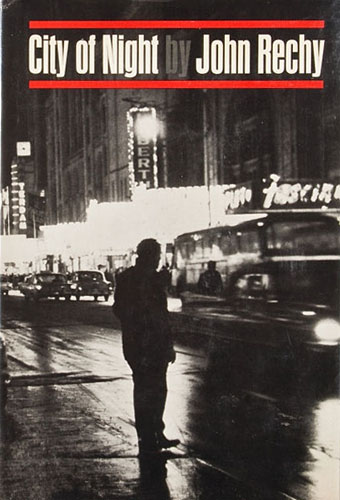
City of Night (1963), Grove Press.

Surprising to read this week that John Rechy’s pioneering novel of gay nightlife in America is now fifty years old. The attitude and style of Rechy’s work looks so much to the 1970s that it seems out-of-place in a time when writing about male hustlers was almost as risky as being one. Charles Casillo revisits the novel for the Los Angeles Review of Books, and also talks to the author. Casillo turns up again at Lambda Literary to ask a collection of other writers for their recollections about Rechy and his work.

The usual curiosity impelled me to go looking for City of Night cover designs. The results are disappointing, there having been little advance from the Grove Press first edition (above) which I’m guessing was a Roy Kuhlman design. (And while we’re looking at it, Taxi Driver aficionados might note the “Fascination” sign.)

rechy2.jpg

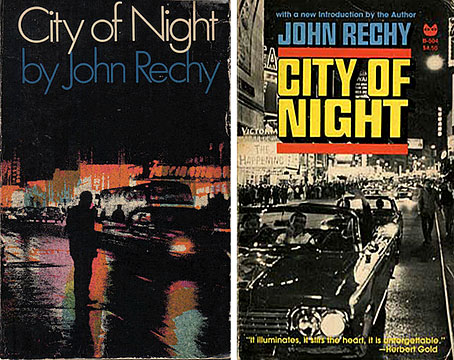
The Grove Press paperback (left) reused the photo, and set the template for many subsequent editions, all of which could easily be mistaken for crime novels. The early editions play safe but that solitary figure does at least communicate the book’s emphasis on loneliness. Later editions offer lazy variations on the words “city” and “night” with no indication that the book is also about sex.

rechy3.jpg

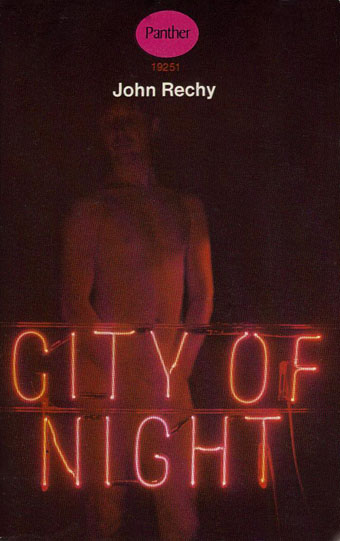
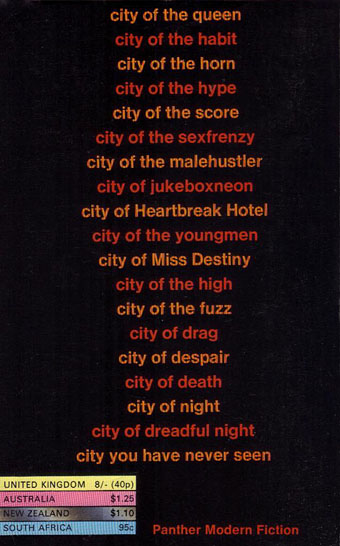
The Panther (UK) paperback from 1969 is the edition I’m most familiar with, and it’s a surprise again to find that this cover design is still the best I’ve seen. Panther had a run of great cover designs from the late 60s into the 1970s, many of them uncredited. They also published a fair amount of gay fiction in editions that were smart and unsensational. This cover exemplifies the approach: sexy, direct, blurb-free, and with that enticing list of Joyce-like neologisms (“youngmen” is a Rechy trademark) on the back. Goodreads has a handful of other designs.

rechy4.jpg

Elsewhere on { feuilleton }
The book covers archive

Previously on { feuilleton }
William E. Jones on Fred Halsted
California boys by Mel Roberts

Wildeana 11

wilde1.jpg

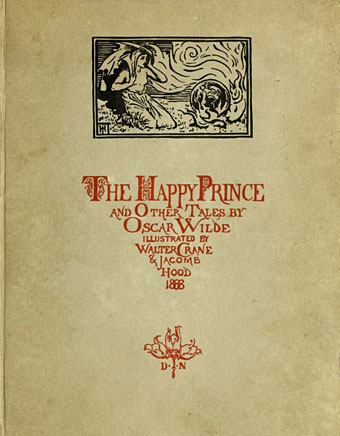
The Happy Prince And Other Tales (1888).

Continuing an occasional series. Recent Wildean links.

Jeanette Winterson makes a persuasive case for the importance of Wilde’s stories for children: “Wilde had a streak of prophecy in him. The children’s stories can be read as notes from the future about Wilde’s fate. It is as though the little child in him was trying to warn him of the dangers his adult self would soon face. ‘Every single work of art is the fulfilment of a prophecy’, he writes in De Profundis.”

• At the Morgan Library & Museum: a collection of Wilde’s manuscripts and letters, including the MS of The Selfish Giant, one of the stories discussed in Winterson’s piece.

• At The Smart Set: “Oscar Wilde abandoned journalism and hated fashion – so why is his essay The Philosophy of Dress so important?” asks Nathaniel Popkin.

wilde2.jpg

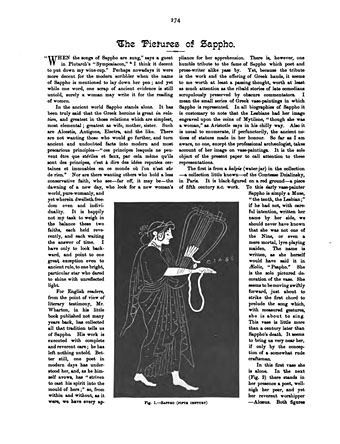
The Pictures of Sappho from The Woman’s World.

• Wilde’s The Philosophy of Dress led to his being asked to edit The Lady’s World in 1887, a magazine he promptly renamed The Woman’s World. He was editor for two years. A collected run of the magazine may be browsed here.

Elsewhere on { feuilleton }
The Oscar Wilde archive

Weekend links 180

andrew.jpg

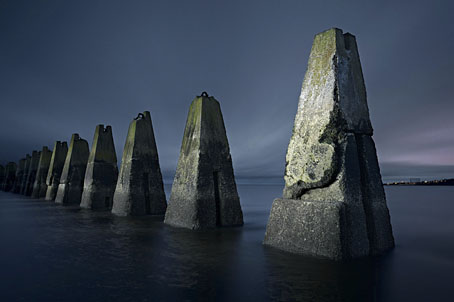
One of Jonathan Andrew‘s photos of coastal bunkers and concrete defences from the Second World War. In 2006 JG Ballard looked at the way these structures embody the functional nature of Modernist architecture.

• “Utamaro, whose prints of famous courtesans were regarded as the very models of sober beauty by 19th-century Western collectors, in fact produced more Shunga books and albums than non-erotic works.” Adrian Hamilton on the Shunga: Sex and Pleasure in Japanese Art exhibition.

• “…in Samoa, as in many traditional cultures around the world, androphilic males occupy a special transgendered category.” Alice Dreger on gay male couples and evolution.

• Robert Fuest’s film of Michael Moorcock’s first Jerry Cornelius novel, The Final Programme (1973), is out on (Region 2) DVD this month.

Masked by reticence and cloaked in tweeds, [Herbert] Read was the unexpectedly ardent and frighteningly prolific champion of nearly everything that was radical in the first half of the twentieth century: Imagism, Surrealism, abstraction, the Bauhaus, Marxism, anarchism, Freud and Jung, progressive education, Gandhian nonviolent resistance. Though now somewhat dimly remembered, he was, for decades, the Victoria Station of the arts, England’s primary explainer of the modern.

Eliot Weinberger introduces Herbert Read’s strange fantasy novel, The Green Child (1935).

• KW Jeter’s steampunk novel Fiendish Schemes is published (with my cover art) by Tor on the 15th. There’s an extract here.

• Mix of the week: An early Halloween mix (and interview) from Joseph Stannard of The Outer Church.

• At Dangerous Minds: Codex Seraphinianus: A New Edition of the Strangest Book in the World.

A trailer for the forthcoming Blu-ray release of Murnau’s Nosferatu: A Symphony of Horror.

• Kenneth Halliwell: lover, killer… artist? Philip Hoare on the collages of Joe Orton’s partner.

• Clive Hicks-Jenkins looks back at Cocteau’s La Belle et la Bête here, here and here.

Anastasia Ivanova‘s photo portraits of lesbian couples in Russia.

Christopher Fox on electronic music’s sound of futures past.

• At Strange Flowers: Melchior Lechter’s book designs.

Vaughan Oliver‘s favourite 4AD album covers.

Swinging Sixties Japanese film posters.

John Foxx’s favourite albums

Beauty And The Beast (1977) by David Bowie | Slow Motion (1978) by Ultravox | I Am The Green Child (2000) by Coil