Weekend links 671

cassel.jpg

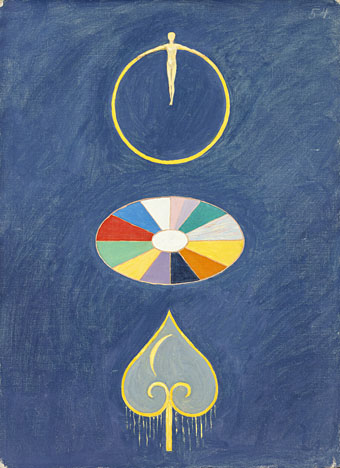
No. 54 (1915) by Anna Cassel.

• “I called it the treasure hunt: two years of tapes appearing from closets, letters dropping out of attics, persuading a film company to find the rushes of a TV show buried in a warehouse, paying a film director to digitise unused footage and a radio company to surface an old broadcast.” Nick Soulsby on pursuing the ghosts of Coil for his book about the group, Everything Keeps Dissolving.

• “It is likely that af Klint scholarship is on the brink of some radical changes regarding attribution and authorship.” Susan L. Aberth on the researches revealing collaborations between Hilma af Klint and other mystically-inclined women artists. It makes a change reading something about this group that isn’t completely dismissive about the beliefs that informed their work.

• New music: No Highs by Tim Hecker (“a beacon of unease against the deluge of false positive corporate ambient currently in vogue…”), and Seascape–polyptych by Jan Jelinek.

I think an unfortunate effect of Foucault’s work, as it was absorbed by academia, was that it made historians reluctant to call people or sexual acts in the past ‘homosexual’ or ‘gay’ since these terms ‘did not exist at the time’ or were recent creations. This gave some homophobes a spurious defence when suggestions were made as to the inclinations of their heroes, but it also—or so I thought—tended to downplay the reality of non-opportunistic homosexual desire as a constant in history, reducing it to recorded acts performed and then deeming these inadequate evidence anyhow, because they were assumed to have taken place in a fuzzy sexual universe.

If, as it seems to me, and as it seemed to Symonds and Carpenter, terms like ‘homosexual’ were invented in the effort to describe a type of person that has always existed, then they are in essence just a shorthand. Each term has its history, associations and effects, but—and perhaps this makes me an unsophisticated thinker—I think it’s the sexual feelings that fundamentally matter, and that these have existed across time. For that reason, I don’t find the Victorian sexual psyche, as far as it can be defined, alien or outlandish, or hard to speculate on. It is the product of sexual feeling filtered through observable social beliefs and conditions.

Tom Crewe talking to Amia Srinivasan about The New Life, Crewe’s debut novel which explores Victorian sex and sexuality

• “I’ve been tumbling down the rabbit-hole of toy theatre all my life, and I’m tumbling still.” Clive Hicks-Jenkins on the dark art of the toy theatre.

• At Public Domain Review: Jean Baptiste Vérany’s Chromolithographs of Cephalopods (1851).

• “Glass is perhaps the most frequently overlooked material in history,” says Katy Kelleher.

• At Cartoon Brew: Chris Robinson remembers the surreal animations of Run Wrake.

• At Unquiet Things: Of Dreams and Dark Pasts: Surrealist Painter Sofía Bassi.

• RIP Harry Belafonte.

House Of Glass (1969) by The Glass Family | Heart Of Glass (1978) by Blondie | Slow Glass (1997) by Paul Schütze

Weekend links 665

schwimbeck.jpg

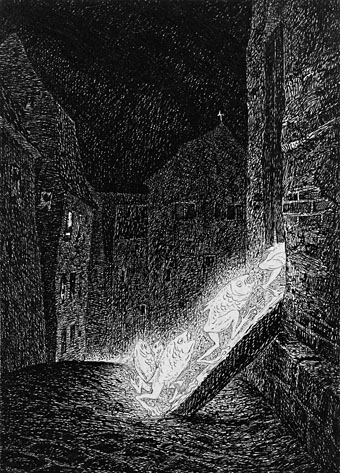
Entrance of the Fish Frogs (1919) by Fritz Schwimbeck. Via.

• “This bold chunk of fiction comes garlanded with the promise that it is written in Polari, the historical cant of British gay male society. This turns out to be not quite true—Polari was only ever a vocabulary, rather than a full language—but it certainly indicates where we’re heading; back to the late 1960s, when Polari had its heyday, and far out into the choppy waters of linguistic transgression. The largest part of the book is taken up with what purports to be a typescript of the ‘anarcho-surrealist’ memoirs of one Raymond Novak. The tersest summary of Novak’s literary stylings might be to say that Julian and Sandy, those Polari-dishing stars of Round the Horne, meet Bataille and Breton—and lose.” Neil Bartlett reviewing Man-Eating Typewriter by Richard Milward. • Related: You’ve got male: British beefcake photos from the 1940s to the 1970s.

• Among the new titles at Standard Ebooks, the home of free, high-quality, public-domain texts: Can Such Things Be? (1893) by Ambrose Bierce, a collection of weird fiction that includes the story that gave the world the name “Carcosa”. Also The Hashish Eater (1857), Fitz Hugh Ludlow’s account of his drug experiences.

• “…despite the book’s title, there is very little explicitly sexual here.” Hunter Dukes on Cultus Arborum: A Descriptive Account of Phallic Tree Worship (1890), a privately-printed volume believed to be the work of Hargrave Jennings.

• New music: Tenere Den by Tinariwen, Offworld Radiation Therapy by Memnon Sa, and Die Untergründigen by Alva Noto.

• At Spoon & Tamago: Japanese buildings that are shaped like the things they sell.

• At Unquiet Things: The papercut art of Ivonne Garcia.

• Mix of the week: DreamScenes – March 2023.

Hashish (1968) by West Coast Natural Gas | The Hashishins (1970) by Ry Cooder & Buffy Sainte-Marie | Hassan I Sahba (1977) by Hawkwind

Weekend links 662

mika.jpg

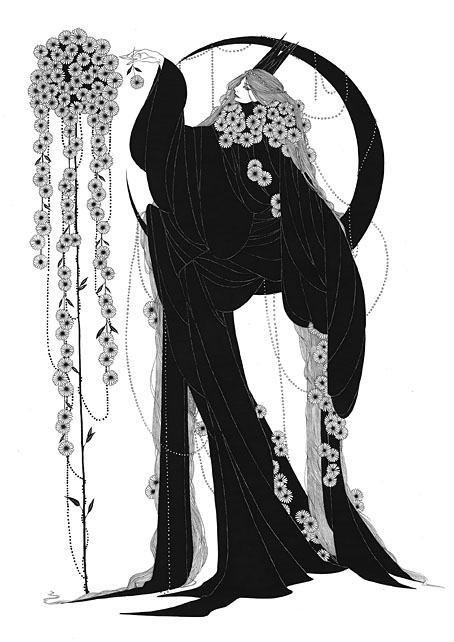
Pierrot le Fleur by Marina Mika.

• I’ve been saying for years that Andrzej Żuławski’s On the Silver Globe should be given a proper blu-ray release, and that’s what Region B viewers will receive soon courtesy of Eureka. Andrzej Żuławski: Three Films will be released in May, a set that comprises the director’s unfinished SF film, his debut feature, The Third Part of the Night (1971)—which I still haven’t seen—and also The Devil (1972), which I have seen but only as a poor copy that’s been circulating via illicit channels for many years.

• “The album’s 18-minute, multi-section standout Jenny Ondioline acquired a crucial role. It became the first track I’d play whenever I boarded a train, slipped on my headphones, and settled in beside an anonymous rail rider.” Hayden Merrick on travelling across the USA to the sounds of Transient Random-Noise Bursts With Announcements by Stereolab.

• At Aquarium Drunkard: E. Hehr explores musical exotica via Technicolor Paradise: Rhum Rhapsodies & Other Exotic Delights, “…a compilation that touches upon the noir side of exotica, far more gritty and raw compared to the lavish production on the esteemed exotica albums from Capitol and Liberty.” I own this collection. It’s a good one.

“My own experience,” Leda muses “tells me that more love goes into the thought of homosexuality than the practice.” Other gays are neither radical heroes nor the pathetic, self-hating fairies of, say, Mart Crowley’s Boys in the Band. This frankness makes Love, Leda a singular work; a contemporary portrait of working-class gay London in the years running up to decriminalisation that neither flatters nor sensationalises. In doing so, Hyatt transforms gay sex and love from an abject taboo to a deeply human intimacy.

Huw Lemmey on Love, Leda by Mark Hyatt, a candid tale of gay life in the Britain of the 1960s

• “It became something like a ritual, an exhumation of long-unheard music reanimated as glacial drones and ghostly symphonic movements—the sound of the cathedral transmuted into an enveloping shadow of pulsation, echo and glitch.” Orgelwerk by Ted Reichman.

Max Richter answers 50 questions. Sleep, Richter’s 8-hour ambient epic, is still my favourite among his compositions that I’ve heard to date: 8 CDs and a blu-ray disc from Deutsche Grammophon.

• RIP Alastair Brotchie, publisher of books at Atlas Press, and biographer of Alfred Jarry. Also a commenter here on one occasion when he corrected an erroneous photograph caption.

• A trailer for Suzume, a new feature film by Makoto Shinkai. Related: A Gathering of Cats.

• The story behind Jack Pierson’s homoerotic new photo book.

• The Strange World of…Phew.

Why Do I Still Sleep (1983) by Popol Vuh | Sleep I (1995) by Paul Schütze | The Dreamer Is Still Asleep (1999) by Coil

Genet in the Arena

genet1.jpg

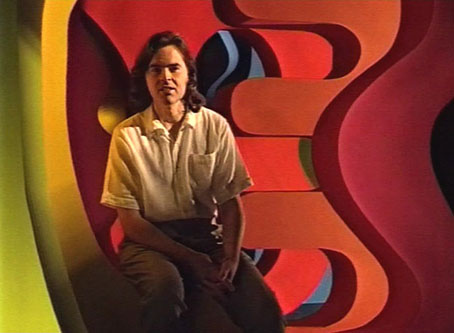
In the summer of 1985 he also gave a televised interview to the BBC. It was to be his last public statement. Genet demanded £10,000 in advance and in cash. In return he agreed to be filmed for two days in the house of Nigel Williams, a young novelist, television presenter and the translator of Deathwatch. At the time of the student uprising in May 1968, Genet had been very critical of the form the students’ debates took, especially during the occupation of the Théâtre de l’Odèon. As an experienced playwright he knew that the form is more communicative in a live or filmed event than what anyone manages to say. Accordingly, he constantly interrupted the formula of the television interview. He genuinely believed that he was no more interesting or important than the camera crew and insisted on asking the technicians questions. This reversal of the ordinary television format infuriated many viewers, but none forgot the show.

Edmund White, from Genet: A Biography (1993)

I didn’t forget the show. In fact this particular programme, Saint Genet, has been in the top five of those I wanted to see again ever since copies of old TV recordings started circulating on the internet. The film is another from the BBC’s Arena arts series, and one the corporation is proud of judging by their inclusion of clips in celebrations of Arena‘s history. This pride hasn’t extended to repeat screenings of the entire interview, however, apart from a single occasion a few weeks after Genet’s death in 1986. The days are long passed when the BBC would devote 50 minutes of its evening air-time to a writer who didn’t have a book to plug or some attachment to a popular film or TV drama. In 1985 you could expect as much while also being offered a programme that countered the reactionary tenor of the time: an author whose novels were filled with gay sex, and populated by all manner of social outcasts, from male prostitutes to thieves, murderers and the like.

genet2.jpg

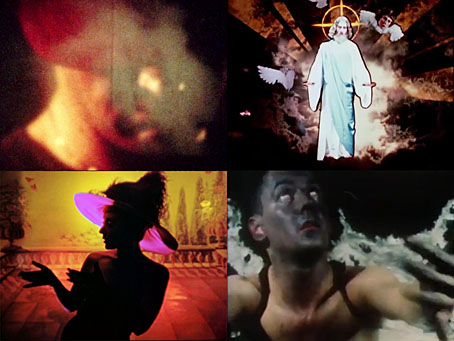
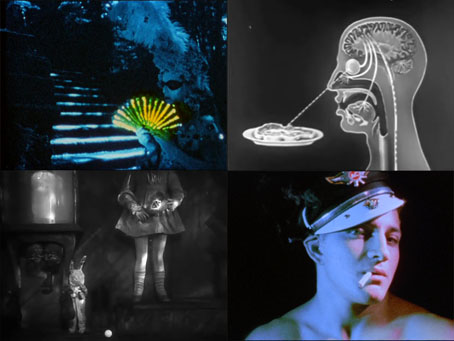
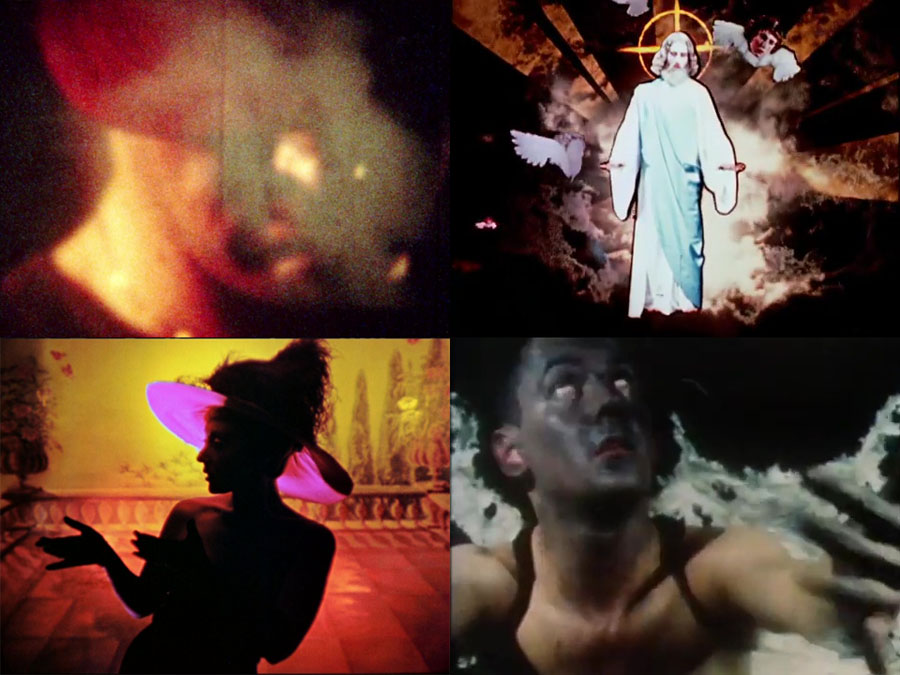
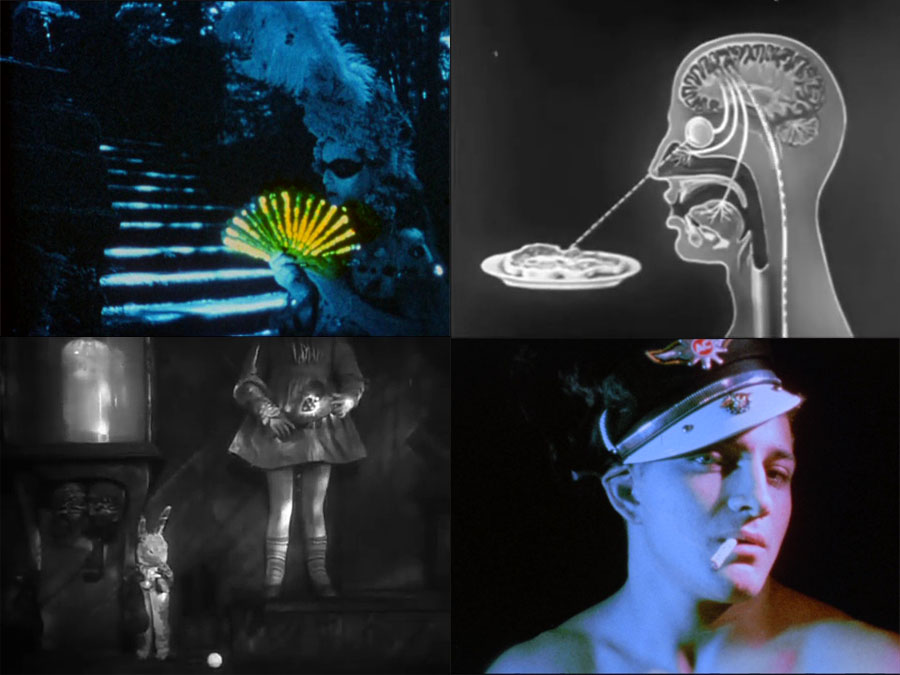
Genet in later years refused to discuss his novels or plays so co-director/interviewer Nigel Williams oriented the discussion around the author’s life (many details of which informed his fiction) while augmenting this with readings from the novels along with extracts from films and plays. I didn’t remember the extracts at all even though this would have been my first glimpse of scenes from the only film that Genet directed (and which he typically disowned), Un Chant d’Amour. More memorable was the sight of Genet himself sitting there for the best part of an hour, rolling cigarettes and verbally jousting with a pair of nervous interviewers in a mood of mingled amusement and exasperation. In the past I’ve been uncharitable about Williams’ handling of the situation but he ought to be congratulated for having inadvertently given us a film that’s so typical of its subject. Genet spent most of his life biting the hand that fed him, and always chaffed at the attention he received from the educated middle classes, even though these were the people who were most interested in (and paid for) his novels and plays. Edmund White’s biography tells us that Genet was unimpressed with Williams’ home (which he compared to something out of a Miss Marple story), and was annoyed when he saw the technical crew eating at a separate table to the producers. This annoyance was translated to the second half of the interview which he described as being like a police interrogation.

In his introductory comments Williams says that this was the first interview Genet had given to a major TV network, but it wasn’t Genet’s first filmed interview. The 52-minute film made by Antoine Bourseiller in 1981 contrasts strikingly with the Arena programme, demonstrating that Genet could talk with ease and at length before a camera. The reason, as White once again explains, is that Genet had planned the film in advance with Bourseiller, selecting the topics for conversation and even helping to edit the footage later. So the difference in attitude was all about control, or the lack of it. Wresting control from the BBC meant directing the questions back at the interviewers while drawing attention to the power relations and the intimidating nature of the interview process.

All of this begs the question as to why Genet agreed to place himself in a situation that he found so uncomfortable when he could easily have refused. We’re left to guess but he certainly didn’t do it for the money; he continued to live frugally despite the international success of his literary works. Large sums such as the £10,000 he extracted from the BBC he regularly passed on to needy friends or to political groups who he felt could put the funds to better use. Whatever the reason behind Genet’s participation, I think Williams and co. would agree that their money was well spent.

Previously on { feuilleton }
Covering Genet
Notre Dame des Fleurs: Variations on a Genet Classic
Genet art
Flowers: A Pantomime for Jean Genet
Querelle de Brest
Jean Genet, 1981
Un Chant d’Amour (nouveau)
Jean Genet… ‘The Courtesy of Objects’
Querelle again
Saint Genet
Emil Cadoo
Exterface
Penguin Labyrinths and the Thief’s Journal
Un Chant d’Amour by Jean Genet

The art of Paul Binnie

binnie03.jpg

Dragon and Demon (1997).

More Japanese art, although the artist responsible happens to be Scottish. One of Paul Binnie’s prints appeared here in January in a post about the Itsukushima Shrine together with ukiyo-e views by other artists. Binnie studied print-making with a Japanese master of the medium in the 1990s, and many of his prints that follow traditional ukiyo-e subjects are now valued by collectors. He also has a nice line in homoerotic portraiture, which is what you see here, a few examples from this collectors’ site. Most of my selections are those styled like his traditional prints but you’ll find plenty of paintings and drawings in the “Handsome Men (Bidanshi)” section.

binnie02.jpg

Celadon Censer (2004).

binnie07.jpg

Yoshitoshi’s Ghosts (2004).

binnie01.jpg

Bang Bang (2011).

binnie04.jpg

Hokusai’s Waterfalls (2006).

binnie05.jpg

Katana (2007).

binnie06.jpg

Maple Leaves (1994).

Elsewhere on { feuilleton }
The gay artists archive