Oj! Nie moge sie zatrzymac!, a film by Zbigniew Rybczynski

rybczynski.jpg

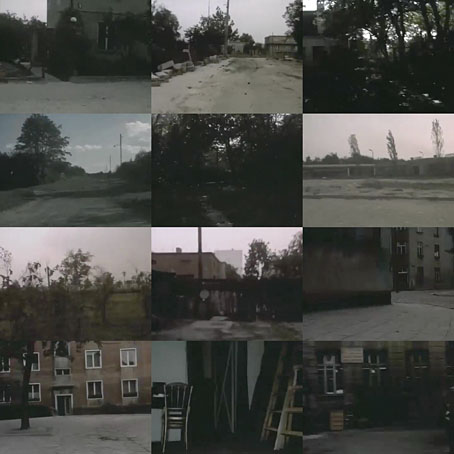
The title translates as Oh, I Can’t Stop!, and the camera shows 10 minutes of unstoppable momentum beginning with a stealthy creep through woods on the outskirts of a Polish city, and quickly evolving into a hurtling flight through streets, yards and buildings. The viewer is left to guess at the identity of the point-of-view but given the sounds of destruction the thing produces it’s evidently large and heavy. When you start to think you’ve got the measure of this film it speeds up even more. Oj! Nie moge sie zatrzymac! was made in 1975, a few years before Rybczynski’s Oscar-winning Tango. Watch it here.

Previously on { feuilleton }
The Fourth Dimension
Tango

Weekend links 284

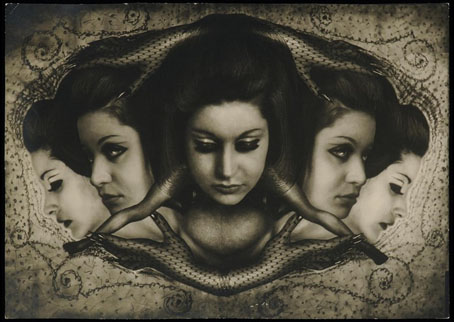
molinier.jpg

Les Hanel I by Pierre Molinier. There’s more at The Forbidden Photo-Collages of Pierre Molinier.

• Western anti-hero Josiah Hedges, better known as Edge, was the creation of prolific British author Terry Harknett. The famously violent Edge novels, credited to “George G. Gilman”, were ubiquitous on bookstalls in the 1970s. They were Harknett’s most successful works, and are still collectible today; if you’re interested there are 61 of them to search for. Amazon Originals have just launched Edge as a new TV series although anything for a mass audience is unlikely to retain the exploitative qualities of novels that often sound like pulp precursors of Blood Meridian.

Related: Terry Harknett discusses the creation of the Edge series at Drifter’s Wind; Ben Bridges on Harknett’s career, including a look at the writer’s many other Western and thriller novels; Bill Crider on Edge, Harknett and the British group of Western novelists known as “The Piccadilly Cowboys”.

• Boyd McDonald’s queer-eye film guide, Cruising the Movies: A Sexual Guide to Oldies on TV (1985), has been republished by Semiotext(e) in an expanded edition. Related: True Homosexual Experiences: Boyd McDonald and Straight to Hell by William E. Jones.

• “…a film that plumbs the dark recesses of all our imaginations: dangerous, glorious, absurd, vivid and terrifying by turns.” Charlotte Higgins on her favourite film, The Red Shoes (1948).

Art Forms from the Abyss, a new collection of illustrations by Ernst Haeckel for the report of the HMS Challenger expedition (1872–76). Related: Silentplankton.com

• “The biggest kick I ever get is to find myself pursuing some group of images without knowing why,” says M. John Harrison in conversation with Tim Franklin.

• “Plots didn’t interest him much. They were just pegs on which to hang characters and language.” Barry Day on Raymond Chandler.

• “Zdeněk Liška’s music thrived in unrealities,” says David Herter in a lengthy appraisal of the great Czech film composer.

• At Dirge Magazine: S. Elizabeth delights in the dark decor of Dellamorte & Co.

• Nabokov scholar Brian Boyd selects his ten favourite Nabokov books.

• Mix of the week: The Ivy-Strangled Path Vol. XIII by David Colohan.

Take me to the cosmic vagina: inside Tibet’s secret tantric temple.

• Pour Un Pianiste (1974) by Michèle Bokanowski | 13’05” (1976) by Michèle Bokanowski | Tabou (1992) by Michèle Bokanowski

Battements solaires, a film by Patrick Bokanowski

bokanowski.jpg

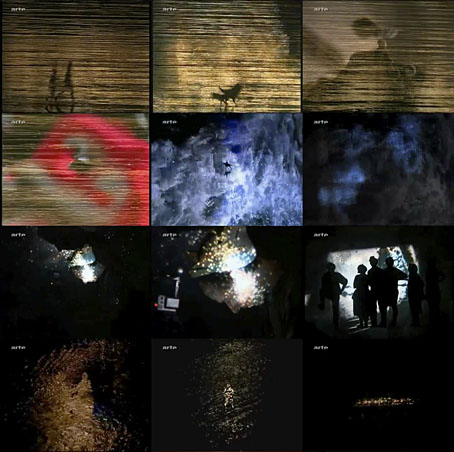
Actually a video piece rather than a film, Battements solaires (2008) is the last official release to date by Bokanowski. Silhouettes of people and animals are laid over more abstract imagery to create another of the director’s moving paintings. As usual with Bokanowski’s films, the music is by the director’s wife, composer Michèle Bokanowski. There’s a DVD of this and other short films available here.

Previously on { feuilleton }
La femme qui se poudre
Patrick Bokanowski again
L’Ange by Patrick Bokanowski

Sweet Friday, a film by Keiichi Tanaami

tanaami09.jpg

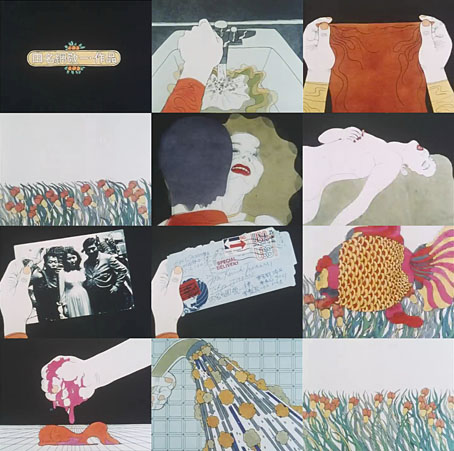
One of a number of strange, short animations made by Tanaami in the 1970s with the assistance of professional animators. IMDB lists 13 of these films but biographical notes for Tanaami refer to others before and after. This one is on YouTube together with a handful of others, or you can see the same films in better quality at Ubuweb.

Psychedelia and Other Colours by Rob Chapman

psychedelia.jpg

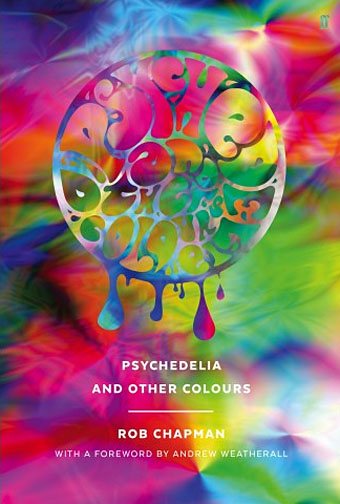
My mother thought well enough of The Beatles in the 1960s to buy two of their albums—Beatles For Sale and Help!—and she continued to enjoy the Fab Four’s songs up to the point when (in her words) “they went funny”, by which she meant the period after Rubber Soul when they dropped the beat stylings, picked up sitars and took to recording drums and guitars in reverse. They were also taking drugs, of course, hence the funniness, and this rapid evolution—from loveable moptops to freaked-out weirdos in a matter of months—is the subject of Rob Chapman’s huge study of psychedelia as a cultural phenomenon, the period from around mid-1965 to late 1969 when Western youth “went funny” en masse.

This isn’t an undocumented era but Chapman’s book provides an overdue counterweight to the American focus of earlier studies such as Jay Stevens’ Storming Heaven: LSD and the American Dream (1987). Psychedelic art evolved in San Francisco but it’s an irony of the form that many of the wildest, most typically psychedelic concert posters were promoting acts that were only marginally psychedelic in their sound or, in the case of the older jazz, soul and blues acts, weren’t psychedelic at all. Chapman is more interested in the multi-media light shows than the poster art, and he reaches back in his early chapters to the origin of the San Francisco light shows in the avant-garde art of the Modernist era (especially László Moholy-Nagy’s Light-Space Modulator of the 1920s) and the art schools of the 1950s; he also traces the familiar journey of LSD from the Sandoz laboratories in Switzerland and the clinics of America to the front pages of newspapers and magazines. One of the most remarkable and unlikely aspects of psychedelia was the way in which a short-lived poly-cultural phenomenon maintained an aura of danger and illegality late into the 1960s even while psychedelic aesthetics were filtering into every facet of mainstream life: films, fashion, decor, advertising, even children’s television—all bloomed briefly with vivid colours and melting typography.

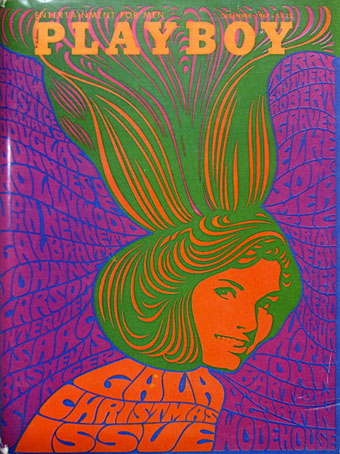
playboy.jpg

Playboy gets hip to the trip, December 1967. Art by Wes Wilson.

Chapman touches on all of this but the bulk of his study is concerned with the music which was always the core of psychedelic culture, even if many of the artists involved were only following a trend (or, to be less charitable, jumping on a bandwagon). American groups are given their due, and Chapman has some smart things to say about the often neglected surf boom of the early 60s; as noted here last month, the first piece of popular music to use “LSD” in its title was LSD-25 (1960), a surf instrumental by The Gamblers. Surf bands and garage bands mutated into psychedelic groups but there was often little change in the overall sound beyond adding an effect or two to the instrumentation. Adulterated or processed sound is what I usually look for in psychedelic music, the psychedelic experience being one of distorted or exaggerated perception. Adulteration (or lack of it) is the most obvious factor that differentiates American psych from its British equivalent: White Rabbit by Jefferson Airplane is a great song (its final line is fixed to every page of this blog) but is psychedelic only as a result of its lyrical context. Musically, the song is a simple rock bolero next to which Strawberry Fields Forever sounds like a broadcast from another planet.

Continue reading “Psychedelia and Other Colours by Rob Chapman”