OffOn by Scott Bartlett

bartlett1.jpg

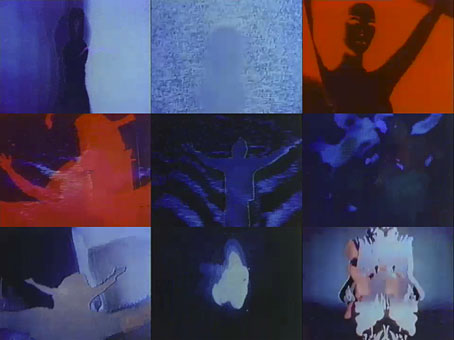
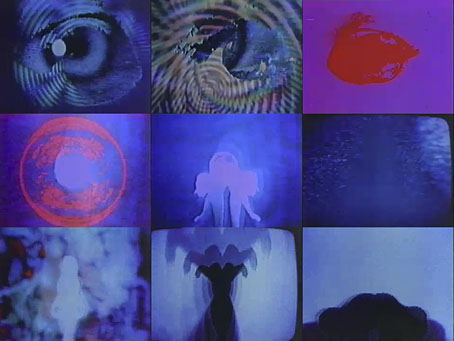
Another gem of experimental filmmaking, Scott Bartlett’s short from 1967 hits all the buttons of psychedelic imagery: disembodied eyes, moiré patterns, solarisation, dancing figures, naked women, oil effects, oversatured hues, and superimposition. The difference between this film and others of the period is that OffOn is largely a product of video techniques, some of which—video feedback, for example—are unique to the medium. As a bonus there’s that standard feature of so much experimental film from the period, the electronic score. The soundtrack for OffOn is by Manny Meyer, and sounds in places like a precursor to Gil Mellé’s buzzing and shrieking music for The Andromeda Strain (1971).

bartlett2.jpg

Elsewhere on { feuilleton }
The abstract cinema archive

Le labyrinthe and Coeur de secours

kamler1.jpg

Le labyrinthe (1969).

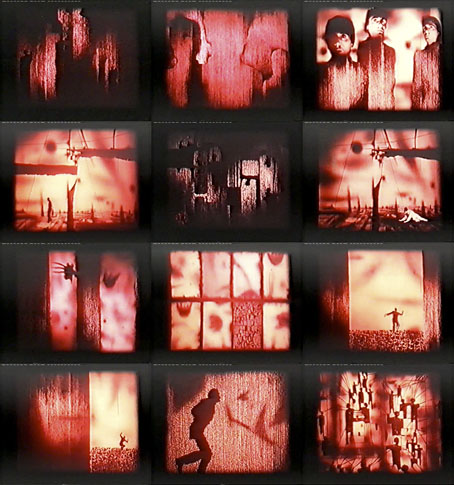
Among the new arrivals at Ubuweb there’s the very welcome addition of more animated films by Polish director Piotr Kamler. Kamler’s incredible Chronopolis (1982) was posted there late last year, a longer work than these shorter films which are nonetheless fascinating in themselves. For a start they show the range of Kamler’s animation which differs radically from film to film. Le labyrinthe is the kind of thing SF artist Richard Powers might have made had he been offered an animation commission: a human figure paces through increasingly threatening corridors and empty spaces until the winged creatures that haunt the zone bear down on him. Coeur de secours is more a sequence of events than anything that might be easily summarised; I’d seen this one years ago on Channel 4 but didn’t remember a thing about it. Chronopolis was notable for its electronic score by Luc Ferrari, and both the earlier films have similar soundtracks created by Bernard Parmegiani and Francois Bayle respectively. All these films, Chronopolis included, are collected on a recent DVD which I’ll definitely be buying. Kamler’s work, like that of Patrick Bokanowski and the Quay Brothers, goes places that films with much larger budgets can never reach.

kamler2.jpg

Coeur de secours (1973).

Previously on { feuilleton }
Chronopolis by Piotr Kamler

Weekend links 156

leonard.jpg

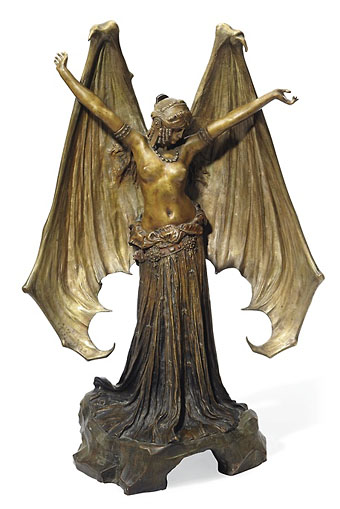
Le Vampire (c. 1903) by Agathon Léonard. Via Beautiful Century.

• Two masters of rumbling atmospherics interviewed at The Quietus: Bobby Krlic aka The Haxan Cloak talks to Maya Kalev while Thomas Köner talks to Joseph Burnett.

Discussions about the arts now have an awkward, paralyzed quality: few judgments about the independent excellences of works are offered, but everyone wants to know who sat on the jury that gave out the award. It’s become natural to imagine that networks of power are responsible for the success or failure of works of art, rather than any creative power of the artist herself.

We’ve reached the point at which the CEO of Amazon, a giant corporation, in his attempt to integrate bookselling and book production, has perfectly adapted the language of a critique of the cultural sphere that views any claim to “expertise” as a mere mask of prejudice, class, and cultural privilege.

Too Much Sociology, an essay by The Editors at n+1

• Prints of Karl Blossfeldt‘s plant portraits can be seen at the Whitechapel Gallery, London.

Stephen J. Gertz on Samuel Roth, “The Most Notorious Publisher In American History”.

• Max Beerbohm is Cranky: Mary Mann on the appeal of the curmudgeon.

• Travel brochure graphics: Graphic design from the 1920s to the 1970s.

• Still returning to its constituent components: Chernobyl’s ghost town.

Thoughtless Grin: a new Arthur Mixtape

Richard Williams: the master animator

Ketch Vampire (1976) by Devon Irons | A Vampire Dances (Symmetry) (1988) by Jon Hassell with Farafina | Vampires (1999) by Pet Shop Boys

The Web by Joan Ashworth

theweb.jpg

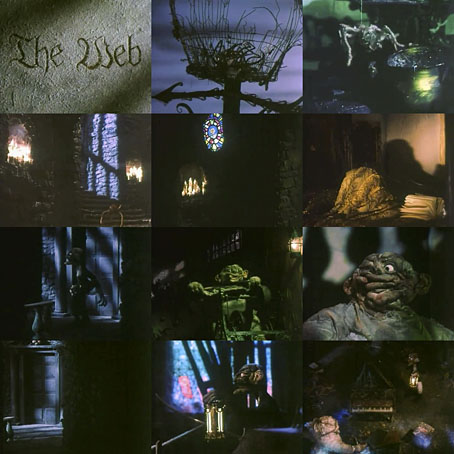
Another animated gem, The Web (1987) is an eighteen-minute film based on Mervyn Peake’s Gormenghast novels which dramatises the lethal duel between Flay and Swelter. Director Joan Ashworth reduces the cast to manservant, cook, and bedridden earl, no doubt for reasons of economy since the film was originally a student work. Economy or not, for me this has always captured more of the flavour of the books than the BBC’s well-intended but ultimately unsatisfying television adaptation. Watch The Web here.

Previously on { feuilleton }
Peake’s glassblowers
Mervyn Peake in Coronation Street
The Worlds of Mervyn Peake
A profusion of Peake
Mervyn Peake at Maison d’Ailleurs
Peake’s Pan
Buccaneers #1
Mervyn Peake in Lilliput
The Illustrators of Alice

Jiří Barta’s Pied Piper

barta1.jpg

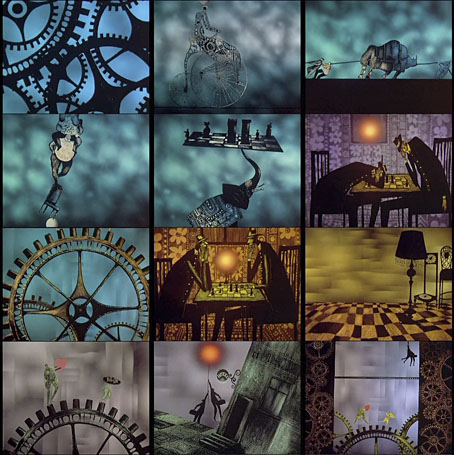
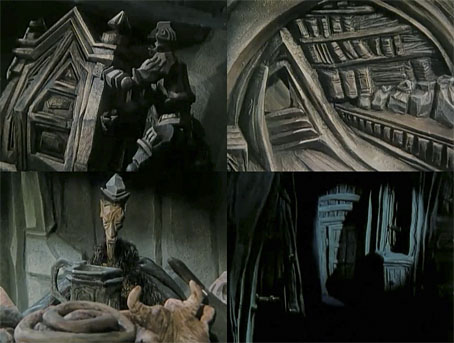
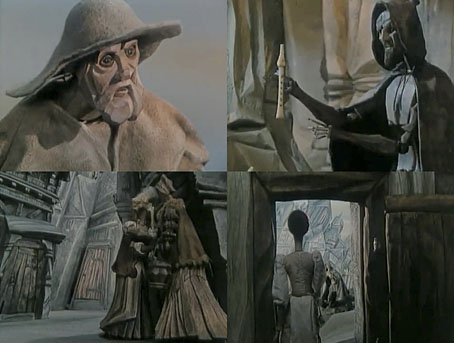
The last time I mentioned Jiří Barta’s extraordinary animation of the Pied Piper story there were only short clips on YouTube. That was several years ago, in which time the 53-minute film has been posted in its entirety. Barta pulls the tale away from its sanitised derivations back to its darker origins in the folk mythology of Central Europe; he also gives the end of the story a twist which I won’t reveal here. The characters are almost all angular wooden figures, while their rat-infested town is constructed from the disjunctive perspectives of German Expressionism. The whole effect is so successful it makes you wish even more that Barta might have completed his feature-length version of the Golem story.

barta2.jpg

Previously on { feuilleton }
Gloves
More Golems
Barta’s Golem