Return to Pepperland

ys1.jpg

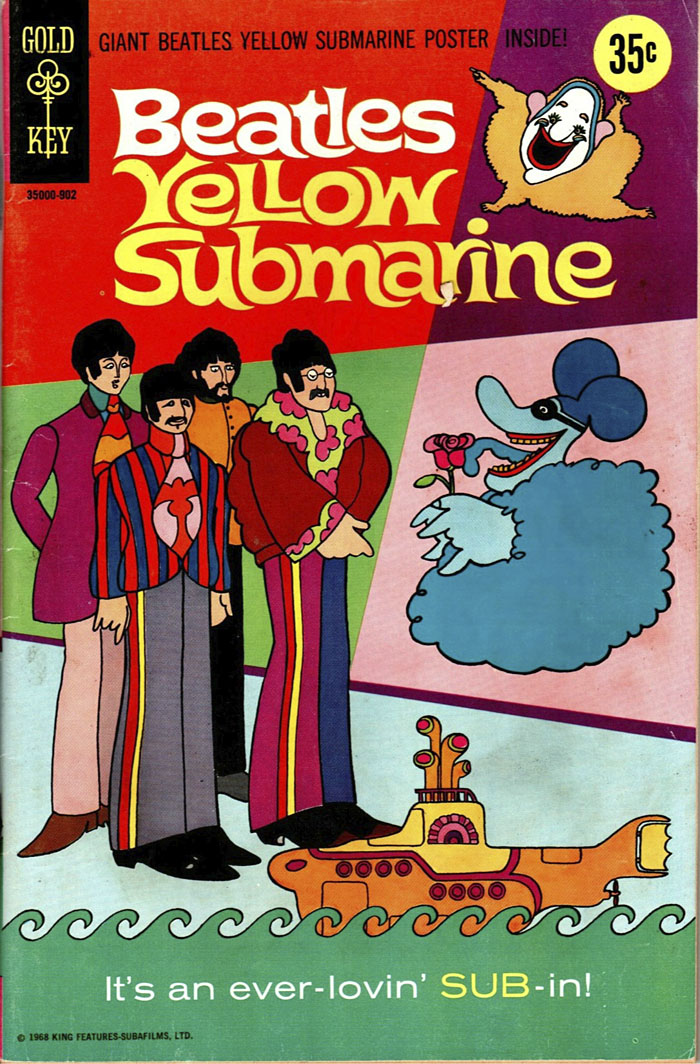
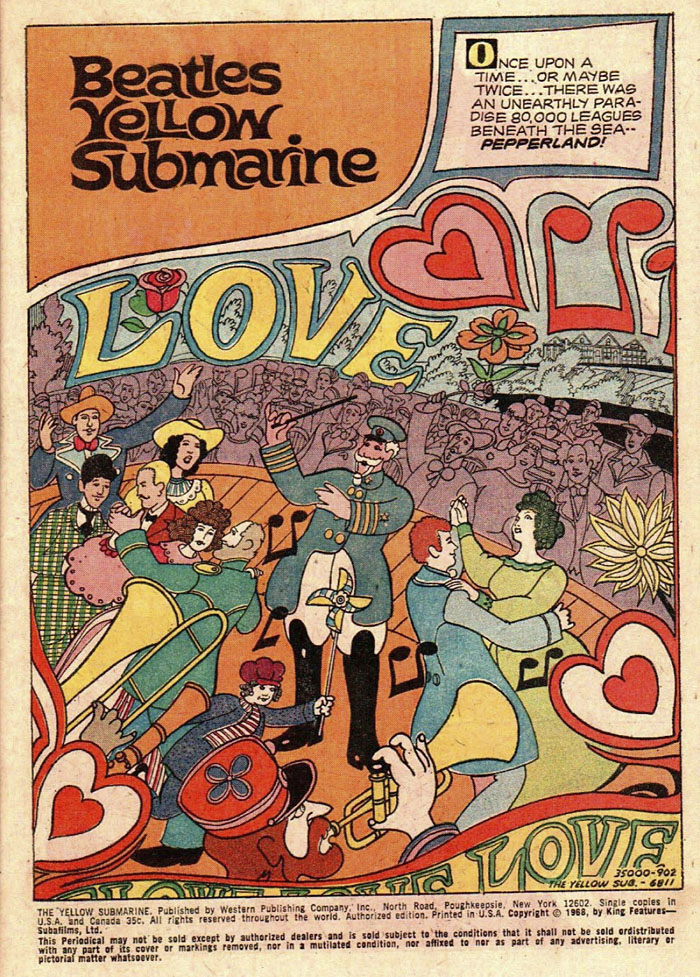
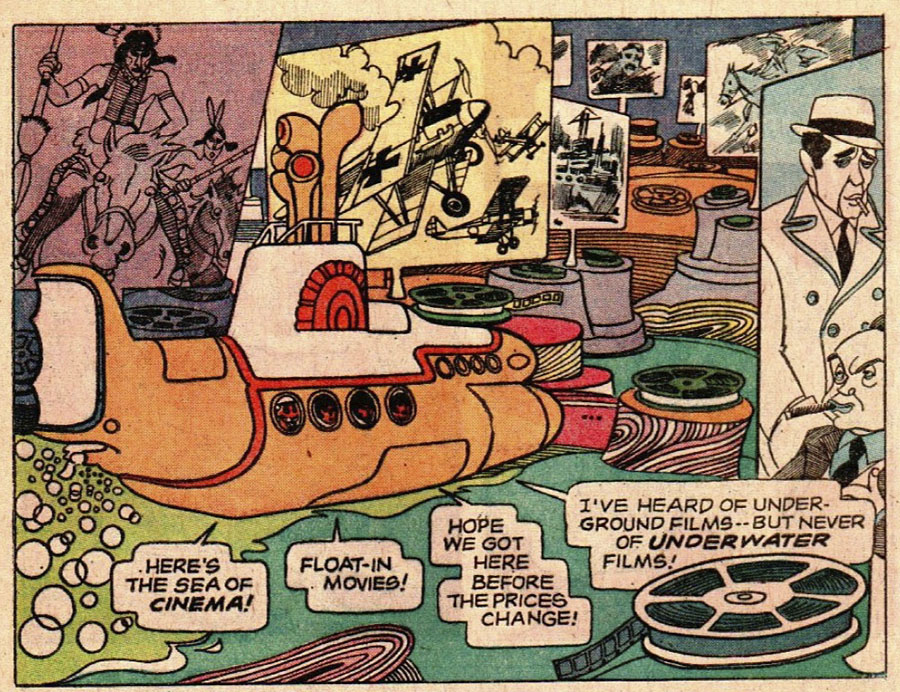
Another candidate for the small list of comics drawn in the groovy style (or a diluted version of the same), the first comic-book adaptation of Yellow Submarine was a single 64-page issue published by Gold Key in February 1969. Low-quality copies have been circulating for years on fan sites but there’s now a copy available here with the pages scanned at a higher resolution. Whatever the quality, the cheap paper doesn’t help the artwork, but for a cash-in this isn’t a bad adaptation. The background details don’t always keep up with Heinz Edelmann’s invention but artist José Delbo maintains the character style of the animation throughout, while the script by Paul S. Newman pads out the missing song sequences with additional japes and bad puns. I’ve seen claims that the story is based on an early draft of the film script but can’t say whether this is true or not. There are a few notable deviations from the film, however, such as additional seas—The Sea of Consumer Products, The Sea of Cinema—and an extra character, Rita the Meter Maid, who looks nothing like a British traffic warden of the 1960s.

ys3.jpg

The last time I mentioned this comic I also referred to a more recent adaptation by Bill Morrison which had been commissioned, partly drawn then inexplicably cancelled. Morrison’s pages were superior to the Gold Key adaptation in their design and their fidelity to the animation style of the film so it’s good to see that the various licence-holders have allowed him to complete his work. The book was published by Titan for Yellow Submarine‘s 50th anniversary in 2018.

ys3.jpg

Previously on { feuilleton }
The groovy look
The South Bank Show: The Making of Sgt Pepper
The Sea of Monsters
Tomorrow Never Knows
Yellow Submarine comic books
A splendid time is guaranteed for all
Heinz Edelmann
Please Mr. Postman
All you need is…

The Gate to the Mind’s Eye

tgttme1.jpg

Turn a 6 on its head and you’ll see a number 9. Do the same with the psychedelic culture of the 1960s and you get the 1990s when psychedelia emerged again, after a fashion, in a profusion of new drugs (plus the same old ones), “ambient” music (a lot of which was never very ambient at all), and, of course, computer graphics. The resemblance of the overlit, weightless world of early computer graphics to the vivid inner landscapes of psychedelic hallucination prompted people like Timothy Leary to declare computers to be their new drug of choice, while also inspiring the resurrection of the kind of visual tripping aid that would have been considered dead and buried in the very un-psychedelic 1980s. (There were a few musical exceptions in that decade—the Paisley Underground, the Dukes of Stratosphear albums, Around The World In A Day by Prince & The Revolution—but all these were counter to the dominant trends of the time.)
tgttme2.jpg

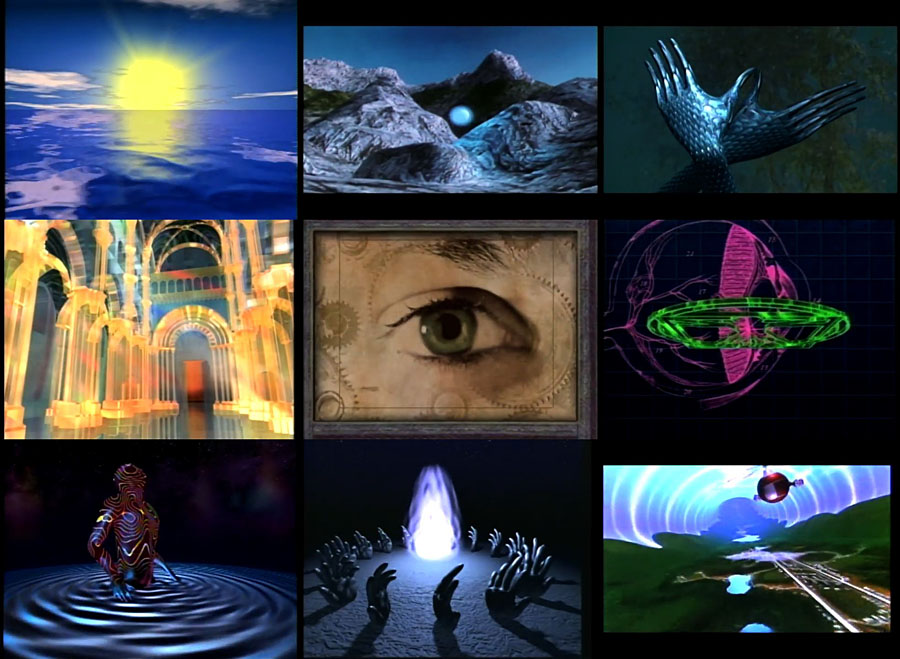
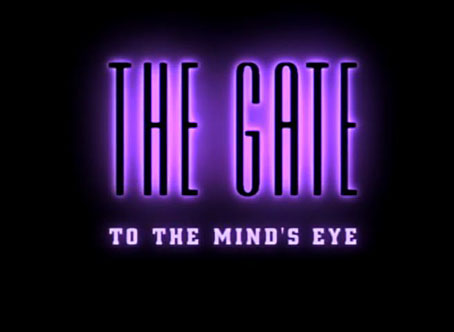
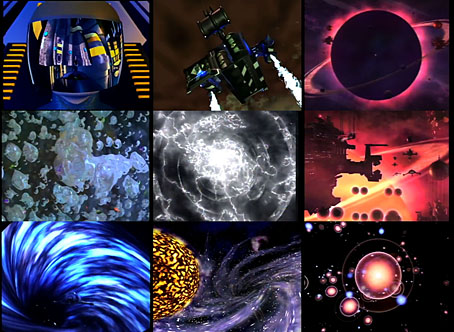
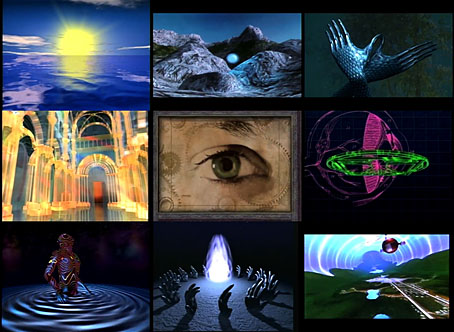
CD-ROMS were the hippest vehicle for far-out visuals in the mid-90s. Brian Eno was vocal in his criticism of the limitations of the point-and-click CD-ROM format but he still provided music for a thing called Headcandy in 1994, one of a series of “video kaleidoscopes” with 3-D visuals created by Chris Juul and Doug Jipson. Not so overtly druggy was a series of VHS tapes and laserdiscs released throughout the 1990s by Odyssey Productions, all of which had the words “Mind’s Eye” in their titles: The Mind’s Eye: A Computer Animation Odyssey (1990), Beyond the Mind’s Eye (1992), The Gate to the Mind’s Eye (1994) and Odyssey Into The Mind’s Eye (1996). Where Headcandy and its relations created far-out visuals using original data encoded on a CD-ROM, the Mind’s Eye laserdiscs wowed the viewer by stitching together the latest examples of CGI from a variety of sources—showreels, TV ads, music videos and so on—giving you an hour of coloured balls bouncing across crystal mountains, pulsating blobs of mercury, shiny objects zooming through corridors and vortices, together with the clumsy figure animation that’s a consistent feature of early computer graphics. Each instalment was provided with a soundtrack by a different musician, so each release is really a long music video in itself, rather like The Orb’s Adventures Beyond The Ultraworld (Patterns & Textures) (1992), a 50-minute collage of rave footage, dolphins, spacewalking astronauts and cheap video effects soundtracked by live music from The Orb.
tgttme3.jpg

The Gate to the Mind’s Eye is highlighted here mainly for its having a soundtrack by Thomas Dolby that I hadn’t heard before. Other instalments feature original music by Jan Hammer (which may be okay), and Kerry Livgren from Kansas (which promises to be as unpalatable as Giorgio Moroder’s misconceived mauling of Fritz Lang’s Metropolis). The Gate to the Mind’s Eye doesn’t feature the best of Dolby’s music, it should be said, which may explain why the soundtrack CD has only been reissued once since 1994, while the visual material looks like a combination of music video and computer game. But there’s a lot of this stuff around today, especially at the Internet Archive which now has a laserdisc section containing several uploads from Odyssey Productions and its affiliate, Miramar Productions. Closer to the psychedelic ideal is a series of discs from Japan with the uninventive name of Video Drug. The Internet Archive has five discs from this series. I might have been happy to watch these in the 1990s when late-night TV in the UK was either dull or non-existent but today I’m more taken with outmoded things like Electric Light Voyage aka Ascent 1, a video release from 1979 which featured analogue video effects of a type you don’t find at all in the digital world.

Elsewhere on { feuilleton }
The abstract cinema archive

Previously on { feuilleton }
Kusama’s Self-Obliteration, a film by Jud Yalkut
Science Friction by Stan VanDerBeek
The groovy look

groovy14.jpg

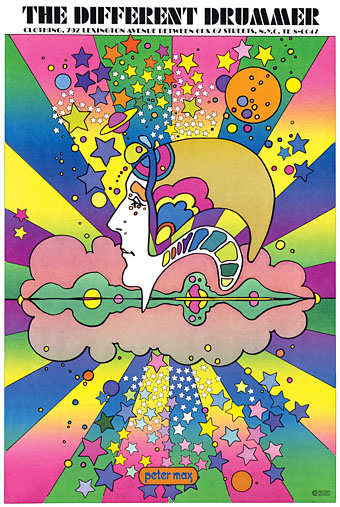
Peter Max, 1968.

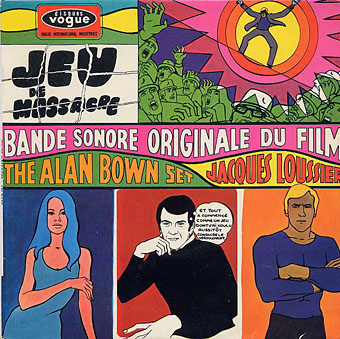
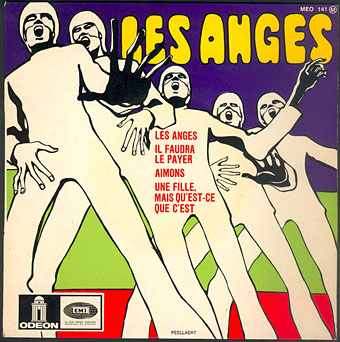
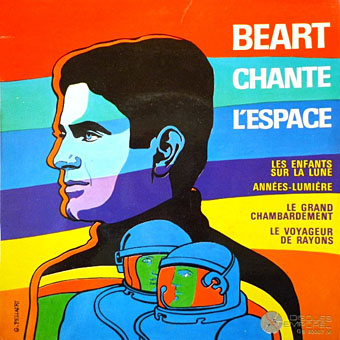
Artists complain justifiably about the constraining effect of labels but sometimes you really do need a label in order to identify a particular idiom. The artwork here is what most people would regard as psychedelic even though the subject matter isn’t always psychedelic at all. I doubt that Citroën intended their new Dyane car to be associated with LSD when they asked Michel Quarez to create a comic book to promote the vehicle, while Quarez’s Mod Love comic is just as hallucinogenically chaste. I tend to think of this style as “groovy”, an unsatisfying term with other associations but “post-psychedelic”, while accurate, feels too cumbersome for such playful graphics. The groovy look is where the purely psychedelic style enters the mundane world, and where the intended audience may be youthful but isn’t always a crowd of experienced lysergic voyagers; a watering down of psych delirium mixed with a dash of Pop Art, all bold shapes, heavy outlines and very bright colours, comic art (or actual comics) with the edges and detail smoothed away and the gain pushed to the maximum. I keep wishing someone would put together a collection of this stuff. There’s a lot more to be found.

Update 1: I knew I’d forgotten somebody. I replaced the book cover by Gray Morrow—an artist who was never really groovy in the manner of these other works—with a contraception poster by Nicole Claveloux, who was very much in the Groove Zone in the 1970s.

Update 2: Added designs by Miguel Calatayud, Mike Hinge, György Kemény, and Tito Topin. Thanks to Vadim for the tips!

• Further browsing: The Peculiar Manicule.

groovy01.jpg

Guy Peellaert, 1967.

groovy02.jpg

Guy Peellaert, 1968.

groovy03.jpg

Guy Peellaert, 1968.

groovy04.jpg

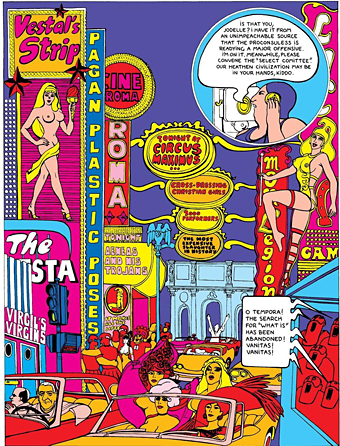
The Adventures of Jodelle by Pierre Barbier and Guy Peellaert, 1966.

Continue reading “The groovy look”

Switched On again

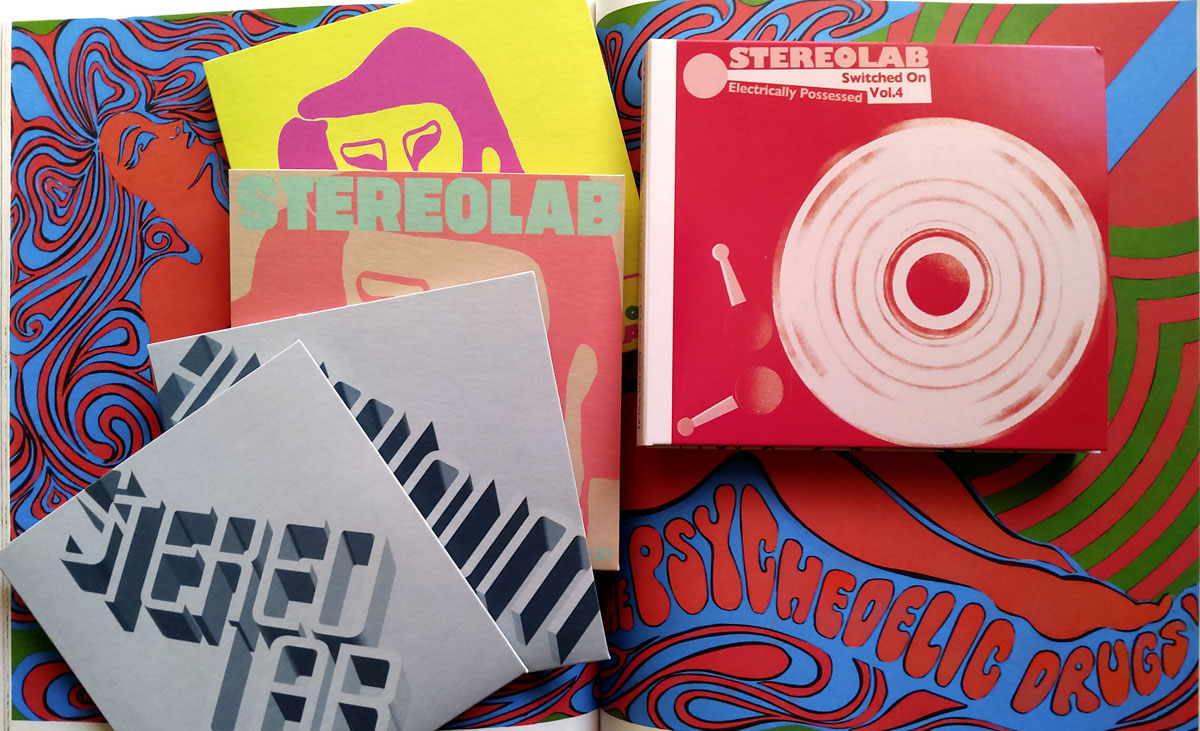
stereolab.jpg

This week I’m electrically possessed by Stereolab, thanks to the arrival of the fourth volume in the Groop’s Switched On series of compilation albums. As with the earlier releases, the new album collects deleted EPs, singles and other scarcities. I already had a third of this one on the First Of The Microbe Hunters EP but it’s good to finally have on disc B.U.A. (aka Burnt Umber Assembly), a previously unreleased piece from the Amorphous Body Study Centre recordings, together with more of the tour singles such as The Underground Is Coming and Free Witch And No-Bra Queen. The latter may well allude in its title and cover art to Pravda, La Survireuse, Guy Peellaert’s freedom-loving biker-hippie whose persona was modelled on Françoise Hardy. (Stereolab’s borrowings are often overt but I’ll give them the benefit of the doubt on this one.) Pravda or not, the animation that Peellaert produced with Gallien Guibert would have made a great video for the song if it was a little longer. Guibert has an updated version of the film here.

Arzak Rhapsody

arzak1.jpg

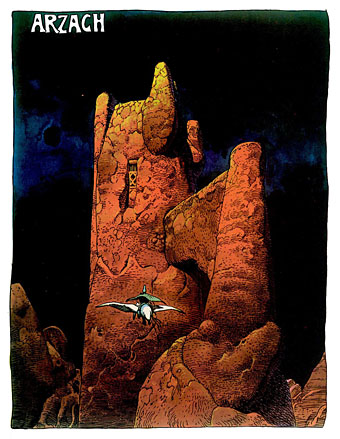
The first appearance of Arzach in Métal Hurlant, 1975.

Arzak (or Arzach, or Harzak, or Harzakc, etc) is one of the oldest of the comic characters created by Moebius, and an enduringly popular one even though the amount of pages devoted to the character is small. Moebius returned to Arzak sporadically after the first strips appeared in Métal Hurlant in 1975, where the first panel of the first story establishes the principal ingredients: the stern and resourceful explorer navigating an alien world on the back of a large white bird. Arzak’s flying companion is often described as a pterodactyl but it’s really a Moebius bird whose ancestors or cousins may be seen elsewhere in the Moebius-verse, notably the character of Deepo from The Incal.

arzak2.jpg

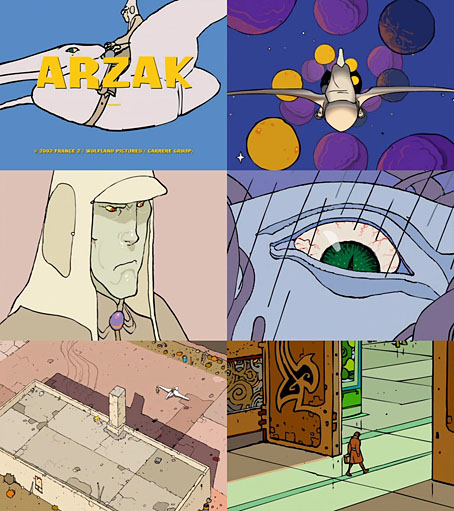
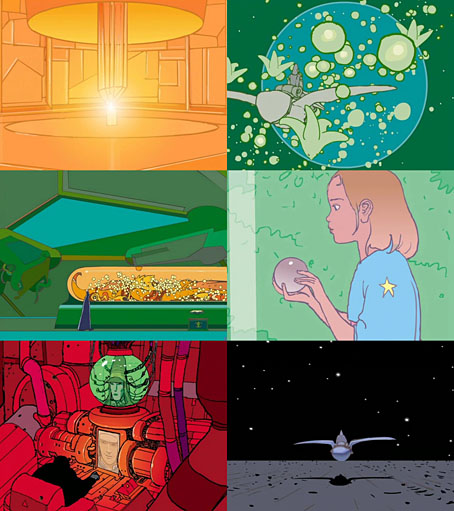
Arzak Rhapsody is a late entry in the Arzak mythos, a series of 4-minute animated films made for French TV in 2002, all of which were written by Moebius. The animation is crude when compared to René Laloux’s Moebius-designed Time Masters (1982), but the Moebius aesthetic is present throughout, from the desert landscapes of his early strips to the glowing crystals of his later work. The stories recycle moments from the comics, most of which concern Arzak evading one of the many lethal hazards presented by the flora and fauna of the place named in the animations as “Desert B”. All 14 episodes may be viewed here with the superfluous narration translated into English. Now when do we get to see Time Masters on blu-ray?

arzak3.jpg

Previously on { feuilleton }
The Captive, a film by René Laloux
The horror
Chute Libre science fiction
Heavy Metal, October 1979: The Lovecraft Special