Dalí in Wonderland

dali1.jpg

I’d only seen one or two of Salvador Dalí’s illustrations for Alice’s Adventures in Wonderland before but you can see the complete (?) set here. These date from 1969 when Dalí was well past his prime as an artist but they’re still worth a look to see how he tackled each chapter, using the skipping girl motif from earlier paintings as his Alice figure. The attraction of the Alice books for the Surrealists is no surprise; Max Ernst produced a rather enigmatic series of Alice-themed lithographs while André Breton had earlier made Alice the “Siren of Stars” in the set of Surrealist playing cards he designed in the 1940 (below). I’d imagine there are other connections I’ve missed; leave a comment if you know of any. (Thanks to Charity for the tip!)

For more Dalí, here’s something I neglected to link to a while ago, the legendary Dalí meets Disney short, Destino.

stars.jpg

Elsewhere on { feuilleton }
The illustrators archive

Previously on { feuilleton }
Virtual Alice
Psychedelic Wonderland: the 2010 calendar
Charles Robinson’s Alice’s Adventures in Wonderland
Humpty Dumpty variations
Alice in Wonderland by Jonathan Miller
Dalí and Film
The Illustrators of Alice
Surrealist cartomancy

Finch posters

finch.jpg

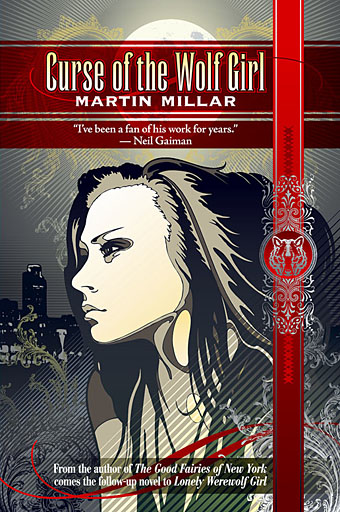
I won’t say this is by popular demand but after persistent requests for posters of my cover art for Jeff VanderMeer’s latest novel, Finch, I’ve opened a new CafePress shop selling exactly that. The largest of these is 58.38cm x 82.55 (22.984″ x 32.5″) which should be big enough for most appetites. There’s also a smaller size 35.03cm x 49.53 (13.7904″ x 19.5″) and I’ve added some cards and postcards.

In Finch, mysterious underground inhabitants known as the gray caps have reconquered the failed fantasy state Ambergris and put it under martial law. They have disbanded House Hoegbotton and are controlling the human inhabitants with strange addictive drugs, internment in camps, and random acts of terror. The rebel resistance is scattered, and the gray caps are using human labor to build two strange towers. Against this backdrop, John Finch, who lives alone with a cat and a lizard, must solve an impossible double murder for his gray cap masters while trying to make contact with the rebels. Nothing is as it seems as Finch and his disintegrating partner Wyte negotiate their way through a landscape of spies, rebels, and deception. Trapped by his job and the city, Finch is about to come face to face with a series of mysteries that will change him and Ambergris forever.

Jeff is currently promoting Finch on his latest book tour, details of which can be found here.

Previously on { feuilleton }
Finch

Virtual Alice

alice.jpg

No, I didn’t go searching for this, I had my fill of Alice’s Adventures in Wonderland last month. The British Library website is a lot more amenable than it used to be for the casual browser, and one of its newer sections is a small collection of what they call virtual books which enable you to leaf through some of their exclusive volumes. The pages above are from the original handwritten manuscript, Alice’s Adventures Under Ground, from which the printed book was later adapted. I have this in a small facsimile edition so I don’t need a web version, and the illustrations are often reprinted, but this web copy allows you to see the work in its entirety. They also reproduce the text and have an audio facility. I went through my copy a couple of times whilst working on the calendar in order to see how Dodgson depicted some of his scenes. A few of his conceptions differ from the famous Tenniel illustrations, not least his drawing of Alice herself who closely resembles the real Alice Liddell.

Previously on { feuilleton }
Psychedelic Wonderland: the 2010 calendar
Charles Robinson’s Alice’s Adventures in Wonderland
Humpty Dumpty variations
Alice in Wonderland by Jonathan Miller
The Illustrators of Alice

The Evil Orchid Bookplate Contest

bookplate1.jpg

Bookplate by Denis Kostromitin.

Following the recent postings of covers and illustrations from Der Orchideengarten, Will at A Journey Round My Skull posts the results of his Evil Orchid Bookplate Contest which encouraged illustrators to create an Orchideengarten-styled bookplate design. You can see the winner and many other splendid entries on his pages. I fully intended to do something for this then got sidetracked by work on the Alice in Wonderland calendar but I’ve picked out a couple of the (inevitably) black-and-white pieces which I thought stood out. The death’s-head moth on @ndy paciorek’s picture below makes a convenient link with yesterday’s post.

Meanwhile, there’s further Orchideengarten goodness over at Arthur Magazine.

bookplate2.jpg

Bookplate by @ndy paciorek.

Elsewhere on { feuilleton }
The illustrators archive

Previously on { feuilleton }
Der Orchideengarten illustrated
David Becket’s bookplates
Der Orchideengarten

Der Orchideengarten illustrated

orchid_01.jpg

Halloween approaches and as a precursor it’s a great pleasure to be able to post a selection of interior illustrations from Der Orchideengarten, courtesy of Will at A Journey Round My Skull. Der Orchideengarten was a German magazine of weird fiction which ran for 51 issues from 1919 to 1921 and whose existence today is rarely acknowledged despite being credited as the world’s first fantasy magazine. Information is scarce and these scans come from Will’s own copies which is why I’ve posted fifteen more below the fold; you can’t see this stuff anywhere else. A Journey Round My Skull featured some covers and a different set of interior illustrations earlier this year, and there should be a new post complementing this one with more of the magazine’s stunning cover designs.

orchid_02.jpg

What strikes me about these black-and-white drawings is how different they are in tone to the pulp magazines which followed shortly after in America and elsewhere. They’re at once far more adult and frequently more original than the Gothic clichés which padded out Weird Tales and lesser titles for many years. Some are almost Expressionist in style, while the Wild Hunt series below shows a distinct Goya influence. I’d love to know how the written content matches the illustrations; I suspect there’s the same difference of atmosphere and emphasis to American weird fiction as there is in the drawings.

Update: Will’s new post is Watering the Toxic Garden which will be followed on Thursday by the results of his Evil Orchid Bookplate Contest.

Click on any of these pictures for a larger version.

Continue reading “Der Orchideengarten illustrated”